Budapest is easiest when someone maps it for you. This private, customizable walking tour strings together the big sights—Hungarian Parliament, Chain Bridge, Buda Castle, Matthias Church, St. Stephen’s Basilica—then adds thoughtful stops like the Shoes on the Danube Bank memorial. I love the way the guide can steer the pacing to what you want, and I love that you get plenty of practical advice for the rest of your trip. One thing to consider: you’ll cover a lot of ground on foot in about 3 hours, so wear shoes you trust.
The best part is the guide’s local sense of what matters at each stop, not just what’s on a postcard. You start at Szervita tér and meet your guide in front of Immaculata kegyoszlop, then move through classic viewpoints and lesser-spotted streets like Andrassy Avenue. With a tour like this, you’re not just seeing Budapest—you’re learning how to read it.
In This Review
- Key highlights worth your attention
- Getting your bearings fast: how this 3-hour walk actually works
- Meeting point and start: Szervita tér to Immaculata kegyoszlop
- Hungarian Parliament Building: Gothic Revival that feels like a city compass
- Chain Bridge: the iconic crossing with city-wide payoffs
- Buda Castle and Matthias Church: moving through the Castle District
- St. Stephen’s Basilica: a grand stop that also helps you understand Hungary’s identity
- Fisherman’s Bastion: panoramic views, neo-Romanesque style, and photo time
- Liberty Square and Andrassy Avenue: when Budapest feels more like a city than a postcard
- Shoes on the Danube Bank memorial: a pause that lands
- Private format and customization: why this tour feels different
- Price and value: what $35 buys you in real terms
- Practical tips before you go
- Who should book this tour
- Should you book this Budapest highlights and lesser-known stops walk?
- FAQ
- How long is the Budapest Highlights & lesser-known stops walking tour?
- Where do I meet the guide?
- Is this tour private?
- Which languages are available for the guide?
- Is the tour wheelchair accessible?
- What is included, and what should I budget for?
- Can I cancel for free?
Key highlights worth your attention
- Private and exclusive: no other group tag-along.
- Customizable route: you can shape what you focus on.
- Big-view sequence: Parliament to Chain Bridge to Fisherman’s Bastion for high-impact photos.
- Stop with meaning: the Shoes on the Danube Bank memorial adds emotional context.
- Guide-powered planning: you’ll leave with clear next-step ideas for the city.
- Multilingual live guides: English, French, Italian, and Spanish.
Getting your bearings fast: how this 3-hour walk actually works
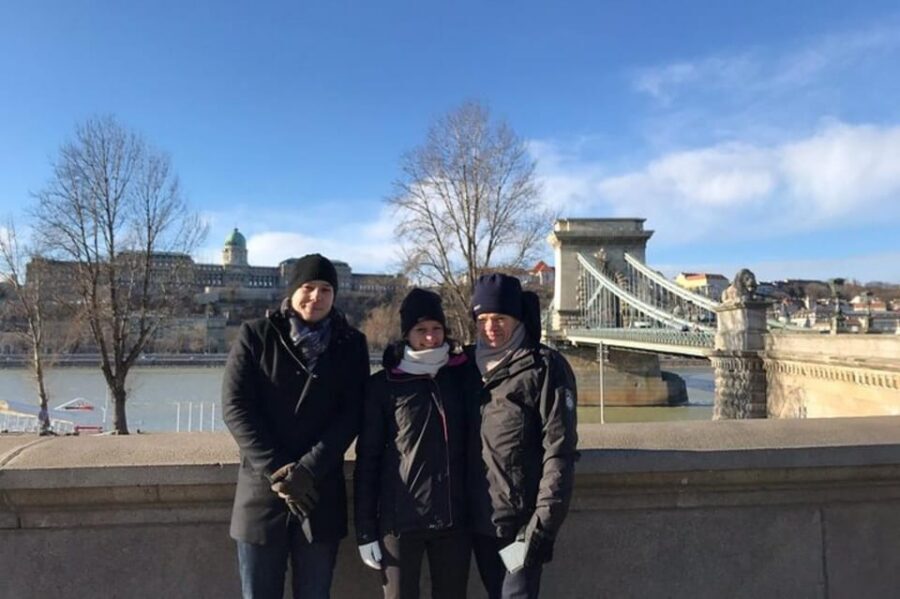
This is a compact Budapest plan built for real-world timing. At 3 hours, you’ll hit the essentials without needing a full day, and you’ll still get explanations that make the architecture and geography click. If it’s your first visit, this kind of route helps you understand where the neighborhoods sit relative to each other. If you’ve been before, it’s a useful reset—especially when you’re ready to stop following signs and start following stories.
The pacing matters here. The itinerary keeps moving, but the tour is still customizable, so your guide can adjust what you linger on. That’s a big deal if you care more about viewpoints, churches, photos, or street scenes. It’s also why private format is worth paying for: you’re not stuck with someone else’s speed.
And yes, it’s a walking tour. The experience also includes public transport as part of the plan unless you choose a different option, so expect a mix of on-foot time and short transfers. If you hate “walk-a-lot” tours, this one may feel like more than you want. If you like momentum, it’s a great match.
You can also read our reviews of more walking tours in Budapest



Meeting point and start: Szervita tér to Immaculata kegyoszlop
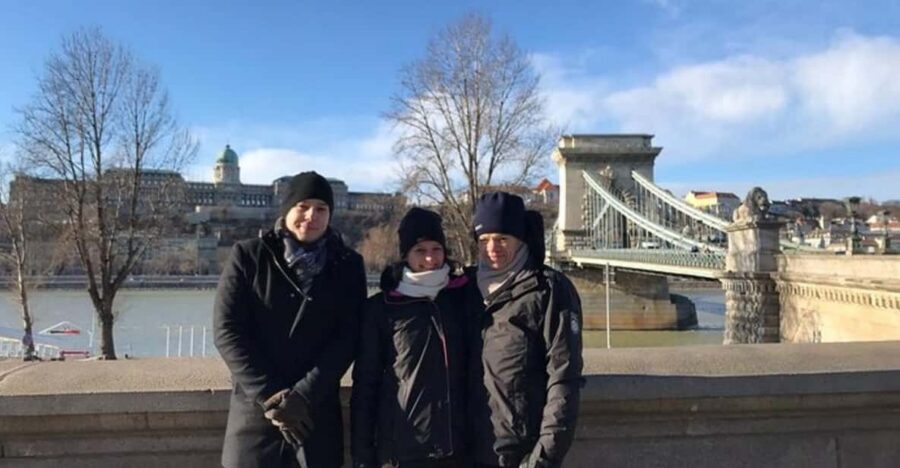
You’ll begin around Szervita tér and meet your guide in front of Immaculata kegyoszlop. Meeting at a specific monument like this is practical in Budapest, where streets can look similar once you’re a few blocks in. It also keeps the tour from wasting time.
Once you’re with the guide, you’ll start by going straight into the visual landmarks. The route is designed so you don’t spend your first minutes hunting for what to see. You’re told where you are, what you’re looking at, and why the place matters—then you move on.
Hungarian Parliament Building: Gothic Revival that feels like a city compass
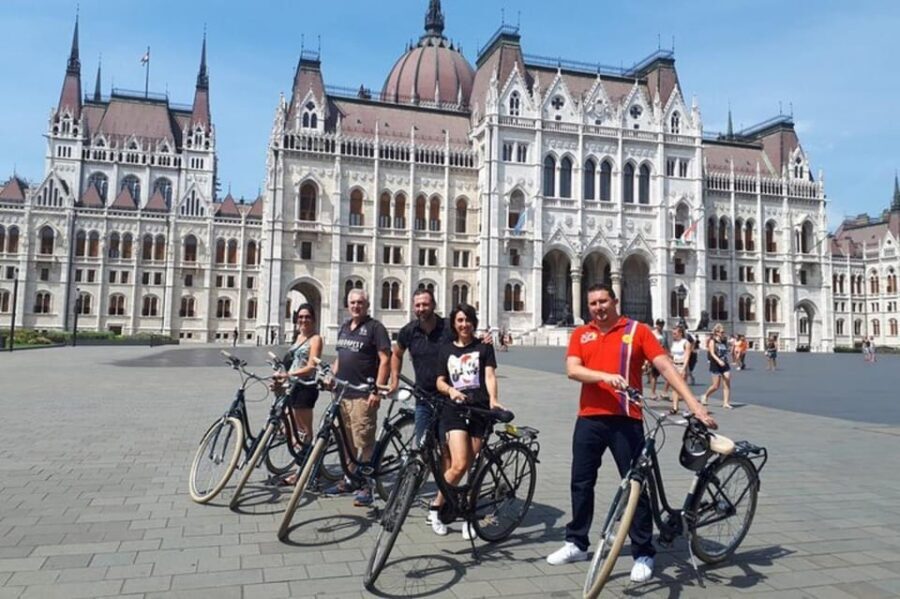
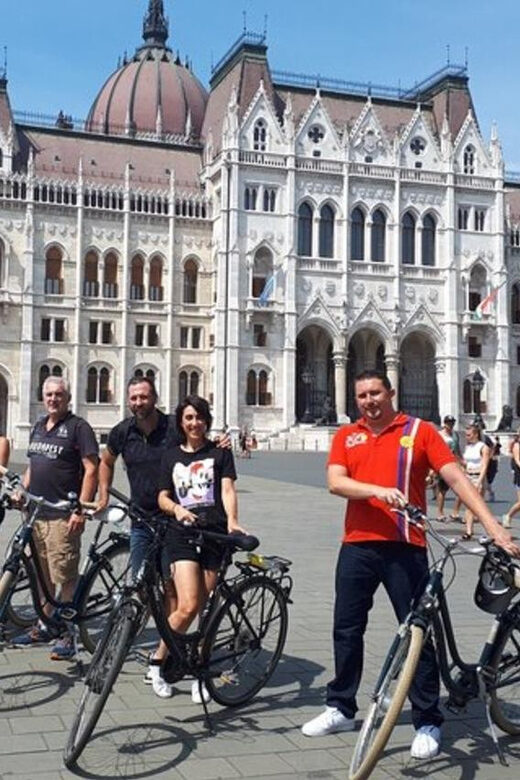
The tour starts with the Hungarian Parliament Building, guided as a proper first stop. You’ll be looking at Gothic Revival architecture, and you’ll get the sense that this building is a symbol of Hungary’s past—an anchor for understanding why Budapest’s public spaces feel so deliberate.
Why this stop is strong for you:
- It sets a scale. Budapest’s beauty isn’t just scenery; it’s also political and civic space.
- It gives you a reference point for later viewpoints across the river.
A small practical tip: if you’re choosing between photos and listening, split your time. Listen first for context, then take pictures while the guide points out what to notice in the façade.
Chain Bridge: the iconic crossing with city-wide payoffs
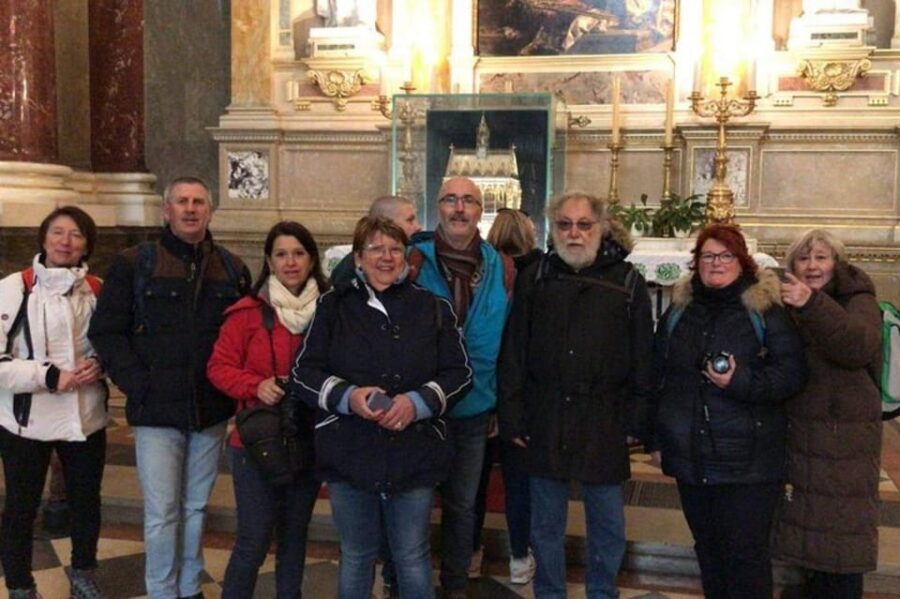
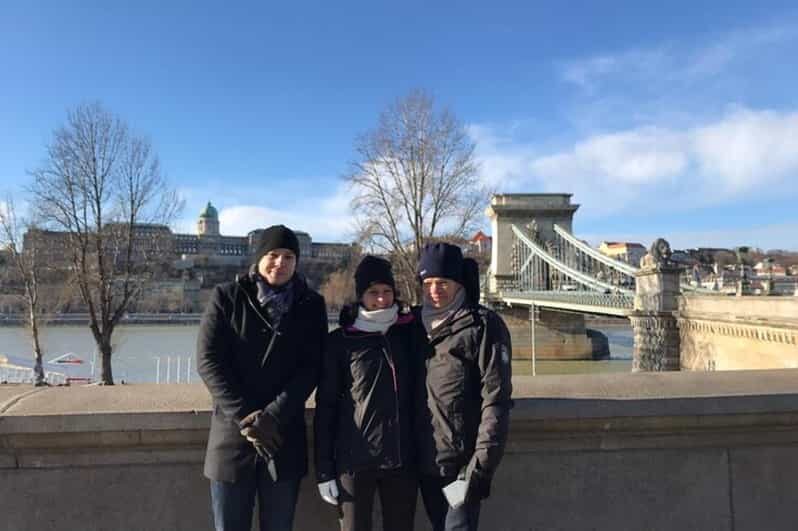
From Parliament, the next big move is the Chain Bridge. This is one of those places where even if you’ve seen it in photos, it hits differently in person—mainly because the bridge frames the city around it.
What you’ll get in the guided portion:
- An explanation of why this landmark works visually.
- Help picking vantage points so you don’t just stand anywhere and hope for the best.
- A smooth transition into the Buda Castle side of the city.
If your goal is photos, prioritize your shots here. The views are the kind that make your Budapest album feel like a real story: civic building, river crossing, then the old royal district above.
Buda Castle and Matthias Church: moving through the Castle District

Next up is Buda Castle, followed by Matthias Church in the heart of the Castle District. This is your shift from river views to layered old-town atmosphere. The tour frames Buda Castle as a historical palace complex with ties to Hungary’s royal past, then focuses on Matthias Church as a beautiful Roman Catholic church you’ll see up close.
Why I like this pairing:
- Buda Castle gives you the big setting.
- Matthias Church gives you a specific, human-sized stop where details matter.
A practical note: castle areas can mean uneven ground and lots of steps. The tour doesn’t warn you about that in the description, but walking + viewpoints does mean you’ll want comfortable shoes and a steady pace. If you’re traveling with mobility limits, you’ll want to check how your guide plans the route and transfers.





St. Stephen’s Basilica: a grand stop that also helps you understand Hungary’s identity
After Matthias Church, the tour heads to St. Stephen’s Basilica, a Roman Catholic basilica named in honor of Hungary’s first king. This stop works especially well on a walking tour because it changes the mood. You go from one architectural landmark to another, but the explanations help you connect the dots between devotion, national identity, and Budapest’s layout.
This is also a good point to ask questions. People often come to Budapest wanting a single “best church” and then end up disappointed because each one has its own purpose. A guided stop like this helps you decide what you actually enjoy—architecture, scale, symbolism, or just the feeling of place.
Fisherman’s Bastion: panoramic views, neo-Romanesque style, and photo time
The next highlight is Fisherman’s Bastion, described as a neo-Romanesque monument with panoramic views. This is where Budapest starts to look like a painting you can walk inside.
Here’s what makes it valuable on this particular tour:
- It sits after the Basilica and Castle District, so you see the city unfold in a logical sequence.
- The panoramic payoff makes the earlier walking feel worth it.
- The guide can help you time your photos without turning the stop into a rushed sprint.
This is also a place where personality matters in your guide. In past bookings, guides like Ferenc Vass have gone above and beyond to help with photography and gave extra time to make sure the group finished the tour well—even in snowy conditions. That kind of attention isn’t guaranteed, but it’s a good sign this tour aims for more than just check-the-box sightseeing.
Liberty Square and Andrassy Avenue: when Budapest feels more like a city than a postcard
After the major landmark circuit, you shift to Liberty Square, described as a public square with a mix of business and residential buildings. It’s a useful contrast. You’ve been in monumental spaces; now you see how the city lives around them.
Then comes Andrassy Avenue, a boulevard lined with Neo-Renaissance mansions and townhouses. This part of the walk matters because it shows you Budapest’s style beyond the riverfront icons. It’s the kind of street scene that teaches you what to look for when you wander later on your own.
If you’re the type who likes to walk and observe, this segment is a treat. It helps you understand why certain neighborhoods feel formal, why some streets look planned, and why the city’s grand avenues matter just as much as the major monuments.
Shoes on the Danube Bank memorial: a pause that lands
The last stop is Shoes on the Danube Bank memorial, described as a poignant tribute to people who lost their lives during the Arrow Cross rule. Even if you only spend a short time here, this is one of those moments that changes how you look at the river for the rest of the trip.
On a practical level:
- It gives context to a place you’ll pass again.
- It turns a famous river scene into something that carries meaning.
It’s also the kind of stop where a good guide’s tone matters. You want clear, respectful framing and time to reflect. Because this tour is private, there’s room for your questions and your pace here.
Private format and customization: why this tour feels different
The “private and exclusive” part isn’t a luxury add-on. It changes how your tour works.
First, it affects pacing. In a shared group, someone always wants to sprint and someone else wants to linger. Here, you’re more likely to get a smooth flow between stops. Second, it affects the level of responsiveness. You can ask what you truly care about—photos, architecture, church details, viewpoints, or what to do next—and your guide can adjust.
You can also see this in the quality of guidance from past tour experiences. Guides such as Benjamin have been praised for giving maximum information in French, answering all expectations, and keeping to the itinerary. Alix has been recognized for explaining history, answering questions, and even providing a list of recommendations tailored to what people liked. Anikó Dömötör has been praised for being clear and precise, making the city visit genuinely interesting. Different guides, different styles—but the through-line is clear: you’re not left to figure it out alone.
Price and value: what $35 buys you in real terms
At $35 per person for a 3-hour walking tour, the value is mainly in what’s included: a live guide, private format, customization, and support for tickets when needed.
Here’s what you’re getting that usually costs extra elsewhere:
- Private/exclusive group, meaning you’re paying for a guide who can focus on you.
- Guided visits to major sights and guided walking segments between them.
- Customizable route, so you’re not paying for a fixed script that doesn’t fit your interests.
- Help from the team to book tickets for desired visits.
- Walking + public transport, unless you choose another option.
What’s not included is straightforward: no food or drinks. So plan on budgeting for a snack or a drink later if you’ll be out in the afternoon or evening.
If you’re comparing costs, don’t just look at the per-person number. Ask yourself what you’d pay to get a private guide for Parliament, Chain Bridge, Castle District stops, and a memorial in one organized loop. Even without extra add-ons, this tour is positioned as a time-saver with a human explanation.
Practical tips before you go
- Bring comfortable walking shoes. This is a 3-hour route built around walking and key sights.
- Plan for questions. This tour format supports back-and-forth, and guides have been praised for answering thoroughly.
- If you care about photos, tell your guide early. In past bookings, guides like Ferenc Vass have helped with photography and taken extra steps so the group got the pictures they wanted.
- If you need to fit ticketed entries, lean on the included support for booking tickets for the visits you want.
Who should book this tour
This tour is a strong fit if:
- It’s your first time in Budapest and you want a logical route through the main sights.
- You want something more than a quick “look and leave” sightseeing walk.
- You like private guiding because you care about pacing and questions.
- You’re interested in both the famous viewpoints and a memorial stop with serious context.
It might not be the best fit if:
- You want a totally relaxed, slow stroll with lots of free time at each location.
- You dislike walking tours that cover multiple major sites in one session.
Should you book this Budapest highlights and lesser-known stops walk?
Yes, if your priority is getting oriented fast and understanding what you’re seeing, this one’s a solid choice. The itinerary hits the recognizable anchors—Parliament, Chain Bridge, Castle District, Basilica, Fisherman’s Bastion—and it doesn’t stop at views. The Danube memorial adds weight, and Andrassy Avenue adds the street-level Budapest feel many people miss.
I’d book it especially if you like the idea of a private, customizable guide and you want helpful guidance for what to do next. Just go in ready to walk, and you’ll come out with a Budapest you can navigate without second-guessing.
FAQ
How long is the Budapest Highlights & lesser-known stops walking tour?
The duration is 3 hours.
Where do I meet the guide?
You meet your guide in front of Immaculata kegyoszlop. The route also starts from Szervita tér.
Is this tour private?
Yes. It’s a private and exclusive tour, with no one else in your group.
Which languages are available for the guide?
The live guide is available in English, French, Italian, and Spanish.
Is the tour wheelchair accessible?
Yes, the tour is wheelchair accessible.
What is included, and what should I budget for?
Included: the guided tour, a private/customizable experience, walking tour and public transport (unless you select one of the options), and help from the team to book tickets for desired visits. Not included: food and drinks.
Can I cancel for free?
Yes. You can cancel up to 24 hours in advance for a full refund.