REVIEW · BUDAPEST
Budapest: City Center Walking Tour
Book on GetYourGuide →Operated by Tourist Angel · Bookable on GetYourGuide
Budapest’s Pest side is where the city really shows off. This 2-hour central walking tour gives you a smart route through the inner city, with Danube panoramas, major monuments, and clear stories tying the sights together. I especially like the mix of architecture stops and the guide-led pacing that helps you understand what you’re looking at, not just what’s on a postcard.
I also like that you hit the big icons without getting stuck on a bus crawl. You’ll see St Stephen’s Basilica, then move through the pedestrian streets toward the Hungarian Parliament area and learn the darker layers behind the monuments. The main drawback to plan for: it’s a walking tour with no entrance fees included, so if you want to go inside any sights, you’ll need to budget extra.
Key moments that make this tour worth it
- Marcius 15 Square and the Great Blessed Lady cathedral set the tone early with striking Gothic details.
- Danube Corso promenade views connect Pest to Buda, with bridges and the Castle of Buda in one line of sight.
- Elizabeth Park and Budapest Eye give you a fun, easy break with a modern landmark feel.
- St Stephen’s Basilica is a standout stop for its massive dome and colonnade.
- Liberty Square to Kossuth Square turns the walk into context, covering Nazi occupation, Communist oppression, and 1956.
In This Review
- Why This Pest Walking Tour Is a Solid Starter for Budapest
- Marcius 15 Square and the Cathedral Start That Gets You Oriented Fast
- Duna Corso: Danube Views, Bridges, and the Castle Connection
- Passing Pesti Vigadó and Vorosmarty Square’s Classic Café Feel
- Elizabeth Park and Budapest Eye: a Modern Break in the Middle of Old Pest
- St Stephen’s Basilica: The Dome Stop You’ll Remember
- Mr. Safe and the Pedestrian Streets: Budapest With a Smile
- Liberty Square to Kossuth Square: Dictatorship, Oppression, and 1956 in Context
- After the Tour: Shoes on the Danube Bank and a River Walk Option
- Price and Value: Why $14 Can Still Be a Smart Spend
- Rain or Shine Walking Reality (and How to Make It Comfortable)
- Booking Best Fit: Who This Tour Is For
- Should You Book This Budapest City Center Walking Tour?
- FAQ
- How long is the Budapest City Center Walking Tour?
- Where does the tour start and finish?
- Is the tour in English?
- Is the tour wheelchair accessible?
- Does the tour run in bad weather?
- What is included in the price?
- Are entrance fees included?
- How much does the tour cost?
- Can I cancel for a full refund?
Why This Pest Walking Tour Is a Solid Starter for Budapest
If you only have a short window in Budapest, you want two things: orientation and meaning. This tour delivers both. You start in the busy central area of Pest and move through iconic squares and promenades that most first-time visitors eventually want to see anyway.
At a price around $14 per person for a 2-hour guided walk, the value is less about ticking off sights and more about making them click. Budapest’s center can feel like one long blur of buildings and statues if you wander alone. A good guide here helps you connect the architecture, the streets, and the political history so your photos come with understanding.
One more practical plus: it’s designed to be doable. You’re not stuck in long vehicle transfers. You’re moving through the city center on foot, with stops placed to keep the experience varied—river views, parks, cafés from the past, grand churches, and squares tied to modern events.
Marcius 15 Square and the Cathedral Start That Gets You Oriented Fast
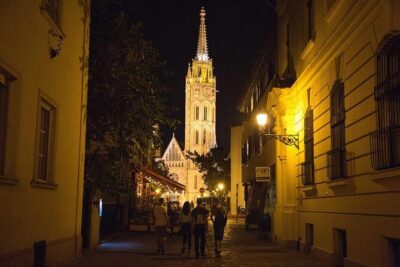
The walk begins at Marcius 15 Square, a great first step because it’s a real public space with the right energy for orienting yourself. From here, you’ll see the Gothic-style Medieval cathedral of the Great Blessed Lady. Even from the outside, Gothic elements make it easier to recognize Budapest’s 19th-century architectural language: vertical lines, strong styling, and that unmistakable “big-city landmark” presence.
This first stretch matters because it gives you visual anchors before you start moving toward the Danube. You’ll also be primed for the tour’s larger theme: Pest isn’t just pretty. It’s a layered city where style, power, and politics all sit in the same blocks.
Tip for your timing: if you’re photographing, take the first few minutes to settle your camera settings. Once you hit the river promenade, light and angles change quickly and it’s easy to miss the shot you actually want.
You can also read our reviews of more walking tours in Budapest



Duna Corso: Danube Views, Bridges, and the Castle Connection
Next comes the heart of the postcard setup: the Duna Corso river promenade. This is where you’ll get the broader view across the water—bridges spanning the Danube, and the Castle of Buda on the opposite side of the river. It’s one of those “oh, so that’s how the city is shaped” moments.
The guide-led part is important here. The view is stunning on its own, but the story turns it into understanding. You learn why this riverfront works as a defining line of the city and how Budapest’s two sides relate to each other spatially and historically.
Photo strategy: stand back from the railings a bit if you can, so you’re not fighting reflections and rail bars. And if it’s windy, keep a close grip on your bag strap. This area gets exposed.
Passing Pesti Vigadó and Vorosmarty Square’s Classic Café Feel
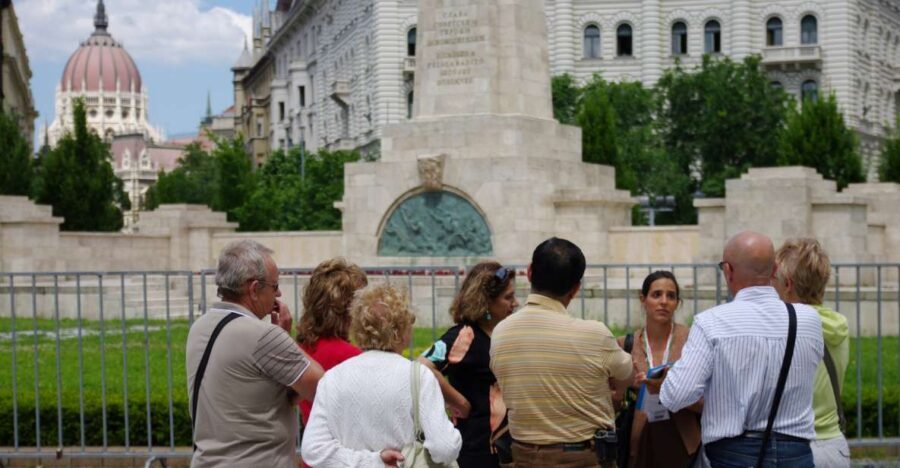
As you move along the city center, you’ll pass Pesti Vigadó, often described as a spectacular “dance palace.” This stop adds variety because it breaks the routine of churches and government buildings. It’s a reminder that Pest’s cultural identity has always been visible in the architecture, not only in museums.
Then you’ll reach Vorosmarty Square, where you can spot the historical Gerbeaud Cafe. Even if you do not go in, it helps to know you’re walking past a place that’s part of Budapest’s long-running café culture. It also sets you up for what to do next after the tour: pick a dessert, sit down, and watch the square life unfold.
If you’re a fan of pastry culture, this is the moment where you might start craving strudel and dobos-style cake. The tour gives you context so your stop at a café feels more intentional than random.
Elizabeth Park and Budapest Eye: a Modern Break in the Middle of Old Pest
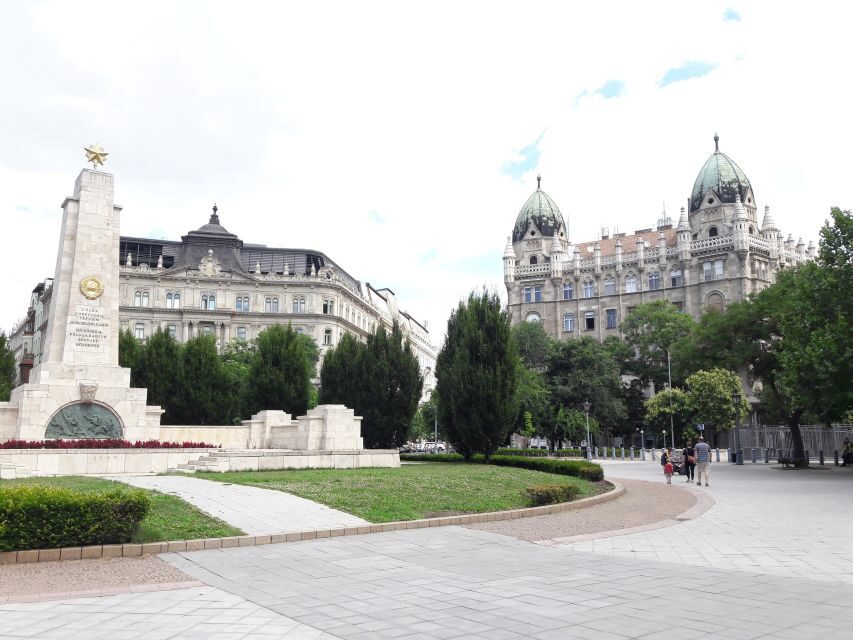
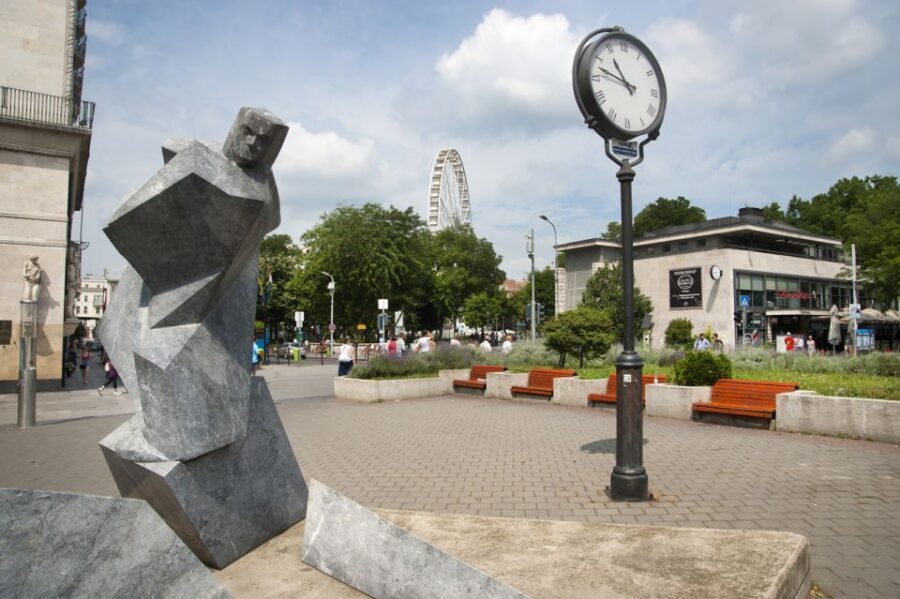
From the squares and grand buildings, the route shifts toward a calmer stretch in Elizabeth Park, ending up at Budapest Eye, described as the largest Ferris wheel in Europe. This is a smart pacing move. After heavy monuments and architectural details, the park and its modern landmark feel like a reset.
Why it works: it gives you a change in scenery without forcing you into a museum schedule. Even if you don’t ride the Ferris wheel, you get to look at Budapest from a different angle—literally and mentally—because the park frames the city around you.
Practical note: in warm weather, parks are where you’ll see families and casual strollers. In colder or rainy weather, the vibe changes fast, so bring a light rain layer. The tour runs rain or shine, so you want to stay comfortable.
St Stephen’s Basilica: The Dome Stop You’ll Remember

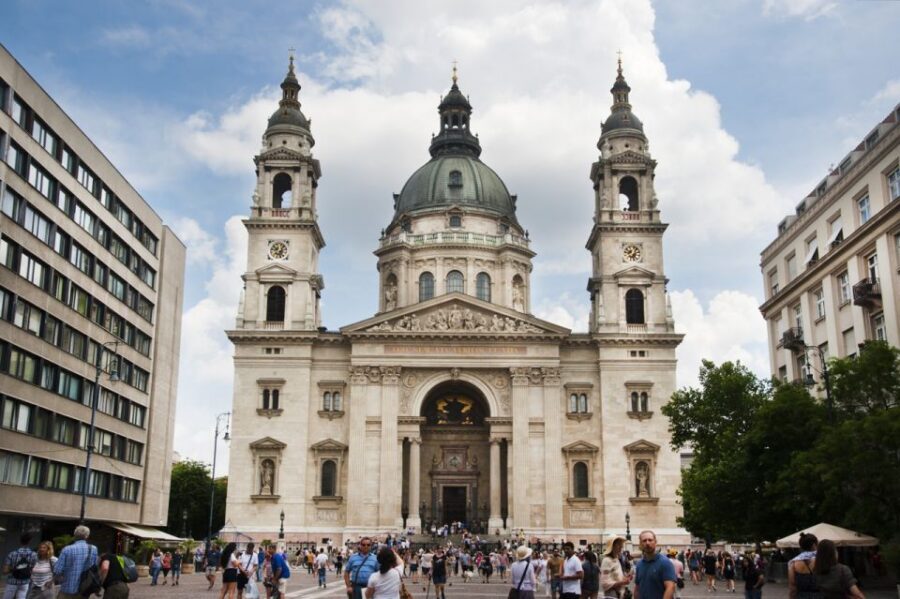
After the park and pedestrian stretches, you arrive at one of the highlights: St Stephen’s Basilica. The big appeal isn’t subtle. It’s a massive dome and a grand colonnade that pull your eyes upward immediately.
This stop is valuable even if you’re not planning on entering. The exterior tells you something about Budapest’s identity as a city of monumental faith and civic pride. And the guide’s explanation adds weight—so you understand why the basilica matters in the larger story, not just that it looks impressive.
If you care about photos, this is your best chance to slow down. Let the architecture sit for a minute. Take wide shots first to capture scale, then step forward for detail photos of the façade elements.
You can also read our reviews of more city tours in Budapest






Mr. Safe and the Pedestrian Streets: Budapest With a Smile
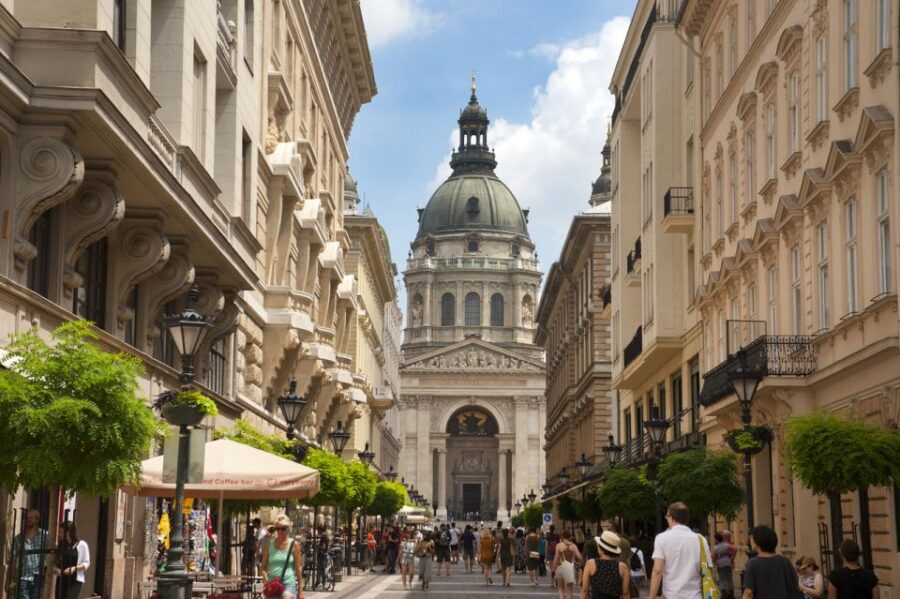
Between the major landmark stops, the tour also takes you through traditional pedestrian streets. These are the blocks where Budapest feels lived-in instead of staged.
A fun and memorable diversion here is the cute statue of Mr. Safe. This kind of stop matters more than you might expect. It breaks up the “big serious monuments only” feeling and reminds you that city identity includes small humor and local character. It also gives you something to look for as you wander after the tour ends.
If you want an authentic feel later, notice the street scale now. The pedestrian layout is a big clue for where locals likely spend time on foot.
Liberty Square to Kossuth Square: Dictatorship, Oppression, and 1956 in Context
The tour doesn’t stop at pretty. It turns toward the heavier story at Liberty Square, where you learn about Budapest’s traumatic past as a center of Nazi occupation and Communist oppression.
This part is handled with historical framing tied to what you’re actually seeing around you. That’s the point. Monuments in Budapest are not neutral. They’re built to communicate. Once you understand what certain squares represent, the same streets feel different.
Then you finish at Kossuth Square, with views and stories around the Hungarian Parliament building. This is where the tour connects dictatorship and the events of 1956 to the space itself—so the Parliament area isn’t just an architectural highlight, it’s part of a political timeline.
Tone check for your expectations: this section can feel intense, but it’s also one of the best ways to make sense of Budapest’s 20th-century history without turning your trip into a classroom. If you want a city that’s more than sightseeing, this is where you get it.
After the Tour: Shoes on the Danube Bank and a River Walk Option
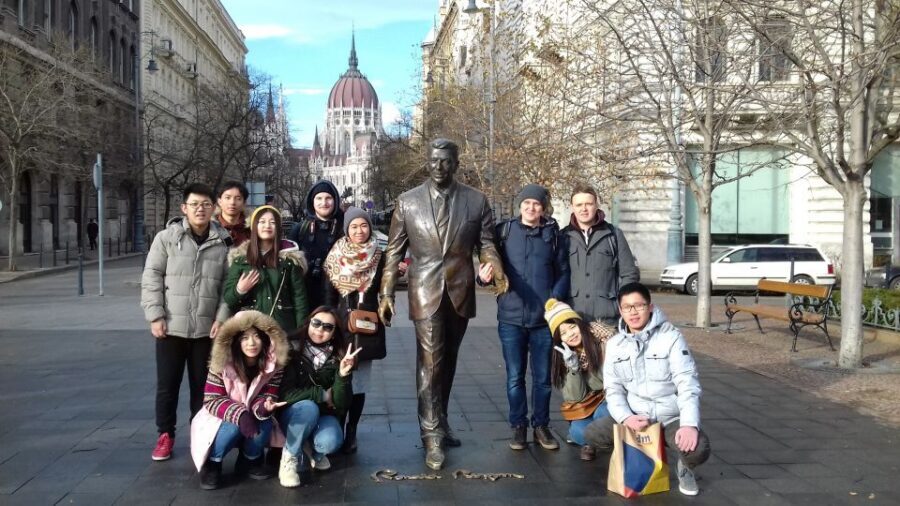
When the official walk ends at Kossuth Square, you’re well-placed for one of the most poignant memorial stops in central Budapest: the Shoes on the Danube Bank monument. The tour suggests you can visit it or simply take a stroll along the river banks.
This is a good plan because the walk leaves you in the right location, with the right historical context in your head. The river becomes more than scenery once you’ve learned what the Danube has meant to the city.
If you’re continuing on your own, give yourself time to slow down. This is not a “snap and go” stop. Even if you only stand for a few minutes, you’ll feel it.
Price and Value: Why $14 Can Still Be a Smart Spend
Let’s talk value in plain terms. $14 is not much for a live English guide covering a 2-hour route through major Pest highlights. The biggest value is efficiency: you’re covering iconic sights that are scattered across the center, and you’re doing it on foot without the coordination headaches of figuring it out yourself.
Also, the guide context can save you time later. After a good orientation walk, you spend less time guessing where to go next and more time choosing what to actually enjoy. Several guides in the past have leaned into Q and A, humor, and practical city tips, which is exactly what you want at the start of a trip.
The one cost caveat: entrance fees are not included. That’s normal for many walking tours, and it means your out-of-pocket total depends on whether you decide to enter any places.
Rain or Shine Walking Reality (and How to Make It Comfortable)
The tour runs rain or shine, so you should dress for real weather, not perfect conditions. Even when the rain is light, uncovered stretches along the promenade can feel chilly and windy.
To stay comfortable:
- Wear shoes you can walk in for two hours without fuss.
- Bring a compact rain layer. You’ll be in the open around the river and squares.
- If you use a wheelchair, this tour is listed as wheelchair accessible, but you’ll still want to consider comfort and pacing on a continuous foot route.
Small-group format is a plus here. It usually means you can ask questions without feeling rushed and you can keep up more easily than on a big bus group.
Booking Best Fit: Who This Tour Is For
This is a great fit if:
- You want to see Pest’s major central monuments in a short window.
- You like your sightseeing with context, including the 20th-century story around Liberty Square and the Parliament area.
- You value a guide’s flow that links architecture, squares, and river views into one coherent walk.
It may be less ideal if:
- You hate any kind of walking and want a sit-down, long-lunch style itinerary.
- You specifically want a tour that includes ticketed interior visits, since entrance fees are not included.
- You’re hoping to skip weather concerns entirely, since it runs in all conditions.
Should You Book This Budapest City Center Walking Tour?
Yes, I think you should book it if you want an efficient, memorable first taste of Budapest’s Pest side. For $14 and a 2-hour walk, you get a strong sweep of landmarks—from St Stephen’s Basilica to the Hungarian Parliament area—plus Danube views and a history thread that makes the monuments feel real, not just decorative.
Skip it only if you’re traveling with zero interest in walking, or you’re set on entry tickets as the main goal of your sightseeing. Otherwise, this is a smart way to get your bearings fast and understand what you’re looking at as you explore the city afterward.
FAQ
How long is the Budapest City Center Walking Tour?
The tour duration is 2 hours.
Where does the tour start and finish?
It starts in Marcius 15 Square and finishes in Kossuth Square.
Is the tour in English?
Yes, the live tour guide offers English.
Is the tour wheelchair accessible?
Yes, the tour is listed as wheelchair accessible.
Does the tour run in bad weather?
Yes, it takes place rain or shine.
What is included in the price?
The tour guide is included.
Are entrance fees included?
No, entrance fees are not included.
How much does the tour cost?
The price is $14 per person.
Can I cancel for a full refund?
Yes, you can cancel up to 24 hours in advance for a full refund.