REVIEW · BUDAPEST
3 Hours Budapest Segway Grand City Tour Buda, Margaret and Pest
Book on Viator →Operated by Segway BP · Bookable on Viator
Budapest by Segway sounds like a stunt—until you see how much ground you cover in just a few hours. This 3–3.5 hour tour strings together major Danube landmarks on both sides of the river, with included Segway training, helmets, and built-in photo/video stops so you spend less time figuring out where to go next. I also like the pace: short hops between viewpoints, then longer pauses where the city actually opens up.
Two things I really like about this experience are the no-experience-needed setup (training time is included) and the personal feel of a private tour. One thing to consider is that many of the best interiors cost extra—Matthias Church, Parliament, Szent István Basilica, and Buda Castle entries aren’t included—so you’ll get great exteriors and views even if you skip paid sites.
In This Review
- Key takeaways before you ride
- Why this Segway route works in only 3 hours
- Meeting point, gear, and the first steps onto two wheels
- Erzsébet Bridge to Szent Gellért: Danube drama without the bus lines
- Castle Garden, Chain Bridge, and the best angles near Halaszbastya
- Matthias Church area: views first, interiors if you want them
- Margaret Island and the Musical Well show (free, easy, and fun)
- Parliament-side icons: Kossuth Square, Shoes on the Danube, and Liberty Square
- St. Stephen’s Basilica area, plus the classic statues and Ferris-wheel pause
- Carl Lutz memorial and the shopping-street moment
- What’s included, what costs extra, and how to budget wisely
- Who this Segway tour suits best
- Should you book this Budapest Segway tour?
- FAQ
- How long is the Budapest Segway Grand City Tour?
- What does the tour cost?
- Do I need Segway experience?
- Is the tour offered in English?
- What’s included in the price?
- Where is the meeting point?
- Are major attractions included or do I pay extra?
- Do I get a private tour?
- Is the tour weather-dependent?
- How does cancellation work?
Key takeaways before you ride
- Included training time means you don’t start stressed or guessing
- Photo and video recording is built in, which saves time later
- Private tour format keeps the pace flexible for your group
- You hit both Buda viewpoints and Pest landmarks in one loop
- Some stops are quick (3–15 minutes), so come for the highlights, not a deep museum day
- UNESCO-listed Musical Well show is free and easy to include in the route
Why this Segway route works in only 3 hours
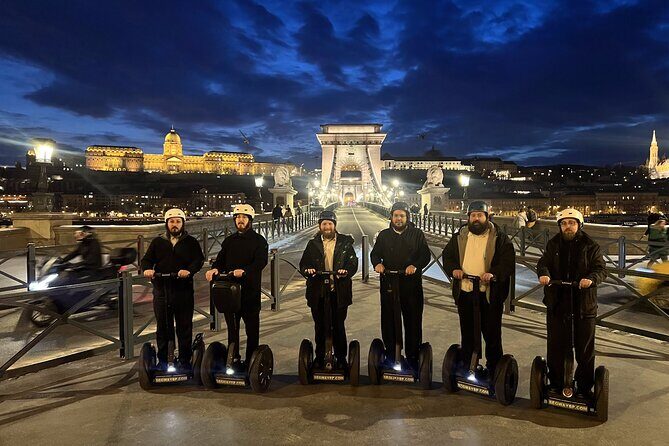
If you have limited time in Budapest, the biggest problem is not lack of sights—it’s time. Walking between bridges, hills, and the riverbanks can turn your day into a lot of uphill effort and tight connections. This tour solves that with Segways plus a route that hits the city’s big visual themes fast: Danube crossings, castle-area viewpoints, and Parliament-side symbols.
The price ($102.84 per person) has a couple of value anchors. First, you’re not paying just for vehicle time—you’re paying for guided route planning plus training, which is what makes first-time riders comfortable. Second, the itinerary is built around mostly free stops, with optional paid entries only if you want to go inside specific buildings.
A practical note: it’s commonly booked about a month in advance, so if you’re traveling in peak weeks, booking early is smart. The timing you choose matters too, because this experience requires good weather.
You can also read our reviews of more city tours in Budapest



Meeting point, gear, and the first steps onto two wheels
You’ll meet in Budapest at Haris köz 2 (1052 Hungary). The tour is near public transportation, and the experience runs as a private tour/activity, meaning it’s just your group. You’ll also get a mobile ticket, so you’re not hunting for paper in a crowded transit station.
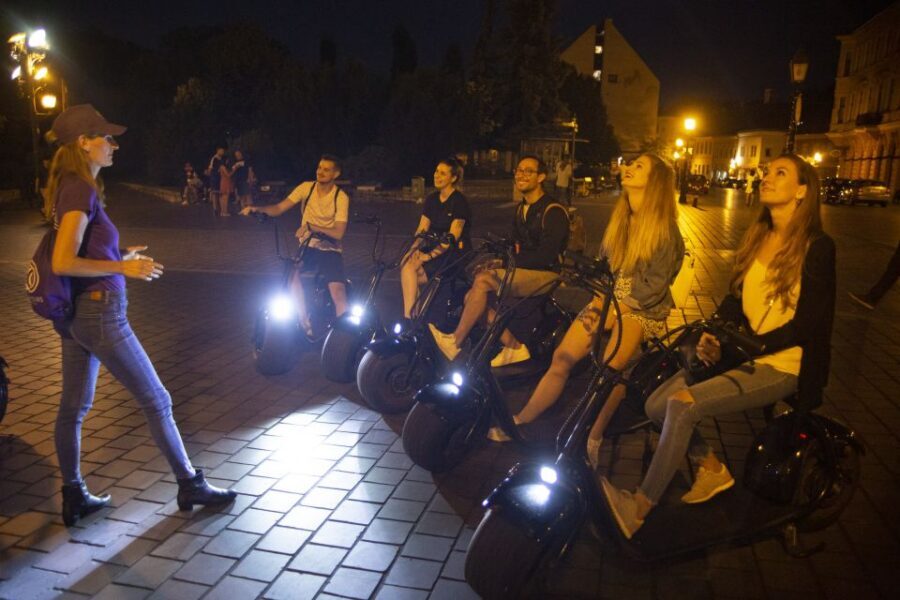
Once you arrive, you’ll get helmets and a personal Segway. The key here is that training time is included, and the tour starts after that practice period. In the guides’ feedback, safety and patience keep showing up—guides like Daniel, Ernesto, Alec, and Ahmed are specifically called out for teaching new riders calmly and watching the group closely.
Also, the tour includes photo and video recording. That matters more than it sounds. Instead of balancing your phone out for one blurry shot, you can focus on riding and let the team handle the moment.
Erzsébet Bridge to Szent Gellért: Danube drama without the bus lines
The tour begins after your practice and quickly moves you into the riverfront story. Stop after stop, you’re positioned to understand how Budapest links together: Buda hills on one side, Pest’s civic landmarks on the other, with the Danube doing the heavy lifting.
At Erzsébet Bridge, you get a classic overview of the suspension-bridge engineering completed in 1964. You’re also learning the basic geography: where hills rise, where roads funnel, and how the bridges act like visual anchors. The visit window is around 15 minutes, so it’s not a long stop—but it’s long enough to take in the big picture and orient yourself.
Next is Szent Gellért Monument, the colonnaded structure on a hill with river views and a statue of an 11th-century monk. This is one of the spots where the Segway’s advantage shows. You’re not just looking at a landmark—you’re getting the sightline from a hillside perspective without making it an all-day workout. The stop is about 15 minutes, and entry is not included.
Then you’ll pass by the Statue of Queen Elizabeth, a short 5-minute landmark stop. This kind of quick photo point keeps the momentum going. If you like street-level sculpture and want a tour that doesn’t feel like a straight line from one giant building to the next, this section hits a good balance.
Castle Garden, Chain Bridge, and the best angles near Halaszbastya
This is where the route starts to feel like a greatest-hits walk—except you’re gliding. Castle Garden is a renovated 19th-century Neo-Renaissance complex of exhibition halls, theaters, gardens, and restaurants, and the stop is about 13 minutes with free admission for this stop area. Even if you don’t go inside paid rooms, it’s an excellent place to slow down and look around.
Then you’re at Clark Adam Square (near Chain Bridge), a short 10-minute stop that sets you up for one of Budapest’s signature views. The square is named after the British architect who designed the Chain Bridge, which makes the next stop more than just a photo moment.
Széchenyi Chain Bridge is next, around 7 minutes. It’s the oldest and biggest bridge in the city and one of the clearest symbols of how Budapest grew into a unified capital. This is a “pause and absorb” moment—even if you don’t go up for extra viewpoints, the river angle is enough to make it click.
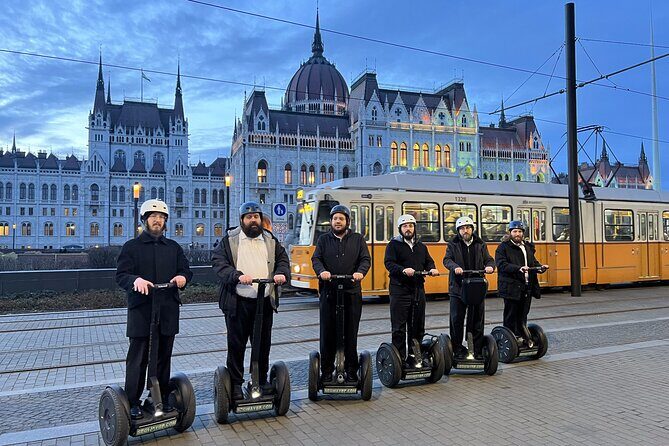
A bonus for perspective comes at the Schulek Staircase (7 minutes). It’s named for Frigyes Schulek, an architect linked to restoration work, and it connects you to the broader church-area context near Halaszbastya. If you’ve ever been in a place where stairs are either intimidating or boring, this is the opposite: the staircase itself becomes a viewpoint tool.
Matthias Church area: views first, interiors if you want them

At Matthias Church, you get a longer stop—about 30 minutes at the site. Matthias Church is a 13th-century church named for King Matthias, tied to major royal moments, and it also includes an ecclesiastical art museum. Admission isn’t included here, so you’ll need to decide whether to pay for the interior experience.
For many people, this is the choice point of the whole tour. If you’re the type who wants the detailed interior—art, architecture, and museum context—this is one of the places where spending extra can pay off. If you’d rather keep costs down, you can still get excellent value from the exterior views and the time to take your bearings.
Following that, the route shifts to Castle District Townhall, another short stop (about 5 minutes) that’s mainly about views. This quick point is a smart move because it gives you city-and-river panoramas without forcing a long climb.
A few more Budapest tours and experiences worth a look






Margaret Island and the Musical Well show (free, easy, and fun)
Then you pivot to a calmer, more nature-and-symbol route segment: Margit-sziget (Margaret Island). It’s a fully natural island with a historical naming story tied to princes of Hungary. The stop is about 10 minutes, which works well after the denser castle and church areas because it gives your brain a reset.
Right after that is Musical Well, one of the heritages protected by UNESCO. This is the kind of stop that surprises people—in a good way. The “Musical Well” is a musical and dancing fountain show, and the admission for this stop is free. Because the show involves timing, you’ll want to be ready to watch when your group arrives.
This portion is ideal if you want variety. Budapest isn’t only stone and monuments. You’ll get a playful, sensory moment on water and sound, and you’re not required to pay extra to enjoy it.
Parliament-side icons: Kossuth Square, Shoes on the Danube, and Liberty Square
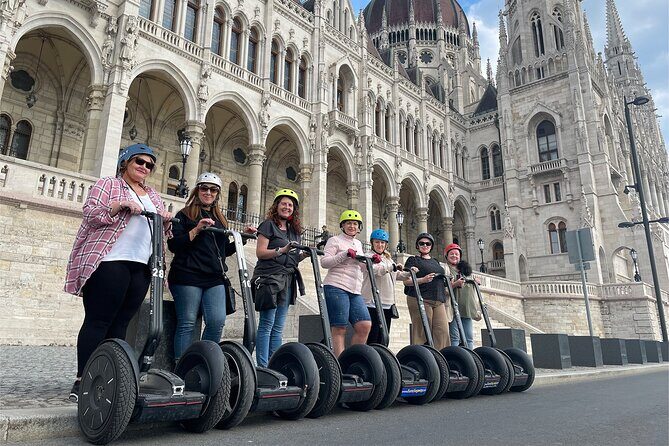
Now the route swings into Pest’s civic centerpiece area. Kossuth Lajos Square is about 5 minutes with amazing riverside views and it places you right in front of one of the city’s most powerful visual backdrops.
The Budapest Parliament stop is around 10 minutes, and entry isn’t included. The Parliament building is one of the biggest in the world, and if you want the interior, you’ll need to budget extra. If you don’t, you’ll still get a solid “see it in full context” moment plus the Danube alignment that makes Budapest feel like a planned masterpiece.
Next comes one of the most emotionally important stops: Shoes on the Danube Bank. It’s about 5 minutes and it’s a memorial for Holocaust victims. This stop doesn’t need extra time to be meaningful, but it does benefit from quiet attention. When a tour keeps this short, that’s usually a sign they’re respecting the solemn tone.
Then you reach Szabadság ter (Liberty Square) for about 10 minutes. It’s an easy stop for photos, but it also helps connect the “Parliament equals power” idea with the broader civic story of the city.
St. Stephen’s Basilica area, plus the classic statues and Ferris-wheel pause
A tour that only focuses on bridges and big buildings misses part of Budapest’s charm. This one mixes in smaller landmarks that help you feel the city at street level.
The Fat Policeman Statue is a quick 5-minute stop, located as a watcher of Zrinyi utca. It’s goofy in a charming way, and it breaks the heaviness of the memorial stop with something more human.
At St. Stephen’s Basilica, you’re at the biggest church in the city, tied to the hand of the first king. The stop time is about 10 minutes, and entry isn’t included. If churches are your thing, this is another spot where paying extra can deepen your experience. If not, the exterior view and the chance to stand in the space where the city gathers can still be worth it.
You’ll also stop near the Ferris Wheel of Budapest for about 3 minutes. This is a tiny pause, but it adds a modern city layer. It also makes it easier to understand the city’s riverfront entertainment zone without spending money.
Carl Lutz memorial and the shopping-street moment
Another meaningful and unusual stop is the Carl Lutz Memorial, where you’ll see a memorial tree noted for the Michael Jackson connection. The stop is about 5 minutes and it’s a quick but memorable way to learn a different side of the city’s human story.
Finally, the route includes time around what’s described as the first main street in the city and a shopping street with lots of shops. There’s no specific time given for every detail here, but it’s clearly meant to give you a chance to browse and pick up something small without feeling like you’re breaking the tour.
The tour ends back at the meeting point, so you’re not left navigating the last part alone. That matters when you’re tired from riding.
What’s included, what costs extra, and how to budget wisely
Here’s the simple way to think about value: the tour gives you the Segway experience, the training, and the route. The extra costs are mainly for interiors and major paid sites.
Included:
- Helmets and personal Segways
- Training time
- Photo and video recording
- A tour leader
- Stops that are marked free on the route
Not included (paid entries you may choose):
- Buda Castle building entry, listed with costs around $5–$8, plus an “Entrance fee – Buda Castle” of $8 per person
- Matthias Church (about $10)
- The Budapest Parliament (about $10)
- Szent Gellért Monument (about $10)
- Szent István Basilica (about $10)
This pricing structure is useful because it lets you tailor your spend. If you pay for only one interior, you’ll still feel like you did the big day. If you pay for several, your total trip cost rises fast, so pick based on what you personally care about most: church interiors, the Parliament, or castle-area museum space.
Who this Segway tour suits best
This tour is built for flexibility. It works well if:
- you want to see major sights without spending your whole day walking
- you’re a first-timer who wants the city’s layout explained through landmarks
- you want a private guide experience with more attention than a large bus group
- you enjoy viewpoints and photo stops more than long museum time
From the guidance pattern in the feedback, the tour also seems friendly for people who aren’t natural riders at the start. Guides like Daniel, Ernesto, Alec, and Ahmed are highlighted for teaching new riders and maintaining a safe, relaxed rhythm.
If you’re the type who only wants slow, in-depth museum visits, you might feel the stop times are short. But if you’re trying to maximize three hours in Budapest, that pace is the whole point.
Should you book this Budapest Segway tour?
I’d book this if you want a smart, time-efficient way to get the main Danube-and-castle story of Budapest. The included training, helmets, and photo/video add real convenience, and the route covers both “postcard Budapest” and a few offbeat human-scale stops.
I’d hesitate only if your priority is going inside multiple major buildings. Since several key interiors cost extra (Matthias Church, Parliament, Szent István Basilica, Buda Castle areas, and Szent Gellért Monument), you’ll want to plan your add-ons in advance so you don’t feel nickel-and-dimed mid-day.
If the weather is decent and your schedule is tight, this is a strong use of your time in the city.
FAQ
How long is the Budapest Segway Grand City Tour?
The tour lasts about 3 hours to 3 hours 20 minutes.
What does the tour cost?
The price is $102.84 per person.
Do I need Segway experience?
No. Training time is included, so you can start as a beginner.
Is the tour offered in English?
Yes, it’s offered in English.
What’s included in the price?
Included features are photo and video recording, helmets, a personal Segway, training time, and a tour leader.
Where is the meeting point?
The start meeting point is Haris köz 2, 1052 Hungary, and the tour ends back at the meeting point.
Are major attractions included or do I pay extra?
Entry to some sites is not included, including Buda Castle building areas, Matthias Church, Budapest Parliament, Szent Gellért Monument, and St. Stephen’s Basilica. Some other stops on the route are listed as free.
Do I get a private tour?
Yes. It’s described as a private tour/activity, with only your group participating.
Is the tour weather-dependent?
Yes. This experience requires good weather, and if it’s canceled due to poor weather, you’ll be offered a different date or a full refund.
How does cancellation work?
Free cancellation is available up to 24 hours in advance for a full refund. Canceling less than 24 hours before start time won’t be refunded.