REVIEW · BUDAPEST
Rise Against the Soviet: The 1956 Revolution – Private Tour
Book on Viator →Operated by Fungarian · Bookable on Viator
1956 still echoes in Budapest. I love how this private tour strings together the major Revolution 1956 sites with real human stories, not just dates. I also like the ease of hotel pickup and a small group (up to 5), so you can ask questions without fighting the crowd. The main drawback: three hours moves fast, and the guide also covers the bigger political roots and aftermath, so if you want a pure 1956-only deep dive, some stops may feel brief.
I’m especially drawn to the guides—Peter and Miklos are specifically mentioned for bringing events to life with personal context from life under communism. The pacing can be adjusted, even for an older parent, which tells me this isn’t a one-speed scripted walk. One more thing to consider: the tour is meant for moderate physical fitness, with walking and short transit bits, so wear good shoes and plan for some time on your feet.
In This Review
- Key highlights at a glance
- Why Budapest’s 1956 Revolution Still Feels Real
- Meet Your Guide: Peter and Miklos Bring the Streets to Life
- Price and Value: What $228.66 Covers for Up to 5
- Getting Around in Three Hours: Pickup, Walking, and Transit
- Kossuth Lajos Square: Where a Mass Demonstration Turned Deadly
- Margaret Bridge and the “White House” HQ of the Communist Party
- Bem Square and the Student Protest Story: Plus Bambi Eszpresszó
- Sándor Petőfi Statue: The Revolution as a Public Meeting Point
- Radio Budapest / Hungarian National Museum Area: Begging for Help Abroad
- Corvin Cinema and Corvin köz: Resistance Close to Tank Fire
- Souvenires, Handouts, and Leaving With Something You Can Use
- Who This Tour Fits Best (and Who Might Want Something Else)
- Final Take: Should You Book This Budapest 1956 Private Tour?
- FAQ
- Is this tour private, or will I join other groups?
- How long does the tour take?
- Where does pickup happen?
- What language is the tour offered in?
- Are there admission fees at the stops?
- Can I cancel and get a full refund?
Key highlights at a glance
- A private group up to 5 means more questions and less waiting
- Free entry stops at each planned site keep the focus on the story
- Kossuth Lajos Square, Radio Budapest, and Corvin Cinema cover the revolt’s key geography
- Personal testimonies connect ideology to daily life before and after 1956
- Handouts + a communism-related souvenir help you remember the facts after you leave
- Short and targeted: three hours is long enough for the essentials, short enough to feel like a sprint
Why Budapest’s 1956 Revolution Still Feels Real
Budapest doesn’t treat 1956 like a museum exhibit. It feels embedded in the city—on bridges, in squares, on building fronts, and in the places where people gathered when they believed they had a chance. This tour works because it doesn’t try to cover everything; it points you to the moments and locations where the conflict became visible.
What I like most is the human scale. You don’t just hear what happened. You get the why behind the fear, the anger, and the stubborn courage. And you’ll also see how the story connects outward—from the buildup of Hungarian political tension, through Soviet pressure, to what came after.
If you’re a history buff, you’ll probably love the clarity: events are placed in order, and each stop has a job. If you’re not a history buff, you’ll still get pulled in because the guide ties the events to recognizable places in Budapest.
You can also read our reviews of more private tours in Budapest



Meet Your Guide: Peter and Miklos Bring the Streets to Life
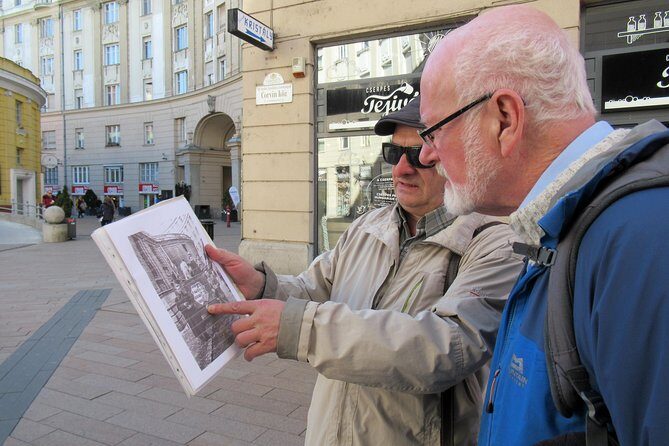
This is a private tour, but it’s also a guide-led storytelling experience. Two guide names show up clearly—Peter and Miklos—and both are credited with making the material easier to understand while still being detailed.
Miklos, in particular, is mentioned as living through the communist era and sharing personal insight. That matters because 1956 isn’t only about politics—it’s about how it felt to live under the system. When a guide has that lived context, the architecture and memorials stop being just “things you pass.” They become evidence.
Peter is also praised for having a mental library of Budapest history, linking themes across time. That’s great for perspective, but it’s also your clue: you’re going to get context that reaches beyond the 1956 dates.
A small but important practical point: one family visited with a 91-year-old father, and the guide slowed down so the pacing worked. So if your group includes someone who walks a bit slower, this doesn’t have to feel like you’re dragging them along.
Price and Value: What $228.66 Covers for Up to 5
At $228.66 per group (up to 5), this isn’t a “cheap and cheerful” walking tour. But it can be good value if you’re traveling with 2–4 people. You’re paying for:
- A private guide instead of joining a larger group
- Hotel pickup (so you don’t waste your morning figuring out transit)
- Handouts and a communism-related souvenir
- Free admission at the listed stops
Also, three hours is a sweet spot. It’s long enough to see multiple sites across Budapest’s inner geography, but not so long that you’ll feel locked into a full-day history grind.
The one trade-off you should know: the theme is big, and a few departures may feel short given how much happened. If you want every detail of 1956 explained at full length, you might wish it lasted longer.
Getting Around in Three Hours: Pickup, Walking, and Transit
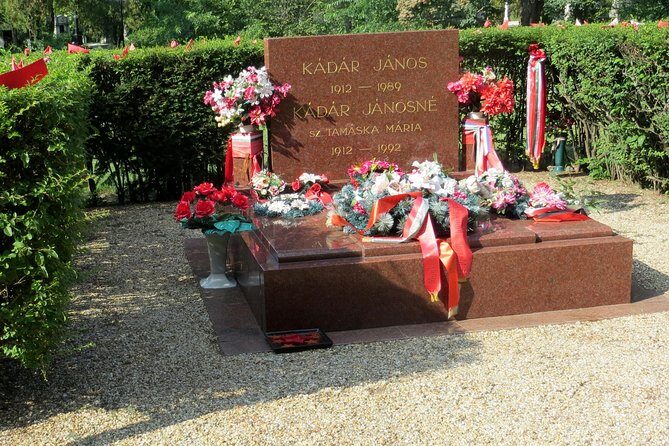
You meet either at your hotel in Budapest or at a central point agreed in advance. That pickup option matters more than it sounds. In a city like Budapest, starting in the right place can turn a “busy day” into an easy day.
The tour runs about three hours and includes walking between stops plus short transit segments. You’re asked to have moderate physical fitness, which is travel-speak for: you should be comfortable on your feet, but you don’t need to be an athlete.
Plan for the basics:
- Wear comfortable shoes. You’ll be outside for at least portions of the route.
- Bring a layer. Danube-area weather can shift fast.
- You’re not getting included food or drinks, so if you’re the type who needs a snack at the 90-minute mark, plan ahead.
The good news: admissions are free at each stop listed, so you won’t lose time lining up for paid entry.
Kossuth Lajos Square: Where a Mass Demonstration Turned Deadly
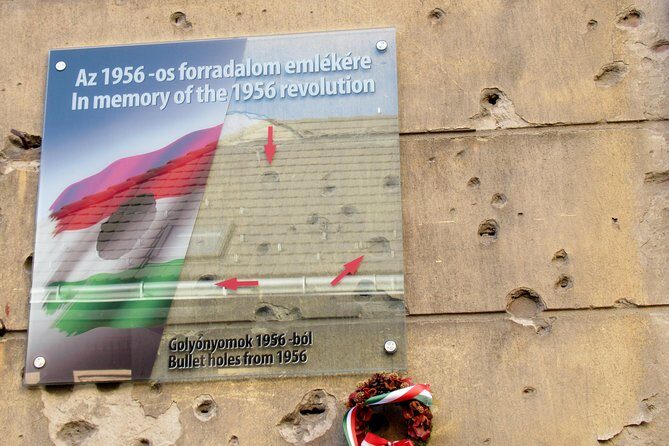
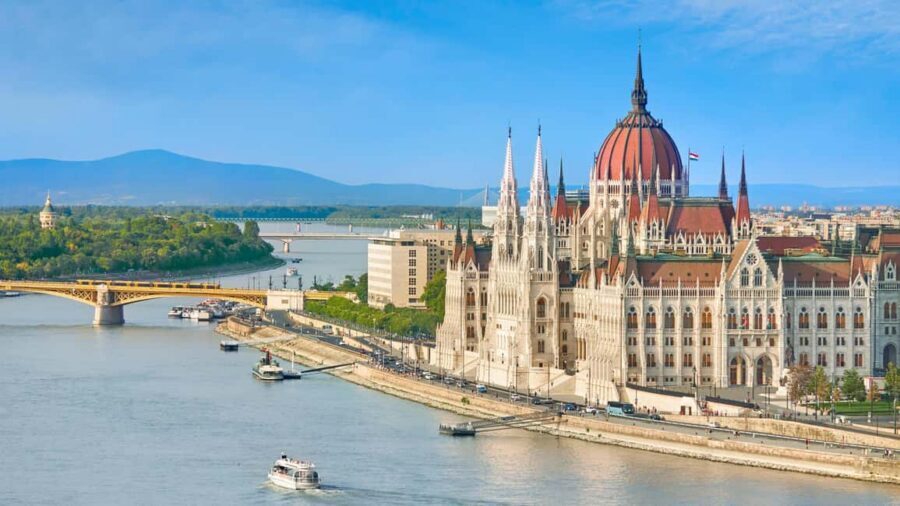
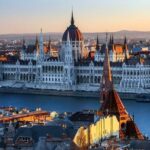
Kossuth Lajos Square is where history moves from “background” into something stark. You’ll stand near the Hungarian parliament and learn what happened after a mass demonstration in 1956, when dozens were massacred by the government.
This stop is powerful because it shows the conflict wasn’t only a Soviet vs Hungary story in the abstract. It was also about the relationship between the state and the people inside Hungary.
What I like about this kind of stop is that it forces your brain to do a quick reality check: revolutions don’t happen in a vacuum. They respond to violence already unfolding, and that’s what this square represents.
Practical tip: this is a big open space. It can get windy, and it’s easier to take photos than in tight streets, so if you care about visuals, you’ll appreciate the setting.




Margaret Bridge and the “White House” HQ of the Communist Party
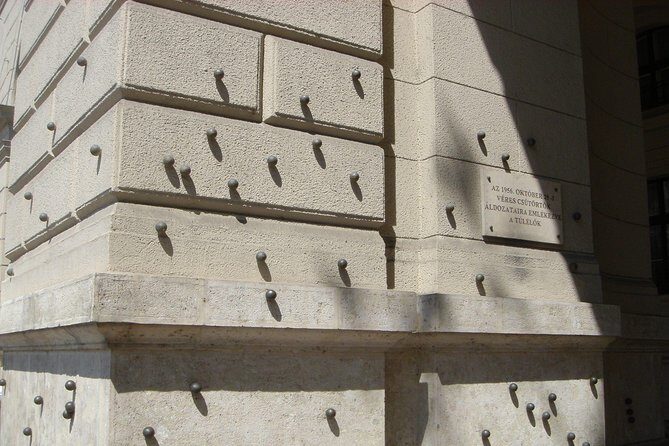
From the Danube area near Margit/Margaret Bridge, you’ll visit a building that communist times dubbed The White House. It served as the Party HQ of the Hungarian communist government.
This is where the tour’s tone sharpens. You’re not looking at a battlefield. You’re looking at the machinery behind power. A headquarters stop is a reminder that control systems usually look like offices—not like movie scenes.
You’ll also see the statue of Imre Nagy, Prime Minister in 1956, who was later murdered. Even if you’ve only skimmed the basics of 1956, this statue is an anchor point for understanding why symbols matter so much. People remembered, gathered, argued, and risked everything around figures they believed could change the country’s direction.
If you love political history, this stop is a clear win: it connects leadership, repression, and the public’s reaction in one tight geographic area.
Bem Square and the Student Protest Story: Plus Bambi Eszpresszó
Heading toward Bem Square, you’ll learn about the 200,000 Hungarian students who protested against Soviet rule in 1956. The rally had an original link to support Polish workers, which is a key detail: solidarity across borders was part of the energy.
This matters because it reframes 1956 as part of a wider Cold War moment, not a local incident that only belonged to Hungary. The streets around you become a map of political pressure—youth pushing back, crowds growing, and the state responding.
You’ll also visit Bambi Eszpresszó, a shelter for Buda-side intellectuals in Frankel Leó utca. It’s been operating since the 1960s, keeping the same atmosphere and interior design since then.
I like including a place like this. It slows the pace emotionally. Instead of only heavy memorials, you get a sense of how intellectual life continued in the decades after. It’s the “after” version of history—where people processed, argued, and persisted.
One consideration: if you’re hoping for a strictly memorial-only route, this café stop may feel more lifestyle than lecture. But it’s still anchored to the theme of culture under communism.
Sándor Petőfi Statue: The Revolution as a Public Meeting Point
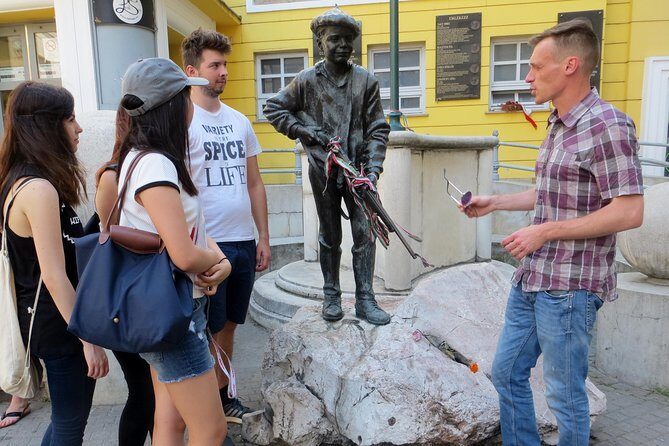
At the Sándor Petőfi statue, you’re stepping into a space that still functions as a meeting place for political events and protesters today. That’s a big deal. It means the story doesn’t end when the Soviet tanks roll away. Symbols keep working.
Petőfi represents struggle against government dating back to 1948, which is why his statue became a stand-in for resistance in 1956. The tour also shares a specific dramatic moment: actor Sinkovits Imre recited Petőfi’s revolutionary words here in 1956 and was arrested and imprisoned.
That kind of detail hits differently than generic political summaries. It shows how speech, art, and performance could be treated as a threat—because words could mobilize people.
If you like stories with named figures, this is one of the most memorable stops. If you’re short on time, make sure your camera battery is charged; you’ll likely want photos here for your own “remember this” map.
Radio Budapest / Hungarian National Museum Area: Begging for Help Abroad
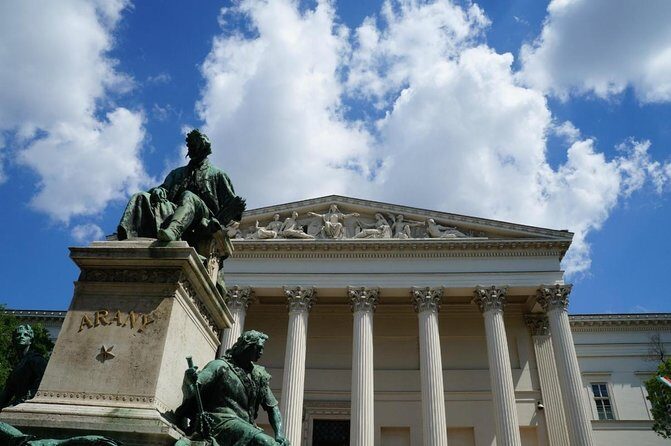
Near the Hungarian National Museum area—along the tiny, one-way Sándor Bródy Street—you’ll be pointed toward the Radio Budapest building, described as somewhat secluded from the city’s main thoroughfares.
This building is one of the epicentres of fighting in 1956. Revolutionaries used it to plead for help from the world at large. You’re seeing a communications center turned into an emergency lifeline.
This stop is valuable because it highlights a reality many people forget: revolutions need information. They need broadcasts, messages, and the ability to connect with outsiders. When communications fail, movements become isolated. When communications work, they can multiply.
So even if you’re not a “media history” person, you’ll likely find this emotionally relevant. It’s about urgency and the desperate hope that the world might hear.
Corvin Cinema and Corvin köz: Resistance Close to Tank Fire
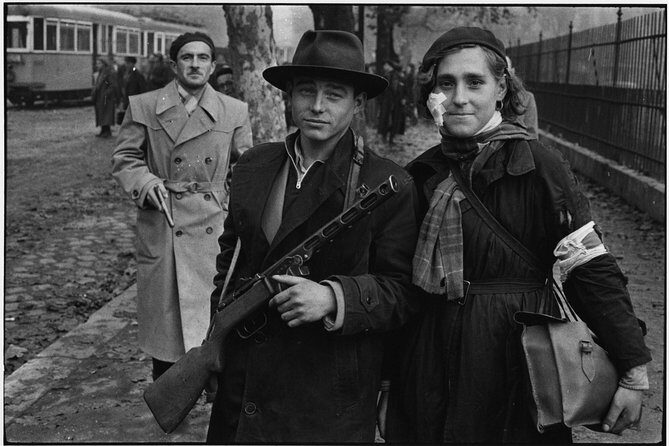
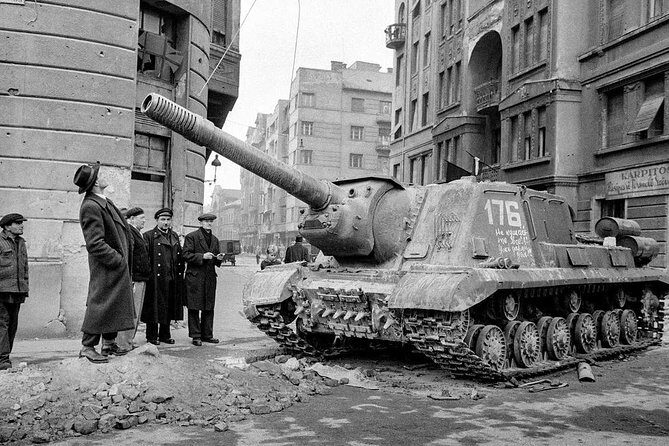
Your final major scene-setting stop is Corvin Cinema in Corvin köz, described as the major resistance center. Here, local youngsters fought invading Russians with Molotov cocktails and guns they stole from soldiers to fight Soviet tanks.
This is the most action-heavy part of the tour, and it brings the entire narrative into focus: what began with demonstrations and student rallies became street resistance. It also connects youth to agency—people who should have been protected by age were instead in the front line.
You’ll look at reminders of the battles and talk about the invasion of 1956 and its aftermath. That “aftermath” piece is crucial. Knowing what happened after helps you understand why these places were memorialized the way they were, and why the city keeps returning to them in public memory.
If you’re the type who likes a strong closing moment, this is it. It ends with courage, not only tragedy.
Souvenires, Handouts, and Leaving With Something You Can Use
This tour doesn’t just give you memories in your head. You get educational handouts and a communism-related souvenir. That’s a practical advantage if you like to review details later while planning your next stop.
In my view, handouts matter most for history tours because they reduce the “wait, what was that again?” effect. You’ll be able to connect names—Imre Nagy, Petőfi, and others—to the physical locations you saw.
Also, because this is a private tour with English offered and a mobile ticket, you can keep moving without dealing with extra printed paperwork.
Who This Tour Fits Best (and Who Might Want Something Else)
This experience is a strong match if you:
- Care about mid-20th century history and communist legacies
- Want a guide to connect political events to specific Budapest streets
- Prefer a private format where questions feel welcome
- Like tours that use context, names, and personal human detail—not only monuments
It may feel less ideal if you:
- Want a long, blow-by-blow account focused strictly on the 1956 revolution with no broader timeline
- Have very limited walking ability (moderate fitness is expected)
- Hate tours that mix heavy memorial material with cultural stops like Bambi Eszpresszó
Final Take: Should You Book This Budapest 1956 Private Tour?
Yes, I’d book it if you want a focused, city-based way to understand the 1956 Revolution against Soviet rule. The main reason is practical: you see the key places where the conflict became visible, and you get a guide who can explain not only what happened but what it meant in daily life.
I’d especially recommend it for couples or small groups because the per-group price makes the guide cost feel more reasonable when shared. For solo travelers, it can still be worth it if you value an easy pickup and a quieter pace.
Just go in with the right expectations: three hours is an efficient route, not a full-length university lecture. If you crave depth on every single detail of 1956, consider pairing this with a longer standalone museum visit later in your trip.
FAQ
Is this tour private, or will I join other groups?
It’s a private tour/activity. Only your group participates, with a maximum of up to 5 people per group.
How long does the tour take?
The tour lasts about 3 hours.
Where does pickup happen?
Pickup is offered. You can meet your guide at your hotel in Budapest or at a central point you agree on in advance.
What language is the tour offered in?
The tour is offered in English.
Are there admission fees at the stops?
The stops listed include free admission tickets.
Can I cancel and get a full refund?
Yes. You can cancel for a full refund if you cancel up to 24 hours in advance of the experience’s start time.