REVIEW · BUDAPEST
Private Art Nouveau Budapest Tour
Book on GetYourGuide →Operated by CurioCity Budapest · Bookable on GetYourGuide
Hungary loves to reinvent itself in style. This private Art Nouveau Budapest walk threads together the look and ideas behind the city’s most colorful buildings.
What I like most: you focus on big-name Art Nouveau landmarks (not random façades), and you get a proper café pause with Art Nouveau scenery included. One thing to consider: with a private, custom route, your exact stops can shift depending on where you meet—so arrive ready to follow the guide’s plan.
Art Nouveau here isn’t just decoration. It’s an urban mood: stained glass that curves, façades that ripple, and rooflines that seem designed to be looked at from every angle. You’ll also learn why Budapest’s version grew from European movements like Viennese Secession and Jugendstil into something that felt unmistakably Hungarian.
In This Review
- Key points to know before you go
- Art Nouveau Budapest: why this tour is built for real seeing
- Meeting at your hotel, then starting with Lechner’s masterpiece
- The tram ride and Váci Street: catching the style as a living city
- Gresham Palace: stepping into Secession-era luxury
- Liberty Square and the House of Hungarian Art Nouveau café break
- Hungarian State Treasury rooftop: the view you almost miss
- Your guide matters: languages, pacing, and story-driven architecture
- Price and value: $377 per group can be a bargain or a splurge
- Timing and what to wear for uneven streets and long looks
- Who should book this Art Nouveau Budapest tour
- Should you book it?
- FAQ
- How long is the Private Art Nouveau Budapest Tour?
- Where do I meet the guide?
- Is this a private tour?
- What’s included in the coffee stop?
- What languages are available for the guide?
- What should I bring?
- What’s the cancellation policy?
Key points to know before you go
- Museum of Applied Arts starting point: a strong way to understand the style before you hit the streets
- Tram hop + focused walking: smart time use so you see more than just one neighborhood
- Gresham Palace inside the story: the luxury feel helps explain why Secession-era design mattered
- Liberty Square café break: you’ll pause in an Art Nouveau setting, not just pass by it
- Hungarian State Treasury rooftop view: a standout look you can’t get from the sidewalk
Art Nouveau Budapest: why this tour is built for real seeing
Budapest is good at showing off. But Art Nouveau here can still surprise you because the details don’t behave like typical sightseeing. You don’t just look forward at a façade. You also look down at tilework, up at roof edges, and sideways at windows that refuse to stay flat.
This tour is built around that kind of attention. The focus stays on the parts of the city where the Secession-style design feels most intentional—rounded stained glass, wavy architectural surfaces, and those colorful roof tiles that make the skyline feel hand-crafted.
You also get a guide who works like an art-history interpreter, not just a human GPS. That matters because Art Nouveau is full of symbolism and craft decisions. Once you know what you’re looking for—motifs, materials, and why buildings were made when they were—you see more on the same street in the same amount of time.
You can also read our reviews of more private tours in Budapest



Meeting at your hotel, then starting with Lechner’s masterpiece
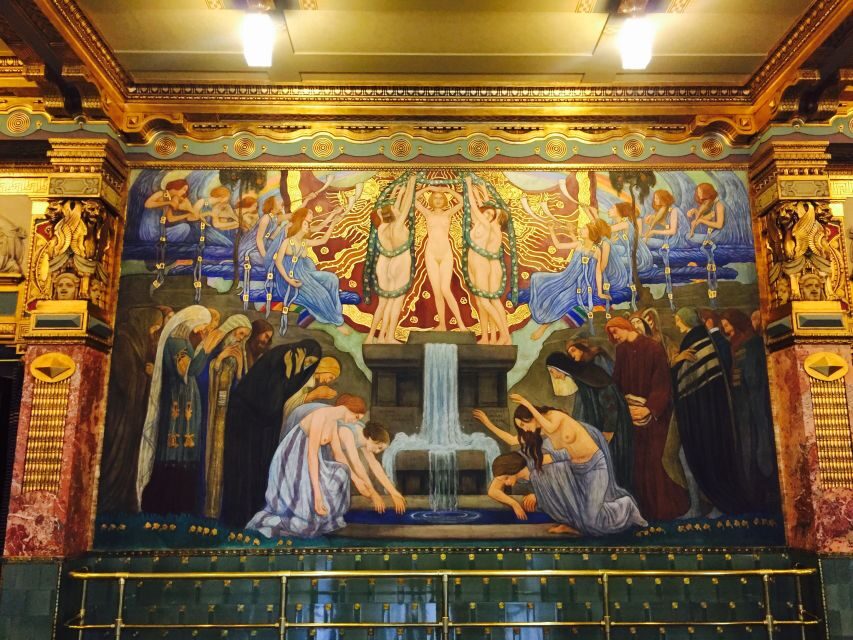
The tour is private, so it starts where it should: at your hotel (or another arranged pickup spot). That saves you from the usual Budapest trap of “meet somewhere near a landmark” that ends up being a 20-minute scramble.
The best starting point for this style of tour is the Museum of Applied Arts, strongly linked to Ödön Lechner—often described as the Hungarian Gaudí. Even if you only catch a glimpse before you move on, it helps set the rules of the game: Budapest’s Art Nouveau wasn’t copied. It grew from European influences and then developed a local voice in what the tour describes as a Hungarian national style.
From there, you’ll take a pleasant walk and a short tram ride to get back toward the city center, where most of the best-known Art Nouveau buildings are grouped more densely. The tram time is short enough to feel efficient, but long enough that you don’t waste the whole 4 hours crouching over maps.
Practical thought: wear shoes you can handle on uneven surfaces. Art Nouveau façades often come with old-city sidewalks that don’t match modern smooth standards.
The tram ride and Váci Street: catching the style as a living city
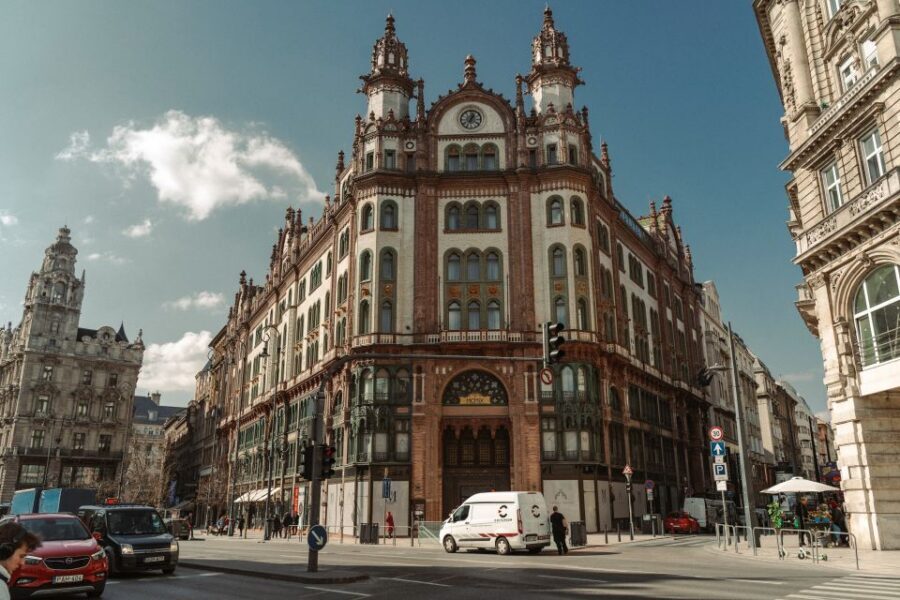
A key part of the experience is how the tour uses movement. After the walk, the short tram ride back to the center gives you a quick “now you’re in it” transition. You’ll also observe modern constructions of the style around Váci Street.
That’s a smart move. It helps you notice which details are timeless—like curved windows, ornamental geometry, and roofline drama—and which ideas get repeated as decoration in later buildings. You don’t need to treat it as a museum only. You can treat it like a design language still used today.
This segment is also where you can reset. In a 4-hour tour, the day can get long fast. So the tram break helps keep your eyes fresh for what comes next.
Gresham Palace: stepping into Secession-era luxury
Then you hit one of the tour’s anchor stops: Gresham Palace. The building is presented as a way to understand the luxury atmosphere of the past and the present, which is exactly what Art Nouveau masters often do well: they make everyday city life feel like a special occasion.
What’s useful for you here is not just the façade. The building is part of the bigger story the tour sets up: within about 20 years, Budapest saw a burst of masterpieces inspired by multiple branches of the Secession movement—Viennese Secession, Jugendstil, and French and Belgian Art Nouveau—before a more clearly Hungarian version took over.
Once you see that progression in one building sequence, other façades around the city start to read differently. Details that once looked like decoration start to look like choices—choices about craft, identity, and status.
Possible drawback: if you’re expecting a long inside visit at every stop, note that the tour is built for seeing multiple exteriors plus a few selective entries. You’ll likely feel satisfied, not tired out.
Liberty Square and the House of Hungarian Art Nouveau café break
At Liberty Square, you’ll get a coffee or soft drink—and yes, there’s cake in the plan. This is more than a snack. The point is to rest your feet and slow your brain down long enough to absorb what you just saw.
The tour also sets you up with context: Liberty Square is a pocket where buildings are from the same period, so the feel of the area becomes a kind of living timeline. Instead of bouncing between random points, you experience the neighborhood as a design group—like a curated set, but on a street level.
Then there’s the coffee stop at the House of Hungarian Art Nouveau, noted for having a private collection of the time. Even if you only catch a few details, it helps connect architecture with the broader artistic taste of the era—furnishings, interior atmosphere, and period style.
Tip: if you’re traveling in shoulder season or during changeable weather, the café break is your built-in safety valve. Take a few minutes, warm up or cool down, and then rejoin the walk with energy.




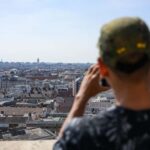
Hungarian State Treasury rooftop: the view you almost miss
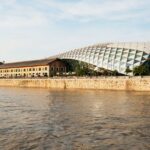
The last big highlight is the Hungarian State Treasury and its unforgettable rooftop. The tour makes a point of something important: the rooftop is essentially invisible from street level. So if you tried to find it on your own without a clue, you’d likely miss the best angle.
Getting close to the rooftop is the payoff here. The style looks different once you see it from the right position—especially roof edges and the way ornamentation climbs upward and keeps going. This is where Art Nouveau can feel like it’s not meant to be photographed from one spot. It’s meant to be approached.
It’s also a strong finish in a 4-hour tour because rooftops give your eyes a “big last image.” After a day of façades and windows, seeing the top of the story feels satisfying.
Your guide matters: languages, pacing, and story-driven architecture
This is a live tour with a private group guide, offered in Spanish, English, French, Italian, and Portuguese. That’s a big plus if you want the explanation to match your language, especially for design terms and the reasons behind stylistic choices.
The reviews linked to this experience highlight something you should care about: the best Art Nouveau guides don’t just describe shapes. They add stories and anecdotes that make the architecture feel human. Names that show up positively include Suzy, Peter Horvath, and Joel. People describe them as passionate about Art Nouveau history and history in general, and good at making places feel accessible—even when the weather changes.
Because this is custom and private, pacing also depends on your guide. In at least one case, a planned start shifted to connect with an English-language Music Academy tour experience, and the overall tour ran longer. That’s not something you can count on, but it’s a helpful sign: flexibility is part of how the day is managed.
Red flag to respect: there’s at least one serious incident reported where a guide didn’t show up, leaving someone still waiting on refund updates. That’s rare, but it’s real. To protect yourself, make sure your meeting details are confirmed the day before, keep your local contact info handy, and plan a simple backup—like having a way to reach your provider quickly if communications fail.
Price and value: $377 per group can be a bargain or a splurge
The price is $377 per group, up to 25 people, for a duration of 4 hours. As a value equation, it really depends on how many people share the cost.
- If you split it among a full group near 25 people, the per-person cost can drop dramatically.
- If it’s just your family or a small set of friends, you should think of it more like a museum-level guided experience: you pay more, but you gain a tighter route, hotel pickup, and guided access choices.
Where the value feels strongest is when you want more than a casual walk. Art Nouveau details take time to understand. A guide compresses that learning curve. And the itinerary here is built around multiple major stops—Lechner’s museum starting point, Gresham Palace, Liberty Square, and the State Treasury rooftop—so you’re not paying for dead time.
Also, you get hotel pickup included. That reduces friction in a city where “nearby” can still mean a confusing detour. You get coffee/soft drink (and cake), which is also part of why this tour feels like a full afternoon, not a quick drive-by.
Timing and what to wear for uneven streets and long looks
The tour is listed at 4 hours. In reality, expect your pace to be mostly guided by how much time you spend looking closely at details and whether the route adjusts to match what you can enter or see comfortably.
Plan for:
- Comfortable shoes (this is non-negotiable with uneven surfaces)
- Time to look up and sideways, not just forward
- A short transit segment (tram), so don’t pack too tight a schedule around the tour end
If you’re trying to stack other plans that require you to be on the move immediately after, keep a buffer. Art Nouveau sightseeing makes you want to linger—and the best parts are often the parts you only spot after you slow down.
Who should book this Art Nouveau Budapest tour
Book it if:
- You love architecture and want a clear framework for understanding Secession-era design.
- You’d rather spend 4 hours seeing the best Art Nouveau cluster than chasing scattered photos.
- You want a guided café break with the style as part of the experience, not a random café stop.
Skip it or reconsider if:
- You mainly want quick photo stops with minimal explanation. This tour is about looking and learning, not speed.
- You’re sensitive to route changes based on your hotel pickup and local logistics. It’s designed to be flexible, but that means your exact flow might differ.
Should you book it?
If your goal is Budapest Art Nouveau with context, comfort, and a route that hits key buildings in a smart order, I’d say yes. The combination of major landmarks, a purposeful start at the Museum of Applied Arts, and a final rooftop moment at the State Treasury is a strong use of time. Add the tram hop and the café break, and you get a real afternoon program, not a rushed loop.
Just do one sensible thing before you go: confirm the meeting details clearly and keep communication ready in case your guide contact needs to happen last-minute. That’s how you turn a great architectural day into a smooth one—no drama, just design.
FAQ
How long is the Private Art Nouveau Budapest Tour?
The tour lasts 4 hours.
Where do I meet the guide?
The meeting point is your hotel. Pickup can also be arranged from another spot in the city.
Is this a private tour?
Yes. It is a private group tour.
What’s included in the coffee stop?
You’ll get a coffee or a soft drink, and a cake is included as part of the café break.
What languages are available for the guide?
Guides are available in Spanish, English, French, Italian, and Portuguese.
What should I bring?
Wear comfortable shoes, since you’ll be walking and the streets can be uneven.
What’s the cancellation policy?
You can cancel up to 24 hours in advance for a full refund.