REVIEW · BUDAPEST
Palace District Evening Culinary, Wine, and History Walk
Book on GetYourGuide →Operated by Taste Hungary · Bookable on GetYourGuide
One neighborhood, six bites, and plenty of wine. This Palace District evening walk mixes a sommelier-led tasting with a guided stroll through grand 19th-century streets and courtyards. I like that you get a proper food-and-wine progression instead of random snacks, and I also like the history angle handled by a guide who ties buildings to real moments in Budapest’s past. One thing to consider: you cover a lot of ground on foot in about four hours, so comfortable shoes are not optional.
You start with curated cheese and charcuterie plus a small Hungarian wine flight, then keep moving through several local spots for hot dishes, baked goodies, and dessert. The group stays small (up to eight), which matters because it makes the pace feel human and gives you time to ask questions while you eat. The main drawback is dietary limits: it is not suitable for vegans, and there’s no wheelchair access.
If your trip includes a first night in Budapest or a night you want to plan around something that already has structure, this is a smart pick. Just set expectations for a walking tour that pairs food with context, not a slow sit-down dinner.
In This Review
- Quick hits before you go
- Palace District evenings: a four-hour mix of food and real Budapest stories
- Where the evening starts: The Tasting Table near the National Museum
- The first tasting: cheese, charcuterie, and a sommelier-led intro to Hungarian wine
- Then it’s on to the street: grazing becomes dinner across five venues
- A family bakery stop built on a long time trend
- Courtyard bar pálinka: the fruit brandy moment
- Neighborhood bistro comfort: gulyás and goose liver pâté
- Dessert at an old coffeehouse: finish with something local
- The history you walk through: National Museum gardens, parliaments, and 1956
- Courtyards and a neo-Baroque palace-library with a ballroom
- Price and value: what $145 buys in real terms
- Walking pace, comfort, and who should plan for this route
- The best way to pair this with your Budapest plan
- Should you book the Palace District evening culinary walk?
- FAQ
- How long is the Palace District evening culinary, wine, and history walk?
- How much is included in the food and drink?
- Where do we meet for the tour?
- What languages are offered?
- Is the tour suitable for vegans?
- Is it wheelchair accessible?
Quick hits before you go
- Six tasting stops over roughly four hours, starting with cheese, charcuterie, and a guided wine introduction
- Hungarian wine tasting with a sommelier featuring sparkling, white, and red pours
- Pálinka (fruit brandy) included, served at a fun courtyard bar stop
- Courtyard and building peeks around the National Museum area, including spots not open to the public
- Classic Budapest bites like pogácsa and stangli, plus gulyás and goose liver pâté
- Small-group pacing (max 8) that keeps the evening conversational rather than rushed
Palace District evenings: a four-hour mix of food and real Budapest stories
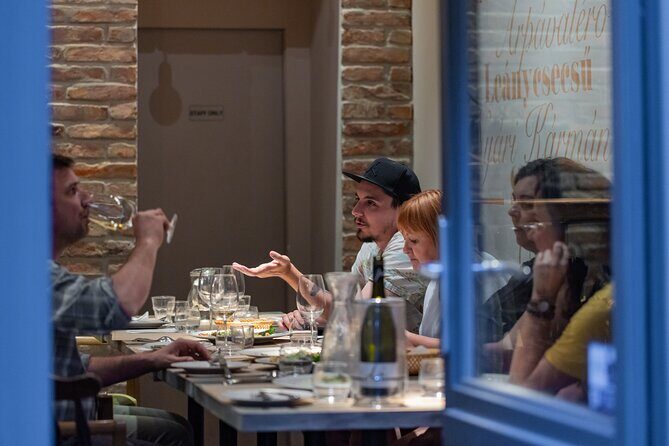
Budapest can feel split into clear zones: grand views on one side, neighborhoods with cafés and daily life on the other. This tour intentionally lives in the middle of the action, in the Palace District area (Palotanegyed). The idea is simple: you eat and drink your way through the evening, while your guide explains what you’re looking at—who lived there, what happened there, and why this part of town matters.
I’m a big fan of food tours that feel like a shortcut to local rhythms. Here, you get that because the tastings are spread across different types of places: a wine-and-cheese start, a family-run bakery stop, a courtyard bar moment for pálinka, a neighborhood bistro for gulyás and pâté, and finally dessert at an old coffeehouse. It’s not just about variety. It’s about learning the local food logic, from savory snacks to soup to a sweet ending.
The other half of the draw is the setting. You walk through an elegant stretch between the inner and outer ring roads, with stops that connect directly to Budapest’s big eras. This area is tied to the golden age of Budapest, when aristocrats built palatial homes in the late 1800s and early 1900s. It also connects to the 1956 Hungarian Revolution, including the siege linked to the Hungarian Radio building. Your guide points out how the streets and buildings keep the evidence of all those layers.
You can also read our reviews of more walking tours in Budapest



Where the evening starts: The Tasting Table near the National Museum
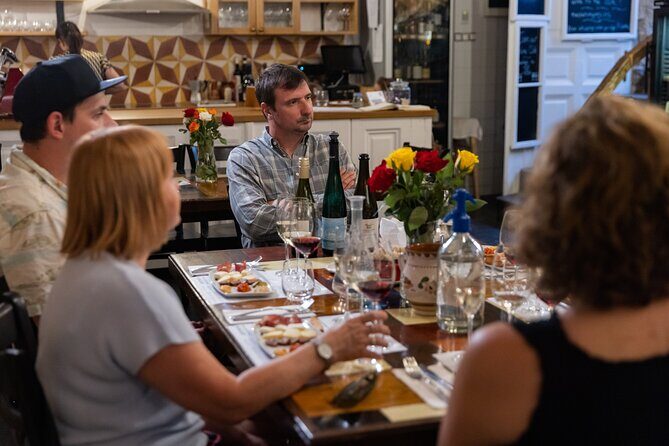
You meet at The Tasting Table (and Shop), Bródy Sándor utca 9, District VIII. It’s only about 150 meters from the National Museum, and it’s an easy hop from major transit: roughly a five-minute walk from Astoria (M2) and Kálvin tér (M3). Trams 47 and 49 also stop at Astoria and Kálvin tér, so you can arrive without turning your night into a navigation problem.
This location matters for two reasons. First, it puts you right where your walking route begins—before the evening stretches into courtyards and side streets. Second, it’s convenient if your hotel is near the center. The start point is close enough to several transit nodes that you can treat the tour like a confident plan, not a logistical gamble.
One practical bonus: the tour includes skip-the-line entry through a separate entrance. You’re not spending your pre-dinner time stuck at a door with everyone else.
The first tasting: cheese, charcuterie, and a sommelier-led intro to Hungarian wine
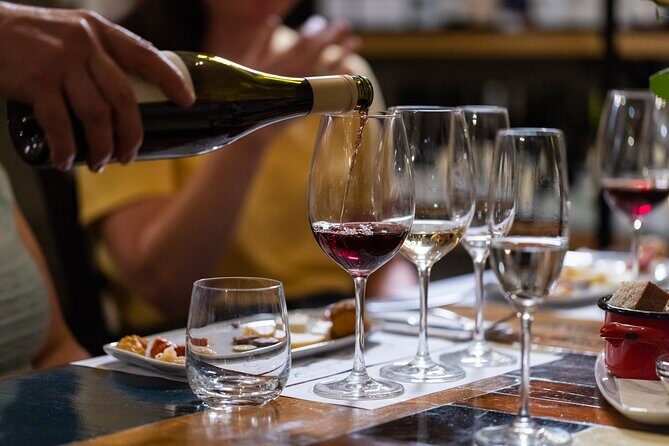
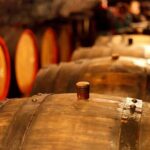
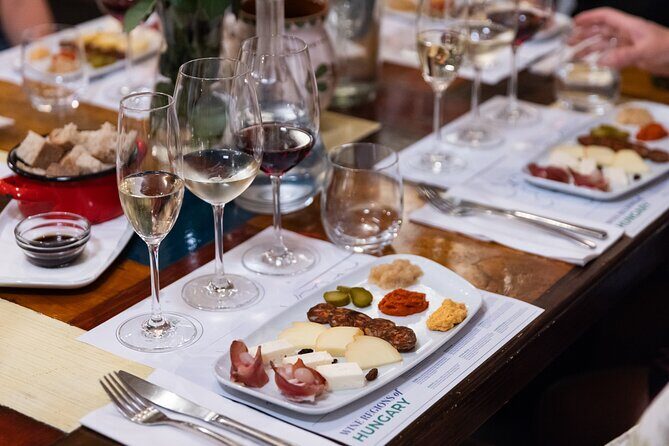
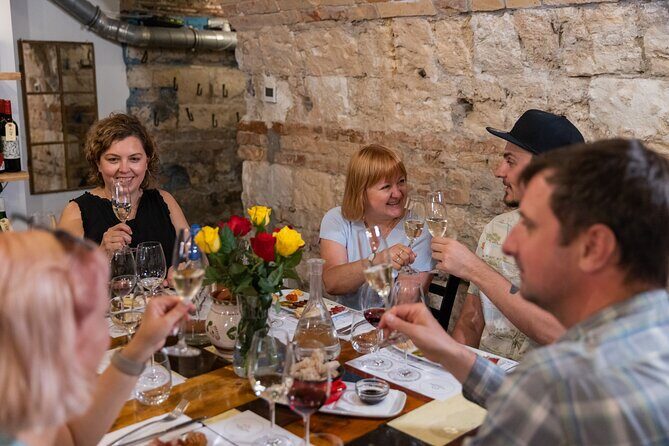
The opening move sets the tone. At The Tasting Table, your sommelier brings you into the Hungarian wine world with a tasting flight that includes sparkling, white, and red. This isn’t just about sipping. It’s about learning how these wines fit local food flavors—how acidity, fruit, and texture change what a bite tastes like.
You’re also served a platter that pairs the wine intro with local cheese and charcuterie. This is the kind of start I like for early-evening tours because it’s both filling and flexible. You’re not waiting until later for real food. You begin tasting immediately, then roll into the rest of the night on a steady base.
If you’re the kind of traveler who wants to understand what you’re drinking (not just consume it), the sommelier format is a good fit. Guides assigned to these tours have included people like Aniker, Andrea, Daniel, Sarah, Sophia, and Franc, and the common thread is conversation-style guidance—plenty of room for questions while you’re mid-flight.
Then it’s on to the street: grazing becomes dinner across five venues
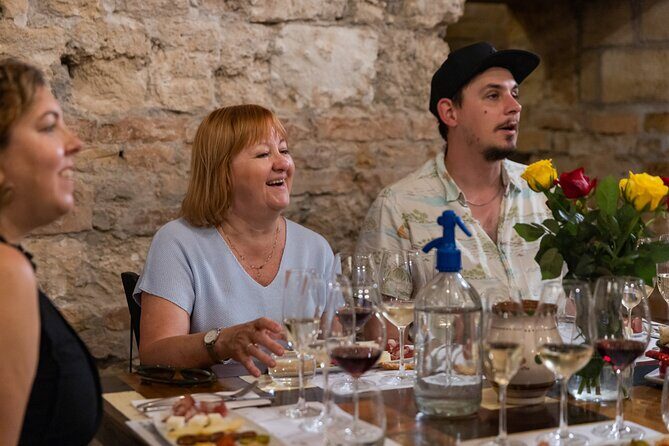
After the first stop, the evening becomes a progressive loop through the Palace District, with six tasting stops total. The route is designed so you’re constantly moving forward, but not in a way that feels like frantic sightseeing.
Here’s what you can expect from the mid-course stops and why each one is worth your attention:
A family bakery stop built on a long time trend
One stop includes baked goods from a bakery run by a family that has been in business since 1870. Two items specifically called out are pogácsa and stangli. These are the kinds of Hungarian bites that make you understand why local food feels comforting: they’re warm, savory, and made for sharing.
If you’re hungry, this is a perfect pause. If you’re photographing, this is also the moment where you’ll see more local everyday habits than you would in a museum setting.
You can also read our reviews of more historical tours in Budapest




Courtyard bar pálinka: the fruit brandy moment
Another stop features pálinka, Hungarian fruit brandy, served inside a courtyard bar that has a playful feel. This kind of stop is valuable because it doesn’t pretend pálinka is a fine-dining garnish. It’s a local drink with its own personality—often strong, often aromatic, and best treated as a meaningful checkpoint in your evening.
Pálinka also changes how you experience subsequent bites. Sweet-aromatic spirits can sharpen savory flavors, so it’s not just a fun detour. It’s part of the tour’s built-in pacing.
Neighborhood bistro comfort: gulyás and goose liver pâté
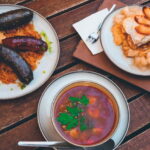
The tour includes a bistro stop where you’ll have gulyás soup and appetizers that include goose liver pâté. That combination works well because it shows two faces of Hungarian comfort food: stew-like warmth and rich, spreadable depth.
Gulyás can be heavy or bright depending on preparation, and goose liver pâté is the opposite kind of richness. Together, they give you a clear taste map for how Hungarians balance fat, spice, and savory depth.
Even if you’re not a big “off-menu” eater, this stop tends to land because it focuses on classic flavors rather than experimental dishes.
Dessert at an old coffeehouse: finish with something local
The evening ends with dessert at an old coffeehouse. In Budapest, coffeehouse culture isn’t just branding. It’s part of how people slow down. Ending here makes sense after a walking-food loop because it turns the final minutes into a calmer landing.
This is also where you can ask your guide for practical recommendations for the rest of your trip. You’ll have already learned how the neighborhood thinks about food and drink, so suggestions feel more grounded.
The history you walk through: National Museum gardens, parliaments, and 1956
Food tours are fun when they’re just sampling. They’re great when they help you read the city. This one does that by folding history into the physical space you’re standing in.
Between the ring roads, the tour includes strolls through elegant areas and gardens of the National Museum. That museum setting isn’t accidental. Aristocrats built palatial homes nearby during the late 19th and early 20th centuries—Budapest’s golden age. When your guide points out architectural details and explains the social life behind them, those big facades start to mean something.
You’ll also hear about events tied to modern Hungarian identity. The neighborhood is linked to Hungary’s first parliament and was a prominent scene during the unsuccessful Hungarian Revolution in 1956, including the siege of the Hungarian Radio building. Those details make the area feel less like scenery and more like a living record.
There’s also attention to immigrant and community history. You’ll learn about the Italian community that played an important role in this part of town. It’s a helpful detail because it reminds you that neighborhoods evolve through more than just ruling classes and wars.
Courtyards and a neo-Baroque palace-library with a ballroom
One of the best “I didn’t know that existed” parts of this kind of tour is access. You’re guided to peek into buildings and courtyards not open to the public, which changes how you experience a city.
A standout stop is a former neo-Baroque palace that is now one of the most beautiful public libraries in existence. You’ll also get the extra story detail: it includes a ballroom where Franz Joseph attended events. That kind of fact isn’t trivia for trivia’s sake. It helps you understand why the space looks the way it does—and why it still matters.
You’ll also get a sense of how the neighborhood is repositioning over time: the tour frames the area as a place where older traditions mix with more cosmopolitan touches now. That blend is part of why this district still has an off-the-beaten-track feel compared to the flashier main drags.
Price and value: what $145 buys in real terms
At $145 per person for about four hours, you’re paying for more than a couple of tastings. You’re paying for (1) guided food selection, (2) multiple venues, (3) wine service with a sommelier, and (4) the history storytelling that keeps the walk coherent.
Look at what’s included: cheese and charcuterie, Hungarian wine tasting with three wines (sparkling, white, red), gulyás soup, goose liver pâté, pálinka, coffeehouse dessert, plus baked goods like pogácsa and stangli. That package is difficult to replicate cheaply if you try to build it yourself and also factor in your time and guide time.
The most honest way to judge value is simple: if you would otherwise spend a chunk of your evening piecing together a wine bar stop, a dinner somewhere nearby, and a dessert afterward, this tour gives you a structured path. It also gives you someone steering the order so you taste a range of local flavors without getting stuck eating the same style at the same kind of place.
Also, the small-group size (limited to 8 participants) is part of the value. It keeps the pace and conversation manageable, which matters when wine and history are both involved.
Walking pace, comfort, and who should plan for this route
This tour is not designed for slow wandering. You’ll be on foot, moving between venues across the district. That means two things for your planning:
- wear shoes that can handle evening walking
- expect a packed four hours, even with breaks built into the tasting stops
It’s also important to know the limits. The tour is not suitable for vegans, and it’s not wheelchair accessible. If you’re in one of those categories, you’ll need to choose a different food option or a different tour format that matches your needs.
Group size is small (minimum 2 and maximum 8). Small-group tours often feel less like an assembly line and more like a guided night out. That also means it can be a little more sensitive to weather and scheduling, because with small groups the numbers matter for running.
The best way to pair this with your Budapest plan
If you want the most out of the evening, schedule it early enough that the guide’s neighborhood tips can help you later. Doing it on your first night is a smart move if you’re jet lagged or tired of deciding where to eat. After this tour, you’ll have a better instinct for what kinds of places you’ll enjoy in the Palace District.
Also, treat it like dinner. You’ll eat and drink across the stops, so plan your day around that. If you try to cram a heavy lunch and a snack-heavy evening too, you might feel overfull before dessert.
Should you book the Palace District evening culinary walk?
Yes, if you want a single night in Budapest that combines wine, classic Hungarian food, and specific local history in a manageable package. I’d especially recommend it if you like the idea of a progressive meal across multiple real neighborhoods spots, not one restaurant and a quick dessert.
Skip it if you need a fully vegan menu, if mobility support is required, or if you dislike walking at night. Also consider your wine comfort: there’s a structured wine tasting with three wines plus pálinka, so this is an evening that comes with alcohol.
If you fall somewhere in the middle—comfortable walking, not vegan, curious about Hungarian food and the story behind the streets—this tour is a strong use of your time.
FAQ
How long is the Palace District evening culinary, wine, and history walk?
It lasts 4 hours.
How much is included in the food and drink?
You’ll enjoy six tasting stops with plenty of food and drinks. Highlights include a Hungarian wine tasting (sparkling, white, and red) with a sommelier, local cheese and charcuterie, gulyás, goose liver pâté, pálinka, coffeehouse dessert, and baked goodies like pogácsa and stangli.
Where do we meet for the tour?
You meet at The Tasting Table (and Shop), Bródy Sándor utca 9, District VIII, Budapest.
What languages are offered?
The live tour guide speaks English.
Is the tour suitable for vegans?
No. The tour is not suitable for vegans.
Is it wheelchair accessible?
No. The tour is not wheelchair accessible and you should be prepared to cover ground on foot.