REVIEW · BUDAPEST
German tour in the Budapest city centre & the Jewish quarter
Book on GetYourGuide →Operated by Gábor Glasner · Bookable on GetYourGuide
Budapest has a way of showing its layers fast. This German-language walk connects the monumental Parliament to the Jewish Quarter, with stories that make the streets feel personal. I like the clear guide-led pacing, and I especially like how the tour explains daily life and big public buildings side by side.
Two things I truly appreciate: you get exterior views of major landmarks like St. Stephen’s Basilica, and you also walk through the Jewish Quarter with a practical sense of place, not just a list of stops. One thing to consider: it’s a 2.5-hour outdoor walk with no entrance fees, so if you want to go inside buildings, you’ll need to plan that separately.
In This Review
- Key highlights to look for on this Budapest walk
- A 2.5-hour route that links big power to everyday life
- Meeting by Gyula Andrássy: the tour starts with context, not trivia
- The Hungarian Parliament Building: photos plus political meaning
- Szabadság Square: seeing how civic space shapes a city
- St. Stephen’s Basilica from the outside: time for photos, not lines
- Downtown’s 1890s buildings: money, banks, and why architecture tells stories
- The Jewish Quarter walk: synagogues, monuments, and modern street life
- Food and nightlife ideas built into the route
- Finish on Kazinczy Street near Karavan Street Food and Szimpla Kert
- Price and value: why $23 works here
- Group size and language: what to expect if you’re booking from abroad
- Who should book this tour?
- Should you book this Budapest German tour?
- FAQ
- Where does the tour start?
- How long is the walking tour?
- Is the tour in German?
- Do we pay entrance fees or go inside buildings?
- What is included with the tour besides the guide?
- Where does the tour end?
- Is the tour wheelchair accessible?
Key highlights to look for on this Budapest walk
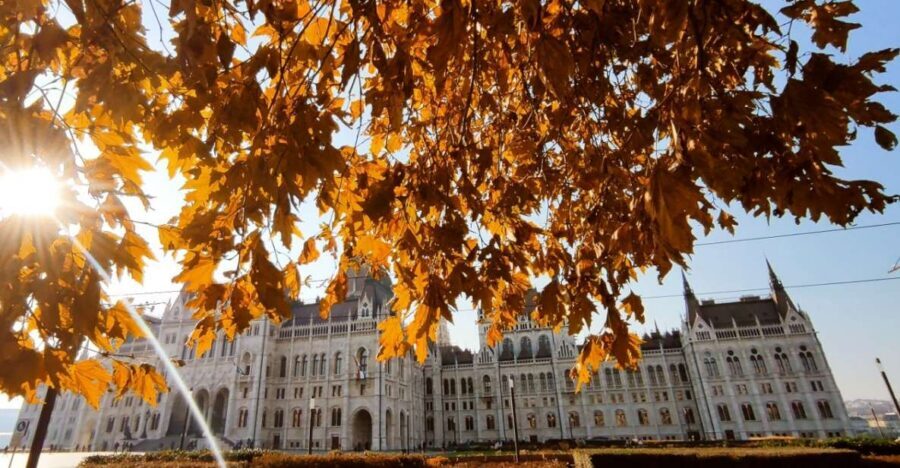
- Parliament Building photo stop with guided context that helps you read what you’re looking at
- Downtown Budapest 1890s architecture tied to money, politics, and how people lived
- St. Stephen’s Basilica from the outside with time for photos and explanation
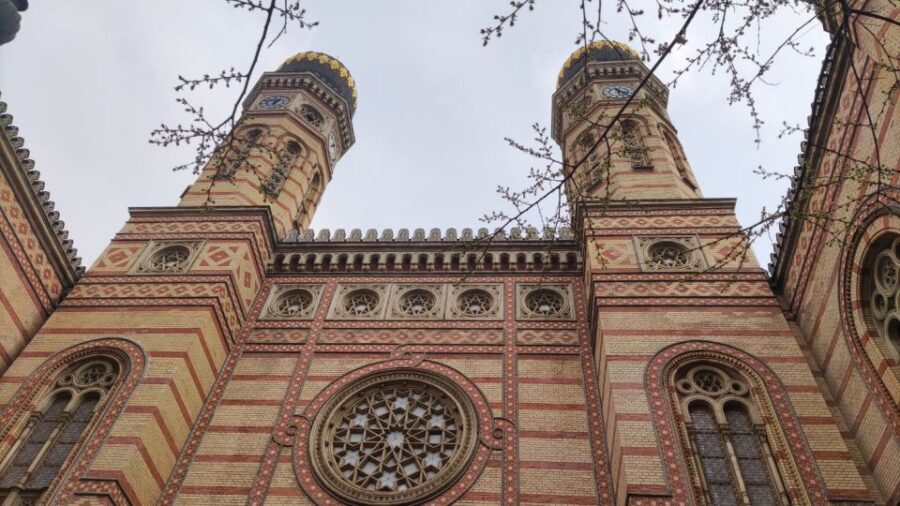
- Jewish Quarter synagogue sights including Rumbach, Dohány, and Kazinczy
- Street art and ruin-pub culture mixed into the Jewish Quarter walk
- Finish near Kazinczy Street and Szimpla Kert, with built-in ideas for where to go next
A 2.5-hour route that links big power to everyday life
This is the kind of tour that helps you get your bearings quickly. In just 2.5 hours, you move from Hungary’s political symbol—the Parliament—into Downtown Budapest’s historic financial zone, then on to the Jewish Quarter, where landmarks sit alongside everyday hangouts like street art and ruin pubs.
The value comes from the way the guide ties things together. You’re not only looking at impressive facades. You’re also learning why these places mattered to ordinary people—financial matters, social life, and the push-and-pull of politics.
You can also read our reviews of more city tours in Budapest


Meeting by Gyula Andrássy: the tour starts with context, not trivia
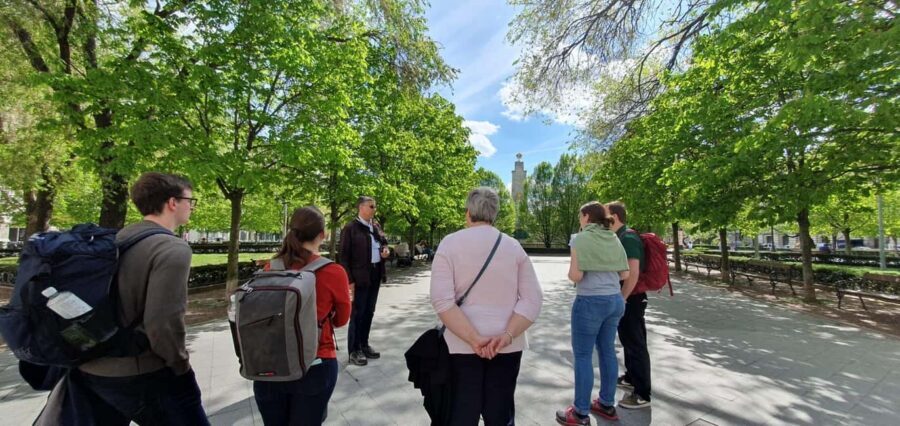
You’ll meet at the statue of Gyula Andrássy. It’s a strong starting point because it sets the tone before you even hit the main monuments. The guide gives a short Hungarian-history briefing right at the start, which makes the rest of the walk easier to follow.
Then it’s straight into the city’s visual language: what buildings signal, what squares are for, and how street-level Budapest connects to larger national stories. That early context is a big reason this tour works well for first-timers.
The Hungarian Parliament Building: photos plus political meaning
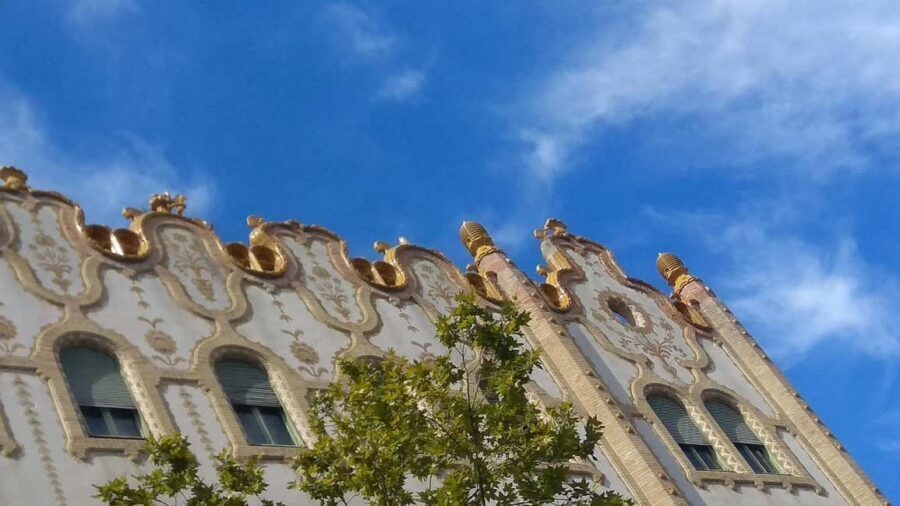
Your next main stop is the Hungarian Parliament Building. You get a photo stop plus guided sightseeing for about 15 minutes. Even if you only see the exterior, the guide’s explanation helps you notice details instead of just taking quick pictures.
This is the moment where Budapest’s scale shows up. The Parliament isn’t just pretty from a distance—it’s a statement. The tour approach makes you understand it as part of Hungary’s public life, not just a landmark to check off.
If you prefer slower stops for photos, you’ll still be fine here, but you may want extra time on your own later to linger at the best viewpoints.
Szabadság Square: seeing how civic space shapes a city
After Parliament, you move to Szabadság Square for another photo stop and guided walk of about 15 minutes. Squares are where city life happens, so this stop is useful even if you’re not a museum person.
What you’ll get is the guide’s focus on how public space works in Budapest—how people gather, how routines play out, and how the city’s layout nudges daily movement. You come away with a better sense of where you are and where you’re going next.
St. Stephen’s Basilica from the outside: time for photos, not lines
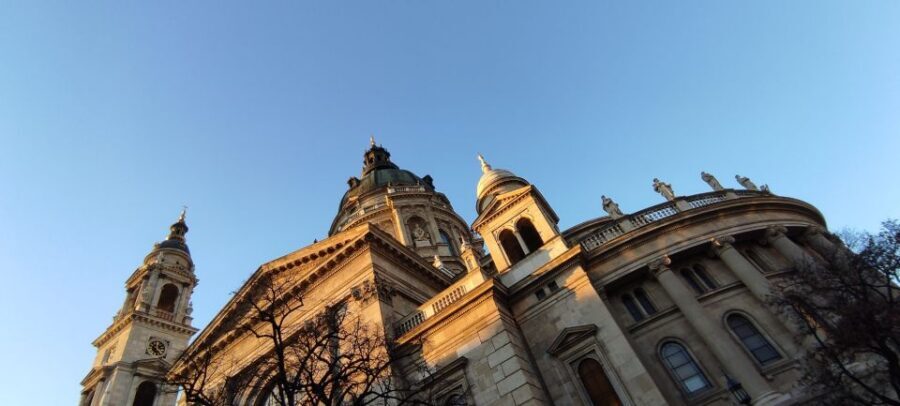
Next is St. Stephen’s Basilica, again with a photo stop, guided tour, sightseeing, and about 15 minutes of walking focus. Since entrance fees are not part of this experience, you won’t be going inside. The upside is you spend your time understanding the building’s place in the city and getting exterior views.
The basilica tends to dominate the skyline, and that’s exactly why this stop matters. When you see it in context with the earlier financial and civic sights, it helps you recognize how Budapest built a visual map of power, faith, and identity.
If you strongly want interior viewing, treat this as your orientation visit and add a separate ticketed stop later.




Downtown’s 1890s buildings: money, banks, and why architecture tells stories
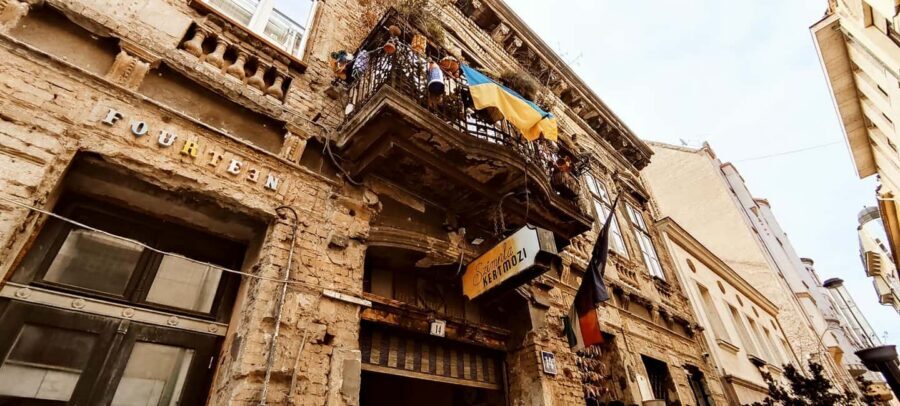
One of the best parts of the walk is the Downtown section featuring older buildings from the 1890s. The guide points out historic architecture like Art Nouveau palaces and key institutions such as the Postal Savings Bank and the Hungarian National Bank.
This isn’t random sightseeing. The tour explicitly links those buildings to everyday life topics like finance, politics, and social habits. You’ll hear how these institutions shaped how people planned, saved, and lived, even if you’re just strolling past them on a normal street.
Practical takeaway for you: by the time you reach the Jewish Quarter, you’ll have a clearer mental framework for how Budapest’s different neighborhoods were shaped by different forces—religion and community in one area, government and money in another.
The Jewish Quarter walk: synagogues, monuments, and modern street life
Then you head into the Jewish Quarter in Budapest. This is where the tour becomes more personal, more varied, and—based on the guide style—more story-driven.
You’ll pass synagogue sights including:
- Rumbach Synagogue
- Dohány Synagogue
- Kazinczy Synagogue
You’ll also see Jewish monuments and learn about why the area’s religious and cultural landmarks matter. Importantly, the tour doesn’t treat the neighborhood as frozen in time. It also makes room for modern street art and ruin pubs.
That mix is useful. If all you do is chase historic buildings, you miss how the area functions today. Here, you get a sense of continuity: community spaces and creative scenes share the same streets.
The walk portion is longer here—about 50 minutes—so you’ll want decent walking shoes. You’re moving through a dense pocket of sights, and the guide is balancing explanations with forward momentum.
Food and nightlife ideas built into the route
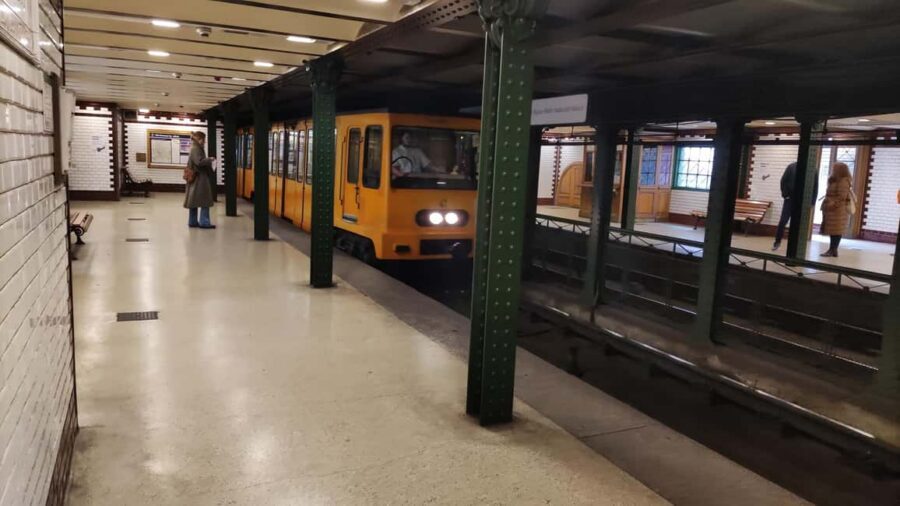
One of the quietly valuable parts is that the guide includes tips for places to eat and drink. The Jewish Quarter area is known for restaurant and bar culture, including ruin pubs, and the tour points you toward good options for continuing your night after the walk.
This is also where you’ll see more modern Budapest energy. Think street art next to historic architecture, and casual hangout spots next to meaningful monuments. It’s a strong reminder that this isn’t a theme park. It’s a neighborhood that still lives.
Finish on Kazinczy Street near Karavan Street Food and Szimpla Kert
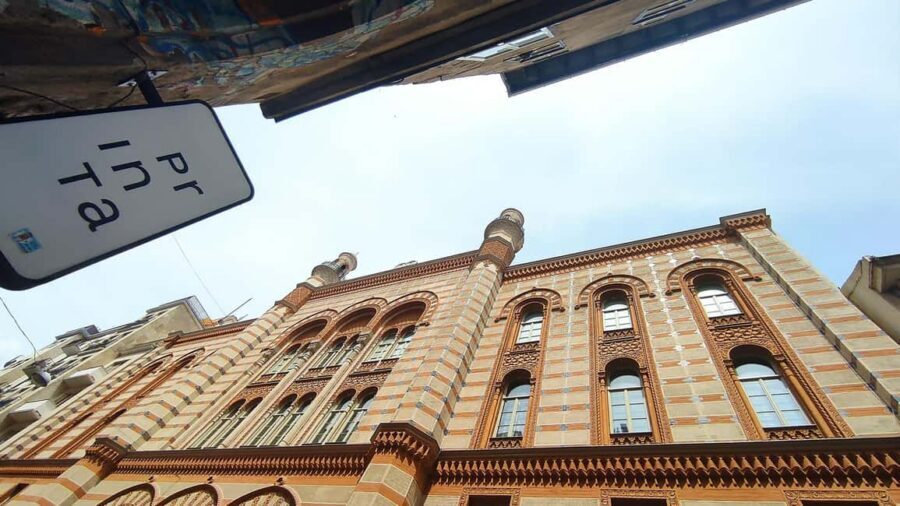
The tour ends at Kazinczy Street, close to the Karavan Street Food court and the famous ruin pub Szimpla Kert. This finishing point is smart for you because it saves decision fatigue.
After the tour, you can choose your next step right away: snack from Karavan Street Food or head into Szimpla Kert for the classic ruin-pub atmosphere. Either way, you’re starting your post-walk time in a place that’s designed for wandering—perfect if you want to keep the momentum going.
Price and value: why $23 works here
At $23 per person for a 2.5-hour guided walk, the value is mostly about what’s included and what’s not. You get live German-language guiding, plus digital restaurant and money-saver guides, and you also get small or medium-sized group dynamics.
Because the tour does not include entrance fees (you don’t go inside buildings), you’re paying for interpretation, not ticketing. That can be a good deal if your priority is seeing the big public sights and understanding what you’re looking at while you’re walking.
If you’re the type who loves architecture explanations, political context, and neighborhood stories, this format fits well. If you mainly want museum interiors or religious sites with inside access, you may feel like something is missing and should pair it with additional visits.
Group size and language: what to expect if you’re booking from abroad
This experience runs in German, and the guide work is a major part of the payoff. The tour is also listed as wheelchair accessible, which is helpful for planning. Group size is small or medium, so you’re less likely to get swallowed by a huge pack.
If your German is basic, you can still enjoy the route for the visuals, but the full benefit comes from understanding the commentary. On the bright side, guides associated with this tour have been praised for clear, engaging anecdotes and good humor, which can make the information easier to catch even when language is a challenge.
Names you might hear associated with strong guide performances include Georgiana and Zsuzsanna (including Zsuzsanna Berts), and the provider listed is Gábor Glasner.
Who should book this tour?
Book it if you want an efficient intro that connects Hungary’s public identity to neighborhood-level culture. It’s a strong fit for you if you like:
- Architecture you can interpret as you walk
- Short story lessons about society and daily life
- Jewish Quarter sights taught with context, not just dates
- A route that ends near food options and a classic ruin-pub scene
It’s also a good first-day tour. You’ll leave with a map in your head: Parliament and civic spaces at one end, banks and 1890s Downtown energy in the middle, Jewish Quarter landmarks and modern street life at the other.
Should you book this Budapest German tour?
Yes—if you want a smart, guided walk that pays attention to meaning. The exterior focus is exactly right for value at this price, and the combination of Parliament, Downtown institutions, and the Jewish Quarter makes it more than a single-neighborhood stroll.
I’d say skip it (or plan carefully) only if your top priority is entering buildings. Since the tour doesn’t go inside, you’ll need separate tickets for interiors if that’s your main goal.
If you’re ready to use a morning or afternoon to get oriented and learn how Budapest’s layers fit together, this is a very solid choice.
FAQ
Where does the tour start?
Meet by the statue of Gyula Andrássy. The guide will have a tour guide card.
How long is the walking tour?
The duration is 2.5 hours.
Is the tour in German?
Yes. The live tour guide speaks German.
Do we pay entrance fees or go inside buildings?
No. Entrance fees are not included, and the tour does not go inside buildings.
What is included with the tour besides the guide?
You get live German-language guiding, a digital Restaurant guide, and a digital Budapest Money Saver & Guide, plus a small or medium group experience.
Where does the tour end?
It ends on Kazinczy Street, near Karavan Street Food court and Szimpla Kert.
Is the tour wheelchair accessible?
Yes. The tour is listed as wheelchair accessible.
If you tell me what day/time you’re considering and your comfort with German, I can suggest how to pair this with a couple of ticketed stops to balance exterior sights and interior visits.