REVIEW · BUDAPEST
Explore Budapest from the Local’s Perspective – Public Transportation Tour
Book on Viator →Operated by Fungarian · Bookable on Viator
Budapest feels big until you learn the routes. This 3-hour public transportation tour gives you expert local guidance and includes a 24-hour transit pass, so you can keep moving after the walk-ups. I love how the guide helps you master the system fast, and I also like the smart mix of major landmarks with real-life transit stops like Nyugati and Deák Ferenc tér. One drawback to consider: with only about three hours, you’ll cover a lot of ground, so some spots (especially the Buda Castle area) can feel more like a taste than a full linger.
Pickup from your accommodation keeps it easy, and you travel as a private group with only your party. It’s offered in English, uses a mobile ticket, and comes with a rider-style booklet plus a route map—perfect if you’d rather learn by doing than wrestle with ticket rules on your own.
In This Review
- What You Really Learn on This Budapest Public Transportation Tour
- Quick Route Reality: The 3 Hours From Grand Boulevards to Danube Views
- Andrássy Avenue: Where Budapest Looks Like a Postcard and You Learn the Flow
- Heroes’ Square and the City Park Zone: Statues, Castles, and Art Buildings
- Vajdahunyad Castle and what it is today
- Fine Arts museum area and the Hall of Art
- City Park Ice Rink: old-school Budapest style
- Jászai Mari tér, Margaret Bridge, and the Nagykörút Tram Ring
- Margaret Bridge: how locals cross the Danube
- The Nagykörút and why trams change your whole trip
- Nyugati pályaudvar (Western Railway Station): Transfers, Food, and Momentum
- Deák Ferenc Square: The City’s Underground Crossroads
- Elizabeth Square: a more relaxed end note nearby
- Buda Castle Area vs. Gellért Hill: Pick Your Panorama Strategy
- Szent Gellért Square and Gellért Hill: Water-Themed Details and a Big View
- Liberty Bridge and Kalvin Square: The Final Transit Loop
- What’s Included (and Why It’s Not Just Trinkets)
- Price and Value: Does $118.58 Make Sense?
- Who This Tour Suits Best (and Who Might Want Another Plan)
- Should You Book This Budapest Public Transportation Tour?
- FAQ
- Is pickup from my accommodation included?
- How long is the tour?
- Is the tour offered in English?
- What transportation ticket do I get?
- What’s included in the price?
- Is food and drinks included?
- Is this a private tour?
- Are children allowed?
- Is cancellation free?
- Are service animals allowed?
What You Really Learn on This Budapest Public Transportation Tour
The big value here isn’t just seeing famous places. It’s learning how Budapest connects them with a public-transport network that’s actually usable.
You get a local guide who turns transit from a puzzle into a rhythm. That means you spend time at key transfer points—squares and stations where locals actually meet, queue, and switch lines—so your next day in Budapest is easier. You also get a 24-hour pass for any means of transportation, which matters because it lets you practice the system while it’s still fresh in your mind.
And yes, it still includes major sights. You’ll pass iconic landmarks like the Chain Bridge area and get to the Royal Palace neighborhood (Buda Castle), but the tour’s focus stays on how to get there and where to position yourself.
Quick Route Reality: The 3 Hours From Grand Boulevards to Danube Views

This tour is paced like a guided orientation walk plus short transit connections. Some stops are quick on purpose, because the payoff is learning the network, not ticking every box.
You’ll start around Andrássy Avenue and Heroes’ Square, then sweep through the city’s transit spine on the Pest side (including tram lines linked to the Nagykörút ring road). From there you head toward major junctions like Nyugati and Deák Ferenc tér, cross into the Buda side via the Danube connections, and finish with a panorama stop around Gellért Hill area.
You might also get an add-on kind of moment on public water—one review notes riding a public boat—depending on how your day’s routing fits together.
You can also read our reviews of more tours and experiences in Budapest.



Andrássy Avenue: Where Budapest Looks Like a Postcard and You Learn the Flow
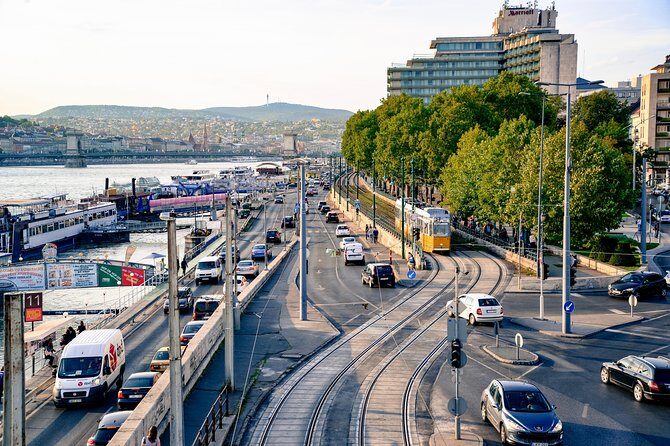
Andrássy Avenue dates to the late 1800s and is lined with Neo-renaissance townhouses and mansions. It’s also a major shopping and café strip, which means you get more than architecture—you get atmosphere. It was recognized as a World Heritage Site in 2002, so you’re standing in the part of Budapest locals take seriously.
Practical win: this is a great place to start because it’s walkable and transit-friendly. Your guide can show you how to orient yourself to the broader layout—where major lines and destinations pull you next—without making you commit to long distances immediately.
If you like people-watching, Andrássy Avenue delivers. If you’re hoping for a quiet, off-the-beaten-path moment, you’ll still enjoy it, but it’s not that kind of street.
Heroes’ Square and the City Park Zone: Statues, Castles, and Art Buildings
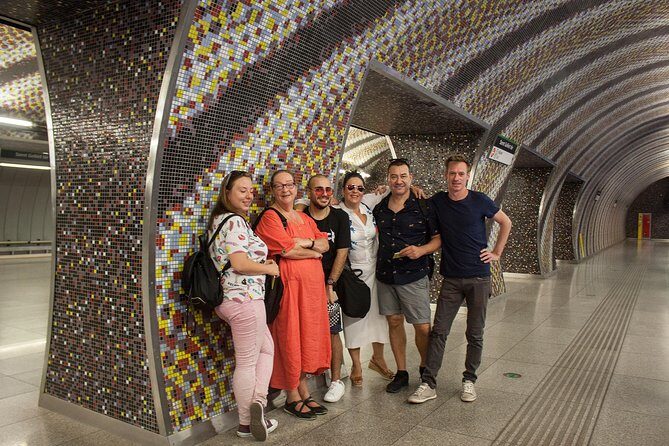
From Heroes’ Square you get one of the cleanest “wow” views in the city. The statue complex highlights the Seven chieftains of the Magyars, plus other national leaders, and there’s also a Memorial Stone of Heroes. People often confuse it with the Tomb of the Unknown Soldier, but your guide can help you keep the details straight.
Expect about 15 minutes here. It’s enough time to absorb the monument and set a sense of direction.
Vajdahunyad Castle and what it is today
You’ll then move into City Park territory, where Vajdahunyad Castle was built in 1896 for Hungary’s Millennial Exhibition (celebrating 1,000 years since the Hungarian Conquest). What’s clever is that the castle was designed to echo landmarks from different parts of the former Kingdom of Hungary.
Right now it houses the Museum of Hungarian Agriculture, described as the biggest agricultural museum in Europe. Even if you don’t spend long inside, the building itself is a shortcut to understanding how Hungarians frame national identity through place and architecture.
Fine Arts museum area and the Hall of Art
Next you’ll be in the Heroes’ Square museum belt, with the Museum of Fine Arts facing the Palace of Art. The collection is international (not just Hungarian) and spans European art periods, with more than 100,000 items. Nearby is the Budapest Hall of Art, which hosts temporary contemporary exhibits and includes the Műcsarnok Café with views over the square.
This part of the tour is valuable if you want a map of the cultural layer of the city. It’s also a reminder that Budapest isn’t just monuments; it’s museum streets and galleries.



City Park Ice Rink: old-school Budapest style
The tour also includes the City Park Ice Rink, opened in 1870. It’s one of the oldest rinks in Europe and also described as the largest. That gives you a fun perspective: even as Budapest modernizes, it still keeps strong public-sport traditions in visible places.
Jászai Mari tér, Margaret Bridge, and the Nagykörút Tram Ring
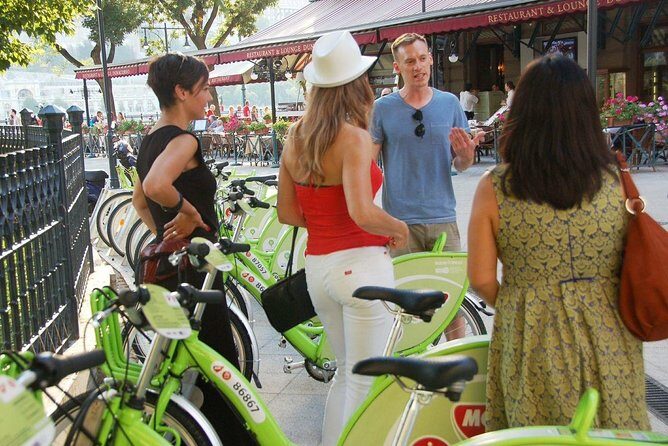
After City Park, the tour shifts from big landmarks to transit life.
Jászai Mari tér sits at a major public transport hub and social meeting spot, right by the earlier foot of Margaret-bridge. It’s named for Jászai Mari, a notable Hungarian actor. This stop matters because it shows you how squares act like living rooms: where lines meet, people gather, and the city moves.
Margaret Bridge: how locals cross the Danube
Margaret Bridge connects Buda and Pest across the Danube and links Margaret Island to the banks. It’s the second-northernmost and second-oldest public bridge in Budapest. The short walk through this corridor gives you a real sense of how the river is not a barrier; it’s a connector.
If you want an easy photo moment plus an orientation to river crossings, this is a good one.
The Nagykörút and why trams change your whole trip
Here’s where the tour really becomes practical. You’ll learn about one of the busiest tram lines on Budapest’s big ring road, the Nagykörút. The information even notes a legend that it might be the busiest in the world, with trams running at up to 15-minute intervals, and every 2 minutes in rush hours.
Why this matters to you: once you understand that ring-road logic, you can plan less. You can bounce between neighborhoods without guessing which direction to travel.
Nyugati pályaudvar (Western Railway Station): Transfers, Food, and Momentum
Next stop: Budapest Western Railway Station, Nyugati pályaudvar, often just called Nyugati. It’s one of three main terminals, and it’s on the Pest side.
The surroundings are a busy meeting point with restaurants, bars, and shops, and it’s accessible via tram lines 4 and 6 plus the M3 metro line. In other words: it’s a transit node that also functions like a mini district.
This is exactly the kind of place where learning helps. Once you can navigate Nyugati confidently, you’ll feel less dependent on taxis or long detours.
Deák Ferenc Square: The City’s Underground Crossroads
Deák Ferenc tér is named for Ferenc Deák, called The Wise Man of the Nation. It’s also a major intersection and transport junction.
This is one of the most important “learn it once, use it forever” points on the tour. Three metro lines converge under the square, and tram lines 47 and 49 originate here, plus several bus lines. If your trip includes multiple neighborhoods, Deák is the kind of hub that can save you time and walking.
If you’re the type who wants a simple strategy—go where the lines connect—Deák Ferenc tér supports it.
Elizabeth Square: a more relaxed end note nearby
You’ll also pass Elizabeth Square, a park space next to Deák Ferenc tér that’s popular with younger crowds. It’s described as common for people to gather there later into the night. It’s a nice contrast after the big junction energy.
Buda Castle Area vs. Gellért Hill: Pick Your Panorama Strategy
The tour heads toward the Buda Castle Area, with a note that you can explore Buda Castle and use the funicular option. The itinerary information specifically mentions Travel with the Funicular as an option, and it suggests an alternative focus: Buda Castle Area instead of Gellért hill.
So you have a choice in what you prioritize:
- If you want palace views and historic architecture vibes, leaning into the Buda Castle focus makes sense.
- If you want a standout overlook over the Danube and a strong photo panorama, the Gellért Hill direction is hard to beat.
Either way, the tour keeps it realistic with public-transport connections and short walks.
Szent Gellért Square and Gellért Hill: Water-Themed Details and a Big View
Szent Gellért Square has water-themed design. Waves of the Danube are represented in wavy benches, and there’s a small fountain and pond-like decor that marks the entry to a unique underground station. It’s a detail stop that feels more thoughtful than a typical quick photo stop.
From there, you’ll be in the area associated with the Gellért Thermal Baths complex (Gellért fürdő). You might not have time for a full soak during a 3-hour tour, but the inclusion is useful because it anchors this neighborhood as a real part of Budapest life, not just an overlook.
Then comes Gellért Hill, a 235 m high hill overlooking the Danube. The info frames it as the best panorama point above the capital. The naming is also tied to Bishop Gellért, who came from Italy around 1000 AD, helped with Christianization, and is linked to a dramatic legend about being rolled down the hill into the Danube in 1046.
Even if you only take a few minutes to look around, this part of the tour helps you understand Budapest’s layout: river bend, bridges, and the way the city stretches upward.
Liberty Bridge and Kalvin Square: The Final Transit Loop
After the hill area, you’ll cross Liberty Bridge (Szabadság hid) back toward the city’s core views. This bridge walk gives you a cleaner line between your panorama moment and your return to central transit.
Finally, you reach Kálvin tér. It’s a major city-center square and intersection, named after John Calvin, linked to the large Reformed Church nearby. It’s also a big transport hub with tram, bus, and trolleybus routes. If you’re imagining how you’ll keep exploring after this tour, landing near a hub like Kálvin is a smart ending point.
What’s Included (and Why It’s Not Just Trinkets)
This experience includes more than a guided stroll. You get:
- A 24-hour public transportation pass covering any means of transportation
- A mobile ticket and a rider’s booklet/manual for Budapest public transport
- A map showing the tour route
- A notebook and a souvenir pen
- A local guide
- Pickup from your accommodation (you provide your address)
In practice, that means you don’t just learn routes during the tour. You can also use the system immediately afterward with the pass and the booklet in your bag. That can turn your first day of sightseeing from stressful to simple.
One more thing: the tour is private, so your group pace is more flexible than a big shared bus style experience. It also runs in English, and children must be accompanied by an adult.
Price and Value: Does $118.58 Make Sense?
At $118.58 per person for about three hours, this isn’t a budget-only activity. But it can be solid value for the right traveler, mainly because you’re buying a bundle of three things:
1) Expert guidance on how to use Budapest’s public transport
2) A 24-hour pass included for further rides
3) Pickup directly from your accommodation plus a route map and transport booklet
If your plan includes hopping between neighborhoods (rather than staying in one walk zone), transit knowledge pays off quickly. And because Budapest is built around strong tram and metro connections, learning the hubs—places like Nyugati and Deák Ferenc tér—can prevent wasted hours.
If you mostly plan to stay in one area, use taxis, or prefer self-guided museum days, you might feel the cost more than the value.
Who This Tour Suits Best (and Who Might Want Another Plan)
You’ll likely love this tour if you:
- Want to use public transport confidently from day one
- Prefer practical city learning over only standing at viewpoints
- Like a mix of landmark stops and real transit stops
- Plan to keep exploring after the tour using the pass
You might want a different kind of tour if you:
- Want long museum time or slow, deep wandering
- Get impatient with quick stops and frequent moving
- Are hoping for food-focused experiences (food and drinks aren’t included)
It’s also a great fit for first-time visitors who feel uneasy about ticketing and routes. The guide’s job here is to remove that stress fast.
Should You Book This Budapest Public Transportation Tour?
Yes, I think it’s a smart booking for most first-time visitors—especially if you want to feel mobile quickly. The combination of an included 24-hour transit pass, pickup from your accommodation, and a guide who teaches you how to use the network makes this more than a sightseeing loop.
My main caution is time. Three hours moves fast. If you want to linger at Buda Castle or plan a full thermal-baths day, treat this as your orientation plus a few photo anchors, not your entire itinerary.
If your goal is simple: learn Budapest transport and hit the big sights without wasting time, this tour is a good match.
FAQ
Is pickup from my accommodation included?
Yes. Pickup is offered, and you provide your address in the special requirements box.
How long is the tour?
It’s listed as about 3 hours.
Is the tour offered in English?
Yes, it’s offered in English.
What transportation ticket do I get?
You receive a 24-hour pass for Budapest public transportation, and the tour uses a mobile ticket.
What’s included in the price?
A local guide, a 24-hour transport pass, a map of the route, a rider’s booklet/manual for Budapest public transport, and small items like a notebook and souvenir pen.
Is food and drinks included?
No. Food and drinks are not included.
Is this a private tour?
Yes. It’s private, and only your group participates.
Are children allowed?
Children must be accompanied by an adult.
Is cancellation free?
Free cancellation is offered, with a full refund if you cancel up to 24 hours in advance.
Are service animals allowed?
Yes, service animals are allowed.