REVIEW · BUDAPEST
Downtown Pest Walking Tour
Book on GetYourGuide →Operated by insightcities.com · Bookable on GetYourGuide
One of Budapest’s best history lessons starts right in Pest. In just 3 hours, you get a clear, street-level story of how this side of the river grew into Hungary’s political, financial, and religious power center. I like the way you’re guided site by site with context, not just photo stops, and I especially enjoy the balance between big monuments and human stories. The main drawback to plan for: it’s still a walking tour, so comfortable shoes matter.
Two highlights I truly love are the Stock Exchange Palace/Freedom Square area (serious architecture, real urban purpose) and the long stretch of Andrassy Boulevard toward the grand end point at Heroes Square. If you want a downtown route that connects politics, money, and culture without feeling like a lecture, this one fits.
In This Review
- Key Points at a Glance
- Downtown Pest’s Story Begins at Kossuth Square
- Parliament’s 1896 Moment: Hungary Declares Itself
- Holocaust Monument by the Danube: Why Location Matters
- Freedom Square and the Stock Exchange Palace: Money, Power, Style
- Cardinal Mindszenty: A Church Leader in Political Hiding
- St. Stephen’s Basilica, Art Nouveau Streets, and a Synagogue Landmark
- Andrassy Boulevard: The Esplanade Designed for the Nobility
- Heroes Square: The 1,000-Year Anniversary Finale
- Price, Pace, and What Makes This Worth $123
- Meeting Point at Szamos Cafe: Where You’ll Start Feeling Oriented
- Who Should Book This Tour (and Who Might Skip)
- Final Verdict: Should You Book Downtown Pest?
- FAQ
- How long is the Downtown Pest Walking Tour?
- Where is the meeting point?
- How much does the tour cost?
- What language is the guide?
- What major sites will I see?
- Is this a walking tour through the Pest district?
- Is the guide a historian?
- Is it a private tour or a group tour?
- Can I cancel for a refund?
- Is pay later available?
Key Points at a Glance
- Historian-led focus that ties major buildings to what they meant in 19th-century Hungary
- Parliament + Freedom Square in one smooth downtown arc of power and prestige
- Holocaust Monument placed where tragedy unfolded, handled with care and context
- Art Nouveau Pest plus classic landmarks that show how the city wanted to be seen
- Cardinal Mindszenty’s story connects faith and politics in a very personal way
- Andrassy Boulevard to Heroes Square delivers the grand “kingdom” finale
Downtown Pest’s Story Begins at Kossuth Square
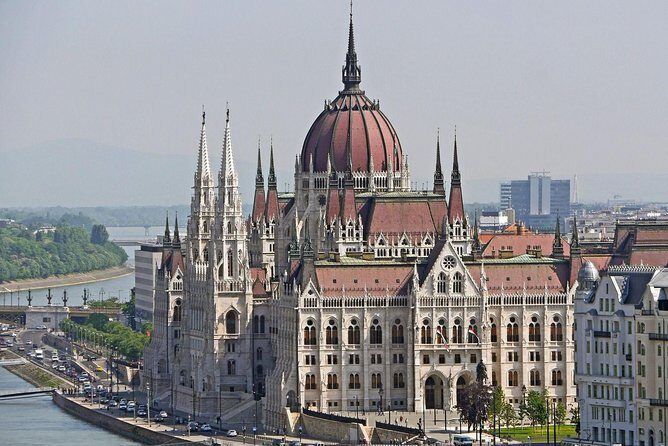
Downtown Pest can feel like two cities at once: one side is showy and monumental, the other is layered with national struggle. This tour is built to make those layers click. You start near the Hungarian Parliament at Kossuth square, and from there the route acts like a timeline. You’ll be moving through the places where Hungary tried to define itself—politically, economically, and spiritually—in the late 1800s.
I like that the tour doesn’t treat buildings like museum pieces. Instead, you get the sense of how they were used, who they were for, and what message they sent. You’ll also get a guide who can slow down when questions come up, which is a big deal on a history walk.
If you’re the type who loves architecture but hates vague explanations, you’ll probably enjoy this format. It’s practical: you walk, you look, then the guide turns the city into a story you can actually follow.
You can also read our reviews of more walking tours in Budapest


Parliament’s 1896 Moment: Hungary Declares Itself
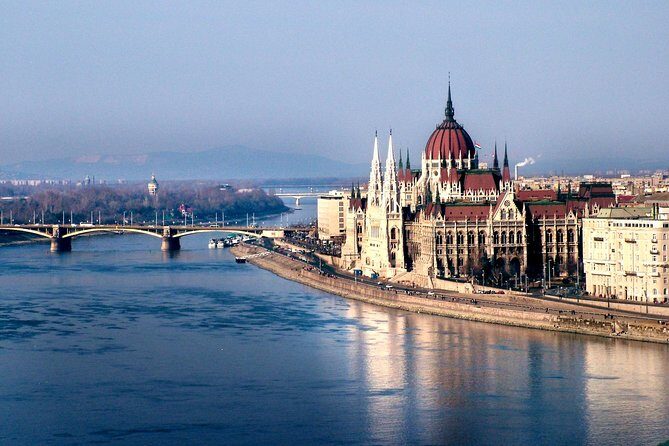
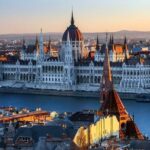
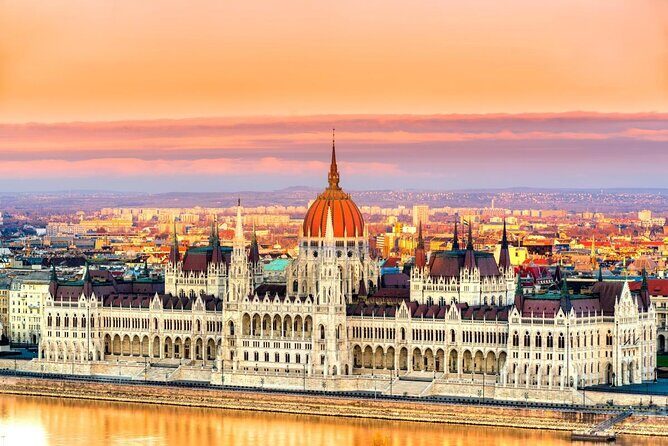
Your first big stop is right by Parliament at Kossuth square. The building opened in 1896, and it was described as the largest and most costly structure ever built in Hungary. Even if you only see it from the outside (as many walking tours do), it’s the kind of project that makes a point. This wasn’t a modest civic upgrade. It was an on-purpose statement of scale and national pride.
What I like here is the interior detail you’re given along the way: Parliament is home to works of art that represent nearly every famous Hungarian painter and sculptor of the time. That matters because it explains a key idea: the state wasn’t just building power. It was packaging identity. Art and government were being braided together in one space.
A practical note: this is a busy area. If you’re easily distracted, give yourself a minute to let the guide settle everyone before the real story starts. Once you’re oriented, it gets easier to see how the buildings around the square relate to Parliament’s role.
Holocaust Monument by the Danube: Why Location Matters
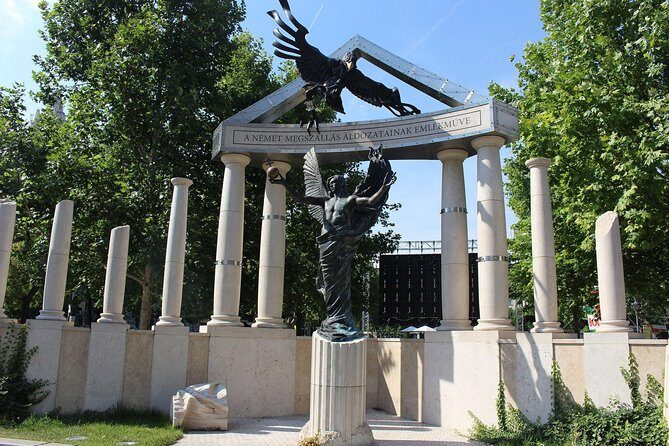
After the grandeur, you move to something heavier: the Holocaust Monument on the banks of the Danube, behind Parliament. The placement is important. It’s not tucked away for convenience. It’s at the spot where thousands of Jewish citizens of Budapest were tragically killed in the last months of World War II.
This stop changes the pace, and that’s a good thing. You’re not only learning dates and names—you’re learning how public space can hold memory. The monument’s existence right there behind Parliament is also a reminder that national stories aren’t clean. The same city that built big institutions also witnessed catastrophic loss.
A consideration: if you’re sensitive to dark history, plan a bit of breathing room for this part. Even though the tour overall is only 3 hours, this stop can hit hard because it’s grounded in the exact place where events occurred.
Freedom Square and the Stock Exchange Palace: Money, Power, Style
Next up is Freedom Square, originally built as the city’s financial center. Many people consider it the most beautiful square in Budapest, and the feeling comes through fast. The architecture and the scale suggest a center where business wasn’t hidden—it was meant to impress.
The headline here is the Stock Exchange Palace, massive and commanding in its presence. You also see opulent buildings around the square that still house several banks. That’s valuable because it shows continuity. The financial district wasn’t a one-era experiment. Parts of it remain active, which makes the walking story feel less like history homework and more like city life with roots.
What I love about this portion is how it ties money to nation-building. The tour frame helps you understand that late 19th-century Budapest didn’t just grow. It organized itself. Squares and exchanges were part of how Hungary presented itself as modern and capable.
If you’re planning photos, bring your patience. This area can be crowded near the center, and you’ll want a clean view of façades rather than rushed shots.
Cardinal Mindszenty: A Church Leader in Political Hiding
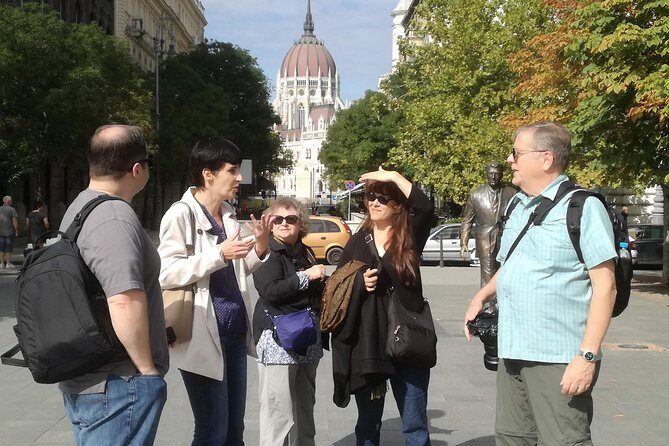
From the financial center you shift into a different kind of power: religious and political conflict. You’ll see the statue of Cardinal Mindszenty, the head of the Catholic church in Hungary.
The story you’re given is intensely personal: he lived hidden for 15 years in the U.S. embassy while on the run from the communists. That detail doesn’t just add drama. It explains why you’ll find political tension woven into everyday city landmarks.
I appreciate this stop because it gives you a broader view of 20th-century history without dragging you into a separate lecture. You’re still in the same downtown zone, still walking through the city’s identity—just through a different lens.
If you’re interested in how international relationships played out inside Hungarian politics, this is the kind of moment that makes the city feel more connected to world events.





St. Stephen’s Basilica, Art Nouveau Streets, and a Synagogue Landmark
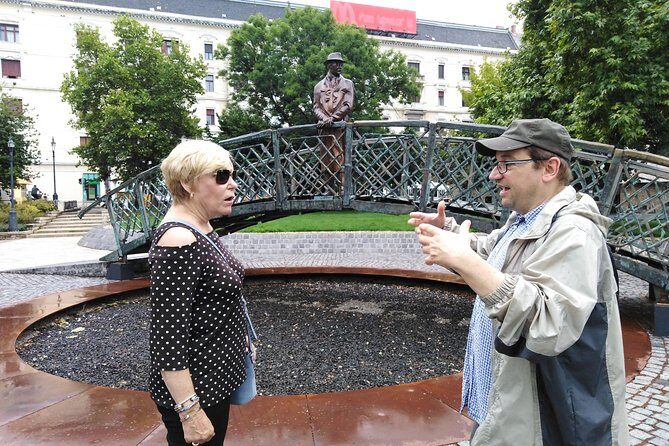
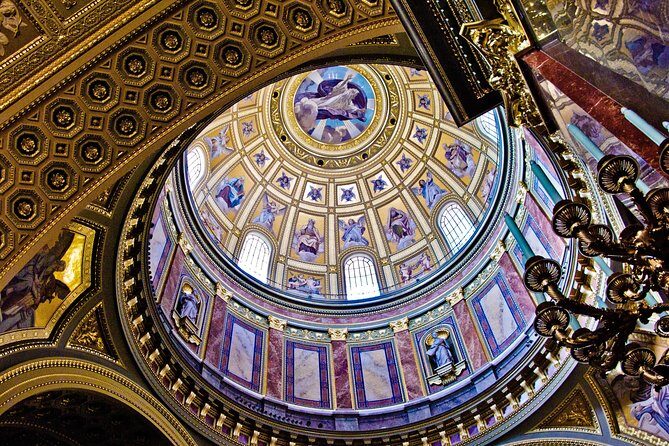
Continuing toward St. Stephen’s Basilica, you pass through streets lined with the kind of architecture Budapest is famous for: Art Nouveau buildings. Even if you’re not an architecture nerd, you’ll notice the ornamentation and the sense that the city wanted to look artistic and elegant, not purely functional.
This part of the tour also includes a major Jewish landmark: the second-largest synagogue in the world. You’ll learn how it connects to the vital role that Budapest’s Jewish population and its wealthy bourgeois played in shaping the city’s development.
This is where the tour’s value really shows. It’s not only about who had political power. It also highlights who helped build the city economically and socially. The result is a more complete picture of how urban growth happens—through finance, community institutions, and civic contribution, not only government decrees.
One practical thought: basilica and synagogue areas often bring crowds at various times. The tour moves as a group, so if you want linger-to-look time, keep an eye on the guide. You don’t want to get stuck waiting at the back while everyone moves on.
Andrassy Boulevard: The Esplanade Designed for the Nobility
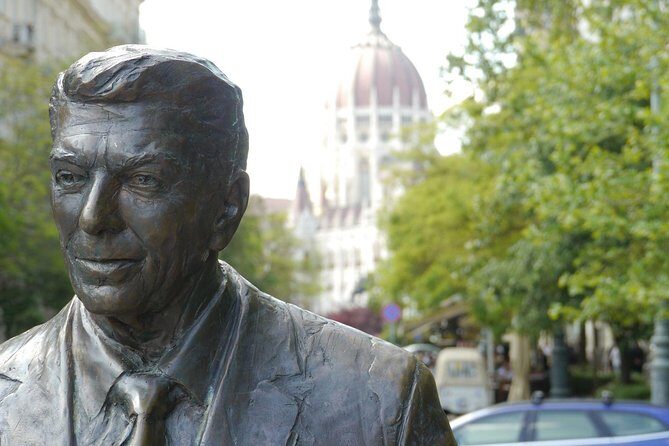
Now you get the classic Budapest boulevard moment: Andrassy Boulevard. You’ll walk along it and also travel along and under the boulevard’s esplanade corridor—an important detail because it changes your sense of how the space was engineered.
The tour framing explains that Andrassy Boulevard was designed for Hungarian nobility. That word—nobility—matters. This wasn’t built as a neutral corridor. It was built so that the elite had a grand, organized stage for movement and presence.
You’ll also come across the Opera House with a short stop. It’s not random. In a city that’s presenting itself to the world, opera houses sit right at the intersection of culture, wealth, and status.
I like that this section slows you down in your head. You’re walking in a designed environment, and your guide helps you read the city like a statement. You start noticing the difference between what the streets symbolize and what the streets actually do day to day.
Heroes Square: The 1,000-Year Anniversary Finale
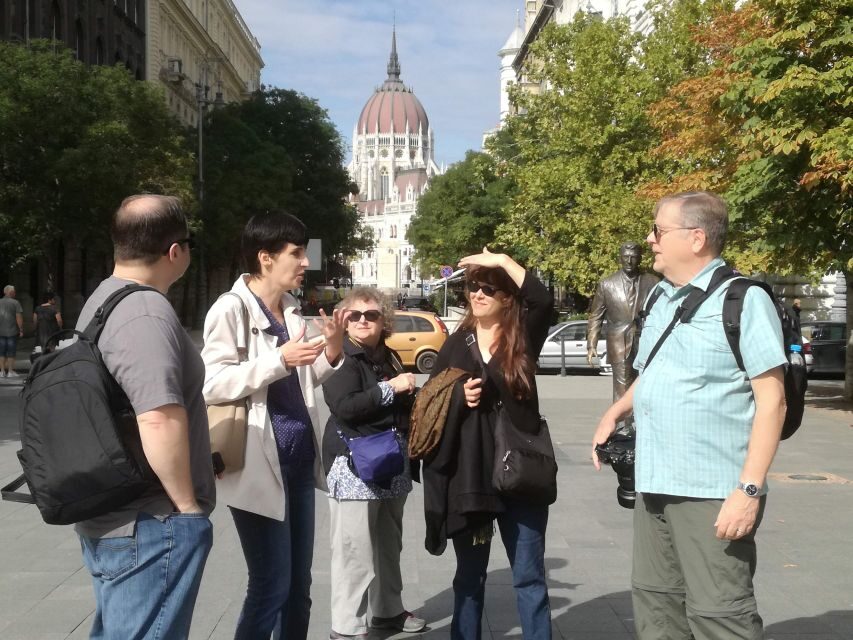
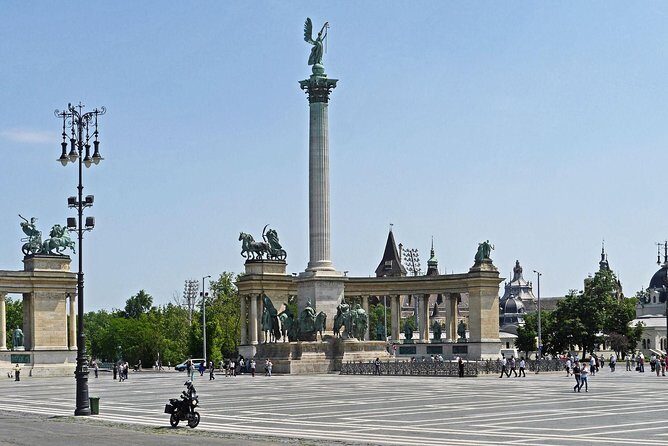
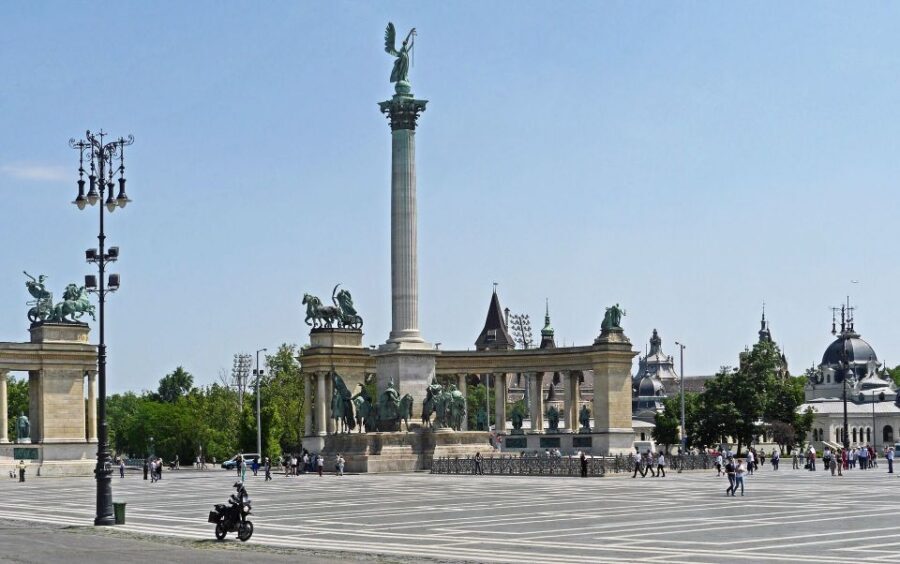
The tour ends at Heroes Square, where in 1896 Hungarians celebrated the 1,000-year anniversary of the founding of their kingdom. That date mirrors the Parliament moment earlier in the route, and that connection gives the whole tour a satisfying structure.
Heroes Square is where the story becomes big and symbolic. It’s not about banking or diplomacy only. It’s about a kingdom idea—who the nation believed it was and how it wanted to project that identity.
If you want a simple way to remember the tour: Parliament showed state power, Freedom Square showed economic ambition, and Heroes Square showed national myth and long-term pride. That’s the arc you leave with.
Price, Pace, and What Makes This Worth $123
At $123 per person for a 3-hour guided walk, you’re paying for three things: guided context, a historian-led route, and access to interpretation that helps you see more than what’s on the surface.
Is it expensive? It’s not bargain-basement. But it’s also not priced like an all-day private driver itinerary. The value comes from density: you cover major landmarks across downtown Pest without needing to stitch together multiple tours or hunt down explanations on your own.
The pace is designed for a downtown walk—enough time to stop, absorb, and ask questions. I especially appreciate the way guides on this style of tour tend to manage time without rushing. In the guide experiences you may encounter, András is described as patient and easy to talk to, with strong English and an objective approach to history. Another guide you might get is Zsofia, praised for storytelling skills that make the 3 hours feel quick.
Group size is also a factor in the feel of the tour. You can choose private or small groups, which usually makes questions easier and keeps the route from turning into a noisy shuffle.
My practical recommendation: bring snacks or water for after, not during. You’ll likely spend most of the time walking and listening, and it keeps the experience focused.
Meeting Point at Szamos Cafe: Where You’ll Start Feeling Oriented
The meeting point is Szamos Cafe, Budapest Kossuth Lajos tér 10. Starting near a cafe is smart because it’s easy to locate, and it gives you a nearby landmark if you’re juggling public transit or walking in from elsewhere.
The best approach is to arrive a few minutes early and use that time to get your map orientation. Once the guide gathers the group, the route becomes easier to follow. Pest’s streets can look straightforward, but the story here relies on noticing relationships between squares and boulevards.
Also, if you’re planning to eat after the tour, keep that in mind. This is the kind of walk that ends with a sense of satisfaction, then quickly makes you hungry.
Who Should Book This Tour (and Who Might Skip)
This is a strong fit if you:
- Want big Budapest landmarks with clear context, not just photo angles
- Like political and social history tied to real buildings
- Enjoy architecture when it comes with meaning
You might skip if you:
- Prefer a loose self-guided wandering day and don’t want to stay on a set route
- Need lots of free time at each stop, because it’s structured as a 3-hour walking sequence
If your trip is short and you want Pest’s “main story” without doing homework, this tour does that job.
Final Verdict: Should You Book Downtown Pest?
If you’re excited by the idea that a city’s identity can be read in squares, façades, and monuments, book it. For $123 you’re buying a focused lens: Parliament’s national-scale ambition, Freedom Square’s financial centerpiece, and Andrassy Boulevard’s nobility-designed grandeur, all tied together with human stories like the Holocaust Monument and Cardinal Mindszenty’s hiding.
I’d choose this tour early in your Budapest trip. It helps you understand what you’re looking at later when you’re walking on your own. And if you care about good guiding, keep your fingers crossed for a guide like András or Zsofia based on the strengths described—patient explanations, strong English, and storytelling that keeps the time moving.
FAQ
How long is the Downtown Pest Walking Tour?
The tour lasts 3 hours.
Where is the meeting point?
You meet at Szamos Cafe, Budapest Kossuth Lajos tér 10.
How much does the tour cost?
The price is $123 per person.
What language is the guide?
The tour is guided in English.
What major sites will I see?
You’ll see the Parliament area at Kossuth Square, the Holocaust Monument, Freedom Square and the Stock Exchange Palace, St. Stephen’s Basilica, Art Nouveau buildings, a major synagogue landmark, Andrassy Boulevard, the Opera House, and Heroes Square.
Is this a walking tour through the Pest district?
Yes. It’s a guided walk through downtown Pest, the part of the city on the east bank of the Danube.
Is the guide a historian?
Yes, the tour includes a historian guide.
Is it a private tour or a group tour?
Private or small groups are available.
Can I cancel for a refund?
Yes. Free cancellation is available up to 24 hours in advance for a full refund.
Is pay later available?
Yes. You can reserve now and pay later.