REVIEW · BUDAPEST
Capital Budapest – Half Day Private Tour (4hr)
Book on Viator →Operated by Fungarian · Bookable on Viator
Budapest in four hours is no joke. I like how this half-day private tour moves fast, yet still leaves time for real viewpoints, street-level details, and photo stops. Two things I especially like: you ride Metro Line M1 (Budapest’s classic underground) instead of burning time on transfers, and you get a relaxed café stop with a included drink near the synagogue area. One thing to keep in mind is that several top sights along the way have admission fees not included, so you’ll want to decide in advance what you want to go inside.
Because it’s private, your guide can shape the order and pace around your group. You’ll also get practical help finding your bearings quickly: meeting at Dohány u. 4 at the start, then ending around Károly körút near Astoria M (or somewhere close in the downtown area). If you’re visiting for the first time and you want the headline sights without turning your day into a race, this format makes sense.
In This Review
- Key highlights to watch for
- A four-hour route that makes Budapest make sense
- Pickup, meeting points, and how the tour actually starts
- Liberty Bridge, St Gellért Square, and the Buda opening scene
- Clark Square and the Castle-adjacent photo route
- Fisherman’s Bastion and Matthias Church: the big viewpoint payoff
- Dísz tér and St George’s Square: medieval layers under your feet
- Heroes’ Square: national symbols in a tight stop
- Riding Metro Line M1: the oldest line, and it feels like part of the city
- Hungarian Parliament Building and St Stephen’s Basilica in Pest
- The synagogue district and Kamara Café terrace break
- What’s included, what costs extra, and how to plan your priorities
- Price and value for a group of up to four
- Who this half-day private tour fits best
- Should you book this tour?
- FAQ
- How long is the Capital Budapest Half Day Private Tour?
- Where does the tour meet, and where does it end?
- Is pickup included?
- What’s included in the price?
- Do I need tickets for the sights?
- Is the tour offered in English?
- What if the weather is poor or I need to cancel?
Key highlights to watch for
- Metro Line M1 time: the oldest Budapest metro line and one of Europe’s earliest underground railways
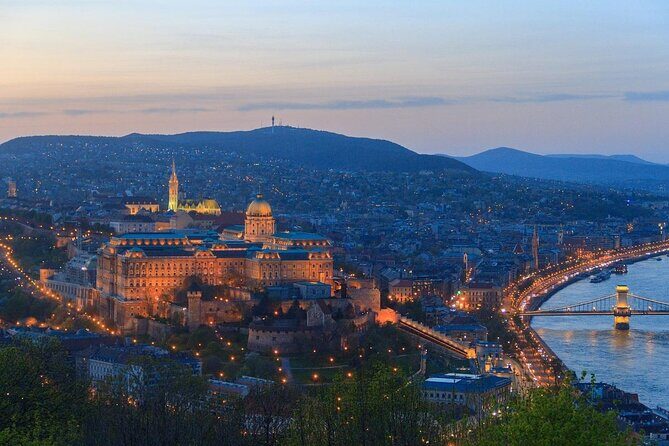
- Buda Castle District photo sequence: Fisherman’s Bastion angles plus the Royal Palace area viewpoints
- Heroes’ Square without detours: the Seven chieftains statue complex and the Memorial Stone area in one sweep
- Parliament-area landmarks: neo-Gothic exterior views tied to quick orientation on Pest
- Synagogue district + a quiet break: Great Synagogue area followed by a terrace stop at Kamara Café
- A real local story-teller: past guests called out guides like Miklos for city history stories that feel personal
A four-hour route that makes Budapest make sense
This tour is designed for momentum. In about four hours, you cover both sides of the Danube: you start on the bridge-and-Buda side to set the scene, then you loop back into Pest for the grand civic buildings. It’s the kind of itinerary that helps you understand how the city is laid out, not just what it looks like.
The private setup matters here. You’re not stuck following a loud group that wants to be in and out of every doorway. Instead, you get a smoother rhythm: walk a little, stop for photos, move again, and use your guide’s explanations to connect the dots.
Two timing realities to know:
- Most stops are short (often around 10–15 minutes), so this is more about seeing and orienting than doing long interior visits.
- If you plan to go inside the sights where tickets are not included, your time can tighten fast. I’d choose one or two “must-enter” places and let the rest be exterior viewing.
You can also read our reviews of more private tours in Budapest



Pickup, meeting points, and how the tour actually starts
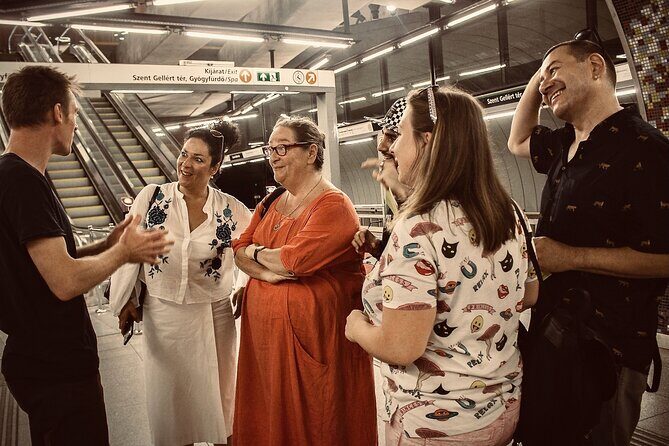
The tour starts at Budapest, Dohány u. 4, 1074 Hungary and ends around Károly körút near Astoria M (end location can vary in greater downtown based on your personalized itinerary). Pickup is offered: your guide can meet you at your hotel in Budapest or at a central meeting point you agree on.
This matters if you’re staying outside the busiest center. The flexibility keeps you from doing the hardest part yourself: getting to the right meeting spot at the right time. It also helps if you’re arriving by train, bike, or ride-share and don’t want to figure out the easiest pickup corridor.
One practical note from an experience review: communication about the exact start time can be inconsistent when it’s handled through the booking platform interface. To avoid any stress, I’d confirm the pickup time directly with the provider the day before your tour.
Liberty Bridge, St Gellért Square, and the Buda opening scene
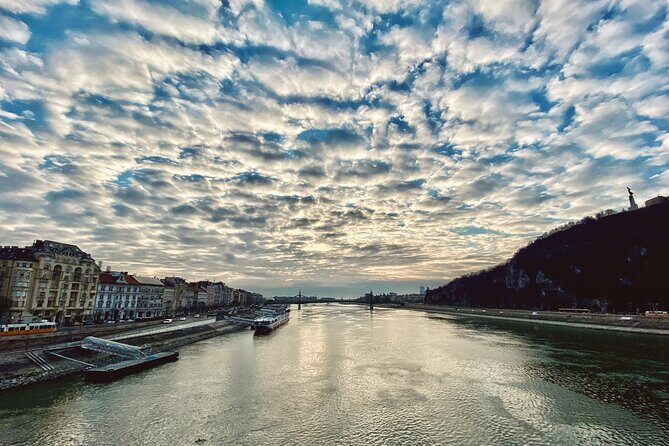
You kick things off at Liberty Bridge (Szabadság hid), connecting Buda and Pest across the Danube. Even if you’ve seen photos, this is one of those bridges where standing near it helps you understand the city’s “spine.” The bridge is the third southernmost public road bridge in Budapest and it has historical naming roots (it was originally called the Franz Joseph Bridge).
From there, you head toward St Gellért Square. The square is named after Bishop St Gellért, who’s also remembered as the Martyr for Hungarian Christendom. What I like about this kind of stop is that it gives meaning to a place that might otherwise feel like just another urban intersection. Your guide can connect the name to the broader religious and cultural story of the city.
Then the route shifts through key connective points near the Danube and Castle approaches. You pass by places locals flow through every day rather than only grand monuments. That’s what helps the itinerary feel like a tour of the city, not a checklist.
Clark Square and the Castle-adjacent photo route
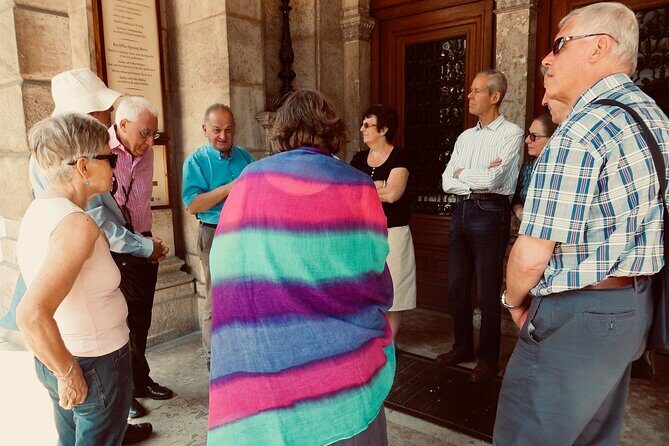
At Clark Square, you’re in the meeting zone for major Castle connections: the Chain Bridge, the tunnel beneath Castle Hill, the funicular up toward Szt. György Square, and streets that funnel people toward the Royal Palace area. In a short walk-and-stop format, this square is a smart choice because it explains how visitors and residents move through the city.
The itinerary then leads you to the Castle approach road where you get those classic viewpoint moments—especially the stretch heading toward Fisherman’s Bastion and the Royal Palace area. If you care about photos, this part is where you start collecting angles, because you’ll be looking across rooftops and river views rather than only at street-level façades.
Fisherman’s Bastion and Matthias Church: the big viewpoint payoff
The star on the Buda side is Fisherman’s Bastion (Halászbástya). It’s right near Buda Castle, and it’s famous for the panorama from its Neo-Romanesque lookout terraces. The seven high-pitched stone towers symbolize the seven chieftains of the Hungarians who founded Hungary in 895.
This is one of those stops where you can feel why people come. Even when the lighting isn’t perfect, the terraces give you layers: river, bridges, city blocks, and the Castle district silhouette. It’s also close enough that you’re not “lost” trekking for it.
Next up is Matthias Church (Mátyás-templom), in front of Fisherman’s Bastion in the Castle District. It’s Roman Catholic, and tradition says it was originally built in Romanesque style in 1015, though no archaeological remains are known from that period. Admission is not included in this tour, so expect exterior viewing time unless you choose to add an entry.
If your group wants an inside visit, decide early. This half-day pace is best when you pick your priority and let the rest be views and orientation.




Dísz tér and St George’s Square: medieval layers under your feet
After the Bastion, the tour continues through the Castle District squares, including Dísz tér. This area is mainly old one- and two-storey residential buildings, and in the Middle Ages it held simple Gothic houses. The interesting detail here is that remains of those houses can still be found in foundations and walls of nearby houses.
Why I like this stop: it’s a reminder that Budapest isn’t only about “one big monument per stop.” It’s also about how everyday building layers survived, changed, and got repurposed. You’ll get a better sense of place without spending hours in a museum.
Dísz tér is located near St George’s Square and adjacent to the Palace district, running north-south in the Castle District. Even with short time, your guide’s explanation makes the space feel less random.
Heroes’ Square: national symbols in a tight stop
Then you head toward Heroes’ Square. This is one of Budapest’s major public squares, known for its iconic statue complex featuring the Seven chieftains of the Magyars and other important Hungarian national leaders. There’s also a Memorial Stone of Heroes, which people often confuse with a Tomb of the Unknown Soldier.
This stop works well in a half-day tour because it’s visually powerful and easy to understand quickly. You don’t need a lecture to get the meaning, but you do want a guide to help interpret what you’re seeing and why it was made.
Timing is short here, about 15 minutes, so plan to do a loop around the main statue complex area and take photos from a couple angles.
Riding Metro Line M1: the oldest line, and it feels like part of the city
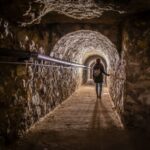
One of the smartest inclusions is the public transport pass, plus the route’s use of Metro Line M1, officially the Millennium Underground Railway. It’s the oldest line of the Budapest Metro and the first underground on the European mainland, with the world context that it’s third oldest after London and Liverpool’s Mersey Railway.
Why this matters: you’re not just getting from A to B. You’re experiencing a piece of how the city modernized. Even if you’ve ridden historic subways elsewhere, the ride itself helps your whole day feel connected.
The practical win is also real. In a four-hour window, saving time on transit connections gives you more “real Budapest” time and less standing around guessing which tram or bus to take.
Hungarian Parliament Building and St Stephen’s Basilica in Pest
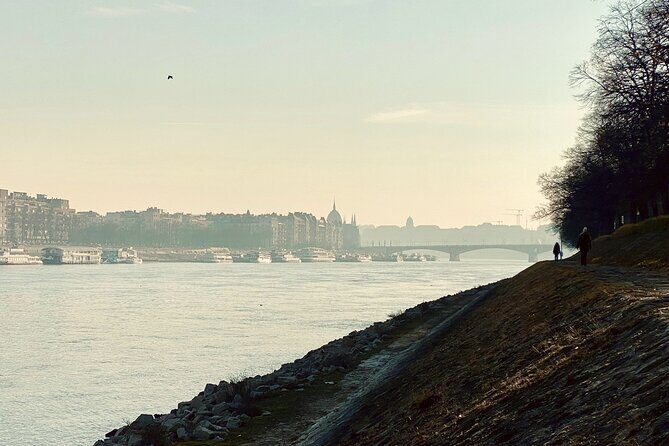
On the Pest side, the tour hits Hungarian Parliament Building on Kossuth Square. It’s the seat of the National Assembly of Hungary and one of the city’s most recognizable landmarks. The building is neo-Gothic, designed by Imre Steindl, opened in 1902, and has been the largest building in Hungary since completion.
You’ll see it from outside with about 15 minutes allocated. Admission is not included, so this is best as a viewing and orientation stop rather than a “go inside and tour the whole building” plan.
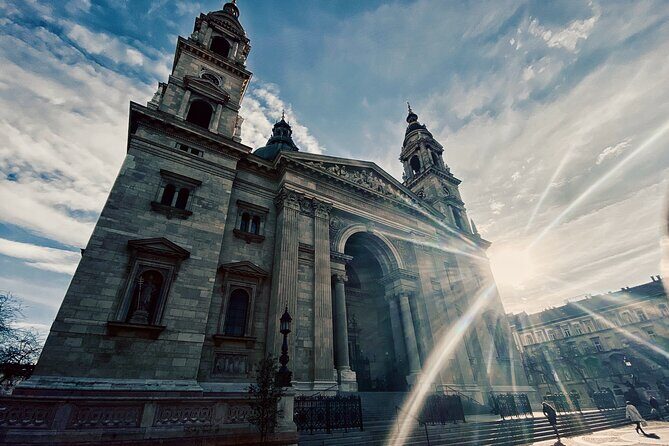
After that, you move to St. Stephen’s Basilica (Szent Istvan Bazilika). It’s named for Stephen, the first King of Hungary, and tradition says his right hand is housed in a reliquary. Admission is not included here either, so again: expect a meaningful stop to appreciate the exterior and the setting around it.
The Basilica area gets you another kind of Budapest feeling: big civic-and-religious landmarks in a city square environment, where architecture becomes a compass for where you are in the city.
The synagogue district and Kamara Café terrace break
The final stretch heads to the Great / Central Synagogue (Nagy Zsinagóga), also known as the Dohány Street Synagogue. It’s in Erzsébetváros (the 7th district) and is listed as the largest synagogue in Europe, seating 3,000 people. It’s also described as a centre of Neolog Judaism.
Admission is not included for the synagogue in this tour, so plan on a stop that focuses on the building’s importance and the neighborhood context rather than entering for a full interior visit.
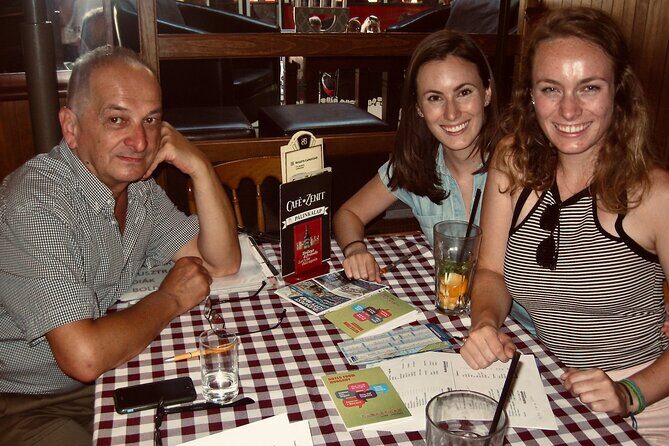
Then you slow down at Kamara Café, near the synagogue area. The tour includes one hot or cold beverage, which is a small thing that makes a big difference. After a day of moving and scanning for angles, it’s nice to stop, take a breath, and regroup your next steps.
Also, because it’s a terrace setting when conditions allow, you can use this time to people-watch the neighborhood and practice basic Hungarian phrases if you like that kind of thing.
What’s included, what costs extra, and how to plan your priorities
Here’s the value picture in plain terms:
Included:
- Public transport pass
- City map
- One hot or cold beverage
- Notebook with pen
Mobile tickets are part of the experience too, which helps reduce friction on the day.
Not included (admission not included at these major stops):
- Fisherman’s Bastion
- Matthias Church
- Hungarian Parliament Building
- St. Stephen’s Basilica
- Great Synagogue
Some other stops are listed as free in the itinerary context, so you can treat those as viewpoint and public-space moments without ticket worries.
My practical suggestion: pick one place to pay for entry if you feel strongly about interiors. The other major sights will still give you plenty to enjoy because the route is built around short, high-impact viewing stops.
Price and value for a group of up to four
The price is $489.24 per group for up to 4 people. That means the value changes a lot depending on your group size.
- If you fill all four spots, you’re closer to about $122 per person for four hours with a private guide, transit included, and a café drink.
- If it’s only two of you, the per-person cost climbs, but you still get the benefit of a private pace and pickup flexibility.
In short, this tour is a strong deal when you share it. It’s also a good fit if you hate the stress of coordinating transit and want someone to handle the flow, especially when you’re trying to see the major Budapest symbols efficiently.
Who this half-day private tour fits best
This works best for:
- First-time visitors who want classic Budapest landmarks without spending all day walking
- Couples or small groups who prefer a guided pace over a big-group tour
- People who want both Buda views and Pest monuments in one shot
- Travelers who appreciate quick context (names, symbols, and why things matter)
It may be less ideal if:
- You want long, slow museum-level experiences at multiple paid sights in one afternoon
- You’re hoping for a lot of interior time at several landmarks, because admission is not included and stop times are short
Should you book this tour?
I’d book it if your priority is getting oriented fast and seeing Budapest’s most recognizable visuals—Fisherman’s Bastion terraces, Parliament-area architecture, Heroes’ Square symbolism, and the synagogue district—while a guide helps you connect names to meaning.
I’d also book it if you travel in a group of two to four, because the private format plus included transit pass makes the price feel more reasonable.
But if your must-do list is heavy on paid entrances, I’d either plan to choose just one or two to enter or consider a longer tour. This half-day is built for seeing a lot, not for doing everything inside.
FAQ
How long is the Capital Budapest Half Day Private Tour?
It runs for about 4 hours.
Where does the tour meet, and where does it end?
The meeting point is Budapest, Dohány u. 4, 1074 Hungary. The tour ends around Károly körút (Astoria M) in Budapest 1072, and the exact end point can vary in the downtown area based on a personalized itinerary.
Is pickup included?
Yes. You can meet your guide at your hotel in Budapest or at another central meeting point you agree on.
What’s included in the price?
The tour includes a public transport pass, a city map, one hot or cold beverage at the café, and a notebook with pen.
Do I need tickets for the sights?
Some entries are listed as not included, including Fisherman’s Bastion, Matthias Church, the Hungarian Parliament Building, St. Stephen’s Basilica, and the Great Synagogue. Other stops in public spaces are listed as free.
Is the tour offered in English?
Yes, it’s offered in English.
What if the weather is poor or I need to cancel?
The experience requires good weather. If it’s canceled due to poor weather, you’ll be offered a different date or a full refund. You can cancel up to 24 hours in advance for a full refund.