REVIEW · BUDAPEST
Café Wandering: An Excursion through Budapest’s Belle Epoque
Book on GetYourGuide →Operated by insightcities.com · Bookable on GetYourGuide
Budapest’s café culture has better lessons than guidebooks. This 3-hour Belle Époque walk links architecture, design details, and the poets and thinkers who gathered in old coffeehouses.
I love the way an art historian guide makes you look past the obvious and notice the why behind each interior. I also like how the tour ends with the art nouveau Kazinczy Street Orthodox Synagogue, so you get a satisfying finale beyond café doors.
One consideration: refreshments aren’t included, so the $123 price covers the guided experience, not your coffee and cake stops. If you plan to order at multiple cafés, budget a little extra.
In This Review
- Key things I’d put on your radar
- Vörösmarty tér and Café Gerbeaud: where the tour really begins
- Why Café Gerbeaud feels like a time capsule (and not a museum)
- Central Cafe and Restaurant 1887: Habsburg power, served in style
- Café Astoria and the art of grand European coffee-house drama
- Museum-level walls and Asian motifs: decorative choices with meaning
- Urania Café on Rakóczi Street: the oldest film theater stop
- Művész Coffee House and New York Palace: artist energy and maximum spectacle
- Kazinczy Street Orthodox Synagogue: art nouveau finish that lands
- Guide quality and small-group feel: why it works in 3 hours
- Price and practical planning for a 3-hour café-and-architecture walk
- Who this tour suits best
- Should you book Café Wandering?
- FAQ
- How long is Café Wandering in Budapest?
- What does the tour price include?
- Where does the tour meet?
- Is the tour offered in English?
- How big is the group?
- Do I need to pay for food and drinks during the tour?
Key things I’d put on your radar
- Gerbeaud starting point: a classic reference point for Imperial Budapest café culture
- Inside-the-interior viewing: you’ll actually admire details, not just walk by
- Tram ride along the Danube: a quick, scenic transport moment built into the story
- Design spotting: you’ll examine Asian motifs and other decorative elements designers used
- Urania Café stop: you learn about the oldest film theater in Budapest and intellectual lectures
- Kazinczy Street Synagogue finish: art nouveau Orthodox architecture caps the walk
Vörösmarty tér and Café Gerbeaud: where the tour really begins
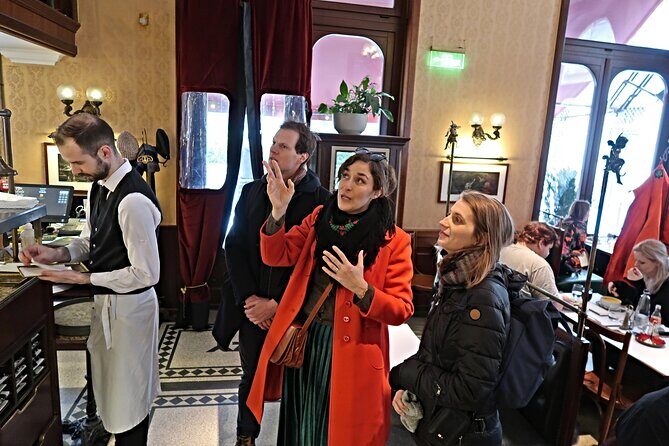
You start at Café Gerbeaud on Vörösmarty tér, right in the center of Budapest. That matters because the whole point is to connect what you see with where the city pulse was—19th and early 20th century life wasn’t “far away.” It was here, in the walkable middle.
From the first minutes, the tone is academic but not stuffy. You’re not just collecting photos. You’re learning how cafés worked like public living rooms for writers, artists, and thinkers.
You can also read our reviews of more tours and experiences in Budapest.



Why Café Gerbeaud feels like a time capsule (and not a museum)
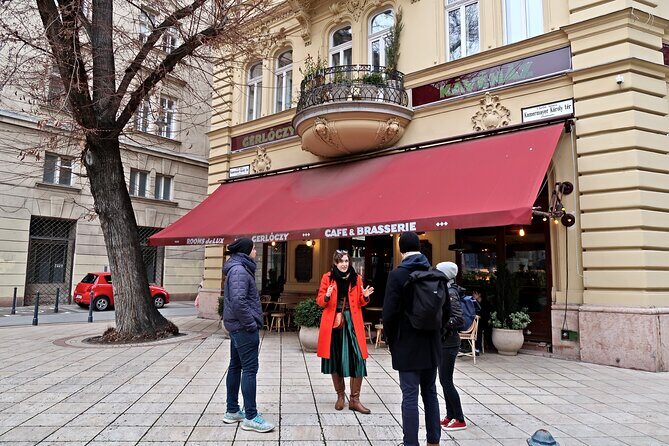
The first stop is Gerbeaud, and the guide sets you up to understand the place as a social hub. This café carries more than 100 years of history and was a major meeting point for both locals and visitors during late-19th-century Budapest.
What I’d pay attention to is the interior presentation. The tour is built around architecture and interior design, so you’re encouraged to notice how the room’s look supports its role: a gathering place that signals importance and comfort.
Central Cafe and Restaurant 1887: Habsburg power, served in style
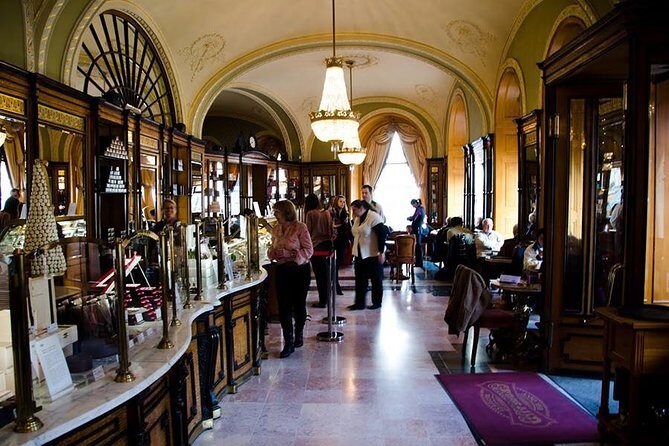
Next you head to the Central Café and Restaurant 1887. A tram ride is part of the experience, and it’s more than a commute trick. Taking the tram helps you shift from “single building” thinking to a broader city rhythm along the Danube.
This stop is described as dignified, the kind of space that fits café house culture at the high point of the Habsburg Empire’s economic and cultural reach. The decor, meals, desserts, and drinks are all part of what you’re meant to sense: a feeling of a bygone era, designed to keep conversation flowing.
Café Astoria and the art of grand European coffee-house drama
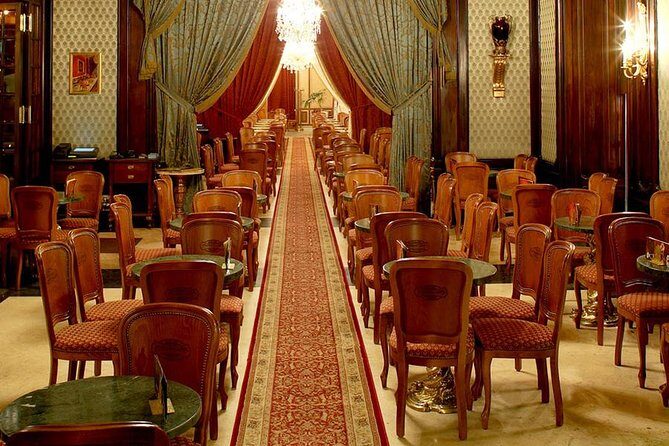
Then comes Café Astoria Restaurant, known for its lavish, classic European coffee-house grandeur. This is the moment where the tour leans into the visual payoff: the space is meant to feel important, and the guide helps you read the design choices instead of just admiring them.
This is also where the tour earns its “architecture” label. You’ll be looking at surfaces, room proportions, and how the café’s styling creates a kind of stage for social life—writers and artists didn’t gather in plain boxes.
If you’re the type who usually rushes through interiors, slow down here. I found the best value is when you treat the café as a design lesson.
Museum-level walls and Asian motifs: decorative choices with meaning
One of the tour’s most specific themes is learning how designers used different decorative languages. You’ll examine Asian motifs and elements employed by designers, plus you’ll marvel at lavish wall details you encounter along the route.
The practical benefit: you start recognizing patterns faster when you travel. Instead of seeing “pretty decoration,” you’ll have a way to interpret it—why a motif appears, how it fits the era’s taste, and how café spaces borrowed from broader design currents to feel worldly.
This kind of look-and-learn is exactly what makes the walk feel more valuable than a standard coffee break. You get to keep your curiosity active without burning time.



Urania Café on Rakóczi Street: the oldest film theater stop
After more café interior viewing, you’ll reach Urania Café on Rakóczi Street. This stop is tied to a bigger cultural angle: Urania Café houses the oldest film theater in the city, and it’s associated with lectures given by prominent intellectuals before large audiences.
That combination is fun and useful. You’re watching café culture evolve from a literary meeting place into a space that feeds the public with ideas and entertainment. The guide frames it so you can connect café society to broader cultural institutions.
Even if you’re not a film history person, this stop helps the tour feel like a living timeline rather than a checklist of pretty interiors.
Művész Coffee House and New York Palace: artist energy and maximum spectacle
Later, the tour moves through Művész Coffee House (Artist Café) and then on to New York Palace Café, where you get a guided look.
I like these two stops because they balance personality. One is explicitly tied to the artist world, and the other is presented as grand and dramatic—think big-room European confidence. Together, they show how Budapest cafés didn’t all follow the same formula. Some leaned into creative identity. Others leaned into luxury and public show.
This is also where the design spotting you started earlier pays off. When you’ve already been trained to look for motifs and decorative logic, you can read these rooms faster and enjoy them more.
Kazinczy Street Orthodox Synagogue: art nouveau finish that lands
The tour wraps up at the Kazinczy Street Orthodox Synagogue, described as fascinating and art nouveau in style. This ending is smart because it breaks the café bubble just long enough to give your brain a new frame.
Cafés shaped public life. A synagogue, especially one with such a distinctive art nouveau look, shows the city’s other side: architecture tied to community identity and faith, but still expressed through the era’s visual language.
If you want one last “wow” stop that doesn’t feel like a repeat of the same interior theme, this is it.
Guide quality and small-group feel: why it works in 3 hours
This is a small group experience limited to 8 participants, and that’s a big deal for a tour like this. In a group that size, an art historian can actually answer follow-up questions and point out details without rushing you through everything.
You’ll also be led by someone from a strong academic and media background—professors, doctoral students, historians, journalists, art critics, and published authors. One verified booking specifically praised the guide Kota as excellent and the information as informative, which matches the overall style of the tour: learning-first, photo-second.
In other words, it’s not just “show up and look.” You’re getting guided observation, which is what makes a short, 3-hour walk worth it.
Price and practical planning for a 3-hour café-and-architecture walk
At $123 per person for 3 hours, the value comes from what’s included: an English live guide plus a curated route that blends multiple major interior spaces and ends with a synagogue. You’re paying for interpretation, not just transportation.
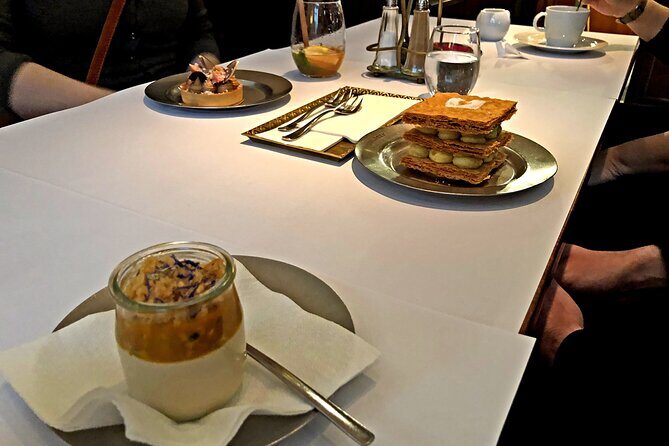
What’s not included is just as important: refreshments, cakes, and coffees you choose at the cafés. That means your real total depends on your appetite for doing the café theme properly. If you want to order at one or two stops, you’ll have a more complete experience. If you prefer to keep it light, you can treat cafés as viewing opportunities.
Logistically, plan for a comfortable pace. This is a walk with stops plus at least one tram segment, so good shoes are a wise move.
Who this tour suits best
I’d point this tour toward you if:
- you like architecture and interior design more than you like quick landmarks
- you want café culture explained with context, not just ambience
- you enjoy historical connections between art, ideas, and public spaces
- you prefer a short, guided format that still feels like a mini journey
Should you book Café Wandering?
If you’re excited by interiors—ceilings, walls, motifs, room character—then yes, book it. The tour’s structure is built around making you notice details, and the guide background suggests you’ll get real explanations, not generic narration.
If you’re only looking for a casual coffee crawl with no instruction, you might feel the pace is too “look and learn.” But for most people who want Budapest to feel deeper than postcards, this is a very efficient way to get Belle Époque culture into your eyes and your brain in just 3 hours.
FAQ
How long is Café Wandering in Budapest?
The tour lasts 3 hours.
What does the tour price include?
It includes a 3-hour guided walk with an art historian guide. Refreshments are not included.
Where does the tour meet?
The meeting point is Café Gerbeaud, Budapest Vörösmarty tér 7-8 1051.
Is the tour offered in English?
Yes, the live tour guide speaks English.
How big is the group?
The group is limited to 8 participants.
Do I need to pay for food and drinks during the tour?
You’ll need to pay for refreshments, cakes, and coffees selected at the cafés yourself, since they’re not included in the tour price.