REVIEW · BUDAPEST
Budapest: Virtual Reality Tour in 8 Languages
Book on GetYourGuide →Operated by VR Tours · Bookable on GetYourGuide
Two minutes of VR makes Budapest feel alive. You start near the Chain Bridge and Clark Ádám Square, then move up into the Castle District for a history-led walk that mixes real streets with Buda Castle-scale sights and sci-fi storytelling.
What I like most is the way this tour connects the big landmarks—especially around the castle area—with the key moments that shaped Hungary. You also get an 8-language audio guide while your headset brings pivotal scenes to life, including medieval construction, wartime destruction, and the Hungarian Revolution of 1956.
One consideration: this is not a sit-down show. You’ll do a light hike with an uphill stretch, and it’s not recommended if you’re prone to migraines or if you have concerns related to heights or epilepsy.
In This Review
- Key highlights to know before you go
- Entering the VR world near Chain Bridge
- The 90-minute flow: real walking plus six VR moments
- Buda Castle and the medieval setup you can almost feel
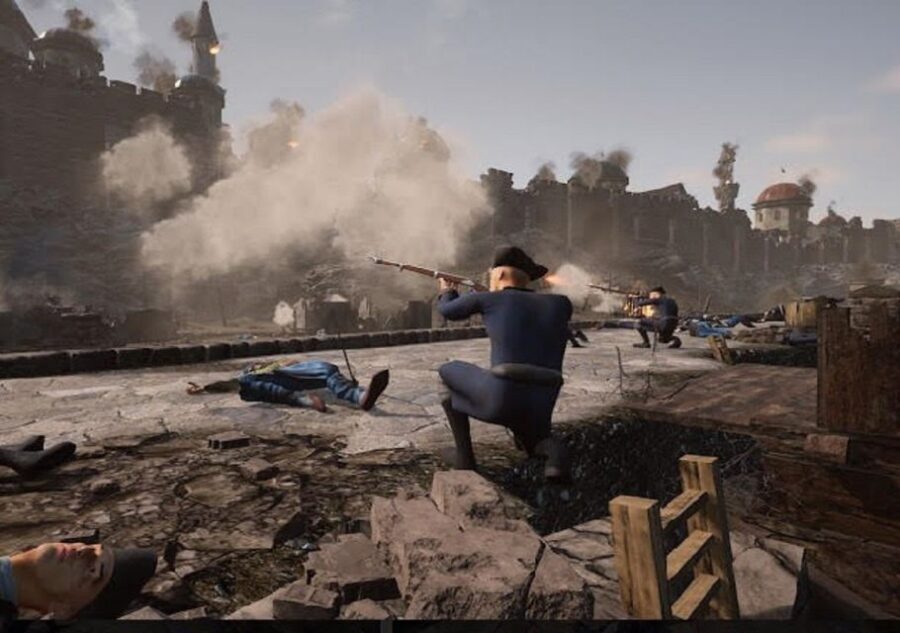
- Battles and WWII destruction: history with consequences
- The 1956 Hungarian Revolution: the story lands closer to home
- Getting your bearings with a bird’s-eye view
- What you hear: live guide and multi-language audio
- Logistics that affect comfort: shoes, deposit, and headset hygiene
- Bring what’s required
- Headset hygiene
- Ear and motion considerations
- The walking part: hill reality in the Castle District
- Price and value: when $43 feels fair
- Who this tour is best for
- Practical tips to get the most from your VR time
- Should you book the Budapest VR tour in 8 languages?
- FAQ
- Where does the tour start, and what should I look for?
- How long is the tour?
- How much does it cost?
- What languages are available for the audio guide?
- Is there a live guide?
- Do I need a passport or ID?
- Is the tour physically demanding?
- Who should avoid this tour?
- What’s the cancellation policy?
Key highlights to know before you go
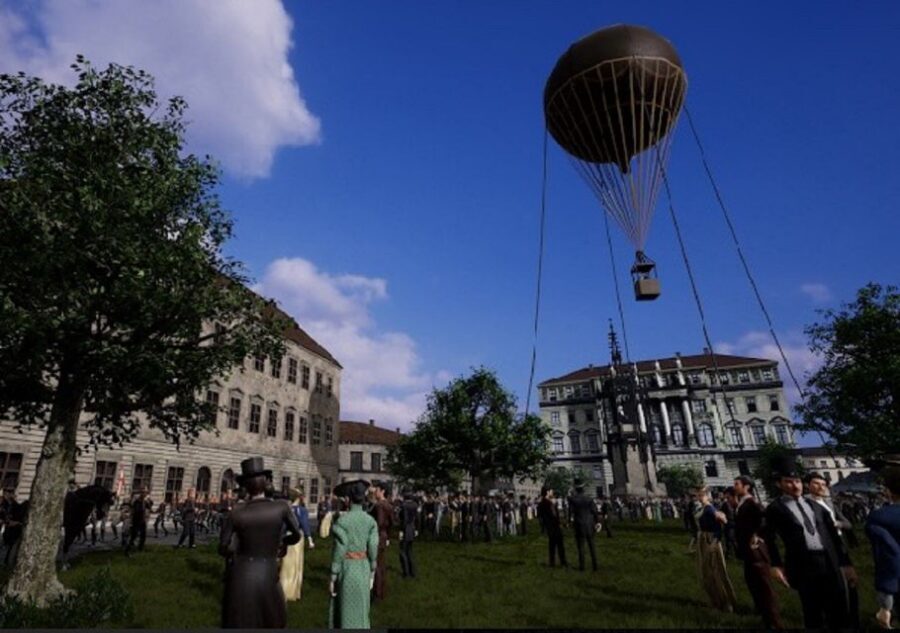
- Buda Castle and Royal Palace focus: You’ll be watching history unfold against the same city views that still define Budapest.
- Six VR stops around town: The story comes in chunks, timed to specific spots, not just one long “ride.”
- Major turning points: Medieval building, World War II devastation, and 1956 all make the cut.
- Bird’s-eye view over Budapest: You get a top-down look at the city, which helps you understand where everything sits.
- Multiple language options on the audio track: English, Chinese, German, Hungarian, Spanish, Russian, Italian, and French are available through the headset audio.
Entering the VR world near Chain Bridge
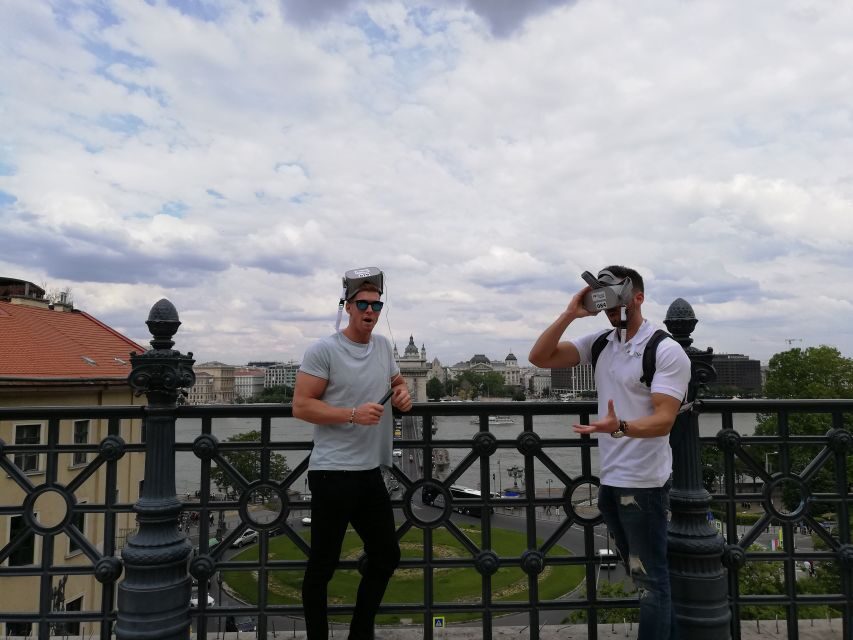
The tour meeting point is right in the center of things: Lánchíd u. 23, 1013, near the Chain Bridge side of Budapest. Look for the VR Tour flags facing the street, and plan to arrive 15 minutes early so you can get set with the gear before the walking begins.
After a quick intro and choosing your language on the audio track, you’ll don the virtual reality headset and then head toward the Castle District. That matters, because the tour isn’t just about what you see inside the headset. It’s also about getting your bearings fast: you’re literally moving through the same geography that the story is about.
If you’re the type who likes to understand a city map while you’re walking, this format is handy. You’re not stuck indoors, and you’re not waiting for a bus tour to tell you where you are. The guide keeps the group moving and helps you navigate between stops.
You can also read our reviews of more tours and experiences in Budapest.



The 90-minute flow: real walking plus six VR moments
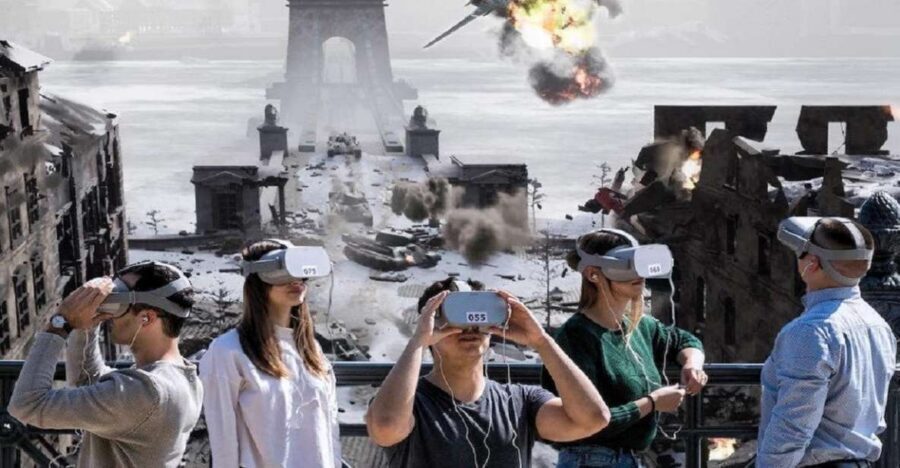
The overall experience clocks in at about 90 minutes. In practice, you’re looking at a tour that feels like roughly two hours, because it blends travel time between spots with the VR “reset” moments each time you stop.
You’ll make around six stops where the VR display kicks in. Between those moments, you walk with your guide who keeps the pace practical and helps the group cover the hills without losing the storyline.
One important detail: you’ll be on your feet, and the tour includes a light hike. It’s not described as a marathon, but it’s also not flat. In warmer weather, you’ll want water—there’s a tip built into the experience to bring something to drink for hot summer tours.
Buda Castle and the medieval setup you can almost feel
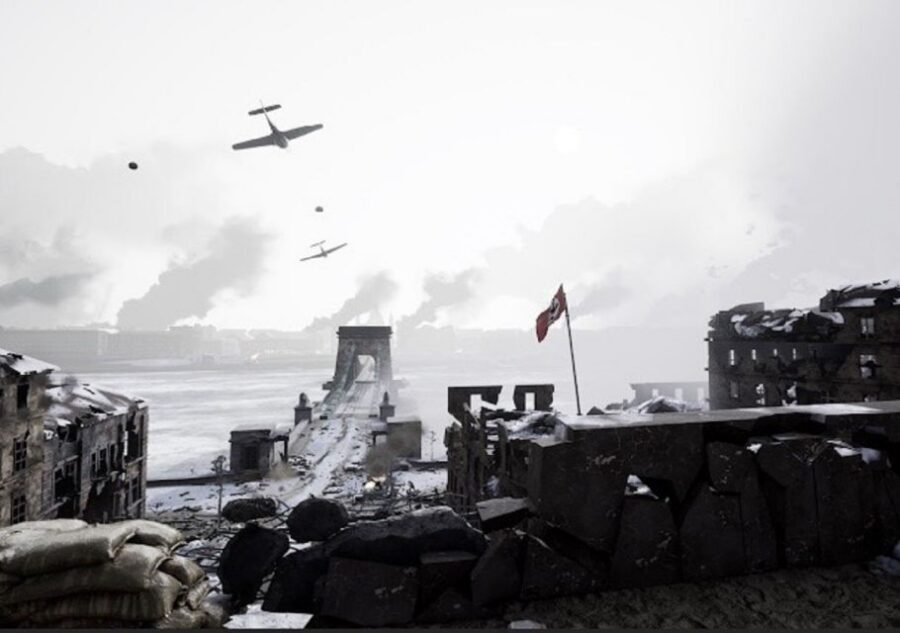
Your story starts in the Castle District area, where Budapest’s layered history makes the most sense. The VR segments are designed to move you through time, and the early portion focuses on the castle’s construction in the middle ages.
What works well here is the “place + period” pairing. When you’re up in the castle area, you can look around and then turn your head inside the headset and see what the space might have looked like before it was modern Budapest. Even if you’re not a hardcore history person, the format helps you stop treating the city as just a postcard.
Also, because the audio guide is on while you’re in motion, you’re not stuck guessing what you’re seeing. The narration explains what’s unfolding and why it matters in Hungarian history, so you’re connecting the visuals to context rather than watching scenes with zero anchor.
Battles and WWII destruction: history with consequences
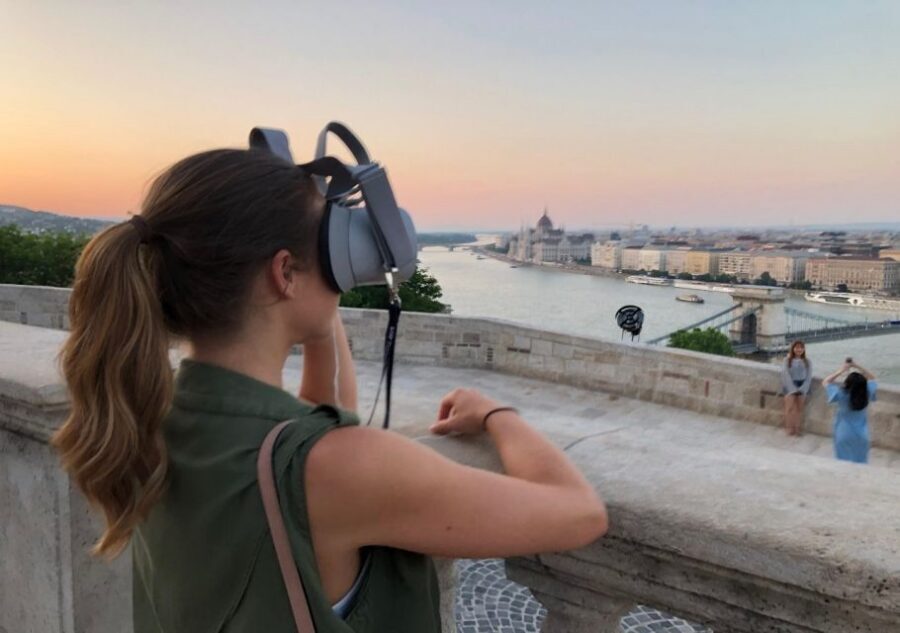
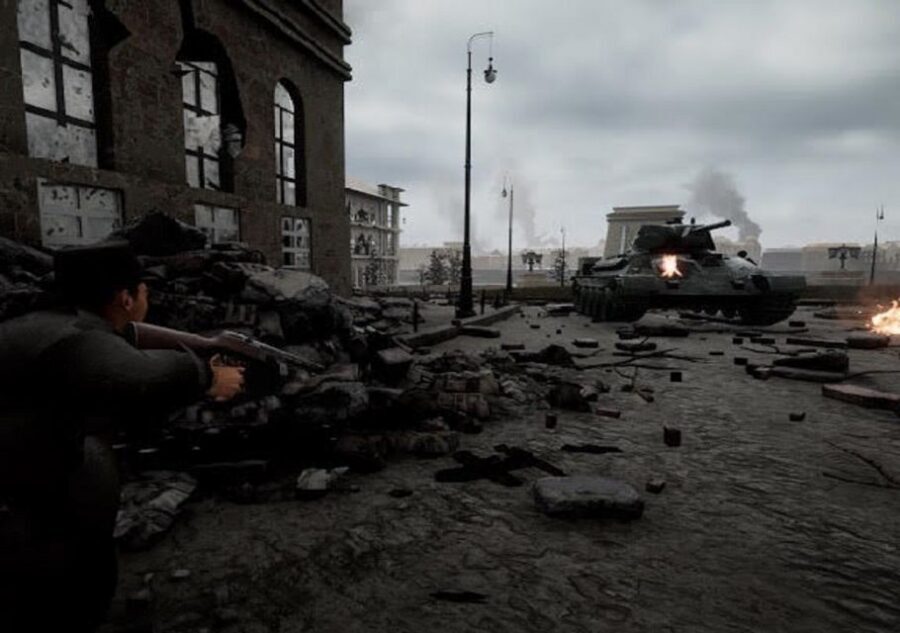
Next up is the painful part: you’ll watch battles and World War II destruction take over the same general area you’re walking through in real life.
This is where the tour becomes more than a novelty. The pacing of the VR stops helps you absorb the scale without feeling like you’ve been dropped into chaos with no guide. The audio track is meant to walk you through the significance of each event—so you’re not just seeing explosions. You’re learning what those turning points did to Budapest and the country.
A practical tip: if you’re sensitive to intense war imagery, you’ll want to think about your comfort level before booking. The tour is built around major events, and this section is clearly part of the core experience.
The 1956 Hungarian Revolution: the story lands closer to home
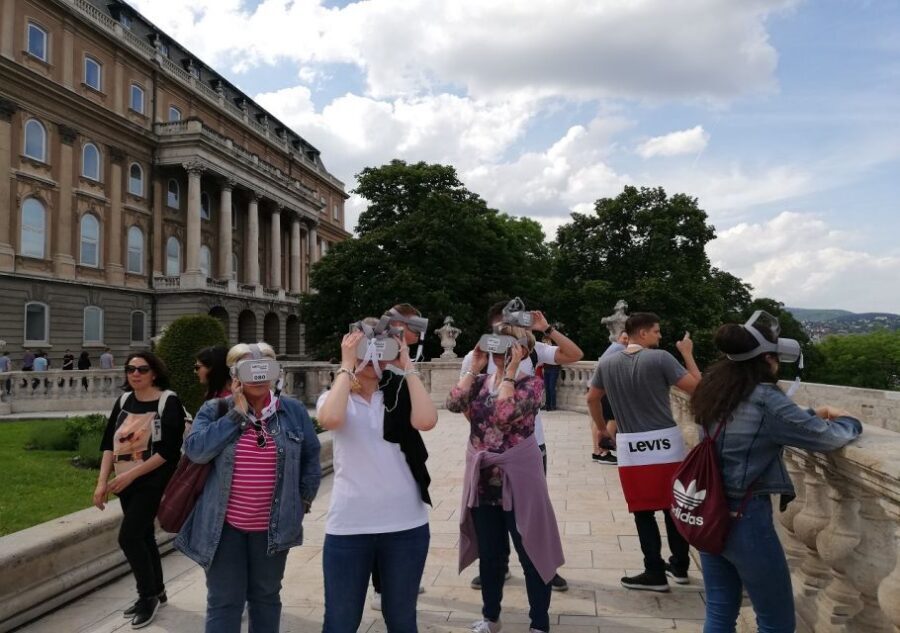
The VR timeline then jumps forward to the Hungarian Revolution of 1956. From a learning standpoint, this is a smart choice for a first-time Budapest visit because it’s later than medieval history, and it connects more directly with the modern identity of the country.
On the street, you get one set of cues: buildings, streets, and skyline views. Inside the headset, you get another layer: the revolution breaking out, presented alongside explanation through the audio guide. That mix is what makes the tour memorable. It gives you both scale and meaning.



Getting your bearings with a bird’s-eye view
One of the highlights is a bird’s eye view over the whole city. This is more than a cool visual. It’s a mental map tool.
Once you’ve seen Budapest from above inside the headset, you’re better equipped to understand where things are relative to each other—especially since you’re already walking between stops. Even if you don’t memorize every street, you’ll leave with a stronger sense of “this is where the Castle District sits above the rest” and how the city’s shape relates to the river area you started near.
What you hear: live guide and multi-language audio
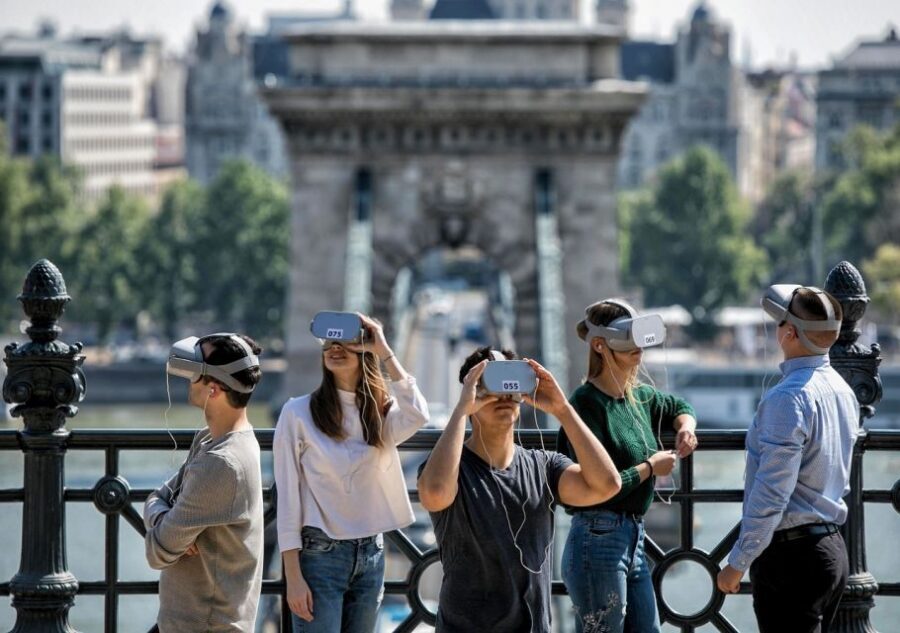
You’ll have a live tour guide for the walking portions and for helping you navigate between the VR stops. The guide is listed as available in English and Hungarian.
Then there’s the audio guide included through your headset, which covers English, Chinese, German, Hungarian, Spanish, Russian, Italian, and French. This matters if you’re traveling with a group that speaks different languages or if you want your own language for the narration while still benefiting from the guide’s on-the-ground help.
Also, you’ll be wearing VR gear plus audio equipment. Some guests describe getting earplugs, and the narration is delivered through the headset setup. Either way, plan to treat this like an active listening experience, not like a casual walk where you can tune out whenever you want.
Logistics that affect comfort: shoes, deposit, and headset hygiene
This is one of those tours where comfort details quietly determine how much you enjoy it.
Bring what’s required
- Passport or ID card
- Comfortable shoes
There’s also a deposit requirement connected to the VR headset. You’ll bring either your passport/ID or 200 euros as a deposit, depending on what the operator requests when you arrive.
Headset hygiene
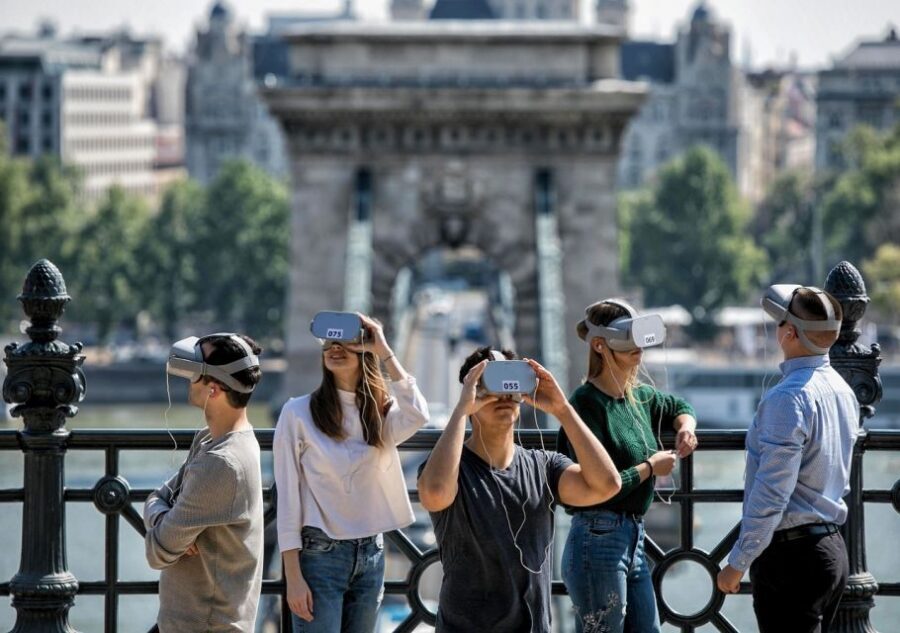
The tour includes VR gear and a sterile headset. A hygienic mask is available upon request. If you’re traveling during cold/flu season or you’re simply picky about cleanliness, this is reassuring.
Ear and motion considerations
This isn’t recommended if you suffer from migraines. It’s also listed as not suitable if you have epilepsy, heart problems, or if you’re afraid of heights. VR can affect people differently, so it’s worth taking those notes seriously rather than hoping you’ll be fine “if you take it slow.”
The walking part: hill reality in the Castle District
The tour includes a light hike, and the best way to think about it is this: you’ll feel the uphill stretch. The Castle District isn’t flat, and your route is built around reaching the right stops.
That means your shoes matter. Comfortable sneakers beat anything fancy. If you’re planning this with other activities the same day, put it earlier rather than later so you’re not tired when the group starts moving between stops.
In summer, hydration matters too. You’re specifically advised to bring something to drink during hot tours. Even if it doesn’t feel that warm at the start, uphill walking plus headset time can sneak up on you.
Price and value: when $43 feels fair
At $43 per person for a 90-minute experience, you’re paying for three things at once:
- A live guide who helps the group move around effectively
- VR gear and multiple timed VR displays
- A guided audio narrative covering major historical events in your chosen language
So is it worth it?
If you like history that you can see where it happened, it can feel like good value because you’re getting multiple perspectives in one go: real locations plus time travel scenes plus a bird’s-eye city view. For first-time visitors, that combination can shorten the learning curve.
But if you expected something closer to a museum exhibit or a long, cinematic production, you might feel the price more sharply. Some guests describe the visuals as more like an older game than movie-grade graphics, and that can change how “wow” the experience feels. One guest even flagged that it felt pricey for a video and a walk.
My practical advice: treat this as a fun, structured way to understand key Budapest moments—not as a substitute for slow, in-person exploring at the castle sites themselves.
Who this tour is best for
This experience fits you best if:
- You’re visiting for the first time and want context fast
- You enjoy guided walking tours but also want something interactive
- You like history presented through a clear narrative (medieval → WWII → 1956)
- Your group wants an audio guide in many languages
It may not be the right choice if:
- You have mobility limitations (it’s not suitable for people with mobility impairments)
- You’re dealing with migraines, epilepsy, or heart problems
- You’re uncomfortable with heights or VR-related sensitivities
Practical tips to get the most from your VR time
- Arrive early so you’re not rushing through the headset setup.
- Wear comfortable shoes for uphill walking.
- Bring water in warm weather; the hike is short but real.
- Choose your audio language carefully before you start, so you don’t lose time later.
- If you’re noise-sensitive, know that the tour uses audio equipment through the headset (and some people receive earplugs).
Finally, pay attention to the guide’s instructions between VR stops. The walking segments are part of the story because they connect each VR scene to the geography you’re standing on.
Should you book the Budapest VR tour in 8 languages?
Book it if you want a compact, guided way to understand Budapest’s biggest historical turning points without spending the whole day reading plaques. The combination of six VR stops, a bird’s-eye view, and an audio guide that explains what you’re seeing in eight languages makes it a strong choice for first-timers and for families who want something more hands-on than a standard walking tour.
Skip it (or choose something else) if VR could trigger health issues, if you’re uncomfortable with uphill walking and heights, or if you’re expecting ultra-cinematic graphics. For the right person, this is an efficient way to leave Budapest feeling oriented and emotionally connected to the moments that shaped it.
FAQ
Where does the tour start, and what should I look for?
The meeting point is at Budapest, Lánchíd u. 23, 1013, and you should look for the VR Tour flags facing the street. Arrive 15 minutes prior to your departure time.
How long is the tour?
The tour duration is 90 minutes.
How much does it cost?
The price is listed as $43 per person.
What languages are available for the audio guide?
The audio guide is included in English, Chinese, German, Hungarian, Spanish, Russian, Italian, and French.
Is there a live guide?
Yes. A live tour guide is provided (listed as English and Hungarian).
Do I need a passport or ID?
Yes. You should bring a passport or ID card. You may also be asked for a 200 euros deposit for the VR headset.
Is the tour physically demanding?
The tour includes a light hike and comfortable shoes are recommended.
Who should avoid this tour?
It is not recommended for people who suffer from migraines, and it is not suitable for people with mobility impairments, heart problems, fear of heights, or epilepsy.
What’s the cancellation policy?
There is free cancellation up to 24 hours in advance for a full refund. There’s also a reserve & pay later option listed as available.