REVIEW · BUDAPEST
Budapest: Inner City Walking Tour in German
Book on GetYourGuide →Operated by Tourist Angel · Bookable on GetYourGuide
Budapest can feel big fast, so this 2-hour walk helps you focus. I like how it mixes iconic landmarks with street-level details, then connects the dots with a clear German-speaking guide. You’ll also see the Danube-side memorials that many people skim past on their own. The one drawback: if you want a slow, long photo stop at every single monument, the pace may feel a bit tight.
Two things I especially like: the route is built for “first-time orientation” in Pest, and the guide is set up to keep it engaging without turning it into a lecture. The other plus is the balance between postcard views (Basilica and Parliament) and heavier stops (Liberty Square and the Danube Shoes). For some visitors, the political history may be emotionally intense, so come ready for that mood shift.
Finally, the tour is priced at $23 per person for a full 2 hours, which is good value for a guided route through central sights. It’s also a private group and wheelchair accessible, so you can move as a group rather than getting swallowed by crowds. My only consideration: your experience will depend a lot on the day’s guide and how many questions your group can fit in.
In This Review
- Key highlights you’ll remember
- Why This Pest Walking Tour Works in Only 2 Hours
- Starting at Molnar’s Kürtöskalacs: Easy Meet-Up, Real-World Vibes
- Elizabeth Park and Budapest Eye: Orientation With a Big View
- St Stephen’s Basilica: The Dome, the Colonnade, and the Meaning
- Pedestrian Streets and Mr. Safe: When Budapest Gets Playful
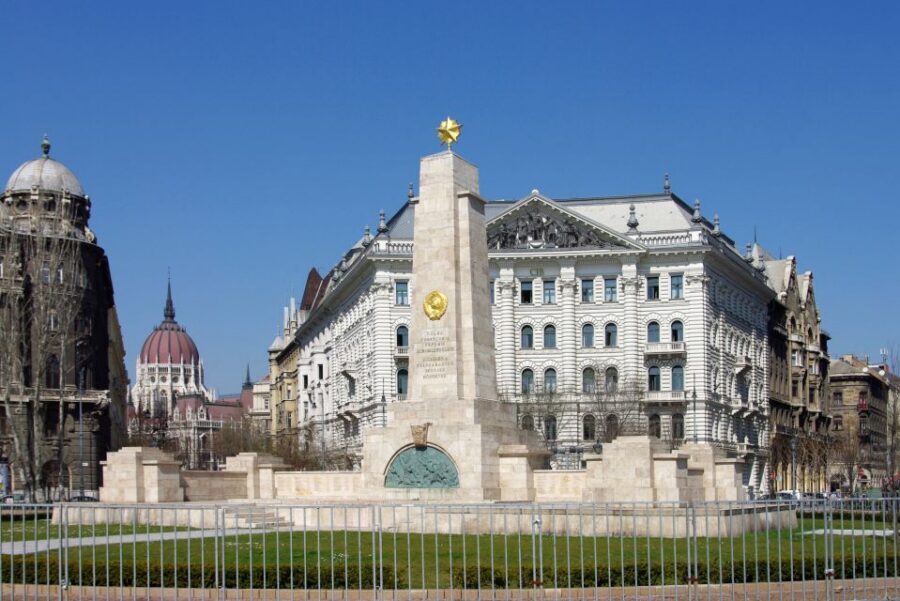
- Liberty Square: Nazi Occupation to Communist Oppression
- Kossuth Square and Hungarian Parliament: Dictatorship and the 1956 Revolution
- Danube Finale: Shoes on the Danube Bank and a Quiet River Walk
- Price and Value: What $23 Buys You Here
- Who This Tour Suits Best (and Who Might Want Something Else)
- Should You Book This German Inner-City Tour?
- FAQ
- Is the tour guided in German?
- How long is the Budapest inner city walking tour?
- What is the meeting point?
- What main sights will we see?
- Is the tour wheelchair accessible?
- What are the booking and cancellation options?
Key highlights you’ll remember
- A German-speaking professional guide who keeps the story clear and paced for a 2-hour window
- St Stephen’s Basilica: the dome and colonnade as the centerpiece of the inner-city walk
- Parliament area storytelling around dictatorship and the 1956 revolution
- Liberty Square context on Nazi occupation and Communist oppression
- Mr. Safe and the pedestrian streets for lighter moments that break up the history
- Shoes on the Danube Bank or an easy river-walk finale, depending on the flow of the group
Why This Pest Walking Tour Works in Only 2 Hours
This is the kind of tour that helps you get Budapest into your head quickly. You’re not wandering randomly through the city center hoping everything lines up. Instead, the route strings together landmarks that people recognize, with just enough explanation to make them meaningful.
I like that it keeps a relaxed city-center rhythm. You’re walking through real pedestrian streets, not spending the whole time “transporting” between stops. That matters because Budapest’s inner city is best absorbed on foot: you notice architectural details, changing street texture, and sudden sightlines to the river.
Here’s the practical idea behind it: you get major orientation points early, then deepen understanding as the walk goes on. That structure makes a big difference on a first visit, especially if you don’t have days to piece together Buda and Pest separately.
Also, the guide-led German format is a nice touch. If your German is decent, you’ll likely follow more easily than you would on a mixed-language tour. If your German is basic, you’ll still pick up plenty from the visuals and the straightforward explanations.
You can also read our reviews of more walking tours in Budapest



Starting at Molnar’s Kürtöskalacs: Easy Meet-Up, Real-World Vibes
The meeting point is right in the city pulse: in front of the café/pastry shop Molnar’s Kürtöskalacs. That’s helpful because you’re not hunting for a meeting spot in some vague side street. You’ll see people around, which also reduces that pre-tour stress.
It’s a smart start for a couple reasons. First, it puts you in the right “tour mode” immediately—an actual café area in the inner city rather than a distant landmark. Second, it gives you a natural chance to grab a quick snack or coffee before you start walking (if you’re the type who likes a little fuel).
From there, the tour moves into Elizabeth Park and the Budapest Eye. Even if you’ve never studied Budapest’s layout, this opening helps you orient fast. You’ll get a sense of where the city’s public spaces sit and how the river area frames the views.
If you’re coming with family or anyone who needs mobility support, the tour being wheelchair accessible is a key advantage. It’s not an all-stairs slog in the dark corners of the old town; it’s designed as a walkable, central route.
Elizabeth Park and Budapest Eye: Orientation With a Big View
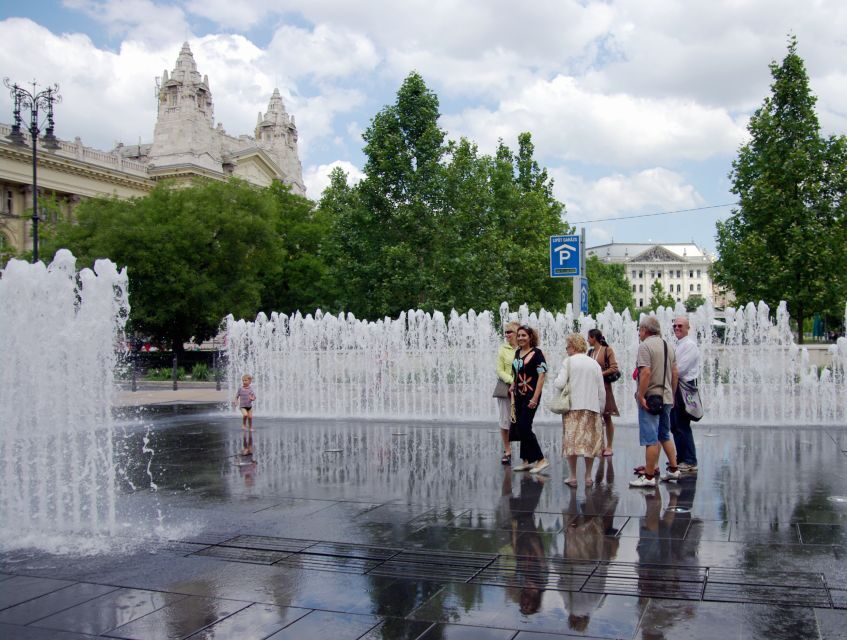
Elizabeth Park is a strong first act because it gives you breathing room before the heavier landmarks. It’s a calmer start, and that sets the tone for the rest of the walk.
Then you reach the Budapest Eye, described as the largest Ferris wheel in Europe. Even if you’re not planning to ride it, just seeing it helps you connect the park with the riverfront zone. It’s one of those “Budapest landmark” moments that snaps photos into focus.
What I like about starting here: it helps you understand the city’s scale and placement. Budapest can look like separate worlds—grand buildings here, river views there, neighborhoods in between. A park-and-view opening makes the rest feel more connected.
One small practical tip: if you care about photos, keep your camera ready as you approach the Budapest Eye. You don’t want to fumble with settings while the group is still moving. Since the tour is only 2 hours, you’ll want those quick windows.
And yes, the pace is designed for sightseeing rather than marathon endurance. That relaxed rhythm makes the whole walk feel doable.
St Stephen’s Basilica: The Dome, the Colonnade, and the Meaning
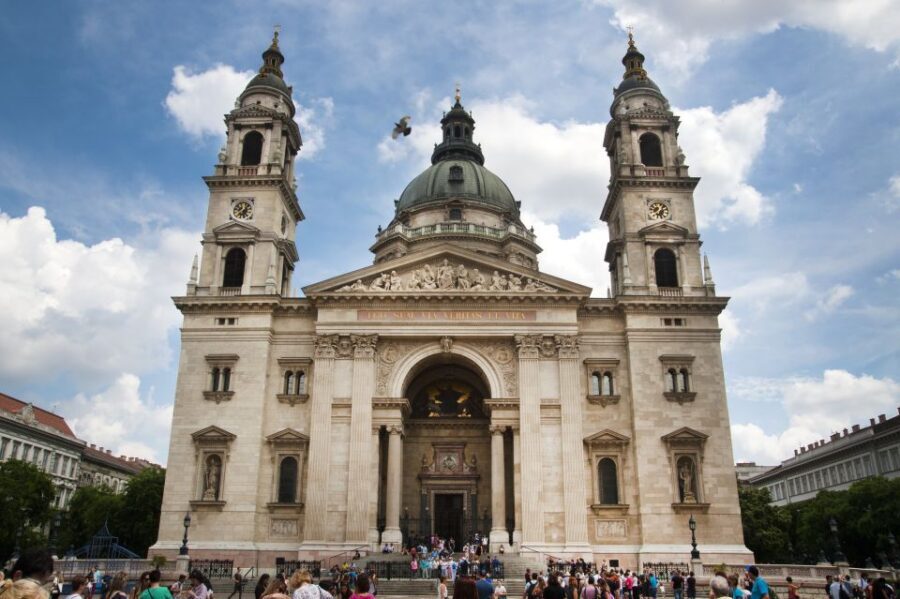
St Stephen’s Basilica is the moment when the tour becomes truly “Budapest.” You’ll admire the monumental dome and colonnade, and you’ll understand why it’s such a central symbol in the city’s identity.
This stop works for two different types of visitors. If you love architecture, the basilica is a built statement—big lines, grand forms, and a presence you can’t miss. If you prefer history and context, the guide’s explanations help you see it as more than just a photogenic church.
The dome and colonnade aren’t just visual perks. They’re also cues for how Budapest frames power, tradition, and public space. On your own, you might notice the building. With a guide, you understand why that building matters in the story of Pest.
A consideration: churches attract people, and this is one of the best-known locations on the route. Expect some crowd movement at least around the exterior areas. If you want the most relaxed viewing, watch how the guide positions the group—go with that flow rather than trying to sprint for your preferred angle.
Pedestrian Streets and Mr. Safe: When Budapest Gets Playful
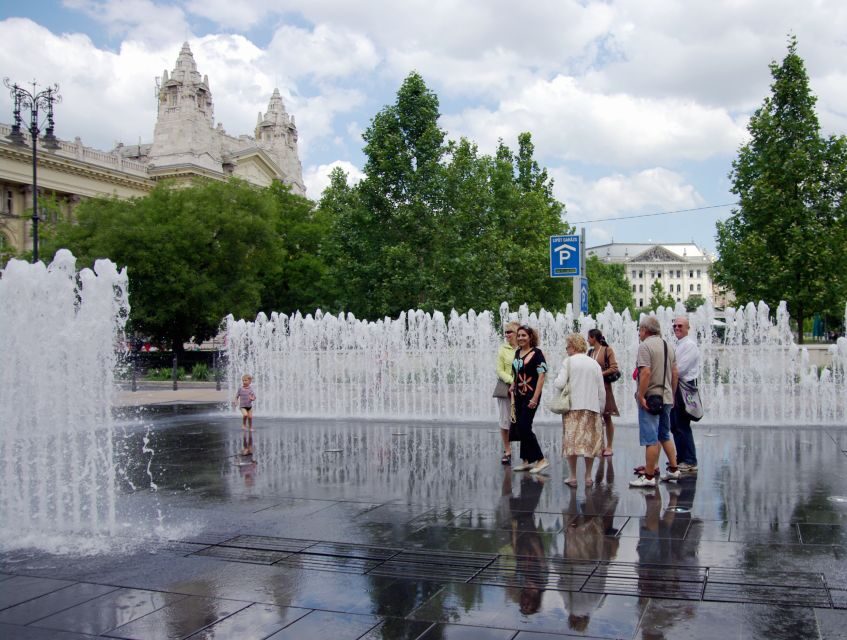
After the big monuments, the tour moves through traditional pedestrian streets. This part is where you start to feel like you’re actually in the city, not just passing through it.
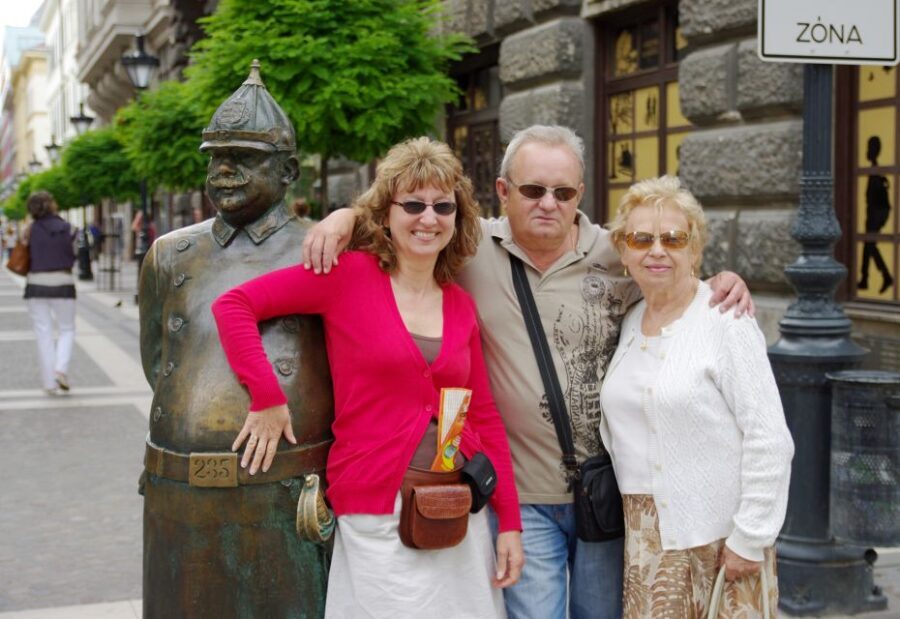
The highlight here is the statue of Mr. Safe, which is specifically called out because it reliably makes people smile. It’s a reminder that Budapest isn’t only heavy history and grand stone. There’s humor in the public space, and that matters when you’ve just been absorbing major political themes.
I also like how pedestrian streets change your experience. Instead of constant large-distance sightlines, you get closer interactions with the city: storefront rhythms, street life, and the slower way you can read a place as you walk.
This section is a nice “pressure release.” It’s not ignoring the story—it’s balancing it. It also gives you a mental reset before Liberty Square and the Parliament area bring the mood back to seriousness.
If you’re traveling with someone who gets museum-fatigued, this stop helps. It breaks up the schedule with something light and memorable, without turning the tour into a comedy show.
You can also read our reviews of more city tours in Budapest




Liberty Square: Nazi Occupation to Communist Oppression
Liberty Square is where the tour’s emotional weight increases. You’ll learn about Budapest’s traumatic past as a center of Nazi occupation and Communist oppression.
This isn’t framed as a dry timeline. The value is in connecting the location to lived consequences. A square is usually just a place on a map—on a guided walk, it becomes a place where you can imagine what people endured.
I appreciate that the tour doesn’t skip the difficult parts. If you want the feel of Budapest’s 20th-century history, you need stops like this. Skipping it means you only get the “postcard city.” With it, the story turns real.
One thing to keep in mind: this section may hit harder than you expect. If you prefer lighter sightseeing early in the day, you might feel this moment earlier or later depending on how your group is moving. But the tour’s pacing is designed to keep you guided and not overwhelmed.
If you’re sensitive to historical topics, it helps to take a minute to regroup after the explanation. You don’t need to rush through the area. A calm pause makes the message sink in more safely.
Kossuth Square and Hungarian Parliament: Dictatorship and the 1956 Revolution
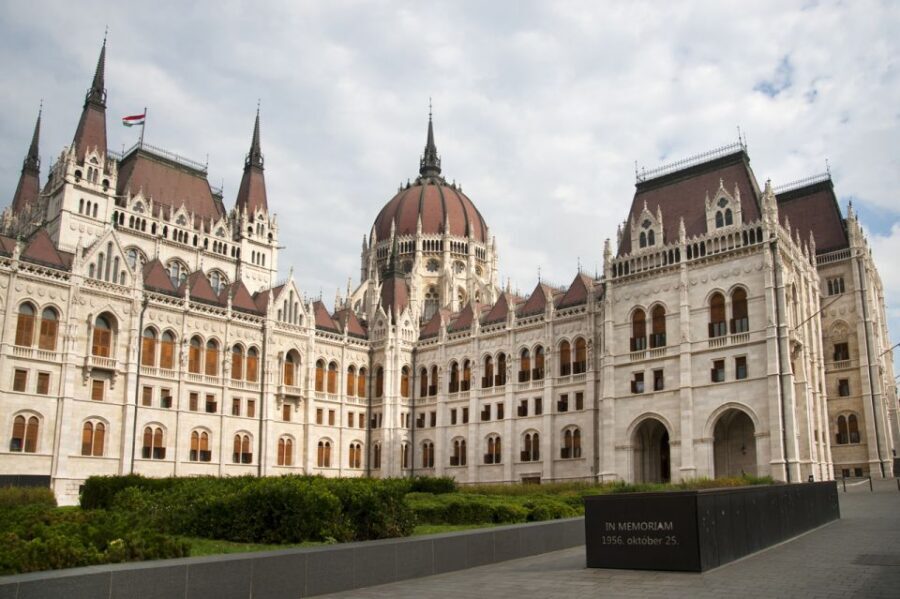
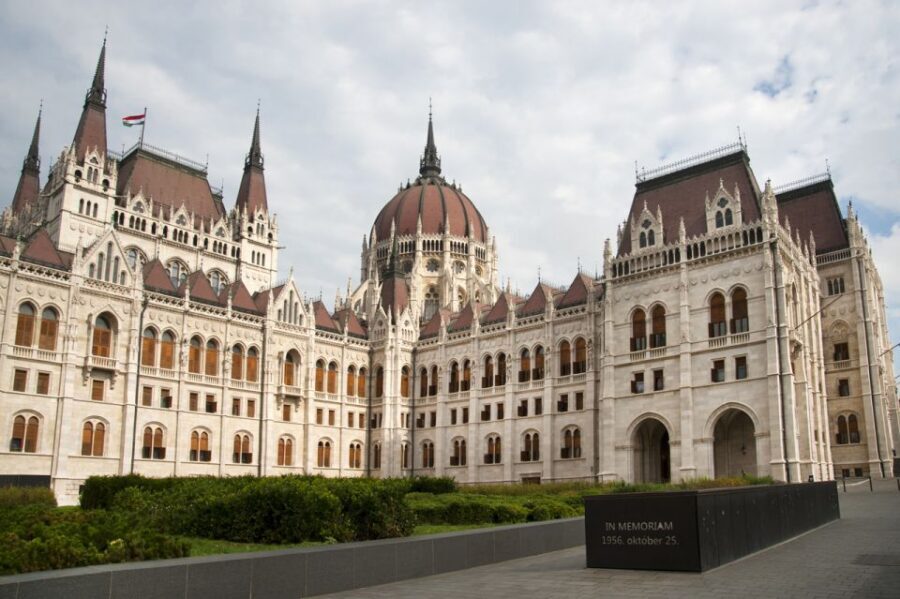
The tour finishes its major narrative arc around Kossuth Square and the majestic Hungarian Parliament building. Here, you’ll hear stories of dictatorship and the 1956 revolution.
This is a powerful combination: the grandeur of Parliament on the outside, and the human struggle behind it in the story. The guide’s job matters a lot in a place like this. Without interpretation, it’s easy to treat the building like a mere backdrop for photos. With context, the space feels charged with meaning.
I also like that the tour doesn’t just point at the Parliament building. It links the architecture and location to the political reality of the era. That makes Budapest’s public spaces feel less mysterious and more legible.
Practical reality: Parliament-area sights are often photo magnets, so you’ll likely share angles with other visitors. Go with the guide’s suggested viewing spots. You’ll usually get better results than chasing a single perfect shot and slowing the group down.
Another plus for value: hearing the 1956 revolution story while you’re standing nearby changes how you remember it. Dates can blur; place-based storytelling sticks better.
Danube Finale: Shoes on the Danube Bank and a Quiet River Walk
After the Parliament area, you get a poignant end: the Shoes on the Danube Bank monument or a stroll along the riverbanks. This gives you a thoughtful landing after heavier history.
I like endings like this because they slow your brain down. You’ve just taken in political context. Now you’re set alongside the Danube, where the city’s beauty and its tragedies sit side by side in plain sight.
The Shoes monument is especially effective because it’s specific and grounded. Even if you don’t know every detail beforehand, you understand the point emotionally. It’s not abstract.
If your group flows a little lighter, you might also get a river-walk moment. That’s where you can take in the city’s relationship to the water—how the skyline and bridges frame the view and make Budapest look like it’s always been built to be seen.
One consideration: this ending can feel quiet and reflective. If your group is loud and chatty, it’s harder to get the full effect. The good news is that the tour’s earlier pacing tends to set you up for a calmer finale.
Price and Value: What $23 Buys You Here
At $23 per person for a 2-hour German-guided walk, you’re paying for something most solo sightseeing can’t easily replicate: an ordered route plus context that makes the landmarks click together.
That’s the key value point. The stops aren’t random; they’re linked so you build a coherent mental map of Pest’s identity. With a guide, you spend less time figuring out what to prioritize and more time understanding what you’re seeing.
This also matters if you’re short on time. Two hours is enough for major highlights—Basilica, Parliament area squares, and the Danube memorial—without consuming your whole day.
There’s also flexibility baked in: you can reserve now and pay later, and cancellation is available up to 24 hours in advance. For people building a tight Budapest schedule, that reduces stress.
As for group format, it’s a private group. That usually means more room for questions and less time waiting for people to catch up. Combine that with a German guide, and you get a more controlled, higher-quality experience than big group tours.
Who This Tour Suits Best (and Who Might Want Something Else)
This tour is a great fit if you:
- want an inner-city overview of Pest in a short time
- like architecture plus real historical context
- prefer a German-speaking guide and clear explanations
- enjoy a route that mixes major monuments with small human moments like Mr. Safe
It may be less ideal if you:
- hate historical topics with heavy political meaning
- want lots of long indoor time or extended stays at each stop
- expect a flexible pace with frequent detours off the main route
A useful way to think about it: this walk is structured for learning without exhausting you. It’s not a slow wander where every stop becomes an all-day event.
Also, if you’re traveling as a couple, a family, or a small group that wants clarity and not chaos, the private group format helps you keep the experience personal.
Should You Book This German Inner-City Tour?
I’d book it if you want the quickest path to understanding Budapest’s inner city—especially if it’s your first or only short visit. The combination of St Stephen’s Basilica, the Parliament area squares, and the Danube memorial creates a memorable arc: beauty, identity, and history, all on one walk.
The strong sign here is the guide quality. Multiple guided experiences are praised for attention to details, responsiveness to wishes, and explanations you can actually absorb within a short timeframe. Names like Zsóka and Uschi come up often in that context, which is a nice hint that the guiding style tends to land well.
Just go in with the right mindset for the serious parts. Liberty Square and the Parliament area cover difficult chapters. If you’re okay with that—and you want context rather than just photos—this is a very solid value at $23.
FAQ
Is the tour guided in German?
Yes. The tour includes a German-speaking professional guide.
How long is the Budapest inner city walking tour?
The duration is 2 hours.
What is the meeting point?
Meet your guide in front of the café/pastry shop Molnar’s Kürtöskalacs.
What main sights will we see?
You’ll see Elizabeth Park and the Budapest Eye, St Stephen’s Basilica, traditional pedestrian streets including the Mr. Safe statue, Liberty Square, Kossuth Square, the Hungarian Parliament building area, and either the Shoes on the Danube Bank monument or a stroll along the river.
Is the tour wheelchair accessible?
Yes, the tour is wheelchair accessible.
What are the booking and cancellation options?
You can reserve now and pay later, and you can cancel up to 24 hours in advance for a full refund.