REVIEW · BUDAPEST
Buda Castle Walking Tour with Audioguide on Your Smartphone
Book on Viator →Operated by TouringBee · Bookable on Viator
Budapest’s castle hill is a maze in good weather. This self-guided walk turns it into a simple route with offline GPS maps and step-by-step audio you can pause anytime. You get 26 audio recordings narrated by a professional historian, plus illustrations that help you match what you see to what you’re hearing.
I especially like the freedom: you’re not tied to a group pace, and the route is built for wandering courtyards, viewpoints, and major sights without feeling rushed. The price also feels fair for what you get: a full audio walk that you can use again later with 1-year access.
One real catch: this is not a printed ticket tour. You must use your smartphone (and bring your own headphones), and you should download/activate the app before you start, or you’ll lose time right when you’re standing by the walls.
In This Review
- Key things to know before you go
- Why Buda Castle fits an audio walk so well
- Getting oriented at Vienna Gate (and not wasting time)
- Stop 1: Buda Castle highlights you’ll hear about
- What to look for as you walk
- The “oldest café” reset
- A note on pace
- What the 26 recordings actually add
- Offline maps and GPS: the real quality-of-life upgrade
- Pricing and value: why $8.40 can be a smart buy
- What’s included vs. what you’ll pay for elsewhere
- What to bring (so your phone doesn’t ruin the day)
- Who should book this (and who might prefer a guided tour)
- Should you book the Buda Castle Walking Tour with Audioguide?
- FAQ
- Is this tour guided by a person?
- How long does the Buda Castle walking tour take?
- Do I need headphones?
- Does it work with an offline map?
- Where does the tour start and end?
- Can I get a full refund if I cancel?
Key things to know before you go

- Smartphone audio, not a human guide: you follow the route in the TouringBee app on your phone.
- Offline map with GPS navigation: you can navigate without relying on mobile data.
- 26 historian-narrated audio stops: clear, story-based context for the key castle sights.
- Illustrations help you identify landmarks: useful when the views and buildings blur together.
- Oldest-cafe break built into the experience: a real reset point during the walk.
- Small maximum group size (20): even though it’s self-guided, it helps keep the start area manageable.
Why Buda Castle fits an audio walk so well
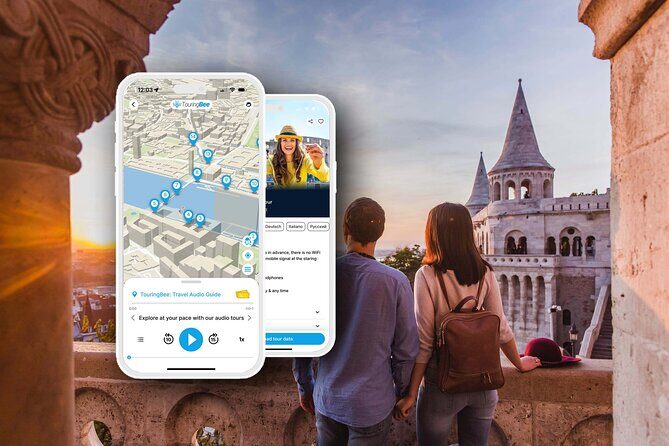
Buda Castle is one of those places where you can easily see the big icons but miss the “how did this place work?” story. A guided talk helps, sure, but an audio format can do something better here: it lets you slow down whenever a church façade, wall detail, or viewpoint actually grabs your attention.
This tour is designed for exactly that. You’re walking a compact, top-of-the-hill area and pairing what you see with audio recordings and landmark illustrations. That combo matters, because Buda Castle isn’t one straight street of sights. It’s courtyards, stairs, tunnels of history, and lots of angles on the Danube.
You can also read our reviews of more walking tours in Budapest



Getting oriented at Vienna Gate (and not wasting time)
The tour starts at Vienna Gate (Bécsikapu tér, 1014 Hungary) and ends back at the same meeting point. That round-trip design is practical because you don’t have to solve a “where do I get out?” problem while you’re tired and sightseeing.
You’ll also want to plan your phone setup before you reach the start. The experience is self-guided through the TouringBee mobile app for iPhone and Android. Your purchase needs to be activated, then you follow the route on the app map with GPS navigation.
Here’s the realistic downside: if you arrive expecting an on-site ticket booth vibe, you can get frustrated fast. Some people run into the surprise of needing an extra app right at the meeting point. You can avoid most of that stress by downloading the app and doing a quick test run before you leave your hotel.
Stop 1: Buda Castle highlights you’ll hear about

The full experience is focused on one main area: Buda Castle, the historic fortress complex above the Danube. With a total duration of about 2 hours, this is ideal if you want a strong orientation in a limited amount of time.
What to look for as you walk
The audio path is built around major castle-district anchors and the viewpoints they create. Expect the stories to connect you to:
- Matthias Church: not just a pretty landmark, but a key piece of the castle’s visual identity.
- Fisherman’s Bastion: those iconic terrace views over the city and river, explained in context.
- The Hungarian National Gallery: you’ll get a lead-in to Hungarian art and culture while you’re in the right place to notice the setting.
Courtyards and nearby galleries can feel similar at first glance, especially if you’re bouncing between viewpoints and staircases. This is where the illustrations help most. They’re there to remind you what you’re standing next to, so you’re not constantly guessing.
The “oldest café” reset
One of the practical perks is a break designed into the route, including a visit to Budapest’s oldest café. Even if you don’t go deep on coffee culture, having a planned pause helps you keep your energy up for the rest of the walk. You’ll also appreciate the chance to warm up, cool down, or just stop thinking for a minute.
A few more Budapest tours and experiences worth a look






A note on pace
Two hours works best if you move steadily but don’t rush. If you’re the type who stops for every photo, you can still do it, but you’ll want to keep breaks short so you don’t run out of audio before the final area.
What the 26 recordings actually add

This tour includes 26 audio recordings narrated by a professional historian. That’s a big difference from random street-level explanations. You’re not just getting “what it is,” but usually “why it mattered” and “what you’re looking at.”
In practical terms, that kind of narration helps you:
- understand why different buildings sit where they do
- connect the major monuments to the broader castle district story
- interpret details that you’d otherwise walk past
A common complaint with self-guided tours is that the audio can feel disconnected from what you see. Here, the app route and the landmark illustrations are supposed to fix that. When you’re using the map as intended, the audio cues line up better with the real environment around you.
Offline maps and GPS: the real quality-of-life upgrade

The best “tech feature” here is not fancy video or anything like that. It’s the offline map with GPS navigation.
That matters because you’re on a hill in a historic area where signal can be sketchy. Offline maps mean you’re less likely to watch your screen spin while you search for the next landmark. It also reduces your data use, which is a quiet win if you’re on a limited plan.
There can still be moments where GPS feels moody, depending on phone settings and how the area reads to the device. If your location dot seems off, slow down and use the illustrations plus your own visual landmarks to confirm where you are. The tour is designed for you to self-correct.
Pricing and value: why $8.40 can be a smart buy

At $8.40 per person, this sits in the “cheap enough to try” category, especially compared with full guided tours that often cost a lot more for the same time window. For that price, you’re getting a real audio product: multiple stops, historian narration, a route map, and 1-year access.
Here’s what you should measure value-wise:
- If you like self-guided walking and you’re comfortable using your phone, this is strong value.
- If you want a human to answer questions on the spot, you may feel under-served. This is not that style of tour.
- If you’re the kind of person who hates app setup, you might end up spending more time than you planned.
One more reality check: the “ticket” is not a ticket in the classic sense. It’s tied to the app experience. If you don’t like tech hurdles while traveling, you’ll feel the cost in frustration more than in dollars.
What’s included vs. what you’ll pay for elsewhere

This tour includes:
- 26 audio recordings narrated by a professional historian
- TouringBee audio guide app access (iPhone and Android)
- Landmark illustrations
- 1 year of access in your preferred language
- Offline map with GPS navigation
Not included:
- A human guide
- Smartphones and headphones
- Transportation
- Entrance fees/tickets
- Food and drink
That last point is important. You might want to visit places like Matthias Church areas or museums, but entrance fees are not included. Plan for that if you’re hoping the audio will replace admissions. The tour helps you understand and locate sights, but you still need to pay where required.
What to bring (so your phone doesn’t ruin the day)

If you do this right, it’s simple. If you do it late, it’s annoying.
Bring:
- Your smartphone with enough battery
- Headphones (not included)
- Time to do one setup step before you walk
Setup is the main make-or-break. The tour depends on the app. Downloading and activating it before you start prevents the classic “now I have to figure this out here” moment.
Also bring a charger plan. Two hours on GPS and audio can drain some phones, especially in cold weather. You don’t need fancy gear, but you do need a working device to get the full benefit.
Who should book this (and who might prefer a guided tour)
This is a good match if you:
- want a self-paced walk on castle hill
- like learning as you move, not sitting in one place
- prefer a structured route with built-in landmark clues
- can handle app-based navigation calmly
It’s less ideal if you:
- strongly prefer face-to-face guidance
- hate downloading apps right before sightseeing
- expect a traditional admissions ticket experience
- need real-time help if your phone audio doesn’t connect properly
One helpful clue is the overall rating: 3.8 out of 5 based on 24 experiences. That tells me the product works well for many people, but the app dependency can be a deal-breaker for others. If you’re tech-comfortable, you’ll likely enjoy it more.
Should you book the Buda Castle Walking Tour with Audioguide?
Book it if you want an efficient, low-cost way to make sense of Buda Castle within about 2 hours, using offline GPS navigation and historian-led audio. The illustrations and planned café break are practical touches that turn “castle hill wandering” into an organized route.
Skip it or consider a different format if you don’t want app setup on your travel day, or if you’re the type who gets stressed by tech that fails at the worst possible moment. Because this is self-guided, you won’t have a person standing there to fix the problem for you.
My take: for the price and the design, it’s a smart buy for independent sightseeing. Just do the phone prep first, bring your headphones, and treat it like a walking companion rather than a ticket booth replacement.
FAQ
Is this tour guided by a person?
No. This is a self-guided walking tour. You follow the route on your smartphone using the audio guide app.
How long does the Buda Castle walking tour take?
It takes about 2 hours.
Do I need headphones?
Yes. Headphones are required, and they are not included.
Does it work with an offline map?
Yes. The experience includes an offline map with GPS navigation.
Where does the tour start and end?
It starts at Vienna Gate, Bécsikapu tér, 1014 Hungary, and ends back at the same meeting point.
Can I get a full refund if I cancel?
Yes. You can cancel up to 24 hours in advance for a full refund.