REVIEW · BUDAPEST
Alternative Budapest Walking Tour
Book on GetYourGuide →Operated by Absolute Tours · Bookable on GetYourGuide
Budapest’s street corners have stories. This Alternative Budapest Walking Tour brings you into the city’s street art world and the alternative culture scene across Buda and Pest, not the postcard stuff. I especially love the way you learn from the people behind the murals and graffiti culture, and then get to see how that creative energy spills into places like ruin bars.
The other big win: small groups capped at 10, so you’re not stuck listening to a monologue. You’ll get time to ask questions and get practical tips for the rest of your stay, from guides like Raymond, Petra, and Krisztián. One consideration: it’s a walking tour through older, less-accessible streets, so it won’t be comfortable if you’re dealing with mobility issues or want lots of sitting time.
In This Review
- Key reasons to do this walk
- Entering Budapest’s alternative scene from a Lutheran Church meeting point
- Street art culture: why the murals matter more than the photos
- The Jewish District route: squats, cultural centers, and abandoned synagogues
- Ruin bars and nightlife spaces: from community centers to a courtyard full of mismatched objects
- Buda meets Pest: how the tour keeps you from seeing only one side
- Price and value: what $67 buys you in real-world time
- What the stops feel like on the ground (and how to prepare)
- Who should book this and who should skip it
- Should you book this Alternative Budapest Walking Tour?
- FAQ
- How long is the Alternative Budapest Walking Tour?
- What’s included in the tour price?
- What isn’t included?
- How big are the groups?
- What language is the tour guide?
- Where do I meet the guide?
- What should I bring?
- Is the tour accessible for wheelchair users or people with mobility impairments?
- Is cancellation allowed, and how much notice do I need?
Key reasons to do this walk
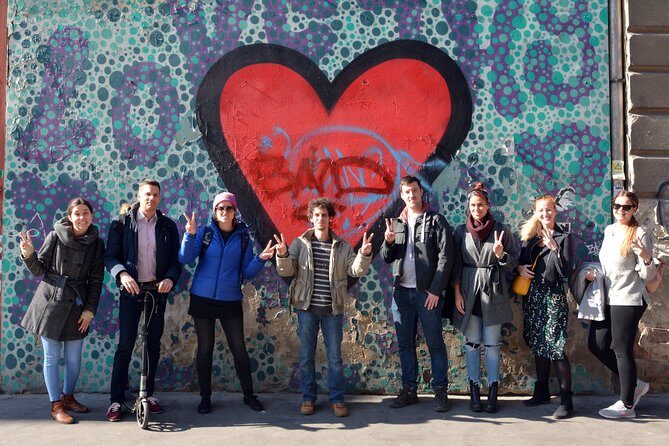
- Small group size (up to 10) means more conversation and Q&A
- Street art culture you can talk about with context on writers and street artists
- Jewish District focus with stops tied to squats, cultural centers, and abandoned synagogues
- Ruin bars and community spaces show how nightlife re-formed the neighborhood
- Design + art stops like eco design shops, art cafés, and analogue photography spaces
- Buda and Pest coverage keeps the tour feeling like Budapest as a whole, not one bubble
Entering Budapest’s alternative scene from a Lutheran Church meeting point
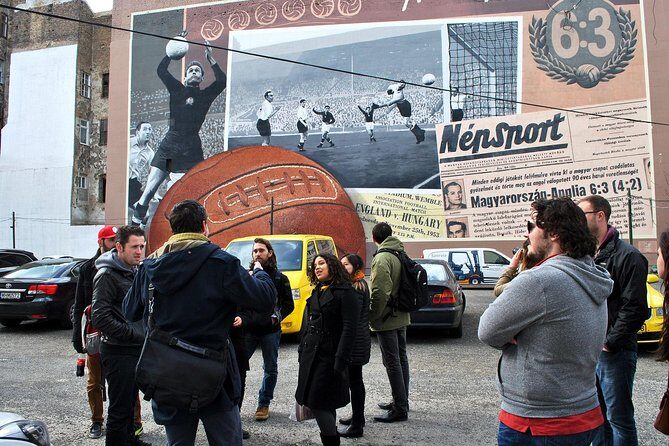
Most Budapest tours start at the obvious spots. This one starts in a very specific, practical place: outside the pale yellow Lutheran Church, right on the church steps. It’s central enough that you can find it, but it also feels like a “meet the city” start instead of a “queue for a highlight” start.
From there, the tour’s core goal becomes clear fast: you’re walking into the parts of Budapest where the present matters as much as the past. The tour description puts it plainly—move past the usual tourist hangouts and look at the culture that’s growing now: underground music, fashion, and art.
If you’re the kind of person who likes a city through what people do there (not just what they built there), this format makes sense. You get a guided thread—street art on one side, the Jewish District on the other, then nightlife and creative workspaces that connect them.
Timing is built for walking, not lingering. The activity is listed at 2.5 hours, though the longer description uses a three-hour feel. Either way, plan for a solid chunk of time on your feet, with frequent stops to look up close and ask questions.
You can also read our reviews of more walking tours in Budapest



Street art culture: why the murals matter more than the photos
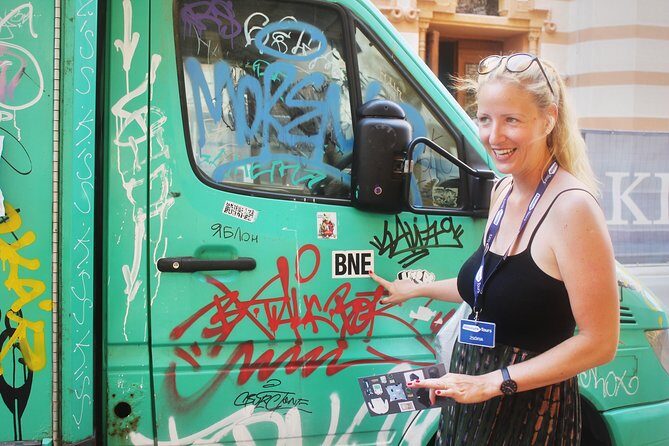
Budapest street art isn’t just decoration. On this tour, you’re taught to see it as communication—visual commentary, identity, and sometimes politics. That matters because many street art walks stop at pointing. This one aims to explain.
You’ll spend time on street art spots and learn how graffiti writers and street artists fit into Budapest’s broader cultural scene. One review specifically notes that guides shared context so you could understand the background behind what you’re seeing on walls and buildings, not just admire the colors.
And the guides bring real-person credibility. Names you’ll hear in people’s stories include Raymond (often mentioned for knowledge and friendly engagement), Petra, and Krisztián. Even when the guide name changes, the pattern stays the same: you ask, you talk, and the tour turns into a conversation about how the city’s creative underground works.
A smart heads-up: if you’ve already spent years chasing street art in major cities, the style might feel familiar. But the value here is local context—why Budapest’s walls look the way they do, and how the city’s alternative districts gave street artists a place to show up.
The Jewish District route: squats, cultural centers, and abandoned synagogues
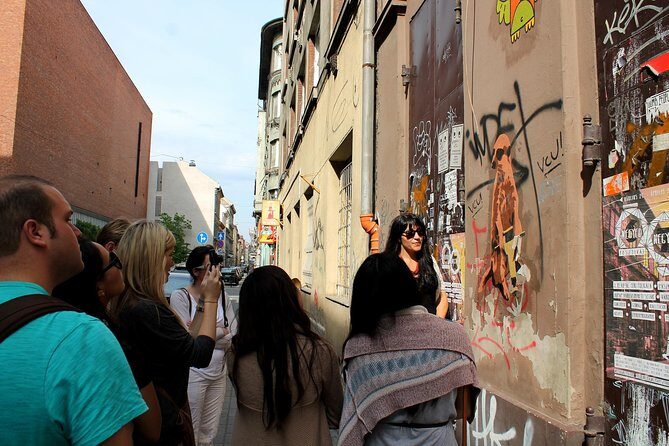
The tour’s emotional center is the Jewish District. The description frames it as where alternative culture is kicking off—almost like a post-wall East Berlin comparison, where uncared-for spaces became places people wanted to be.
You can expect stops that connect alternative culture with real local history. That includes visiting areas tied to squats and cultural centers, and seeing references to abandoned synagogues and art galleries. The point isn’t shock value. It’s to understand what happens when a neighborhood changes and people repurpose space—socially and creatively.
One review credits the guide Cristian (spelled differently in the account) with painting a clear picture of the Jewish community’s history and how ruin bars played a major role in the revival of the entertainment district. That story is exactly the kind of connection I think makes this walk worth your time. You’re not just seeing places; you’re getting the cause-and-effect.
Also, if you like the idea of Budapest as a city in motion—what it’s becoming more than what it used to be—this is where the tour leans hardest into the present and future. It’s less about checking off old landmarks and more about understanding why certain spaces feel alive.
Ruin bars and nightlife spaces: from community centers to a courtyard full of mismatched objects
Ruin bars are not only a fun night out here—they’re part of the neighborhood’s comeback story. On this tour, you’ll stop at ruin bars and related hangouts that function like community spaces: part bar, part meeting point, part creative workshop.
Szimpla Kert is the name that comes up most often. One review describes it as a maze of rooms around a courtyard, where everything feels slightly off-balance—in a good way—like an old Trabant turned into a seating area. That’s the ruin bar spirit: reuse, remix, and make something new inside an old shell.
You might also encounter other spaces tied to the creative underground, such as a bike workshop or an analogue photography gallery (both mentioned as stop types in the tour description). Even if you don’t go inside every single space, the guiding idea is the same: alternative culture here is physical. It happens in buildings you can walk up to, not just online.
Practical note: ruin bars and similar venues are often lively, which means noise levels can be higher than the street art stops. If you’re sensitive to loud interiors, consider this when you bring your patience—and remember the tour schedule includes short stops so you can reset.
Buda meets Pest: how the tour keeps you from seeing only one side
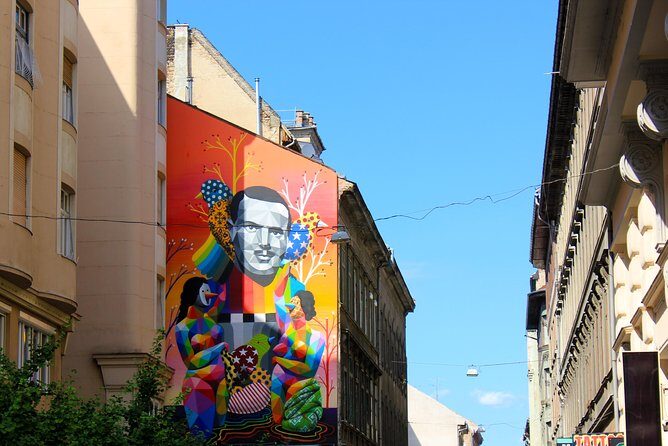
Budapest’s layout can trick you. Many tours make it feel like Pest is the whole city, or that Buda is the only place with views that matter. This one aims to cover both Buda and Pest, with an ever-changing route depending on the day.
In practice, some guides and group days emphasize the Jewish District and the 7th district (District VII), with stops that may pass familiar central landmarks like Deák Ferenc Square. But the bigger picture is that you’re not stuck with one micro-neighborhood identity.
That matters for your whole trip. If you only do a standard “big sights” loop, Budapest can start to feel like separate postcards. This tour stitches them together through people’s culture—street art, fashion, music, and nightlife—so you get a sense of how the city works as one unit.






Price and value: what $67 buys you in real-world time
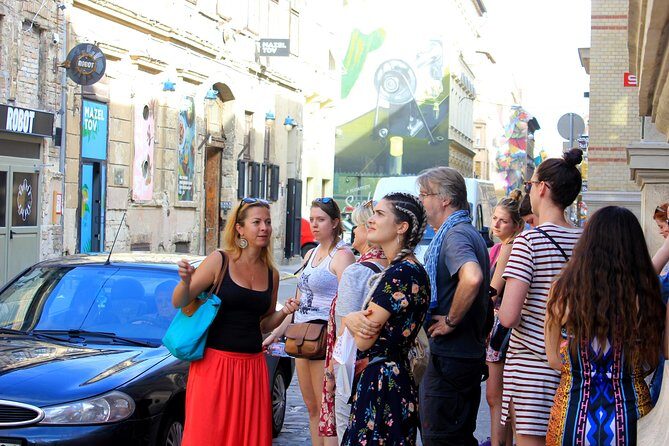
At $67 per person for a roughly 2.5-hour small-group walk, the big question is value: are you paying for access, or paying for information?
From the reviews and the tour design, it’s both, but the emphasis is on the information and the way it’s shared. Guides are repeatedly praised for being friendly and willing to answer questions, and for giving background that helps you interpret what you see. One review even calls out that it helped them understand what they were looking at, because the guide provided stories that made the murals, buildings, and bars click.
The small group size is your payoff here. With a cap around 10 people, you’re more likely to talk than to sit. That’s not a luxury detail. It changes the tour. When you can ask, you can steer. And when you can steer, you leave with a smarter plan for the days after.
Is it overpriced for some? One reviewer directly says it felt slightly over priced. I get that reaction if you expect a long, ticket-based museum tour. But if your goal is to spend a half-day learning how Budapest’s alternative districts formed—and where to go next—then the price starts to look more like paying for a local translator of culture.
So here’s the honest way to evaluate it: if you’re mostly chasing famous monuments and you hate walking, you’ll likely feel the cost isn’t justified. If you want a credible street-level map of where the city’s creativity lives, you’re paying for exactly that.
What the stops feel like on the ground (and how to prepare)
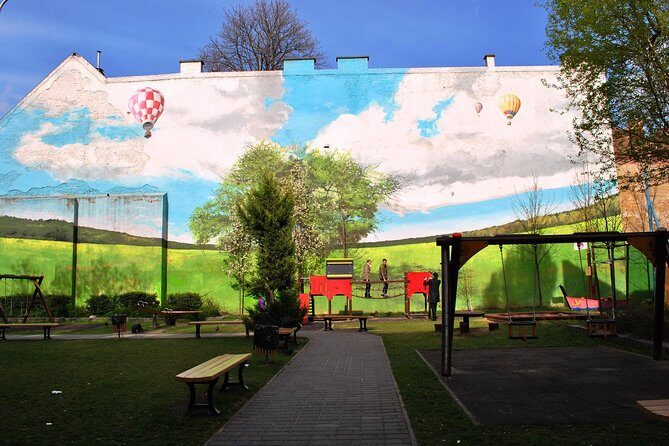
This is where the tour’s small-group structure helps you. You’ll move street to street, stop to look, and then connect what you’re seeing to a story—history, social change, and present-day creative life.
Expect a mix that’s not only outdoors. The tour is described with choices like an art and coffee collective stop, as well as ruin bar-cum community center stops. In cold or rainy weather, one review mentions pit stops indoors and a warmer sit-down break with coffee and mulled wine/coffee. You can’t guarantee the exact break, but you can reasonably expect the guide to manage weather with short interior moments.
What to bring:
- Comfortable shoes (you’ll be on city streets for hours)
- Weather-appropriate clothes (Budapest weather changes fast)
- A phone with decent battery (for maps, photos, and quick follow-up tips)
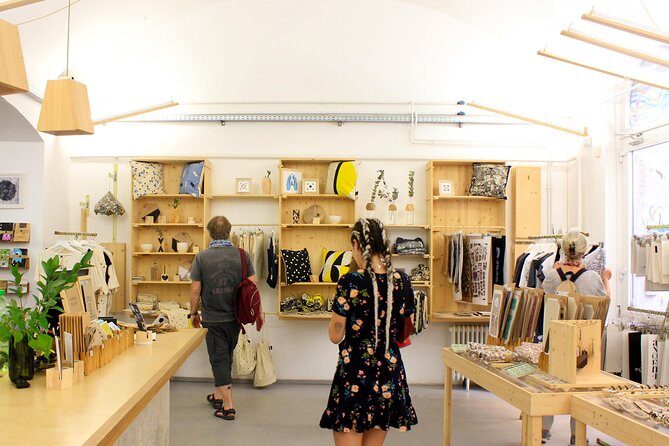
And if you love coffee: at least one named stop in people’s stories is Printa, described as an eco design shop where the group had coffee. Another review mentions a book shop café as part of the mix. Those kinds of stops are why I like this tour format: it’s culture you can touch, not just look at.
One more consideration: this tour isn’t suitable for people with mobility impairments or wheelchair users. The walking and street surfaces are the main issue, so choose based on your ability to cover uneven sidewalks comfortably.
Who should book this and who should skip it
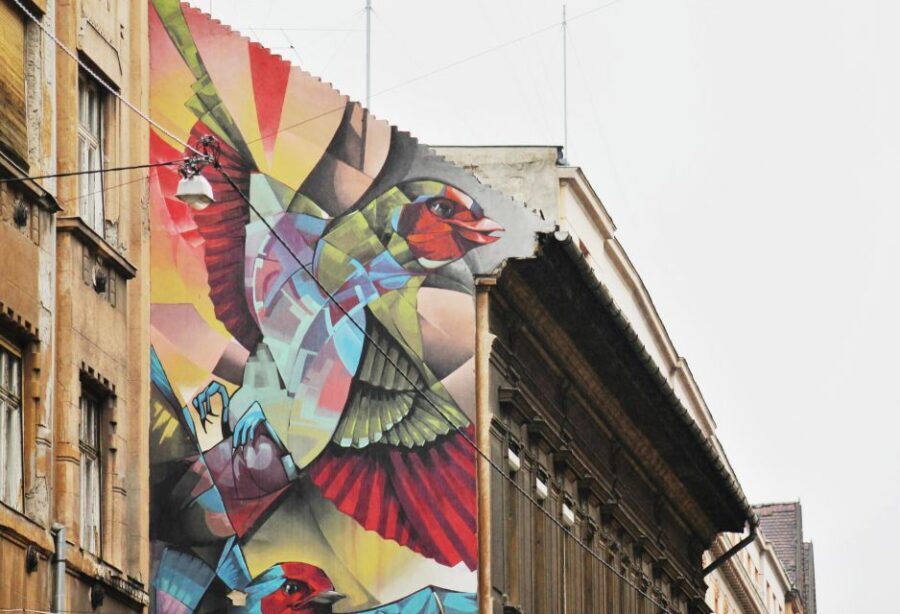
This tour is best for you if:
- You’re curious about street art, graffiti culture, and underground music
- You want a Budapest story that includes nightlife and creative workspaces
- You enjoy asking questions and getting practical pointers for the rest of your trip
- You don’t need a checklist of classic monuments to feel satisfied
You might skip it if:
- You want mostly famous landmarks with lots of indoor ticketed sights
- Walking for about 2.5 hours sounds like a struggle
- You only want general tourist facts and not the gritty neighborhood context
If you’re doing Budapest for the first time and you only have a short window, I like the logic of doing a tour like this early. One theme in the guides’ praise is that they help you plan what to do after—so this becomes a launch pad, not just a standalone experience.
Should you book this Alternative Budapest Walking Tour?
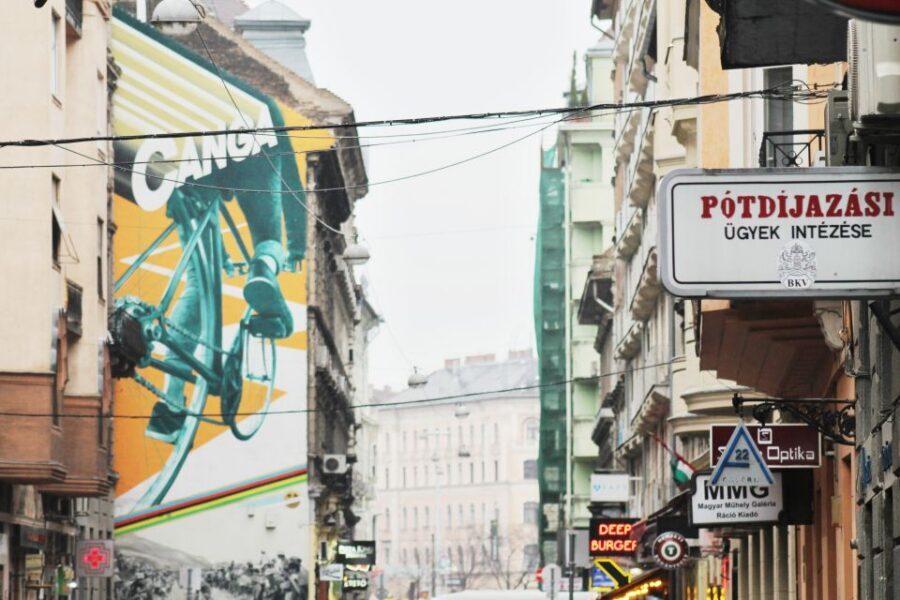
Yes—if your idea of a great Budapest day includes street art, ruin bars, and the Jewish District’s role in the city’s alternative culture. The guides (Raymond, Petra, Krisztián, Anna, Lauren are just a few names that show up across accounts) consistently turn the walk into a conversation, and that’s where the real value sits.
If you’re price-sensitive and only want the most obvious sights, it may feel like you paid to walk somewhere you could find on your own. But if you want the background that helps you see the walls and buildings as part of a living cultural story—and you want insider tips for the rest of your stay—this is exactly the kind of tour that makes your whole trip smarter.
FAQ
How long is the Alternative Budapest Walking Tour?
It’s listed as 2.5 hours.
What’s included in the tour price?
The walking tour and a professional guide are included.
What isn’t included?
Entrance fees, and food and beverages are not included.
How big are the groups?
It’s a small group limited to 10 participants.
What language is the tour guide?
The tour is in English.
Where do I meet the guide?
Meet your guide in front of the Lutheran Church (pale yellow), on the church steps.
What should I bring?
Bring comfortable shoes and comfortable clothes, plus weather-appropriate clothing.
Is the tour accessible for wheelchair users or people with mobility impairments?
No. It isn’t suitable for people with mobility impairments or wheelchair users.
Is cancellation allowed, and how much notice do I need?
Free cancellation is available up to 24 hours in advance for a full refund.