REVIEW · BUDAPEST
A Journey through Jewish Budapest – Walking Tour
Book on GetYourGuide →Operated by insightcities.com · Bookable on GetYourGuide
Budapest’s Jewish story hits hard, fast. This 3-hour walk links Theodor Herzl’s birthplace square to the Shoes on the Danube memorial, with a historian guide explaining how Jewish life evolved in Budapest before WWII. I really like that the tour is led by serious academics and writers, so the facts come with context, not just dates.
My favorite part is how the route layers meaning site by site: the Dohány Street Synagogue complex, then the ghetto wall area, and finally the remembrance at the river. One heads-up: Dohány Synagogue entry isn’t included (14500Ft ticket), and you’ll need shoulders and knees covered for the synagogue itself.
In This Review
- Key highlights to look for
- A before-and-after tour of Jewish Budapest
- Kamara Café start and Herzl’s birthplace square
- Dohány Street Synagogue: Europe’s largest, plus the complex behind it
- Kazinczy Street and the ghetto-wall area: where history meets the street
- Status Quo Ante Judaism and the Rumbach Street Synagogue facade
- Shoes on the Danube: the memorial that closes the emotional loop
- Price and value: is 123 USD worth it?
- Who this tour suits (and who might prefer something else)
- Practical things to know before you go
- Should you book this Jewish Budapest walking tour?
- FAQ
- FAQ
- How long is the Jewish Budapest walking tour?
- What is the price per person?
- Where does the tour meet?
- What language is the tour offered in?
- Is the tour private or small group?
- What’s included in the price?
- What is not included?
- Are there dress requirements for the tour?
- What cancellation options are available?
Key highlights to look for
- Historian-led storytelling that connects daily life before WWII to the memorials you see today
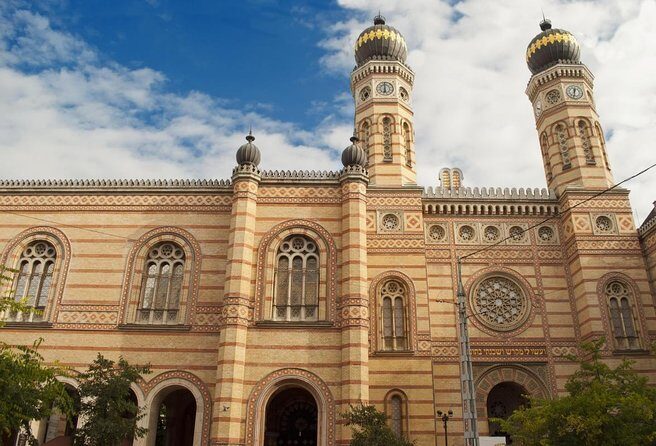
- Dohány Street Synagogue’s Moorish Revival style plus what’s inside the complex, including the Temple of Heroes and Jewish Museum
- A ghetto-wall stop and a 2014 memorial wall that grounds the timeline in the streets themselves
- Status Quo Ante and community history, shown through synagogues like Rumbach Street
- Shoes on the Danube at the end, turning the route into a clear, emotional arc
A before-and-after tour of Jewish Budapest
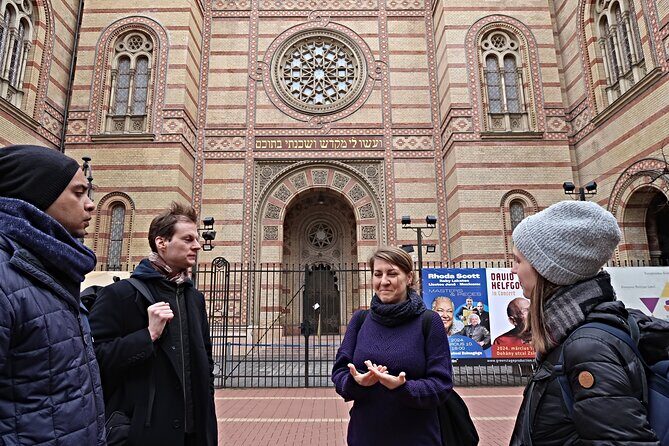
To understand Jewish Budapest before WWII, you need more than big monuments. This tour gives you the street-level story: where people gathered, what their institutions looked like, and how quickly life could change when the world turned dark.
You’ll walk through a city where, before WWII, about a quarter of the population was Jewish. That number matters. It’s why the tour doesn’t treat Jewish culture like a side chapter. It treats it like part of the city’s core identity—then shows what was taken away.
The tone is both educational and reflective. You’re not just checking boxes. You’re learning how buildings, neighborhoods, and memorials became ways for Budapest to tell the truth.
You can also read our reviews of more walking tours in Budapest


Kamara Café start and Herzl’s birthplace square
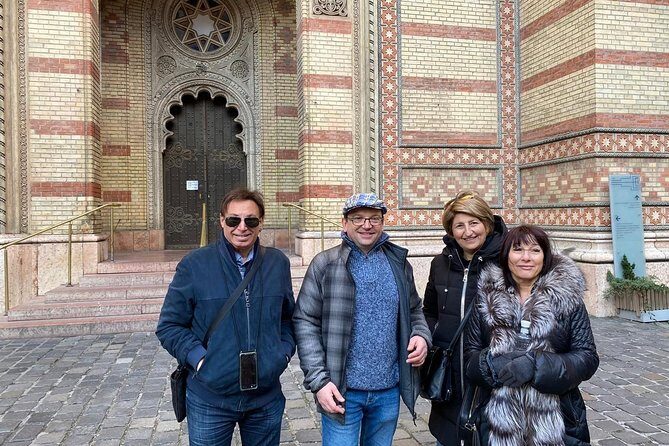
The tour meets at Kamara Café, Dohany utca 1/A. From there, you get moving through the Jewish Quarter area at walking pace. The tour is designed for a compact time window—3 hours—so it keeps a steady flow while still allowing the guide to manage questions.
The first major moment is the square connected to Theodor Herzl, often called the father of modern Zionism. Even before you reach the big synagogues, this stop frames a key idea: Jewish identity in Budapest wasn’t only about religion. It also included debates about the future, belonging, and Jewish nationhood.
I like that the tour starts this way. It helps you read the rest of the neighborhood with more than architecture goggles.
Dohány Street Synagogue: Europe’s largest, plus the complex behind it
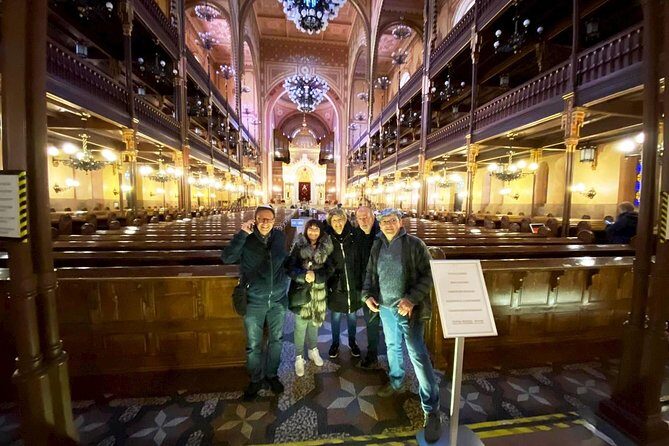
The heart of the tour is the Dohány Street Synagogue, described as the largest Jewish house of worship in Europe. You’ll get a guided visit, not just a quick exterior photo stop. For this part, the tour includes a knowledgeable scholar perspective—so you’re not stuck with surface-level explanations.
What to expect visually: the synagogue is known for its lavish Moorish Revival style. You’ll take in that look because it’s not random. It shows how Jewish communities expressed identity in a major European capital, using style and grandeur to claim cultural presence.
Then comes the part that makes the stop more than a pretty building. Within the synagogue complex, you’ll visit areas tied to memory and learning, including the Temple of Heroes, the Jewish Museum, and a Memorial Park. That sequence is powerful because it moves from people (identity, community, tradition) toward what was lost and what remains to be remembered.
One practical note: the Dohány Synagogue tickets are not included in the tour price, listed as 14500Ft per individual. Also, the synagogue requests shoulders and knees covered, so plan your clothing accordingly.
Kazinczy Street and the ghetto-wall area: where history meets the street
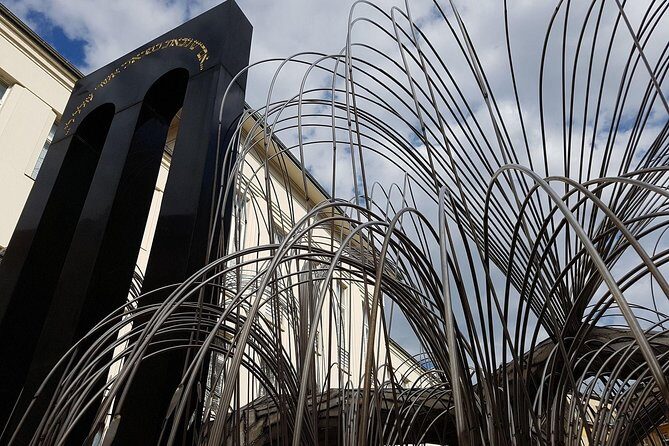
After Dohány Street, the tour shifts from grand architecture to urban reminders. You’ll pass the Ghetto Wall Memorial, created in 2014. That date matters because it shows something hopeful and tricky at the same time: the past wasn’t only rebuilt in the 1940s. It’s still being re-interpreted and re-marked in public space today.
You’ll also go by a mikve, the Jewish ritual bath. Seeing it in the context of the route helps you understand that Jewish life was not only public ceremonies. It included daily religious practice—ritual hygiene and spiritual preparation that marked ordinary routines, even as the political climate grew threatening.
Next, you’ll continue toward Kazinczy Street, focusing on the exteriors of an Art Nouveau orthodox synagogue. The exterior approach is important. It keeps the tour moving while still giving you the visual cues you’d miss if you only sat inside big-ticket stops.
If you’re the type who likes to understand how communities fit into city form—how faith shapes neighborhoods—this section delivers. It’s less about spectacle and more about how the city remembers itself.
Status Quo Ante Judaism and the Rumbach Street Synagogue facade
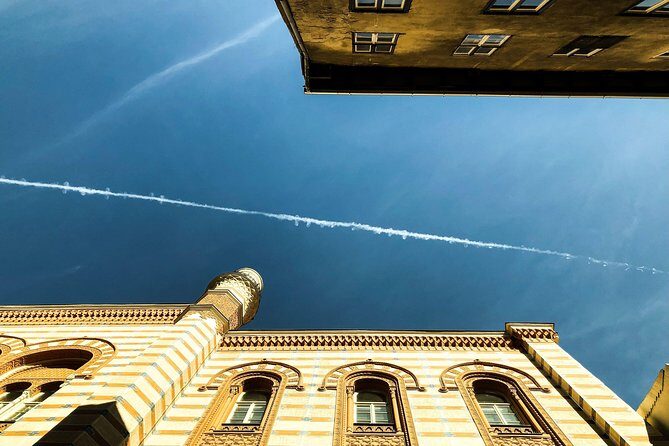
The route doesn’t treat Jewish community history as one single story. It includes internal streams and how different groups saw tradition, authority, and practice.
One specific thread you’ll learn about is the Status Quo Ante stream of Judaism. You’ll hear what that meant in practice as the tour points you toward the impressive facade of the Rumbach Street Synagogue.
Why this matters: when you understand that even within one city, there were differences in how communities organized religious life, Budapest stops feeling like a single postcard. It starts feeling like a living place where identity was debated, practiced, and sometimes contested.
The tour’s pacing helps here. By the time you reach Rumbach Street, you’ve already seen huge institutions (Dohány) and smaller, more local reminders (ghetto-wall area, mikve). Now you see how community structure shows up in architecture and tradition too.






Shoes on the Danube: the memorial that closes the emotional loop
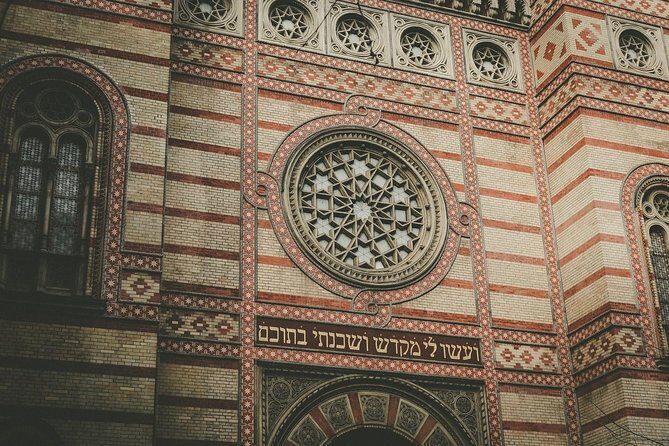
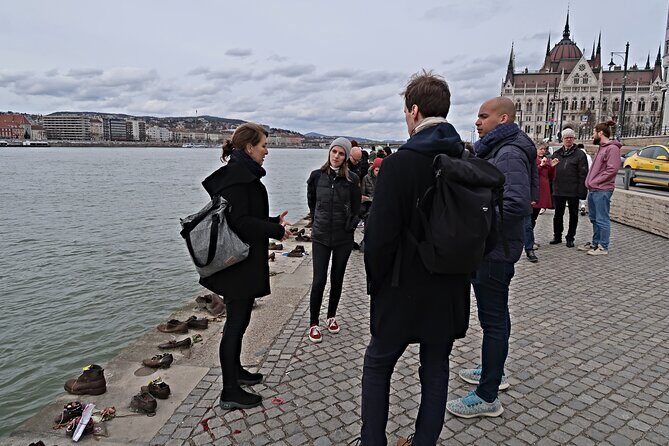
The final stop is Shoes on the Danube Bank memorial. The tour guides you there to reflect on the Jewish lives lost along the river.
This memorial works because it’s not abstract. It’s visual and bodily. It asks you to hold the idea of each person in front of you, even though the names and stories are not carved in the stones. That’s why it’s often the part of a Budapest Jewish tour that stays with you after the walking boots come off.
You’ll spend time considering not only loss, but also present-day Jewish community revitalization in Budapest. The guide framing matters here—this tour uses the ending as a bridge between what was destroyed and what communities are still rebuilding.
There’s also a small detail you might find moving if your guide can accommodate it: one guide described helping participants with a respectful moment involving cleansing “stumbling stones.” If that’s your style—quiet, hands-on remembrance—ask your guide what’s possible during the closing reflection.
Price and value: is 123 USD worth it?
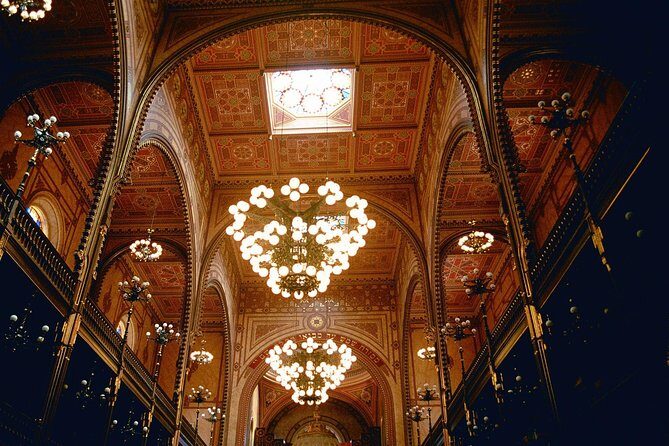
At $123 per person for a 3-hour walking tour, the value comes from the structure: multiple major sites in a tight route plus expert historical guidance.
Here’s what you’re really paying for:
- Time-efficient access to the biggest landmarks tied to the Jewish story in Budapest
- A historian guide, plus added scholarly input during the synagogue segment
- A coherent narrative from pre-WWII Jewish life to the river memorial’s aftermath
Yes, Dohány Synagogue tickets cost extra—14500Ft—and that’s a real budget item to add to your total. But the tour’s value still holds because the included guide time is what connects the dots: why the buildings look the way they do, what different institutions meant, and how Budapest’s Jewish story is remembered in public space.
Also, the tour supports private or small groups. When a tour is led by historians and the group is small, you’re more likely to get direct answers and more flexible pacing. That’s not a luxury detail—it affects how well the story lands.
Who this tour suits (and who might prefer something else)
This tour is a strong match if you:
- Want a guided historical route rather than self-paced wandering
- Like architecture, but also want the meaning behind it
- Appreciate a clear emotional storyline that ends at Shoes on the Danube
It’s less ideal if you:
- Only want casual sightseeing and don’t want synagogue visits and memorial reflection
- Are not comfortable with clothing expectations for the synagogue (shoulders and knees covered)
- Prefer a longer format. Three hours is focused, not slow.
Practical things to know before you go
The language is English, and the guides are described as professors, doctoral students, historians, journalists, art critics, and published authors. That matters because you’re not just getting a local script—you’re getting a guide who can handle questions about community history, institutions, and what you’re looking at.
You’ll be walking through multiple points, including synagogue exteriors and indoor areas within the Dohány complex. The tour sequence is planned to keep a steady rhythm while still giving you the major stops you came for.
Should you book this Jewish Budapest walking tour?
I’d book it if you want the Jewish Quarter story told with both clarity and care. The combination of Herzl context, a deep stop at Dohány Street Synagogue, and a meaningful ending at Shoes on the Danube gives you a route that doesn’t just list places—it explains how those places fit into a larger human story.
One more reason: the tour is set up for private or small groups, which makes it easier to ask questions and stay aligned with the guide’s pace. If you like tours where the guide actually takes responsibility for your understanding, this one is built for that.
FAQ
FAQ
How long is the Jewish Budapest walking tour?
The tour lasts 3 hours.
What is the price per person?
The price is listed as $123 per person.
Where does the tour meet?
The meeting point is Kamara Café, Dohany utca 1/A.
What language is the tour offered in?
The tour guide speaks English.
Is the tour private or small group?
The tour offers private or small group options.
What’s included in the price?
The included items are the 3-hour walking tour and a historian guide.
What is not included?
Dohány Synagogue tickets are not included, listed as 14500Ft per individual.
Are there dress requirements for the tour?
For visitors to the Dohány Synagogue, shoulders and knees need to be covered.
What cancellation options are available?
You can cancel up to 24 hours in advance for a full refund.