REVIEW · BUDAPEST
Urban Tour of Budapest’s Most Controversial District.
Book on Viator →Operated by Perfect European Tours - Budapest FREE Walking Tours. · Bookable on Viator
Budapest gets darker in District VIII. This 2.5-hour private walk takes you through Outer District VIII with stops you won’t find on most quick sightseeing loops. You’ll move from grand public buildings to working-class streets, with a few moments that feel intentionally uncomfortable.
I love the mix of places: Keleti pályaudvar for old-world glamour, then Fiumei Road Cemetery as an outdoor museum of memorials and burial customs. I also like the way the route is built for real street context—train-station architecture, neighborhood squares, and markets—so the city starts making sense in layers. In English, guides like Victoria have a knack for making heavy topics easier to follow without turning them into a lecture.
One drawback: some stops lean grim. The Police Museum includes forensic-science displays and case materials, and the cemetery/memorial stops can be emotionally intense. Add in the requirement to walk about 4 km in roughly 2.5 hours, and you’ll want comfortable shoes and a calm head.
In This Review
- Key things to know before you go
- Why this District VIII route feels different
- Keleti pályaudvar: stepping into the Sissi-era arrival hall
- Police Museum: forensic science and real case files (with a Sunday catch)
- Fiumei Road Cemetery: a memorial walk with real views
- Laszlo tér’s carbon market and the House of Fates debate
- Orczy tér’s architecture and Golgota tér’s broken chapel
- Europe Television, Goyla, and the “workers’ district” feeling
- MÁVAG Kolónia: worker housing with real services
- Ending at Kínai Piac (China Market): street life, shopping, and street food
- Price and logistics: why $27.04 feels fair here
- What to expect from the walking pace and your comfort level
- Should you book this District VIII tour?
- FAQ
- How long is the Budapest District VIII walking tour?
- How much walking is involved?
- Is the tour private or shared?
- What language is the tour offered in?
- How much does it cost?
- What are the start and end points?
- Is there an admission fee for the stops?
- Are there days when stops are closed?
- Are service animals allowed?
Key things to know before you go
- District VIII focus: you’ll see Józsefváros from street level, not just the main attractions.
- Keleti pályaudvar inside access: a short stop at the station’s iconic arrival hall built for Princess Sissi.
- Crime museum warning: the Police Museum shows detailed case content, so plan for heavy visuals.
- Fiumei Road Cemetery views: you can climb up to Kossuth’s tomb for standout perspective over the 8th district.
- Market time at the end: you finish at Kínai Piac (China Market) and can keep exploring after the guided portion.
Why this District VIII route feels different
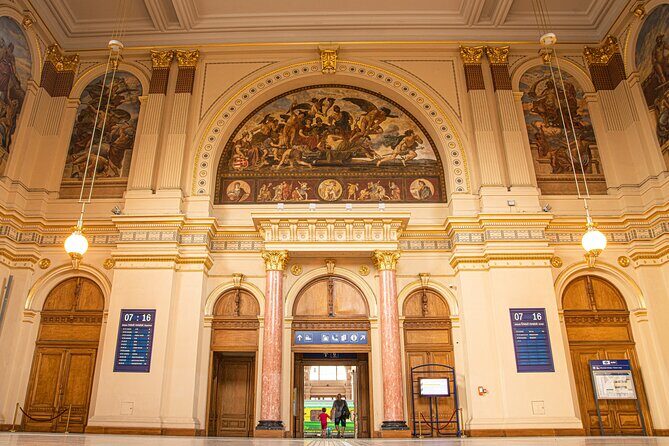
This tour isn’t trying to be polite. It’s designed for places where history is still present—in architecture, in street life, and in the way different communities have been treated over time. You’ll start at Keleti pályaudvar, one of Budapest’s key train hubs, then gradually shift into the neighborhood spaces that most visitors only pass through.
What makes it valuable is the sequence. Instead of hopping randomly, you build a timeline: early 20th-century grandeur at the station, forensic and crime history in the police exhibits, then public memory at the cemetery and political debate at the House of Fates. By the time you reach the China Market, you’ve seen how the district works now: immigration, commerce, and everyday survival.
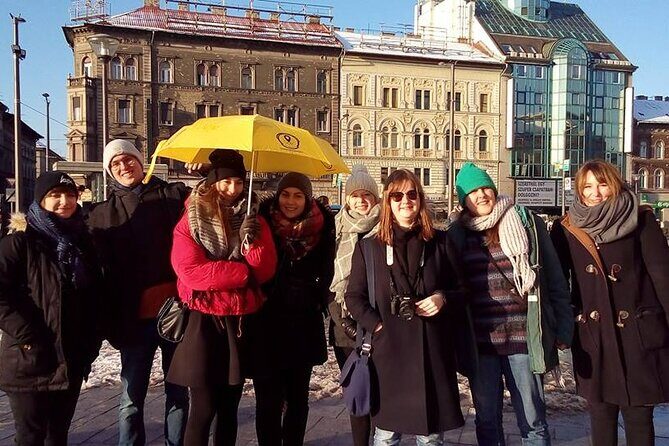
It also helps that it’s a private tour, so you’re not squeezed into a giant herd. You can ask questions, slow down at photos, and get direct guidance on where to stand, what to notice, and how to move on safely. Expect the walk to be steady rather than rushed.
You can also read our reviews of more tours and experiences in Budapest.



Keleti pályaudvar: stepping into the Sissi-era arrival hall
You begin at Keleti pályaudvar (1087 Budapest), and the tour quickly reminds you that train stations are not just transit. They’re political theater, designed to impress.
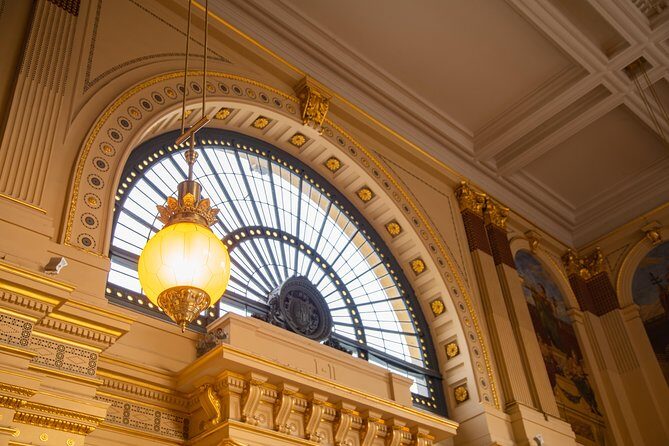
At the first stop, you learn about the station’s history and see the famous arrival hall built for Princess Sissi. Yes, it’s different from the famous frescoed Lotz Hall (often discussed for its treasury function). But this arrival hall has its own kind of charm: an eclectic ballroom feel that still looks surprising even after years of neglect. You’ll get a sense of what’s been left behind—yet the scale still hits you. Greek-style supporting columns, huge window frames, marble coverings, and carved wooden elements all point to a past when the space was meant to feel grand and permanent.
This stop is short—about 15 minutes—and the admission ticket is included. It’s enough time to get oriented and notice details you’d miss if you were just walking through as a commuter.
Practical tip: take a moment to look up and around before you move on. The design is the point here, not just the postcard angle.
Police Museum: forensic science and real case files (with a Sunday catch)
Next comes the Police Museum, a quick visit that packs a lot into a short window. The focus is forensic science and crime-case material, including a set of cases that range from serial killers to named incidents. You’ll hear about the black-and-white realities of police work—how evidence is presented and how sensational stories get archived.
Some specific case topics included:
- the Black Angel case
- crime tied to Béla Kiss, described here as the first Hungarian serial killer
- other serial killer references including a Yugoslav serial killer
- the Whisky case
- the Nicotine murder case
- Martfűi serial murder (described as fourth-degree murder)
- the Miskolc Bonny and Clyde crime case
There’s also a police history exhibition with relics like uniforms, weapons, documents, certificates, sculptures, awards, and photos. You’ll also see a “Past and Present” photo exhibition.
The reason this stop is a highlight is also the reason it needs respect. The content can be heavy, with grim visuals and case materials. If you’re sensitive to crime imagery, I’d treat this like a warning label: it’s not a casual museum browse.
One key logistics note: on Sundays the Police Museum is closed, and you do not enter. The time slot still exists, but you won’t see the inside exhibits that day.
Fiumei Road Cemetery: a memorial walk with real views
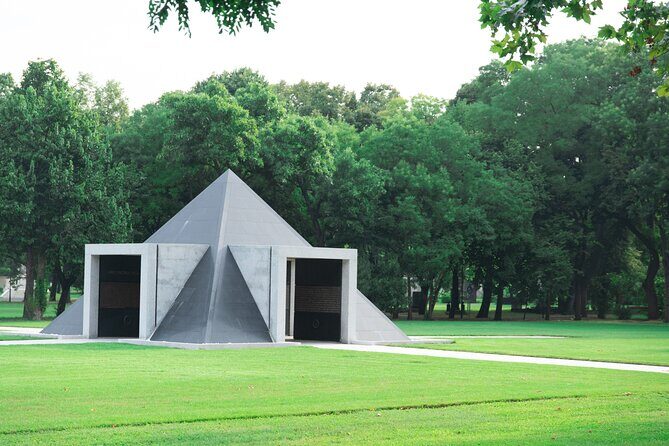
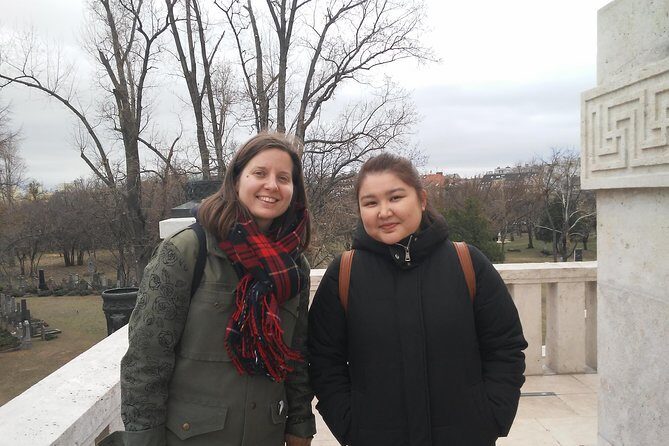
After the museum, you move into open air at Fiumei Road Cemetery, also known historically as the Communist Cemetery. This is where the tour’s tone shifts from investigation to remembrance.
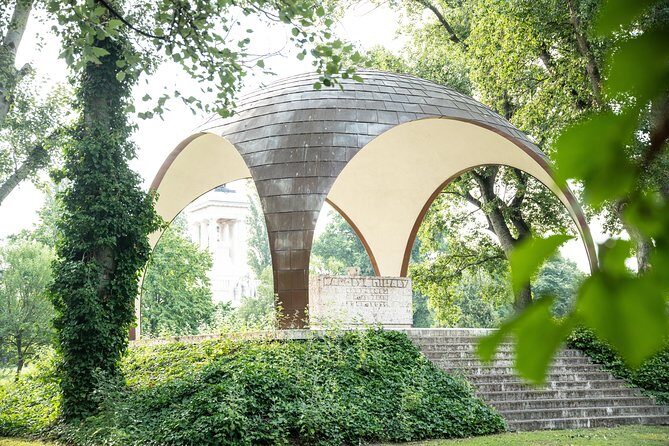
You’ll learn about the cemetery’s history and how local death customs have shaped the space. It’s not just a collection of graves—it’s an outdoor museum of tomb architecture and public memory. Expect beautiful, meaningful design choices, with a layout that encourages slow looking rather than fast photo-snapping.
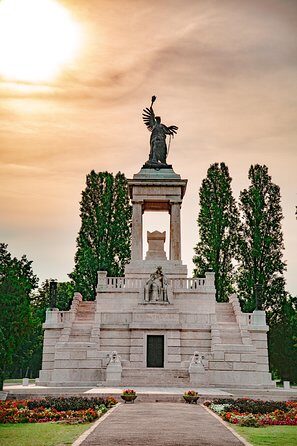
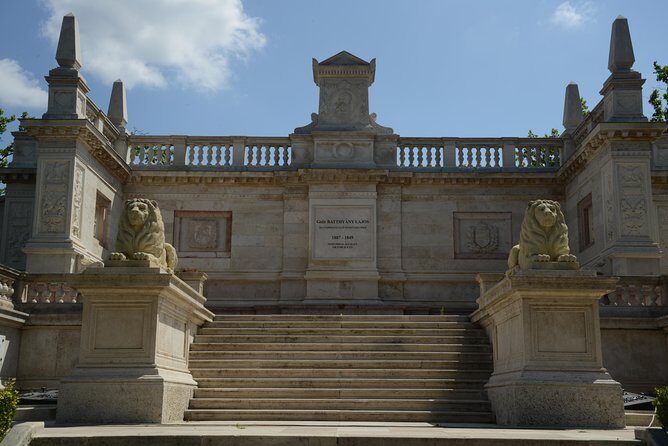
One of the most practical “worth it” moments: you can climb to the top of Kossuth’s tomb for the best views over the 8th district. Even if you’re not a monument person, this view makes the time feel tangible—you’re literally seeing the neighborhood that these memorials overlook.
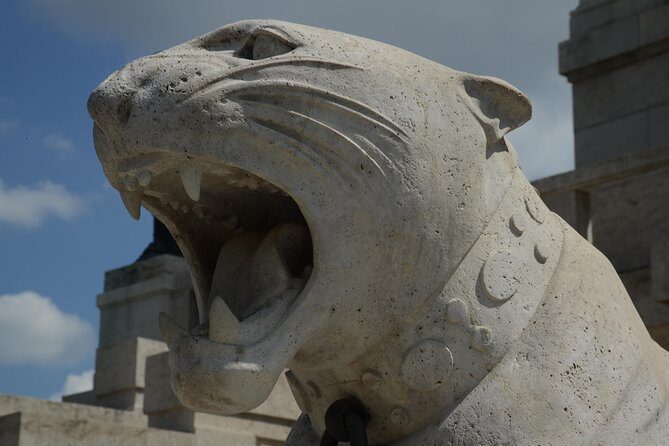
You’ll also hear about the fate of martyred prime minister Batthany and enter one of the mausoleums. There’s even mention of a grand horse-drawn funeral hearse, said to be last used for Count Apponyi, which adds an old-world sense of ritual to the walk.
This stop lasts about 30 minutes, and admission is free. Because it’s outdoor, it’s also a good place to pause, breathe, and reset your mood.
Laszlo tér’s carbon market and the House of Fates debate
From the cemetery, you drift back toward the squares and buildings that make the district feel lived-in.
Stop four is Természet Fitotéka Kkt., with a look at the refurbished Laszlo tér. Here, you learn about the history of the carbon market that used to be located in the area and why the square carries the name of a famous Hungarian writer. It’s a short, 10-minute stop, but it’s one of those “small info, big understanding” moments. You start seeing how trade and industry shaped street names and local identity.
Then comes stop five: Párbeszéd Háza (House of Fates). This is where you get the district’s political weight. The museum is described as highly disputed and unfinished, designed to spread the message by the government of Viktor Orbán about the Holocaust of Hungarian Jews. The memory of the Holocaust has been the subject of turbulent debates in Hungary since the end of communist control, and that tension sits in the background of the building itself.
You’ll also see the “strange building” design cues credited to Attila F. Kovács, including a giant star and railway carriage towers meant to remind you of a terrible starting point for events tied to this location. It’s not a comfort stop, and it’s not designed to be neutral.
If you prefer museums that give you one clear angle, this one may feel frustrating. If you’re open to how societies fight over memory, it’s a powerful place to understand why Budapest still feels like an argument in stone.



Orczy tér’s architecture and Golgota tér’s broken chapel
Orczy tér is where the tour gets specific about how streets can reflect bigger problems. The square is described as an unfortunate symbol of traffic disorder, with plans for renewal delayed for decades. It’s a confusing set of tram tracks and sidewalk islands, and the area has faced social issues that were compounded by commuter flow.
In the middle of that mess, you visit Csobánc Társasház, an award-winning architectural complex by György Kévés. The building’s brickwork and numerous arches evoke early modern architecture around 1910. You also get the Kokárda Catacomb, described as a memorial and underground chapel at the center of the project, commemorating failed revolutions from 1848 and 1956.
You’ll hear how this new housing complex marked the start of a painful gentrification process. That matters because it changes how you read the place: you stop seeing buildings as neutral and start seeing them as choices with consequences.
After Orczy tér, you move to Golgota tér, another small garden area with the remains of a chapel workers once frequented. The tour includes the story of how communists tried to destroy it—described as succeeding only after the third attempt—and what motivated that effort.
You’ll also view reconstruction work of original bronze 14 reliefs by sculptor Antal Szécsi, featuring the Máriabesnyő Calvary Station. It’s the kind of detail that makes the tour feel grounded: not just politics in big statements, but art in specific objects.
Europe Television, Goyla, and the “workers’ district” feeling
Golgota tér is also linked to small-but-strange Budapest stories. The tour mentions Budapest Europe Television, described as Hungary’s first commercial TV station. You’ll learn about its unusual structure and how the relationship between the station’s manager and a liquidator nearly escalated to violence on multiple occasions, before discovering the station’s strange end.
Is this the kind of story you’d find in a guidebook? Not usually. That’s why it works. It humanizes the district as a place where business experiments happened, not just a place where history weighed down everything.
Then you see the Goyla bar and community center. You’ll learn what events and activities it runs, and it becomes part of the tour’s ending energy—something like a “life continues here” counterpoint to the heavier stops earlier.
MÁVAG Kolónia: worker housing with real services
At MÁVAG Kolónia, you get a different lens on District VIII. Instead of focusing on grand visitors’ buildings or monuments, you look at a fortress-like apartment block built for workers.
The tour describes it as home to three thousand workers when it was built. Apartments were designed with a room and kitchen, and they were built by MÁVAG (Hungarian Royal State Iron, Steel and Machine Works). The idea was to provide workers with better conditions—so you get the sense of an intentionally designed living environment.
What’s especially useful is the list of onsite services: bathhouse, canteen, laundry, a doctor’s office, kindergarten, and a public market. That’s not just housing; it’s a whole system.
Today, the colony is also used as a film location. You’ll hear about movies and a documentary shot there, including Colorado Kid, The Exam, and The City Dweller’s. It’s a reminder that even if a district feels “off the tourist track,” it still shapes pop culture and visual storytelling.
Ending at Kínai Piac (China Market): street life, shopping, and street food
Your final stop is Kínai Piac (China Market), part of the broader Józsefváros market area sometimes called the Four Tigers market. This is one of the biggest markets of Southeast Asian goods in Eastern Central Europe, and you get a sense of scale quickly.
The market is described as located in an old industrial estate. You’ll hear that there are over 10,000 workers and about 1,500 business locations selling everything from everyday items like socks and frying pans to more unusual items like dragon fruit, Chinese medicine, fake flowers, and even references to plastic surgery services. The variety is the point—this is a place where different needs, languages, and supply chains collide in real time.
You also explore the market with your guide, with a focus on the immigrants who settled here. That angle matters because it turns the market from a novelty shopping stop into something closer to sociology you can walk through.
When the guided portion ends, you can:
- explore more on your own
- try street food offered in the market
One important date note: the market is closed on Christmas and Easter. If your trip lands on those days, you’ll want to plan for that in advance.
Price and logistics: why $27.04 feels fair here
At $27.04 per person for about 2 hours 30 minutes, this tour is priced like a budget-friendly way to see more than the usual highlights. You cover multiple stops, and the admissions are mostly handled in a low-friction way: Keleti has an admission ticket included, the Police Museum ticket is free, and the rest of the stops list free admission.
So where is the value? It’s in the guide time and the structure. Instead of wandering District VIII with no context, you get someone connecting the dots: station history, criminal-case material, burial customs, political memorials, worker housing, and market immigration stories. It’s also a good deal for a private experience, where you’re not paying extra to share your attention with strangers.
Two practical details you’ll feel during the walk:
- you’ll cover about 4 km, so plan for real walking time
- you finish at the market, not back at the start
If you want to reduce stress, keep your phone charged—your ticket is a mobile ticket—and wear shoes with grip.
What to expect from the walking pace and your comfort level
This is a walking tour where most travelers can participate, but the stated requirement is clear: you must be able to walk about 4 km in 2.5 hours. That’s not a slow stroll. It’s steady, with short time slots at each stop, plus a few longer mental pauses while you take in the memorials or the museum content.
Service animals are allowed, and the route is described as near public transportation, which helps if you want to regroup or adjust pace mid-tour. The start is Keleti pályaudvar, and the end is Kínai Piac (China Market) on Kőbányai út in 1087 Budapest.
You’ll also get a practical ending plan: after the tour, you can join the guide at Goyla a ruin pub, explore the market further on your own, or have the guide walk you about 5 minutes to the nearest tram stop to get back toward the city center.
Should you book this District VIII tour?
Book it if you want Budapest that feels real and slightly uncomfortable in the best way. This is a strong choice if you like your history with context: crime museum material explained, cemeteries treated like architecture and ritual, and political memory shown through a controversial building. I’d also recommend it if you’re craving a value-priced private walk with clear landmarks and English guidance.
Skip it (or at least reconsider) if you’re sensitive to grim crime visuals or if 4 km of walking is more than you want to handle on one day. And if you’re traveling on a Sunday, remember the Police Museum is closed, so you’ll miss that inside component.
If you match the mood, this tour gives you something most visitors don’t get: a District VIII story you can actually follow with your feet.
FAQ
How long is the Budapest District VIII walking tour?
It lasts about 2 hours 30 minutes.
How much walking is involved?
You need to be able to walk about 4 km during the tour.
Is the tour private or shared?
It’s private, meaning only your group participates.
What language is the tour offered in?
The tour is offered in English.
How much does it cost?
The price is $27.04 per person.
What are the start and end points?
It starts at Keleti pályaudvar (1087 Hungary) and ends at Kínai Piac (China Market), Kőbányai út 25, 1087 Hungary.
Is there an admission fee for the stops?
Keleti pályaudvar has an admission ticket included. The Police Museum is listed as free. The other stops are also listed with free admission.
Are there days when stops are closed?
Yes. The Police Museum is closed on Sundays and you don’t enter. The China Market is closed on Christmas and Easter.
Are service animals allowed?
Yes, service animals are allowed.