REVIEW · BUDAPEST
Jewish Budapest (German-language city tour)
Book on GetYourGuide →Operated by Gábor Glasner · Bookable on GetYourGuide
A Jewish Quarter walk can change how a city feels. This one, led by Gábor Glasner, takes you through Budapest’s Jewish history with clear stories, real street-level context, and an actual stop for Flodni. I really like the way the tour links big events to everyday community life, instead of treating the neighborhood like a set of monuments.
Two things I especially loved: you get three major synagogues as anchors for understanding how different Jewish groups shaped architecture and tradition, and you also hear about Jewish life in Budapest today. The one caution: the synagogues are not entered from the inside during the tour, so if you want interior views, you’ll need to plan that separately.
In This Review
- Key highlights you’ll remember
- A 90-minute Jewish Quarter walk that turns architecture into meaning
- Meeting at Madách Imre tér: start where the neighborhood begins
- Madách tér: the history setup that makes the rest click
- Rumbach Street Synagogue: Jewish groups, and why buildings differ
- Dohány Street Synagogue: Holocaust memory and Emanuel Tree
- Kazinczy Street Synagogue: conservative Jewish life, customs, and institutions
- Flodni: the dessert stop that makes the history taste real
- Digital guides that extend the tour after you leave
- Price and value: why $23 feels fair for what you get
- Who this tour fits best
- Final thought: should you book Jewish Budapest (German)?
- FAQ
- What language is the tour offered in?
- How long does the tour last?
- Where do we meet, and how do I recognize the guide?
- Which synagogues will the tour cover?
- Are the synagogues entered from the inside?
- Is the tour wheelchair accessible, and how big are the groups?
Key highlights you’ll remember
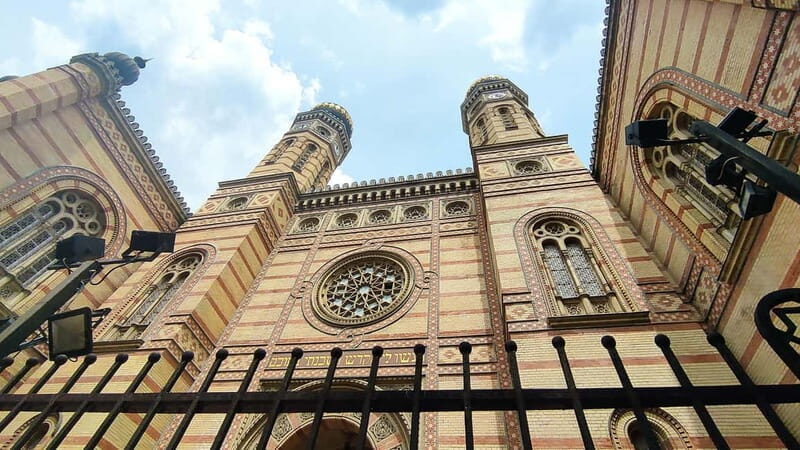
- Three largest synagogues in one loop across the Jewish Quarter
- Rumbach Synagogue for the theme of Jewish splits and synagogue styles
- Dohány Street Synagogue grounds with the small Jewish cemetery and the Emanuel Tree memorial
- Conservative Jewish life in focus at the end, including mikvah and kosher options
- Flodni tastings plus digital guides to food and key Jewish terms
A 90-minute Jewish Quarter walk that turns architecture into meaning
Budapest’s Jewish Quarter is often described like a district you can wander through. This tour is better: it gives you a framework so you understand what you’re seeing while you’re seeing it.
With a duration of about 1.5 hours, it moves at a comfortable pace. You’re walking between synagogues, learning what each site represents, and getting explanations you can actually use when you look around afterward.
You’ll also be in a small-to-medium group (max 25). That matters because the guide can handle questions without the whole experience turning into a monologue.
You can also read our reviews of more city tours in Budapest


Meeting at Madách Imre tér: start where the neighborhood begins
You start at Madách Imre tér 1, at the Gate to the Jewish Quarter conceptually speaking. Practically, you meet behind the statue of Empress Elisabeth, known as Sisi. The guide wears a tour ID visibly around their neck, so it’s easy to confirm you’re with the right group.
I like meeting at a clear, landmark spot like this because you don’t burn time figuring out where the tour begins. If you’re arriving on foot, it’s also easy to keep your bearings for the rest of the walk.
One thing to keep in mind: the tour language is German. If you’re not comfortable in German, you’ll probably prefer a different language option for this exact experience.
Madách tér: the history setup that makes the rest click
At the start, you get a first big picture of Budapest’s Jewish community. This isn’t just dates and names. It’s the kind of introduction that helps you understand why the neighborhood looks the way it does today and why the synagogue sites mattered beyond religion.
Think of this as your orientation chapter. When you later stand near the synagogues and memorial space, you’ll understand what the guide is pointing at.
And because the tour is only 1.5 hours long, this early context is valuable. It prevents the rest from feeling like three separate stops that you forget five minutes later.
Rumbach Street Synagogue: Jewish groups, and why buildings differ
The first major stop is the Rumbach Street Synagogue. The route from Madách Imre tér to Rumbach Street is about a 20-minute walk, which gives you time to see the neighborhood instead of only moving from one photo spot to the next.
At Rumbach, the tour focuses on an important theme: Jewish communities in Budapest were not all the same. There was a split among different groups, and that split shows up in how synagogues were built and understood.
I like this part because it helps you read the neighborhood as living culture rather than a single unified past. When you notice architectural differences and layout choices, the tour gives you the meaning behind them.
Potential drawback here: since the synagogues are not visited from inside, you’re relying on what you can see from the exterior and what the guide explains. If you enjoy learning through close-up interior details, this tour may feel more like a guided street interpretation than a building visit.
Dohány Street Synagogue: Holocaust memory and Emanuel Tree
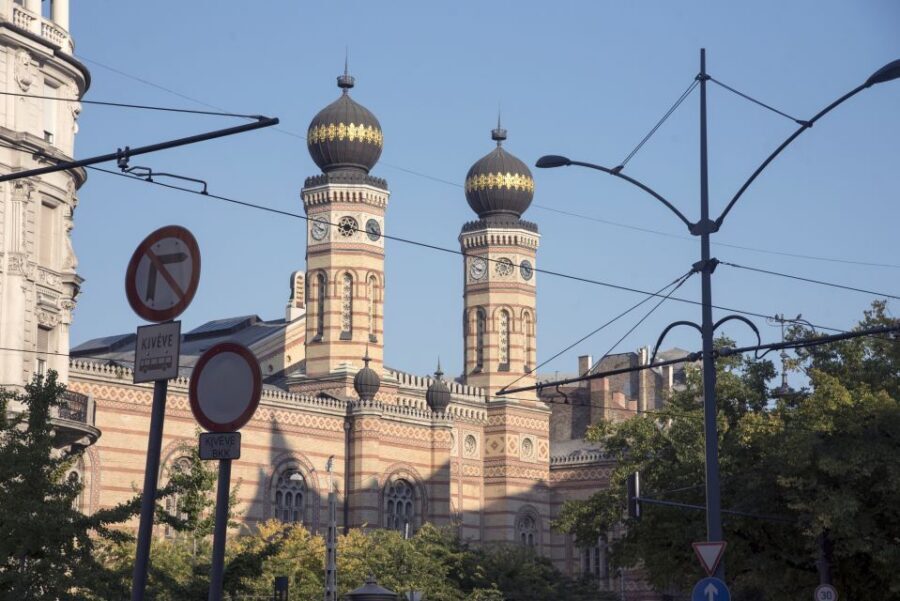
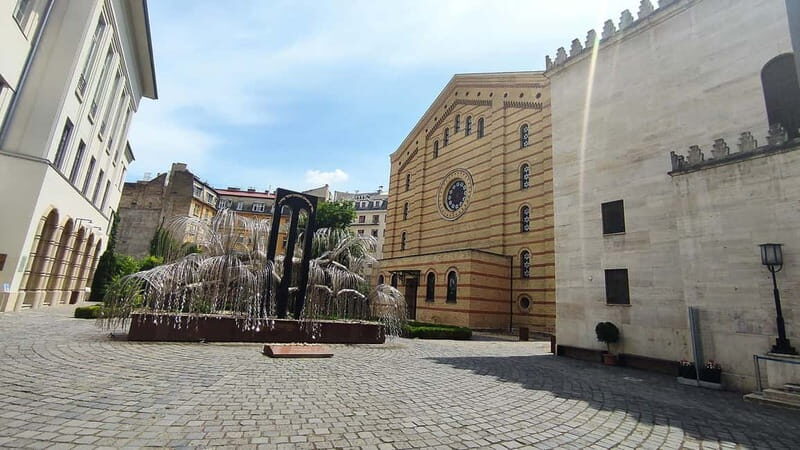
Next comes the Great (Dohány) Synagogue area. It’s about a 15-minute walk from Rumbach Street.
This stop is emotionally heavy in the best sense: you learn about the Hungarian Holocaust and you also hear what Jews in Budapest face now today. The tour doesn’t treat the Holocaust memorials as stand-alone artifacts. It places them within a historical and ongoing reality.
You’ll also see key ground-level memorial details here:
- the small Jewish cemetery
- the Emanuel Tree (Holocaust memorial)
I find that combination powerful because it makes remembrance tangible. You’re not only hearing history; you’re standing in a place where remembrance is designed into the space.
One practical note: in this kind of setting, take a moment before you rush for photos. The story you receive deserves a quiet minute to land.





Kazinczy Street Synagogue: conservative Jewish life, customs, and institutions
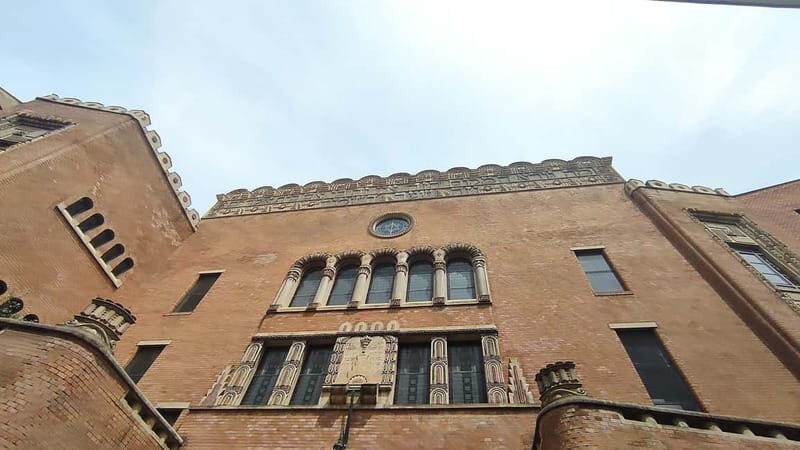
After Dohány, you walk roughly 30 minutes to the Kazinczy Street Synagogue area. This is where the tour shifts from the past-focused story to the present-day texture of Jewish community life.
The final section looks at the world of conservative Jews and nearby institutions. You’ll hear about:
- the mikvah (ritual bath)
- an Orthodox synagogue reference point
- kosher restaurants and how food fits into religious and cultural habits
- other community institutions and customs
I like that the tour doesn’t stop at commemoration. It keeps moving, showing that tradition today includes routines, food choices, and community spaces—not just memorials.
If you’re the type who wants to understand how beliefs show up in daily life, this section gives you concrete examples rather than general statements.
Flodni: the dessert stop that makes the history taste real
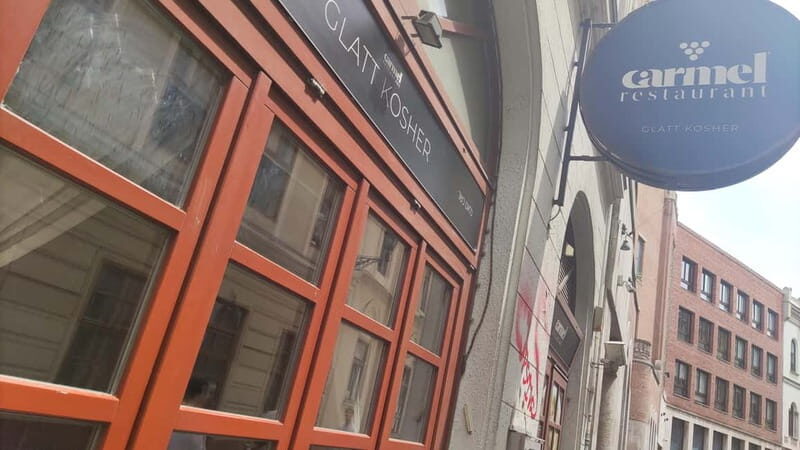
Food can sound like a side note on cultural tours. Here, it’s part of the cultural lens.
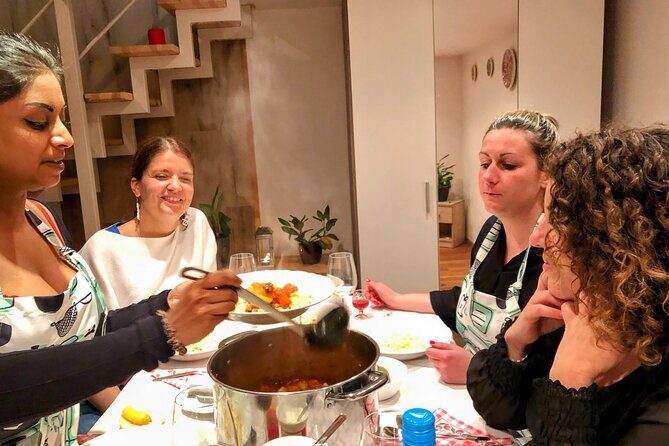
You’ll taste the typical Jewish dessert of Budapest Jews, Flodni. The guide also shares a digital guide to Jewish cuisine and eating habits, so you have something to reference after the tour.
I like this because it works on two levels:
- It gives you an easy memory anchor (you can remember the taste).
- It reinforces the idea that culture is more than buildings. It’s also what people eat, when they eat, and how community life carries on.
If you have dietary restrictions, you’ll want to check in with the operator before you go. The tour includes the dessert, but the information provided doesn’t specify ingredients.
Digital guides that extend the tour after you leave
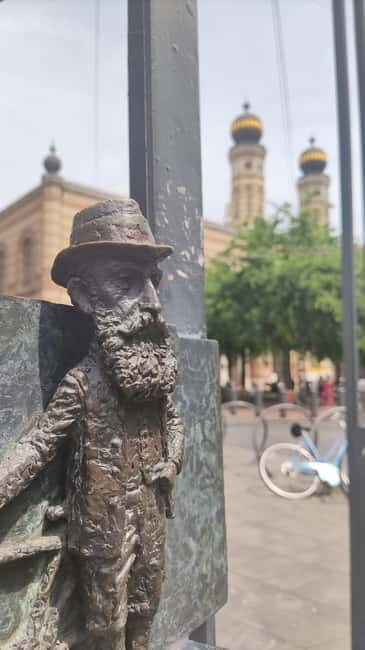
This experience includes digital add-ons:
- a guide to Jewish cuisine (digital version)
- a guide to Jewish terms (digital version)
For me, that’s a smart value feature. Jewish history and religious terms can feel like a new language. Having definitions and food references on your phone after the walk means you don’t lose the learning once you step away from the streets.
It also helps if you’re the kind of traveler who likes to keep exploring on your own right after a tour. You can connect what you see next to what you heard here.
Price and value: why $23 feels fair for what you get
At $23 per person for about 1.5 hours, the price sits in the affordable range for guided city history tours in central Budapest.
Here’s what you’re paying for:
- a German-language guide
- a small group environment (max 25)
- a guided route through three major synagogue areas
- Flodni tasting
- digital guides for cuisine and terminology
What’s not included is equally important: entrance fees to the synagogues, and the synagogues are not visited from the inside. So you’re not buying a ticket to go inside. You’re buying interpretation—street-level education, context, and a food stop.
To me, that makes the value clear. If you want a guided orientation and a deeper understanding of the Jewish Quarter without dealing with synagogue entry tickets, this is a practical choice. If you specifically want interior synagogue viewing as your top goal, plan additional visits.
Who this tour fits best
This tour is a strong match if:
- you want a focused introduction to Budapest’s Jewish Quarter
- you like history explained with concrete stops, not long lectures
- you want cultural context for Jewish life today, not only WWII-era memory
- you’re comfortable in German
It may feel less ideal if:
- you expect inside access to the synagogues during the tour
- you’re hoping for lots of free time for sightseeing stops beyond the guide’s route
Also, since you’re in a wheelchair-accessible experience (as stated), it’s worth considering if mobility is part of your planning.
Final thought: should you book Jewish Budapest (German)?
If you want the Jewish Quarter story told in an organized, human way, I’d book it. You get three key synagogue sites, the Holocaust memory component with specific locations like the Emanuel Tree, and a present-day look at conservative Jewish life. Add Flodni into the mix, and it stops being a purely informational walk.
Book it especially if you’ll appreciate explanations you can carry into your next walk through the neighborhood. If you’re determined to see inside each synagogue during the same outing, you’ll likely need to supplement your trip elsewhere.
FAQ
What language is the tour offered in?
The tour is in German.
How long does the tour last?
It lasts 1.5 hours.
Where do we meet, and how do I recognize the guide?
You meet behind the statue of Empress Elisabeth (Sisi). The guide wears a visible tour guide ID around their neck.
Which synagogues will the tour cover?
You’ll visit the Rumbach Synagogue, the Great (Dohány) Synagogue area, and the Kazinczy Street Synagogue area.
Are the synagogues entered from the inside?
No. The tour does not include entrance fees, and the synagogues are not visited from the inside during the tour.
Is the tour wheelchair accessible, and how big are the groups?
Yes, it’s wheelchair accessible. Group size is limited to a maximum of 25 people.