REVIEW · BUDAPEST
Comprehensive sightseeing tour
Book on Viator →Operated by Tourist Angel · Bookable on Viator
Budapest can feel like a lot at once. This tour helps you get your bearings fast while walking through the landmarks that explain how Pest and Buda became one city. I like that the day is guide-led on foot (not just bus stops), and that you’ll hear straight answers about what you’re seeing, from Heroes’ Square to Buda Castle. One thing to plan for: you’ll be walking and passing many places where extra entry is not included (like Matthias Church inside), so you may want to decide in advance what you’ll pay for.
What makes this work well is the mix of iconic exteriors plus a few key admissions. You’ll include St. Stephen’s Basilica during the day and still keep the route moving, so you don’t waste time guessing where to go next. Guides on this tour include people like Katalin, Elisabeth, Flora, Dalia, and Noemi, and one strong tip: if you can request, ask for Dalia—her style is repeatedly praised for being attentive and flexible with your pace.
In This Review
- Key things to know before you go
- Getting your bearings: why this Budapest route makes sense
- Price and what you really get for $144.18
- Pickup and meeting point: less stress, more sightseeing time
- Heroes’ Square and the Millennium Monument: starting with Hungary’s big symbols
- Vajdahunyad Castle and City Park: pretty buildings with layers underneath
- Anonymus Szobor: a quiet statue that adds a lot of meaning
- Szechenyi Baths from the outside: thermal culture without the ticket
- Andrassy Avenue and the Millennium Subway: Budapest’s stylish underworld
- Opera House and the artistic face of Pest
- St. Stephen’s Basilica: included entry and the mummified hand
- Szabadság tér and Kossuth Lajos Square: monuments that explain the 20th century
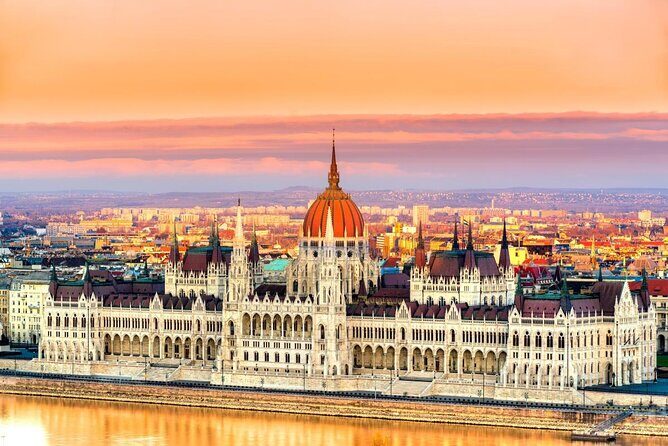
- Admiring the Hungarian Parliament Building from the outside
- Crossing to Buda: Royal Palace terrace views that actually feel like Budapest
- Fountain of King Matthias and Sandor Palace: quick hits with personality
- Fisherman’s Bastion and Matthias Church: the best photo finish
- The walking reality: who this suits (and who may want another option)
- Should you book this Budapest highlights tour?
Key things to know before you go
A guided walk that connects Pest and Buda so the city story actually makes sense.
St. Stephen’s Basilica entry is included, and the visit is timed around religious service rules.
Andrassy Avenue and the Millennium Subway give you a history stop that most highlight tours skip.
Many sights are free to admire, but Matthias Church inside and a few others cost extra.
Pickup and drop-off are built in, so meeting at the busy center is less stressful.
Expect real walking, with dress rules for churches (shoulders and legs covered).
Getting your bearings: why this Budapest route makes sense
Budapest is famous for two things that can fight each other: epic views and complicated geography. This tour solves that by structuring your day around the places that create the city’s main visual “anchors”—then tying each one to what was happening historically.
You start in the wide-open Monument zone on the Pest side, then work your way through the grand civic buildings and cultural streets. After that, you cross over to Buda for the terrace viewpoints and fortress-area sights. It’s one of the smarter ways to see Budapest if you only have a day and you don’t want to spend the afternoon making guesses.
The pacing also matters. Instead of rushing through every stop, you get short, focused moments to look, learn, and move on. You also get a local guide who can answer the stuff you’d otherwise wonder about, like why a square is shaped the way it is, and what a specific statue is meant to represent.
You can also read our reviews of more tours and experiences in Budapest.



Price and what you really get for $144.18
At $144.18 per person, this isn’t a bargain bus tour. It’s a paid guided experience with real inclusions, and that’s where the value shows up.
Here’s what you’re paying for, based on what’s included:
- A professional licensed tourist guide
- Hotel pickup and drop-off (public transport or car, depending on your selected option)
- St. Stephen’s Basilica entry (included, with Sunday-morning religious service timing)
- A one-hour optional lunch break (not required; if you take it, it may affect your total time)
What costs extra (so you’re not surprised):
- Matthias Church inside (guided visit on request is an extra fee)
- Lunch/food and drinks
- Public transport tickets (if your option uses transit, you’ll need the tickets)
For me, the sweet spot is the guide time plus the Basilica admission. If you’re a first-timer, that combo saves both money and energy. You don’t have to sort entrance rules in the middle of a packed day, and the guide can explain what makes each stop important.
Pickup and meeting point: less stress, more sightseeing time
This tour is set up to make meeting easy, which matters in Budapest. Your start point is Szent István tér 4, 1051, and pickup is available if you’re staying at a hotel or accommodation.
If you request pickup, the guide meets you at the reception desk or in front of your address. If you don’t, the guide meets you at the default departure point. After the tour, you can be dropped back at your hotel or another selected point of the city.
That “pickup + drop-off” detail is more valuable than it sounds. It prevents the common first-day problem of arriving early, finding the meeting place, and then spending half the tour figuring out transit or landmarks. Here, you’re already moving through the city when other tours are still doing logistics.
Heroes’ Square and the Millennium Monument: starting with Hungary’s big symbols
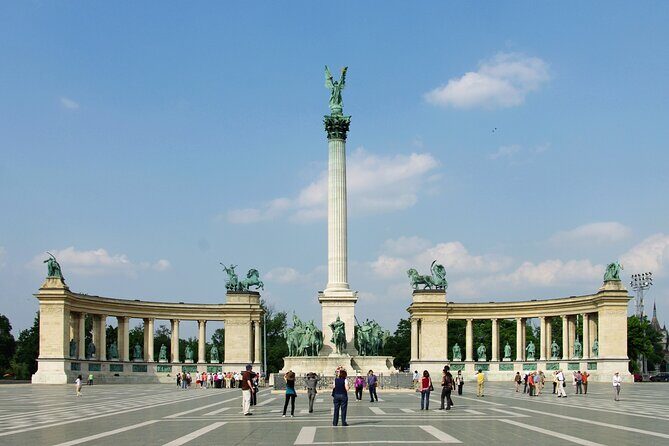
Your day opens at Heroes’ Square, the city’s largest square. The main reason to go here on foot is that you can take in the full composition—wide, symmetrical, and designed to make an impression.
At the center is the Millennium Monument, tied to 1000 years of Hungarian history. Around it are statues of major kings and leaders, and in front is the grave of the unknown heroes. This stop is short, but it sets the tone for the whole tour: you’ll keep seeing how power, identity, and memory show up in Budapest’s architecture and public spaces.
A practical note: photos are easy here, but the square can be busy depending on the time of day. If your guide suggests a specific angle or moment, take it—sometimes the best viewpoint is just a few steps to the side.
Vajdahunyad Castle and City Park: pretty buildings with layers underneath
Next comes Vajdahunyad Castle, located in City Park. City Park is often described as historic for being the oldest public park in the world, and that matters because it explains why this area feels like both a promenade and a civic stage.
To reach the castle, you walk across a bridge to an island in the lake. That little approach is part of the fun; it turns the castle into a “moment,” not just another structure on a list. Inside the courtyard, there are copies of buildings representing different periods and Hungarian architectural styles, so you’re not just looking at one thing—you’re seeing a curated snapshot of design history.
If you like your sightseeing with atmosphere, this is one of the stops where Budapest really starts to feel like a real place you’d stroll around on a slow afternoon.



Anonymus Szobor: a quiet statue that adds a lot of meaning
In the courtyard you’ll spot Anonymus Szobor, the statue of Anonymus, described as the first history writer of Hungary from the 12th century.
This is a small stop, but it’s the kind that makes the guide worth your money. Many tours hit the castle exterior and move on. Here, you get a story about how Hungary wrote its own past—and why a statue might matter as much as a building.
If you enjoy learning how legends and early records shaped national identity, linger for the couple minutes your guide gives you. You’ll understand the statue more than you would from a glance.
Szechenyi Baths from the outside: thermal culture without the ticket
You’ll pass by the main building of Szechenyi Baths, which is known as the largest thermal bath of Europe. This is one of those “see it, don’t pay for it” stops.
Through the windows you can spot the outdoor pools and people swimming in warm water. Even if you don’t go inside, you still get the visual cue that these baths are a daily-life institution, not just a tourist attraction.
If you want a true bath experience, this tour doesn’t include entry tickets. But it’s still a smart way to show you the bath culture so you can decide later if you want to come back for an afternoon soak.
Andrassy Avenue and the Millennium Subway: Budapest’s stylish underworld
After the castle area, you’ll admire Andrassy Avenue, a 2-mile historical thoroughfare. This is one of those streets that feels like a museum gallery in motion—grand façades, an urban rhythm, and plenty to look at without needing a ticket.
A standout detail here is the Millennium Subway, Budapest Metro line 1, built in 1896. The tour notes that the original stations have been preserved, which is a big deal because it gives you proof of how long Budapest has been modern—and how carefully parts of that history were saved.
If you’re the type who likes transit history (or you just hate wasting time staring at maps), this stop helps you connect the city’s architecture to how it actually moves people.
Opera House and the artistic face of Pest
You’ll also pass by the Hungarian State Opera House. Even if you don’t go inside, the exterior is worth your attention. The guide will cover its history, architecture, and artworks, which turns a quick look into something you can remember.
This section works well if you want Budapest to be more than palaces and monuments. It reminds you that the city’s power also expressed itself through performance and design.
St. Stephen’s Basilica: included entry and the mummified hand
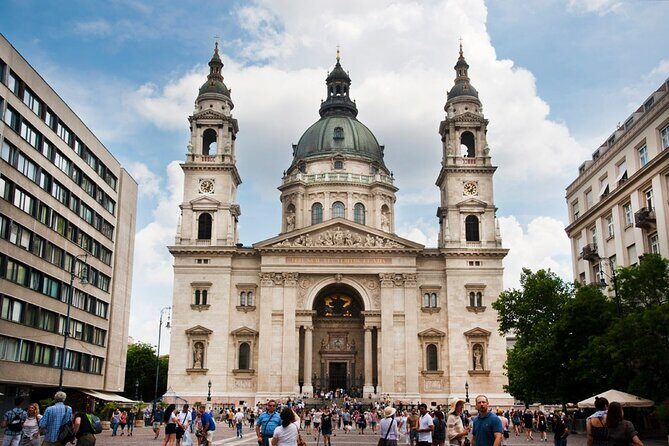
One of the best-included moments is St. Stephen’s Basilica. You’ll visit it as part of the tour, and the ticket is included (with an important rule): it’s open every day except Sunday morning religious service.
This matters because if you’re traveling on a Sunday morning, you should plan your timing carefully. The tour includes the visit, but religious service hours can affect access.
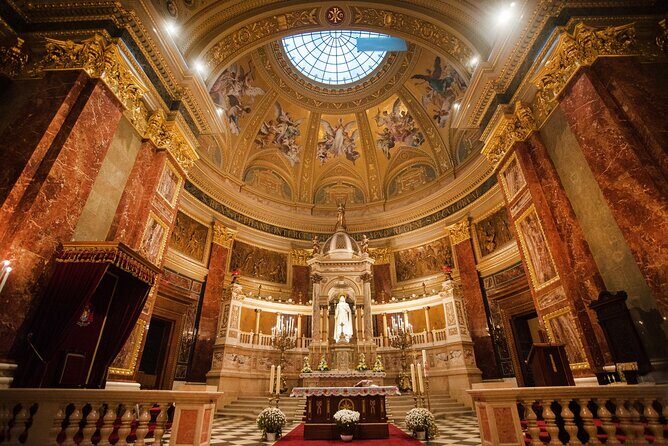
Inside, the guide points out statues and frescoes, plus the famous detail of the mummified right hand of the first king. That’s the kind of fact you can’t really fake from a guidebook—it’s the sort of curiosity that sticks once you see it.
Practical tip: dress code applies. The tour specifies that you should cover legs and shoulders in church areas. If you’re traveling in warmer months, bring a light layer you can put on quickly.
Szabadság tér and Kossuth Lajos Square: monuments that explain the 20th century
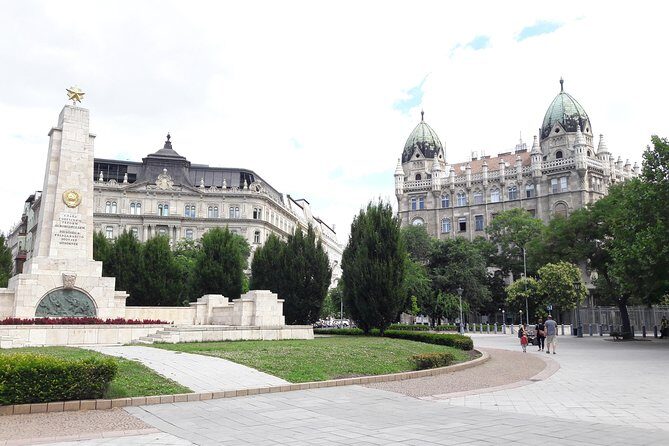
After the Basilica, the tour moves into a darker chapter of Budapest’s story with stops around Szabadság tér and Kossuth Lajos Square.
At Szabadság tér, you’ll see dramatic monuments connected to the Nazi and Soviet occupations and dictatorships. In warm season, the fountain is described as miraculous, but even if you’re there outside that season, the square still has strong visual weight.
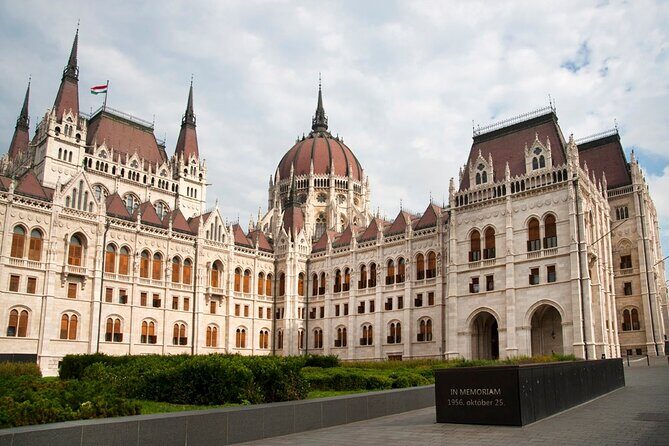
At Kossuth Lajos Square, you’ll see memories of Hungarian freedom heroes and the 1956 revolution against the Communist dictatorship. This is where your earlier context at Heroes’ Square starts to connect: the monuments aren’t just decoration. They’re the city’s public memory.
If you don’t usually enjoy political history, don’t worry. A good guide frames it in a human way and ties it back to what you’re physically seeing.
Admiring the Hungarian Parliament Building from the outside
You’ll admire the Hungarian Parliament Building, and the tour notes that entry is not included.
That can be totally fine. The Parliament is one of the most photogenic façades in the city, and a short guided exterior stop is often the best way to fit it into a day without losing hours to ticketing and security lines.
If you’re the type who wants to go inside, you’ll need to plan that separately. Just know that this tour’s strength is covering many key sights in the time window without turning the day into paperwork.
Crossing to Buda: Royal Palace terrace views that actually feel like Budapest
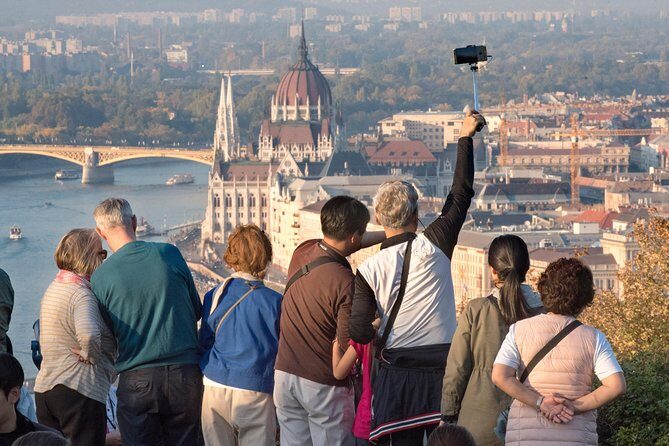
Then you cross the Danube to reach the Castle of Buda area. The big win here is the panoramic terrace of the Royal Palace, which is where Budapest starts to look like postcards in real time.
The view typically makes the whole city click: you can see how Pest’s civic landmarks sit across the river, and why the Buda side feels like the dramatic “backdrop.” Even if you’ve seen photos before, being there changes the scale.
This stop is guided, so you’re not just staring at the skyline. You’ll get context that helps you understand what you’re seeing.
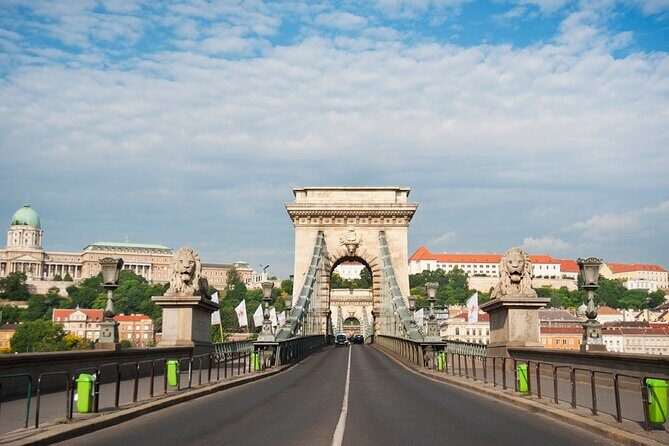
One more planning detail: the tour notes that an iconic bridge is under renovation from 2021 to 2022. If your dates overlap a similar kind of disruption, routes may shift.
Fountain of King Matthias and Sandor Palace: quick hits with personality
Back in the castle district, you’ll stop at the Fountain of King Matthias, a 19th-century work. It’s a short moment, but it’s useful if you like noticing details that most people miss.
Then you move to Sandor Palace, the palace of the president. You’ll see it with guards in historical uniforms. Again, not an all-day ticketed stop—but a worthwhile “watch and understand” moment.
These short stops are part of why this tour works. You get variety without losing momentum.
Fisherman’s Bastion and Matthias Church: the best photo finish
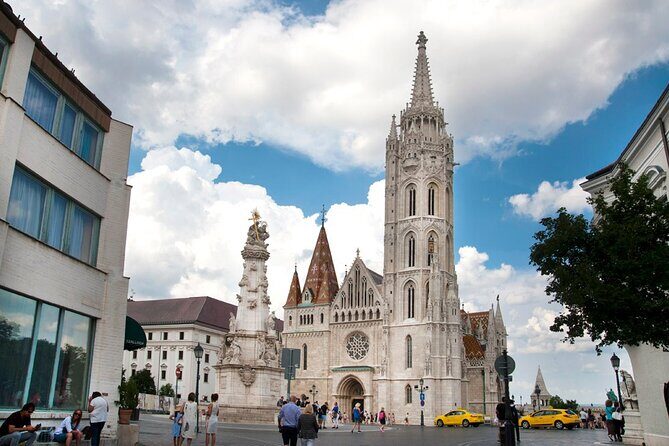
You’ll reach Fisherman’s Bastion, one of the most scenic spots in Budapest. It’s described as offering a stunning panorama over the Danube and the Hungarian Parliament building. Even in a rushed day, this is one of the best places to slow down for a minute and just look.
After that, you’ll walk around Matthias Church. The outside tour is included, but entry inside is not. The tour offers an on-request guided inside visit that takes about 30 minutes, and there’s an extra 5 EUR/person entrance fee.
If you’re deciding on the fly, this is the moment to check your energy. Inside is optional, so you can choose the option that matches your day: exterior photos and architecture versus adding the extra time and fee for interior access.
The walking reality: who this suits (and who may want another option)
Most people can do this tour, but it’s still a walking-based day. You’ll move between many landmarks, with frequent short stops. If you’re comfortable walking for hours and you don’t mind that churches have dress rules, you’ll likely love the format.
This is also a great fit if you like learning what you’re seeing. The guide is the point, not just the checklist of sites.
If you’re more into slow cafe stops or you prefer fewer stops with more time at each one, you might find the pacing a bit busy. In that case, you could still use this as a first-day foundation, then come back later for the sights that matter most to you.
Should you book this Budapest highlights tour?
I’d book this if you want a fast, guided introduction to both Pest and Buda with smart stops that explain the city instead of just showing it. The included St. Stephen’s Basilica ticket, the pickup/drop-off convenience, and the focus on walking make it a strong value for a first-time visit.
I’d think twice if you already have plans to visit multiple churches indoors and you hate paying extra fees for optional entrances. Also, if you’re traveling on a Sunday morning, plan your schedule so the Basilica timing works with the religious service note.
If your goal is to get oriented, understand the city’s symbols, and leave Budapest with a clearer story of where everything fits, this tour is an easy yes. And if you can request a guide, put Dalia on your list.