REVIEW · BUDAPEST
BUSÓJÁRÁS Unesco Heritage Folklore Carnival in Mohács
Book on Viator →Operated by Explore Hungary · Bookable on Viator
Masks and rattles light up Mohács at Busójárás. This 300+ year end-of-winter tradition, recognized by UNESCO for intangible cultural heritage, is the real deal: wool sheepskin cloaks, carved masks, and rattlers that feel both theatrical and serious. I love private door-to-door pickup in an air-conditioned vehicle, and I love that the day stays flexible since the transfer is private. The one catch: on-site food can be pricy, so I’d budget a bit beyond the tour price.
You’ll also hear the legend behind the Busó costumes—people hiding in disguise and scaring away the Turks from the Mohács side of the Danube—right in the place where the story lives on. That legend helps the outfits click into focus: this isn’t just costume wear, it’s ritual, protection, and spring energy.
With about 10 hours total, you’re not tied to stressful public-transport timing. You can plan your day around the festival’s flow, not around bus schedules.
In This Review
- Key highlights at a glance
- Why Busójárás in Mohács feels real, not staged
- Getting to Mohács from Budapest without the travel stress
- A 10-hour day that stays flexible (and why that matters)
- Mohácsi Busójárás: what you’ll actually see
- The Busó characters and their gear
- The spring message inside the spectacle
- How the festival feels in real time
- The legend: Turks, disguise, and Mohács Island
- Food, drinks, and costs: plan like a smart local
- Price and logistics: is $250 good value?
- What this trip is best for (and who should skip it)
- Practical tips I’d use before you go
- Should you book this Busójárás private trip from Budapest?
- FAQ
- FAQ
- Where does the pickup happen?
- How long does the trip take?
- Is the tour private?
- What language is the tour offered in?
- Do I need to buy an admission ticket?
- Does the schedule follow a strict timetable?
- Will I get a mobile ticket?
- Is transportation air-conditioned?
- Can I cancel and get a full refund?
Key highlights at a glance
- UNESCO intangible heritage recognition for the Busójárás tradition
- Private, door-to-door transportation from your Budapest hotel
- No fixed schedule, since the transfer is done your way
- Classic Busó elements: masks, woolly cloaks, hay-filled trousers, rattlers and clapper bells
- A convivial festival mood, with reports of plenty of pálinka and warm welcomes
Why Busójárás in Mohács feels real, not staged
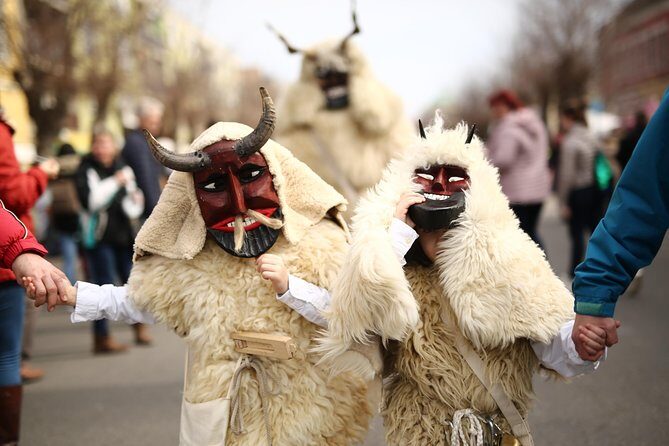
Busójárás is one of those festivals where you instantly understand why people keep showing up year after year. The costumes look wild, but the meaning is practical: the Busó ritual marks the end of a rough season and the start of spring, with protective, fertility-minded symbolism woven into the tradition.
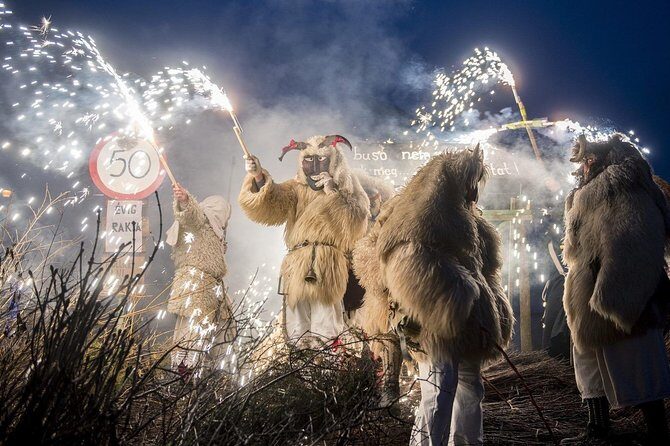
What makes this carnival especially compelling is that it’s rooted in living folklore. You’ll see adults dressed in traditional Busó gear—woolly sheepskin cloaks, trousers filled with hay, decorated stockings, and carved masks—plus the ritual tools: large loud rattlers and clapper bells. The sound matters. It turns the street into a moving statement, not just a backdrop for photos.
And yes, the costumes do share that broader carnival DNA you might recognize elsewhere. Masked winter celebrations exist in other parts of the world, with similar themes about scaring off danger and welcoming spring. But Mohács brings its own local explanation—built around a legend tied to Turkish occupation—so the experience lands with a distinct Hungarian identity.
You can also read our reviews of more historical tours in Budapest



Getting to Mohács from Budapest without the travel stress
Here’s the most useful part for me: you skip the whole public-transport scramble. The tour offers door-to-door pickup and drop-off from your hotel using a private, air-conditioned vehicle. That means you can keep your day comfortable and straightforward, especially if you’d rather not spend hours coordinating buses or trains with luggage, timing, and crowds.
Mohács isn’t right around the corner, so the logistics matter. When you use private transport, you’re free to leave when it makes sense for the festival flow and your own pace. The tour also includes a mobile ticket, which helps on the day when you’re moving between steps.
A small practical note: even with private transport, you may still end up walking from wherever parking or the drop-off point lands. One person’s account mentioned parking about 2 kilometers from the center and then walking in. So wear shoes you trust, and don’t plan to do heavy shopping right after.
A 10-hour day that stays flexible (and why that matters)
This tour runs for about 10 hours total, and it’s built around one key idea: no fixed schedule. When you travel privately, timing becomes flexible, which is a big deal for a carnival. Festivals don’t always move like a museum tour. Sometimes crowds build, sometimes a key moment happens later than you think, and sometimes you want more time watching the ritual unfold.
So you’re not forced to sprint through highlights. Instead, your day can follow what’s happening in Mohács—within the overall tour window. That flexibility also helps if you want to take a slower route through the main area, or if you want a moment to step back and just listen to the bells and rattlers.
You’ll likely spend the day at Mohácsi Busójárás, then return to Budapest after the main festival time. The tour approach keeps it calm: you get picked up, you arrive, you enjoy the show and the folklore, and you head back without trying to reverse-engineer public transport at the end of a busy day.
Mohácsi Busójárás: what you’ll actually see
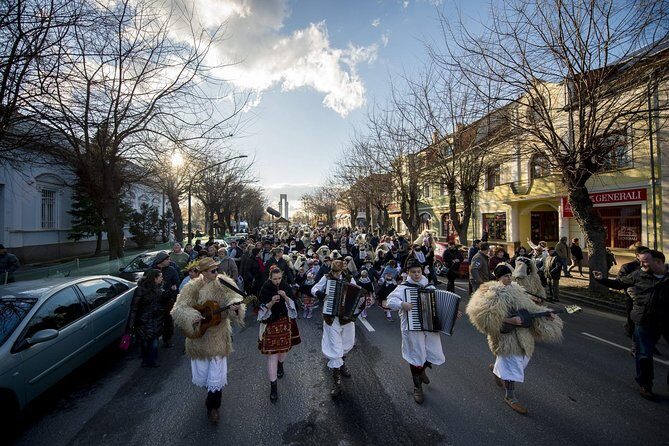
The heart of the experience is the Busó carnival in Mohács, an event connected to traditions that stretch back over 300 years. It’s not a single static moment. Think of it as a moving street ritual filled with sound, costumes, and symbolic actions.
The Busó characters and their gear
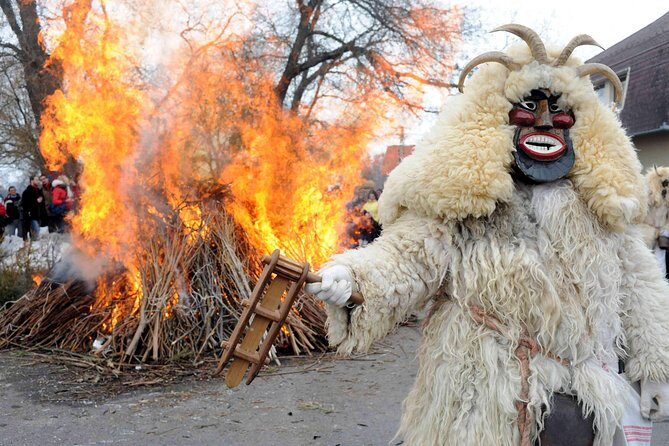
You’ll see adults dressed as Busó, using a set of iconic elements that’s meant to stay the same over time. The look is unmistakable: carved masks, woolly sheepskin cloaks, and trousers filled with hay. Stockings are decorated, and the whole outfit reads like traditional theater—serious costume, not cosplay.
Then there are the sound makers. Busó participants carry large loud rattlers and clapper bells. When those go off, the energy changes. It’s one reason this carnival feels more immersive than a quiet parade.






The spring message inside the spectacle
The festival is described as a celebration of farewell to the rough season and an arrival of spring. That theme shows up in the way the ritual gear is used and in the overall mood of the festival day.
It’s also why the UNESCO listing makes sense. UNESCO isn’t awarding a building or a single performance date. This is about preserving living skills, roles, and the continued use of traditional elements that still matter to the community.
How the festival feels in real time
Based on what I’d use to plan my own visit, this is a hands-on kind of event. You’re walking through a crowd of people in heavy traditional costumes, watching ritual sounds and movements rather than just observing from behind a barrier.
If you like folklore, you’ll appreciate that the carnival isn’t presented as a random spectacle. It’s framed as myth, protection, and community storytelling—played out loudly through masks and noise.
The legend: Turks, disguise, and Mohács Island
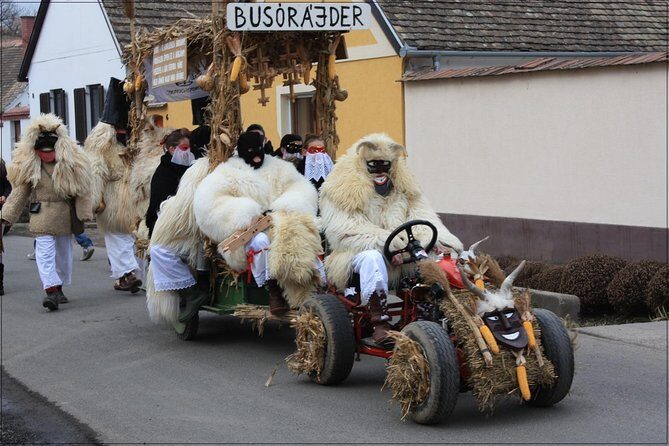
One of the best parts is learning the story that explains why the Busó costumes exist the way they do. The legend connects the tradition to a historic period, describing the second battle of Mohács and a refuge taken across the river Danube, on what’s referred to as Mohács Island.
In the telling, people used disguise and scary masks to return and raid in a way that panicked the superstitious Turks, who fled when they saw the masked men. Whether you treat the legend as literal history or cultural memory, it gives the costumes a spine.
And that spine changes how you watch. When you understand that the masks are meant to protect and confront fear—rather than just entertain—you read the festival differently. You stop thinking of the costumes as decoration and start seeing them as part of a collective story.
Food, drinks, and costs: plan like a smart local
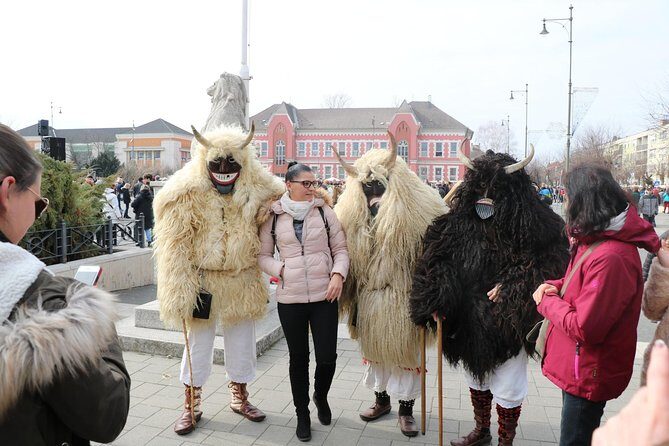
The tour price is $250 per person, and the value depends on what you’re saving yourself. The big part of what you’re paying for is the private transport and the ease of door-to-door pickup. That can be worth it fast when you’re dealing with distance, weather, and a day that’s easier when you’re not managing transit.
Once you arrive, you’ll still need to handle your own spending. Eateries during the festival can be expensive, and at least one visitor flagged that point clearly. So I’d treat meals as a separate budget line, and I’d avoid assuming you can eat affordably just because you’re in Hungary.
On the drink side, there’s a friendly note: one review mentioned lots of pálinka and a warm welcome. That suggests the event atmosphere can include local spirits. Still, I’d keep expectations practical. Keep it light if you’re walking a lot, and remember you’ll need to get back to Budapest later.
Price and logistics: is $250 good value?
For a UNESCO-listed folklore festival, $250 can be either a bargain or a stretch—depending on how you travel. The key is that you’re not just buying access to a festival. You’re buying transport comfort and time management.
Here’s what the cost covers in practical terms:
- Private transportation from your hotel, plus the return
- Air-conditioned comfort
- A group setup that includes group discounts
- A mobile ticket experience
- Offered in English
If you were doing this on your own, you’d likely spend time coordinating getting to Mohács, dealing with parking, and figuring out how to return at the end of the day. Even if the festival itself doesn’t charge an admission ticket (the info provided says admission ticket is free), travel effort is the part that quietly eats your day.
So I see the $250 as a convenience fee with real payoff. If you want an easy, no-stress festival day and you’re not keen on public transport, this is the kind of trip that can actually feel worth it.
What this trip is best for (and who should skip it)
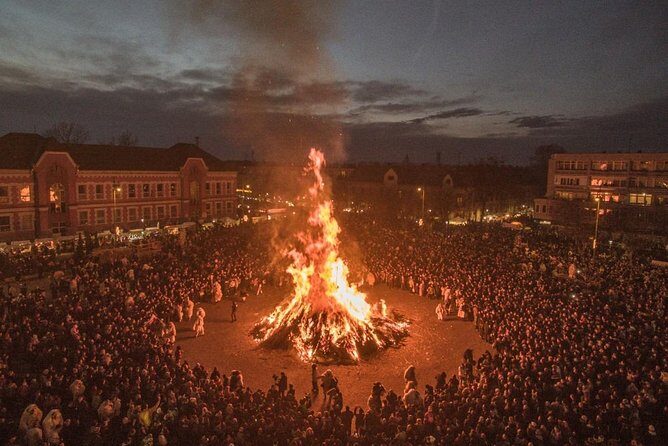
This is ideal if you want:
- A UNESCO intangible cultural heritage festival experience without public-transport hassle
- A day focused on folklore, masks, ritual sound, and community tradition
- A calm itinerary where the timing stays flexible
It also suits groups well. The tour offers group discounts, and it’s structured as a private activity where only your group participates. That helps if you don’t want the experience to feel like a herd.
I’d consider skipping if you’re the type who loves planning every minute and you’re confident handling transit on your own. With private transport, the main advantage is exactly what you’re paying for: someone else handles the ride so you can focus on the festival.
Practical tips I’d use before you go
Bring warm layers. Busó outfits are dramatic, but crowds and outdoor movement still matter. Plan for standing, walking, and spending time in a lively environment where you’ll want layers you can adjust.
Wear shoes with grip. Between festival walking and the possibility that parking sits some distance away, your feet will do more work than you expect.
If you care about photos, aim for patience rather than speed. The masks, rattlers, and bell sounds are part of the story. I’d give yourself time to watch, then shoot.
Finally, keep your day budget-friendly on food. Since eateries can be pricey, pick a plan and avoid surprise spending.
Should you book this Busójárás private trip from Budapest?
I’d book it if you want the festival experience with minimal logistics drama. The combo of door-to-door pickup, private air-conditioned transport, and a day that doesn’t lock you into a rigid schedule makes it a strong option for a UNESCO folklore event.
Choose it even more confidently if you:
- dislike public transport crowding
- want an easy route for a 10-hour day trip
- care about seeing the traditional Busó elements up close, not just reading about them
If you’re comfortable organizing your own transport and you’re on a tight budget for spending beyond transport, you might weigh other approaches. But for many people, the comfort and time saved is the whole point of going on this kind of private cultural day trip.
FAQ
FAQ
Where does the pickup happen?
The tour is door-to-door. You’re picked up and dropped off at your hotel in Budapest.
How long does the trip take?
The duration is about 10 hours.
Is the tour private?
Yes. It’s described as a private tour/activity where only your group participates.
What language is the tour offered in?
It’s offered in English.
Do I need to buy an admission ticket?
Admission is listed as ticket free.
Does the schedule follow a strict timetable?
No fixed schedule is mentioned. Because transportation is private, the timings are flexible.
Will I get a mobile ticket?
Yes. A mobile ticket is included/used for the experience.
Is transportation air-conditioned?
Yes. The private vehicle is air-conditioned.
Can I cancel and get a full refund?
Free cancellation is available up to 24 hours in advance for a full refund.