REVIEW · BUDAPEST
Budapest’s Greatest Hits – Full Day Tour with Lunch & Metro Pass
Book on Viator →Operated by Budapest Urban Walks · Bookable on Viator
Budapest in one long, well-paced day. This full-day tour strings together the city’s headline sights with a private guide approach, plus lunch with dessert and Hungarian wine to keep the day from turning into a photo-only marathon. You also get a practical public-transport pass, so you spend less time figuring out how to cross town and more time actually looking.
Two things I especially like: you get to customize the day to your interests, and the guides shown in recent experiences (like Lazlo Kaiser, Zolton, Francy, Rebekah, Fanni, Leslie, Odea, and Kinga) are repeatedly praised for making the history readable and the route feel personal. One thing to consider: it’s a lot of stops, and some entrances are not included, so you’ll want to budget extra for places like St. Stephen’s Basilica and the Hungarian Parliament if you plan to go inside.
In This Review
- Key things to know before you go
- A Greatest Hits Day That Mixes Icons, Baths, and Real Food
- Heroes’ Square and Széchenyi Baths: Monumental Start, Thermal Reset
- Castle District Preview: Vajdahunyad Castle and Andrássy Avenue
- Opera House and St. Stephen’s Basilica: Culture Stops With Extra Pay If You Go Inside
- Liberty Square, Parliament Area, and the Chain Bridge: Big Budapest Views on Purpose
- Synagogue, Matthias Church, and Fisherman’s Bastion: Religious Architecture Meets Best Views
- Central Market Hall: Finish With Budapest’s Food Energy
- The Metro Pass Advantage: More Than a Ticket, Less Time Lost
- Lunch, Dessert, and Hungarian Wine: A Real Break in the Middle
- Private Guide Momentum: What You Gain From Names Like Kinga and Fanni
- Price and Timing: When $228.27 Feels Worth It
- Who This Tour Fits Best (and Who Might Want a Different Plan)
- Should You Book Budapest’s Greatest Hits Tour?
- FAQ
- Is hotel pickup included?
- What’s included with the tour besides sightseeing?
- Are entrance fees included for every stop?
- How long is the tour?
- Is this tour private?
- Does the tour run in bad weather?
Key things to know before you go
- Private guide, only your group: You’re not stuck waiting on strangers.
- Hotel pickup and drop-off: Less hassle, especially if you’re short on time.
- Széchenyi Baths plus major landmarks: You see Budapest’s icons and its thermal-bath culture in one day.
- Lunch, dessert, and Hungarian wine: Real food time, not just walking time.
- Some sites are free, some paid: Several stops list free admission, but a few major interiors cost extra.
- Metro/pass included for getting around: Helpful when the day crosses from Pest to Buda.
A Greatest Hits Day That Mixes Icons, Baths, and Real Food
Budapest is the kind of city where you can burn days just getting oriented. This tour is built for the opposite problem: you have limited time, and you want the full set of famous spots without spending your day playing transit Tetris. It runs about 7.5 hours, which is long enough to feel satisfying, but short enough that you still have room for your own plans later.
What makes it work is the mix of big-picture sights and slower, human-scale moments. You’ll cover Heroes’ Square, Széchenyi Baths, Andrassy Avenue, the Parliament area, the Chain Bridge, the Castle District viewpoints, and more, then you’ll reset with a proper traditional Hungarian lunch.
The other big value is the guide. When you’re working with a real person (not a generic audio app), you can ask questions that match what you’re looking at right then—architecture details, political history, or why Budapest looks the way it does from one street corner to the next.
A few more Budapest tours and experiences worth a look


Heroes’ Square and Széchenyi Baths: Monumental Start, Thermal Reset
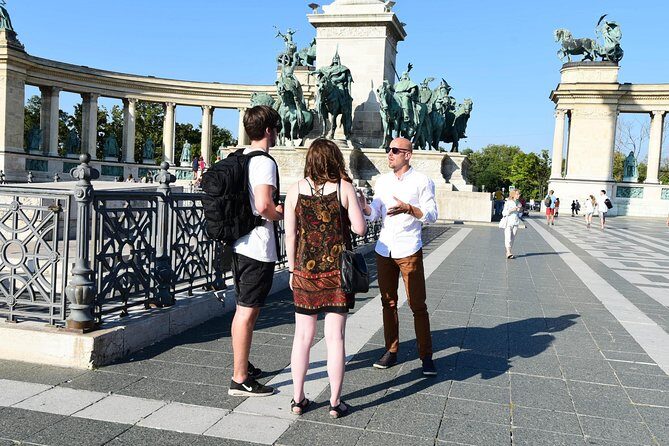
You start at Heroes’ Square, a classic “this is Budapest” landmark. The setting is grand and symbolic, with the statue complex tied to the Magyars and other national leaders, plus the Memorial Stone of Heroes (often misidentified as the Tomb of the Unknown Soldier). Even if you don’t go deep on the symbolism, it’s a great place to understand the city’s identity and scale.
Then you shift gears to Széchenyi Baths and pool. This stop is a standout because it’s not just an exterior sight; it’s Budapest’s thermal culture. The tour info notes Széchenyi Baths as the largest medicinal bath in Europe, fed by thermal springs at about 74°C and 77°C. That temperature detail matters, because it helps you set expectations: this is serious warmth, not a chilly dip.
A practical tip: even though the bath admission is listed as free for this stop, you’ll likely want to come prepared for bath time. If you’re deciding whether to actually get in, think about your comfort level with wet facilities, towel needs, and time. The tour gives a short window here, so plan to move efficiently if you want more than a quick look.
Castle District Preview: Vajdahunyad Castle and Andrássy Avenue
From there, you hit Vajdahunyad Castle in City Park. It was built for the 1896 Millennial Exhibition, celebrating 1,000 years since the Hungarian Conquest of the Carpathian Basin in 895. The castle can feel like a storybook set, but it’s also a clue to how Budapest has used architecture to tell its own timeline.
Next up is Andrássy Avenue, a boulevard that’s more than a pretty street. It dates back to 1872 and links Erzsébet Square with Városliget, and it’s recognized as a World Heritage Site (2002). When you’re walking this kind of avenue with context from a guide, you notice the building rhythm, façades, and the way the avenue frames key central areas.
This is also where you get a sense of what the tour does best: it groups sights so they make sense together. Instead of random scatter, you get a logical flow—monuments, then palace-park energy, then an elegant corridor that connects to major cultural buildings.
Opera House and St. Stephen’s Basilica: Culture Stops With Extra Pay If You Go Inside
You pass by the Hungarian State Opera House on Andrássy Avenue. This neo-Renaissance building was designed by Miklós Ybl, and it was originally known as the Hungarian Royal Opera House. Even if you don’t take an interior tour (not mentioned as included), the exterior and setting are worth a careful look. It’s the kind of landmark where you can spend two minutes noticing details and feel like you saw more than another generic façade.
Then you move to St. Stephen’s Basilica. Here’s the key point: the basilica stop lists admission as not included. That doesn’t make it a bad stop—just be realistic about your plan. If you want to go inside, factor in extra entry time and cost. If you only have energy for photos and a quick exterior moment, you’ll still get the payoff of being at one of Budapest’s best-known religious landmarks.
Because the day is packed, I recommend a simple strategy: decide early which “maybe I’ll go in” places are worth it for you. If you strongly care about interiors, it’s worth paying for them. If you prefer viewpoints and street-level atmosphere, you can treat these stops as look-then-move.
Liberty Square, Parliament Area, and the Chain Bridge: Big Budapest Views on Purpose
From culture, you shift to state power and civic space. You’ll spend time at Szabadság tér (Liberty Square). It’s a public square in Lipótváros with business and residential energy, plus landmark presences like the United States Embassy and the historicist-style headquarters of the Hungarian National Bank.
Then comes the Hungarian Parliament Building. Like the basilica, Parliament’s admission is not included in the tour. Still, the exterior is so prominent that even a quick stop can feel meaningful, especially if your guide explains what you’re looking at and why it became such a signature image for the city.
After that, you cross to the Széchenyi Chain Bridge for a Danube connection moment. Bridges in Budapest are never just bridges; they’re the visual hinge between Buda and Pest. The tour makes it easy to experience that shift without you planning ferry crossings or complicated transit.
If you’re traveling in winter or shoulder season, this is also where having a guide helps: weather changes street flow fast, and the guide can help you time your sidewalk minutes so you’re not stuck in the wrong spot in wind or rain.
A few more Budapest tours and experiences worth a look





Synagogue, Matthias Church, and Fisherman’s Bastion: Religious Architecture Meets Best Views
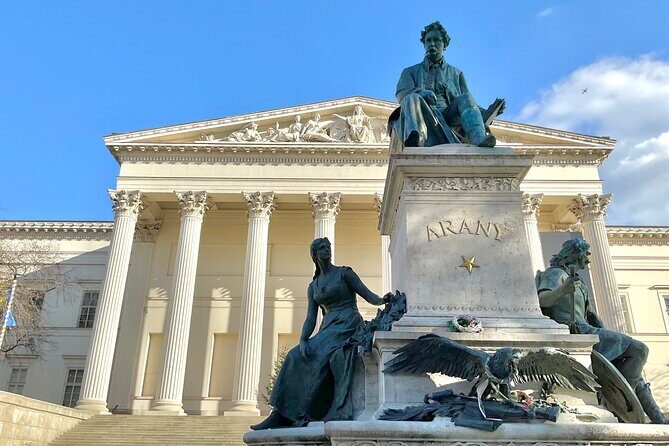
You’ll stop at the Great / Central Synagogue (Dohány Street Synagogue), also called the Great Synagogue or Tabakgasse Synagogue. Admission here is not included, but the stop still matters. This is a landmark that often gets people curious, and in a guided context you can understand the building’s place in Budapest’s community story rather than treating it like a quick exterior.
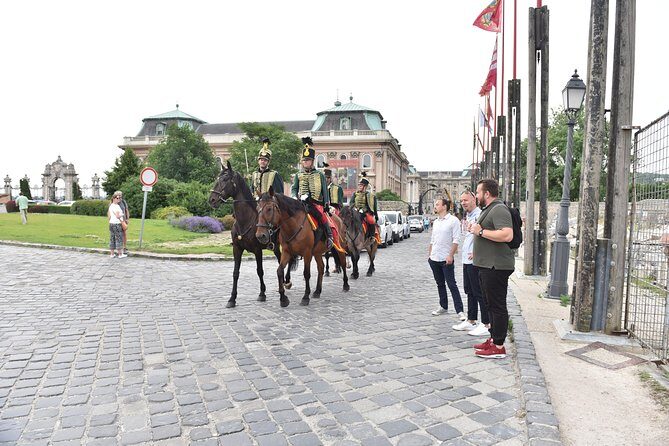
Then you reach Matthias Church (also known as Mátyás-templom), located at Holy Trinity Square in the Castle District. Again, admission is not included. Still, the exterior location is powerful: it’s right in the Castle District’s walking zone, where every turn seems designed for a viewpoint.
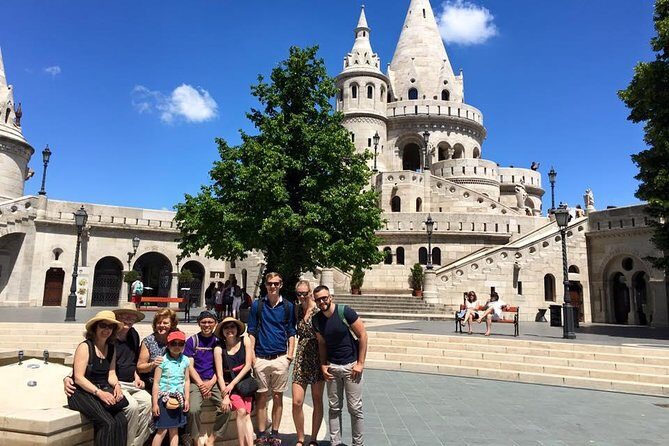
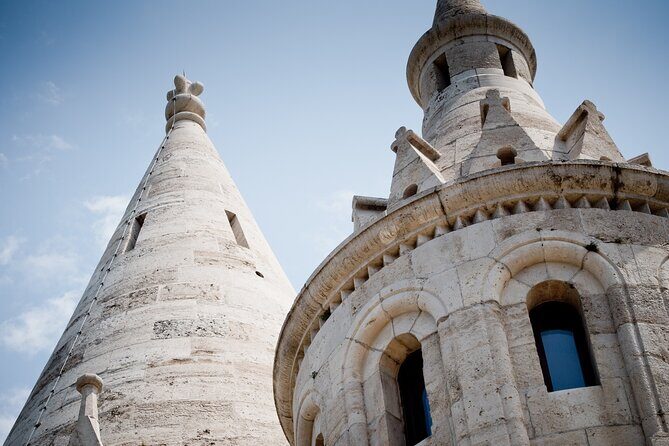
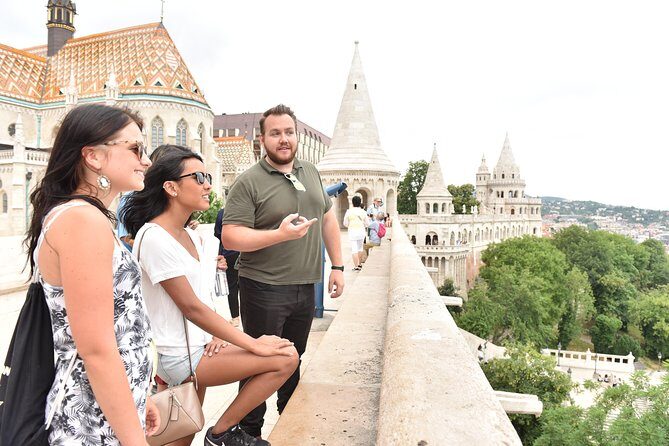
Finally, you hit Fisherman’s Bastion for some of the best panorama time. This stop is listed as free admission. Even if you’ve seen pictures before, the value here is timing and guidance. From these terraces, you understand why Budapest’s river bend and architecture became such an iconic postcard. The photo opportunities are obvious, but so is the mental picture you gain of how the city lays out across the water.
A reality check: this part of the day is where you’ll want to manage your pace. You’ll be tempted to linger for photos, but the tour still has a market stop later. I’d treat Fisherman’s Bastion as your “plan to linger” moment, then accept you’ll move efficiently for the next stop.
Central Market Hall: Finish With Budapest’s Food Energy
To close the sightseeing loop, you’ll visit Central Market Hall (Nagyvásárcsarnok). This is the city’s largest and oldest indoor market. The idea of building such a big hall came from Károly Kamermayer, and the opening is tied to the 1897 ceremony.
This is a great place to finish because it shifts you from landmark viewing to everyday Budapest life. Even if you don’t buy much, you get the feel of what locals shop for and how the market space is organized. Think of it as your chance to grab a snack, a small gift, or something you forgot to taste earlier in the day.
Also, the tour already includes lunch and dessert, so you don’t need to force eating at the market. Use the market like a cooldown: smell the food, look at the stalls, and decide if anything calls your name.
The Metro Pass Advantage: More Than a Ticket, Less Time Lost
The tour includes public transportation tickets (marketed as a metro pass). That sounds minor until you try it. Budapest’s sights are spread out in a way that can make DIY travel slow, especially if you’re switching districts, crossing the river, and trying to keep your day smooth.
With the pass included, you can focus on the route’s logic. You’re not stuck standing at a map debating which tram is best while everyone’s energy drops. It also helps you keep the walking manageable, which matters because the day includes multiple short stops.
If you’re the type who likes to fill the gaps after a tour, the pass also gives you flexibility. You can return to places you loved later, instead of treating the tour as your only chance to see certain streets.
Lunch, Dessert, and Hungarian Wine: A Real Break in the Middle
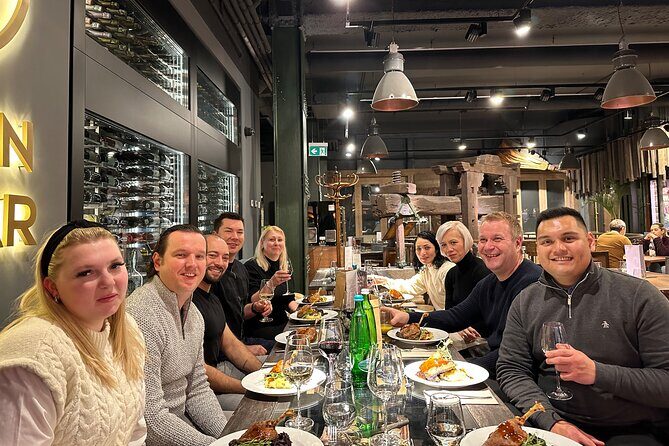
The included meal is one of the best parts of the value picture. You get lunch plus dessert at a traditional Hungarian restaurant, and the tour description specifically includes Hungarian food and wine. That matters because this is where you slow down and stop the day from becoming a checklist.
There’s one note to respect: the minimum drinking age is 18, so wine is only relevant if that applies to you. If not, you can still enjoy the food portion as the core break.
In practice, this lunch stop is exactly where I want tours to land. You’re not hungry and you’re not rushed into another “quick” stop the moment you finish. It also gives you a chance to ask your guide questions that aren’t tied to a single building, like what neighborhoods are worth revisiting after the tour.
Private Guide Momentum: What You Gain From Names Like Kinga and Fanni
This tour is a private experience, so only your group participates. That difference is bigger than it sounds. With a private guide, the pacing and priorities can shift based on your questions, your walking comfort, and how much you want to read on the streets versus just look.
Recent guide names show the kind of performance you can expect when it works well: Lazlo Kaiser is praised for going out of his way to keep people informed, Fanni for being fun and energetic, Francy for being accommodating and explaining Hungarian history clearly, Rebekah for pairing sights with good local lunch time, and Kinga for being kind and passionate while answering questions.
You can’t guarantee a specific person, but you can use this as a clue. If you care about interpretation—not just locations—this is the kind of tour that tends to deliver.
Price and Timing: When $228.27 Feels Worth It
At $228.27 per person, this isn’t the cheapest way to see Budapest. The reason it can still feel fair is the bundle: hotel pickup and drop-off, a private guide, lunch and dessert, Hungarian wine, and public transportation tickets all get built into the day.
The other value piece is time efficiency. Many of these stops are famous enough that you’ll want to see them even on a DIY day. But DIY has two costs: planning stress and wasted time moving between districts. If you’re traveling on a tight schedule, paying for a guided “greatest hits” route can be cheaper than burning a full day trying to replicate it.
One caution: not every paid interior is included. St. Stephen’s Basilica, Parliament, the Great Synagogue, and Matthias Church are listed as not included, while several other stops are marked as free admission. So the final spend depends on how many interiors you decide are worth it for you.
Who This Tour Fits Best (and Who Might Want a Different Plan)
This tour fits best if you want a single-day overview that covers both Budapest’s postcard sights and its everyday character, without having to plan every hop yourself. It’s also a smart pick for first-timers because you leave with a mental map of where major areas sit relative to each other.
It’s also a good fit for winter and busy seasons because the tour operates in all weather and keeps you moving with purpose. Just dress for wet streets and cold wind if you’re in cooler months.
If you’re the type who hates crowds or wants long museum-style interior time at fewer stops, you might feel the schedule is tight. Many stops are short, so you’re visiting, seeing, and learning basics rather than staying for extended programs.
Should You Book Budapest’s Greatest Hits Tour?
If you want the quickest path to Budapest’s biggest landmarks, with real food and a guide who can explain what you’re seeing, I’d say this tour is a strong yes. The combination of hotel pickup, transport tickets, and lunch with dessert and Hungarian wine makes it practical, not just sightseeing.
Book it especially if any of these are true: you have limited time, you want to see both Pest and Buda in one day, you’d rather ask questions than just stare at buildings, or you like the idea of finishing with the Central Market Hall food atmosphere.
Consider a different approach if you know you’ll only want a couple of interiors, or if you prefer slow days with deep museum time. In that case, you might save money by choosing just your top paid stops and exploring the rest on your own.
If you do book, pick two or three places that truly matter to you for going inside, and treat the rest as look-and-learn moments. That simple plan helps you get maximum value from a packed, well-run Budapest day.
FAQ
Is hotel pickup included?
Yes. The tour offers hotel pickup and drop-off, and the guide meets you at your requested location.
What’s included with the tour besides sightseeing?
You’ll get lunch and dessert at a traditional Hungarian restaurant, Hungarian wine, a map and recommendations, and public transportation tickets (a metro pass).
Are entrance fees included for every stop?
No. Some stops list admission as free, while several major interiors are listed as not included, including St. Stephen’s Basilica, the Hungarian Parliament Building, the Great Synagogue, and Matthias Church.
How long is the tour?
The tour runs about 7 hours 30 minutes (approx.).
Is this tour private?
Yes. It’s a private tour/activity, meaning only your group participates. Group discounts may apply.
Does the tour run in bad weather?
Yes. It operates in all weather conditions, so dress appropriately.