REVIEW · BUDAPEST
Budapest Urban Walk – Budapest City Tour with Cake & Coffee
Book on Viator →Operated by Budapest Urban Walks · Bookable on Viator
Budapest has a way of rewarding your first day. This walk strings together major sights in 3.5 hours, with a guide who keeps you moving and learning. I also like the simple comfort of a stop for traditional cake and coffee, which breaks up the walking without turning it into a food tour.
The one thing to keep in mind: two big landmarks on the route (St. Stephen’s Basilica and the Parliament Building) have admission not included, and the time at each stop is short enough that you’ll mostly be taking in the highlights from the outside and around the area.
In This Review
- Quick Reasons This Budapest Walk Works
- Price and Value: What $96.33 Really Buys You
- The Route: From the Opera to Parliament in One Big Pest Day
- Stop 1: Heroes’ Square (Hősök tere) and the Story Behind the Statues
- Stop 2: Széchenyi Medicinal Bath and Pool (and What 74–77°C Feels Like)
- Stop 3: Vajdahunyad Castle in City Park (Built for a Millennium)
- Stop 4: Andrássy Avenue (1872 Grand Boulevard with World Heritage Status)
- Stop 5: The Hungarian State Opera House (Magyar Állami Operaház)
- Stop 6: St. Stephen’s Basilica (Szent István-bazilika) and the Reliquary Detail
- Stop 7: Szabadság tér (Liberty Square) and the Weight of Memorials
- Stop 8: Parliament Building (Országház) and How to Think About “Not Included”
- What Makes the Experience Feel Personal (Even with a Group)
- How to Plan Your Day Around It
- Who This Tour Is Best For
- Should You Book This Budapest Urban Walk?
- FAQ
- How long is the Budapest Urban Walk?
- What is the price per person?
- Is the tour in English?
- What’s included in the tour?
- Are transport tickets included?
- Is admission included for St. Stephen’s Basilica and the Parliament Building?
- Where do you meet and where does the tour end?
- What’s the group size limit, and does it run in bad weather?
Quick Reasons This Budapest Walk Works
- Coffee-and-cake reset at the right moment, not as an afterthought
- Fast orientation on Pest side, ideal if you want to plan the rest of your trip
- Transport tickets included, so you spend less time figuring out transit
- Small group size (max 15) for an actually personal feel
- All-weather operation, with the route designed to keep going even when conditions change
Price and Value: What $96.33 Really Buys You
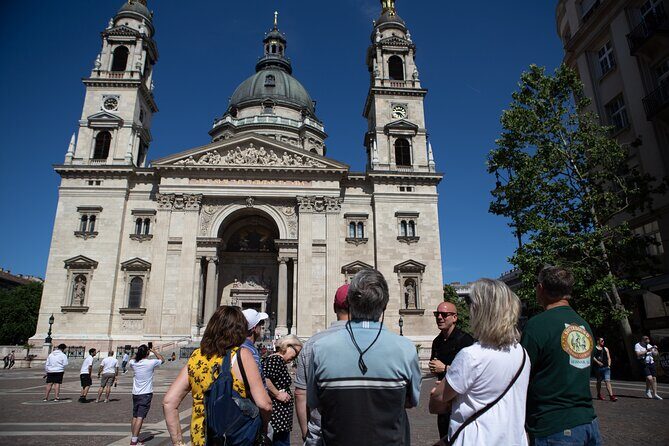
At $96.33 per person for about 3 hours 30 minutes, this isn’t just a casual stroll. You’re paying for a guided route that hits a cluster of top sights, plus the practical extras that usually cost time or money on your own.
You get coffee and cake (a traditional combo), plus snacks and coffee/tea, along with a map and further recommendations. The tour also includes transport tickets, which matters more than you’d think on a first day—Budapest is easy to love, but moving efficiently across sights takes planning. Add in a small group (up to 15) and a guide who can steer you through the route, and the price starts to feel more like “saves you mental effort” than “just pays for walking.”
You can also read our reviews of more walking tours in Budapest


The Route: From the Opera to Parliament in One Big Pest Day
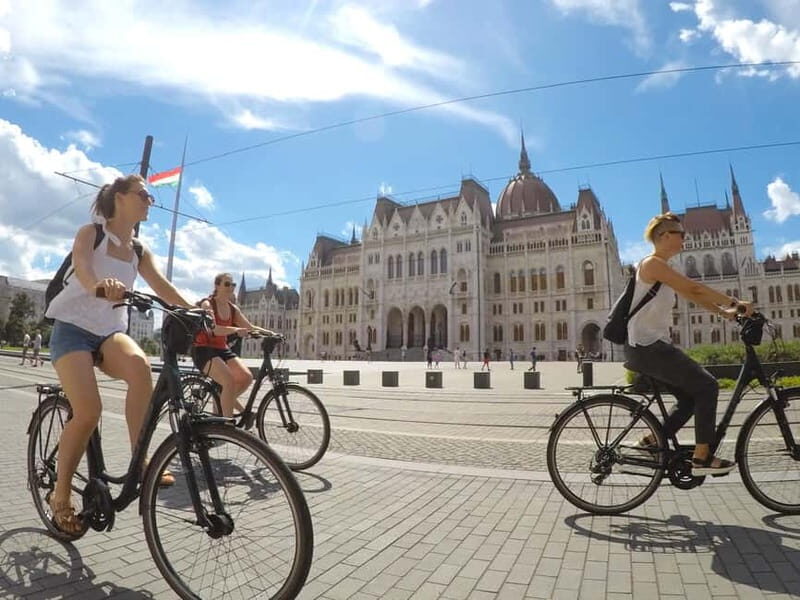
This tour starts at the Hungarian State Opera on Andrássy út (Andrássy Avenue) and ends at the Hungarian Parliament Building area at Kossuth Lajos tér. That’s a smart shape for a first-day experience: you begin on one of Budapest’s grand boulevards and finish at the city’s most iconic political landmark.
Along the way, you move through a mix of eras—national monuments, thermal-bath culture, a castle built for a millennium celebration, grand architecture, and major landmarks tied to Hungary’s national identity. You also get the helpful rhythm of short stops that let you see more, without pretending you can deeply absorb eight separate heavy hitters in one afternoon.
The walking pace is generally manageable. The tour specifies moderate physical fitness, and children must be accompanied by an adult.
Stop 1: Heroes’ Square (Hősök tere) and the Story Behind the Statues
Heroes’ Square is one of those Budapest places you recognize even if you’ve never been. The iconic statue complex features the Seven chieftains of the Magyars and other major Hungarian national figures, built to project national pride and historical continuity.
One detail worth noticing is the memorial stone. It’s often incorrectly called the Tomb of the Unknown Soldier, but it’s meant as the Memorial Stone of Heroes. A good guide makes that kind of distinction fast, and it helps you understand why the square looks the way it does and what it’s trying to say.
You’ll spend about 20 minutes here. That’s plenty of time to get photos and take in the overall layout, but not enough for a long sit-down. If you want to linger, I’d treat this stop as “get your bearings fast” and save deeper reading for later.
Stop 2: Széchenyi Medicinal Bath and Pool (and What 74–77°C Feels Like)
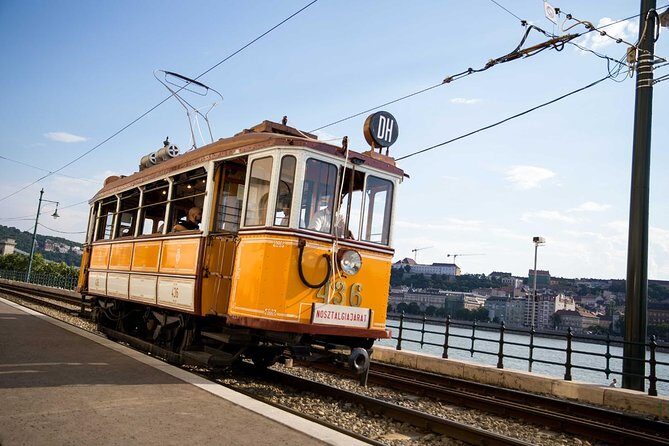
Széchenyi Medicinal Bath is the biggest medicinal bath in Europe, fed by two thermal springs. The water temperatures are listed as 74°C and 77°C—very hot water by any normal standard.
In only 15 minutes, you’re not going to soak. Instead, this stop is about context: seeing Széchenyi’s famous pool-and-bath environment and understanding why it’s such a cultural landmark, not just a “pretty building.” If you plan to swim or fully enter the facilities later, this quick visit works like a preview.
Practical note: even when the tour keeps it moving, bath stops can feel humid and warmer than the streets. If you’re sensitive to heat, keep that in mind and wear breathable clothing.
Stop 3: Vajdahunyad Castle in City Park (Built for a Millennium)
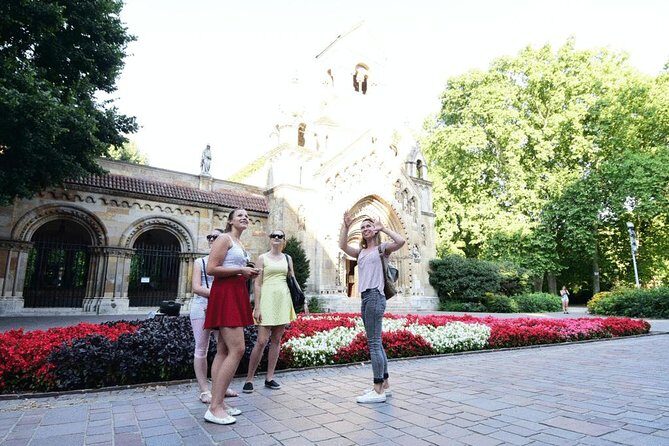
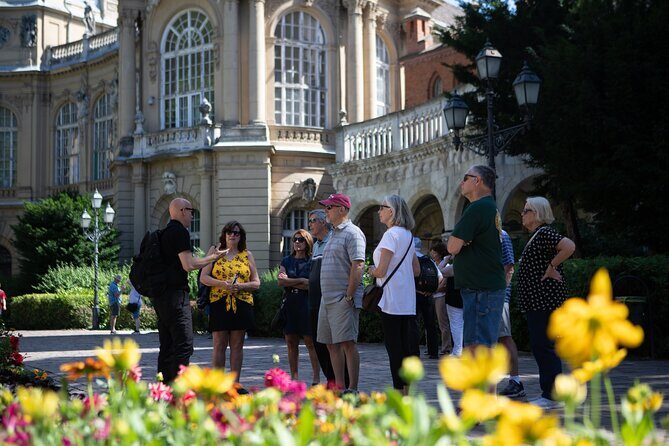
Vajdahunyad Castle (Vajdahunyad vára) looks like it’s been there forever, but it was built in 1896 for the Millennial Exhibition. The exhibition celebrated 1,000 years of Hungary since the conquest of the Carpathian Basin in 895.
That origin matters, because it explains the “storybook” feel. This castle isn’t just a fortress—it’s also a statement about national identity and historical imagination. In about 20 minutes, you can walk the area enough to notice the castle style, its setting in City Park, and why it became one of Budapest’s most recognizable romantic landmarks.
If you’re short on time in Budapest, this stop gives you a big visual payoff without requiring a full museum day.
You can also read our reviews of more city tours in Budapest




Stop 4: Andrássy Avenue (1872 Grand Boulevard with World Heritage Status)
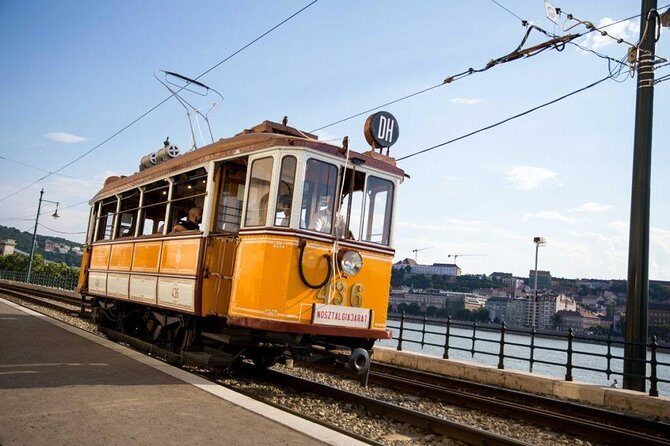
Andrássy Avenue (Andrássy út) is a boulevard dating back to 1872, stretching between Erzsébet Square and Városliget. You’ll spend around 10 minutes here, but it’s one of those stretches where even a quick walk can change your sense of the city.
This avenue is lined with impressive Neo-renaissance mansions and townhouses, and it was recognized as a World Heritage Site in 2002. The practical value is that it sets up the next stop perfectly: the architecture you see on the avenue helps you understand Budapest’s ambition during the 19th century.
In a short time, you’ll get the feel of why Andrássy is often compared to other grand “promenade” streets in Europe. It’s not just pretty; it’s a timeline you can walk.
Stop 5: The Hungarian State Opera House (Magyar Állami Operaház)
Next up is the Hungarian State Opera House, a neo-Renaissance opera house located right on Andrássy út. It was originally known as the Hungarian Royal Opera House and designed by Miklós Ybl, a major figure in Hungarian architecture.
This is another stop with about 10 minutes, so you’re mostly absorbing the exterior and the street-level presence. But the context helps. Once you know who Miklós Ybl was, the building starts to read like part of a broader architectural plan rather than random grandeur.
If opera isn’t your thing, don’t stress. The building still works as a “Budapest style lesson,” and your guide’s explanations are usually the difference between seeing a pretty facade and understanding why it matters.
Stop 6: St. Stephen’s Basilica (Szent István-bazilika) and the Reliquary Detail
St. Stephen’s Basilica is a Roman Catholic basilica named for Stephen, the first king of Hungary. The tour includes about 15 minutes at the basilica area, but admission is not included, so plan if you want to go inside.
One of the most talked-about details is that Stephen’s right hand is housed in the reliquary. That kind of specific fact gives you a reason to care beyond the building’s size and form.
Because admission isn’t included, you’ll want to decide in advance whether you’re using your time and budget for interior viewing. If you’re not going in, focus on the exterior and take in the setting around the basilica.
Stop 7: Szabadság tér (Liberty Square) and the Weight of Memorials
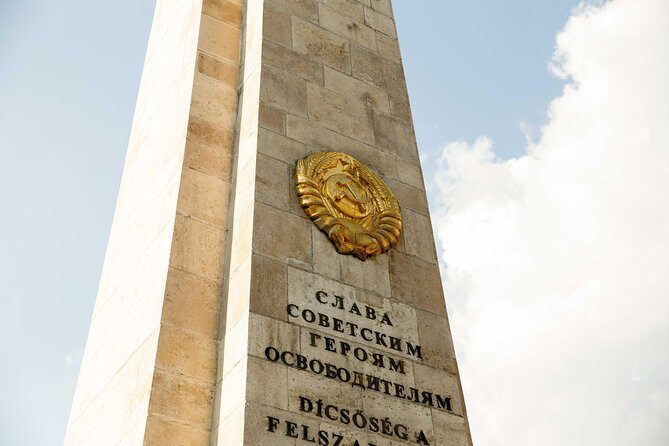
Szabadság tér (Liberty Square) is in the Lipótváros neighborhood and has a very particular emotional gravity. It’s famous for two controversial memorials—one commemorating Hungarian Jewish victims of the Holocaust, and another honoring Soviet soldiers who liberated Budapest from the Nazis in 1945.
That blend of memory and controversy is exactly why a guide helps. Without context, it’s just monuments and statues. With context, you start to understand how Budapest tells its story through public space.
You’ll have about 20 minutes here, plus time to notice nearby landmarks like the United States Embassy and the historicist headquarters of the Hungarian National Bank on the west side of the square. It’s a slower stop compared with the earlier “photo-and-move” cadence, and it can be one of the most thought-provoking parts of the route.
Stop 8: Parliament Building (Országház) and How to Think About “Not Included”
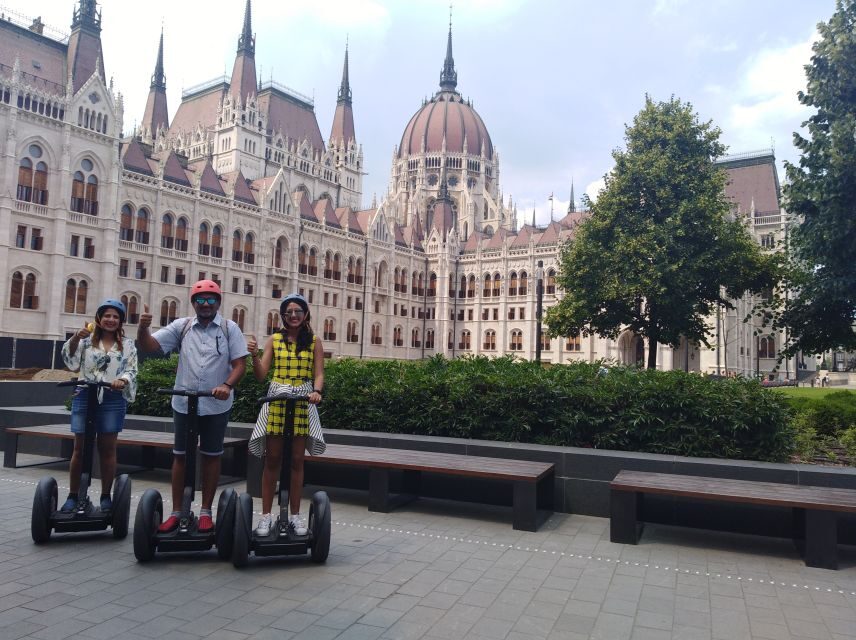
The final stop is the Hungarian Parliament Building (Országház), Budapest’s best-known political landmark and the seat of Hungary’s National Assembly. The tour includes about 15 minutes here, but admission is not included.
You’ll get the main sight impact—this is one of those buildings that instantly signals scale and power. Just be aware that if you want to go inside, you’ll need to plan that separately and budget for it. In a tight time window, it’s better to know your priorities early so the end of the tour doesn’t feel rushed.
Ending here is also smart. If you want to explore further after the tour, the area is naturally where you’ll drift next—along the Danube views and the riverside atmosphere.
What Makes the Experience Feel Personal (Even with a Group)
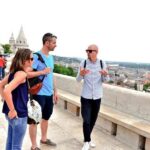
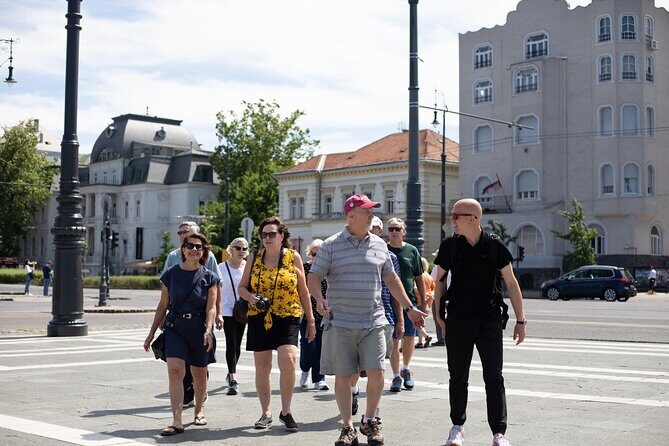
Even though it’s a group tour with a max of 15, the highlights are built around a personal-guide feel. The tour description emphasizes a personalized experience, and that usually translates into things like pacing you can handle, answers that connect the sights instead of reciting facts, and flexibility when weather shifts.
One review note stood out in my mind: the tour can still be enjoyable when the weather turns, and the guide named Reka was specifically praised for making the main Pest-side attractions make sense quickly. That’s exactly what you want from a first-day city tour—clarity, not just checkmarks.
And yes, it runs in all weather conditions. That doesn’t mean it becomes a full indoor substitute. It means the route is designed to keep going, so you’ll want to dress appropriately for the day.
How to Plan Your Day Around It
If this is your first day in Budapest, I think it’s one of the best ways to start. You’ll get a structured overview of major Pest highlights—Heroes’ Square, City Park, Andrássy Avenue, the Opera area, and the Parliament zone—so the rest of your trip feels less like wandering and more like choosing.
If it’s later in your trip, still consider it, especially if you haven’t mapped out your sightseeing by neighborhoods. The transport tickets included help you avoid the time drain that often happens when you try to connect distant sights on your own.
For timing, the tour is about 3 hours 30 minutes. That’s long enough to feel like a real outing, but short enough to keep your evening open. I’d schedule it early or mid-day and leave your “big ticket” interior visits (like Basilica or Parliament) for after you’ve seen where everything sits.
Who This Tour Is Best For
This Budapest Urban Walk is a strong fit if you want:
- A guided introduction to major Pest landmarks without spending your entire day in transit
- Food comfort included (cake, coffee, snacks) during the walk
- A manageable route for moderate physical fitness needs
- A small-group experience (max 15) with room for questions and pacing
It may be less ideal if you’re hoping for long museum time or deep entry tickets at every stop. The schedule is built for breadth—seeing a lot, not lingering for hours.
Should You Book This Budapest Urban Walk?
I’d book it if you want an efficient, guide-led way to get oriented and make the rest of your trip easier. The value is strongest when you care about the included extras—coffee and cake, snacks, transport tickets—and when you like learning through a connected route rather than isolated sightseeing.
Skip or plan carefully if you know you want to go inside St. Stephen’s Basilica and the Parliament Building during this same window. Since admissions are not included, you’ll need to decide how much time and money you want to spend on interior access versus exterior viewing.
If you’re flexible and you want a smart first-day plan in Budapest, this one is a solid choice. It’s short, small-group, and built around the kinds of landmarks that make Budapest feel unmistakably Budapest.
FAQ
How long is the Budapest Urban Walk?
The tour lasts about 3 hours 30 minutes.
What is the price per person?
It costs $96.33 per person.
Is the tour in English?
Yes, it’s offered in English.
What’s included in the tour?
Coffee and cake at a local café, snacks, and coffee and/or tea are included, along with a map and further recommendations.
Are transport tickets included?
The tour highlights mention included transport tickets for convenience.
Is admission included for St. Stephen’s Basilica and the Parliament Building?
No. Admission for St. Stephen’s Basilica and the Hungarian Parliament Building is not included.
Where do you meet and where does the tour end?
You start at the Hungarian State Opera (Andrássy út 22, 1061) and end at the Parliament Building area (Kossuth Lajos tér 1-3, 1055).
What’s the group size limit, and does it run in bad weather?
The tour has a maximum of 15 travelers and operates in all weather conditions.