REVIEW · BUDAPEST
Budapest Jewish Heritage: Synagogues, Shoes, Secrets & Flódni
Book on Viator →Operated by Fungarian · Bookable on Viator
Synagogues, shoes, and a pastry with a purpose. This tour strings together Budapest’s Jewish Quarter with the biggest symbols of prewar life and wartime loss, from the Great Synagogue to the Shoes on the Danube memorial. I like how it’s led by a Jewish historian, with time for questions and stories that connect the architecture to what happened to real people.
Two highlights I especially enjoyed are the focus on different synagogue styles and communities, and the way the walk slows down at the most emotionally heavy stops instead of treating them like quick photo ops. One possible drawback: some synagogue entrance tickets aren’t included, so you’ll want a little extra budget and time for that.
In This Review
- Key highlights you should know before you go
- Walking the Jewish Quarter with a historian guide
- Great Synagogue on Dohány Street: Europe’s largest and the wartime story
- Rumbach Street Synagogue: Otto Wagner’s Moorish-style surprise
- Carl Lutz Memorial: a Swiss rescuer you’ll actually remember
- Kazinczy Street Orthodox Synagogue: art nouveau color overhead
- Shoes on the Danube Bank memorial: go slowly and let it hit
- Jewish Quarter and the ghetto wall: what’s left and what you can imagine
- Flódni finale on Dohány Street: food as living heritage
- Price and logistics: what $102.95 really buys
- Who this tour is best for
- Should you book this Jewish heritage tour?
- FAQ
- How long is the Budapest Jewish Heritage tour?
- Is hotel pickup included?
- Are entrance tickets included for all stops?
- Is the tour private?
- What language is the tour offered in?
- Can I cancel for a full refund?
Key highlights you should know before you go
- Three synagogue stops, three different “Jewish Budapest” viewpoints, from the Neolog center to Orthodox design details
- Shoes on the Danube Bank is included with the stop time built in, so you don’t have to scramble for it later
- Carl Lutz Memorial gives you a clear rescue story tied to Budapest’s wartime ghetto
- A real flódni finale at the end, with the pastry treated as heritage, not just dessert
- Private pacing with a historian guide, plus optional hotel pickup for less hassle
Walking the Jewish Quarter with a historian guide
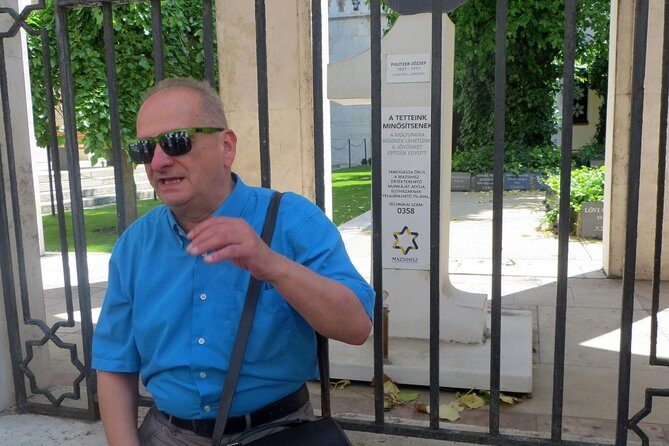
The meeting point is easy: Dohány u. 1, 1074, right by the synagogue area. The format is a private tour, meaning it’s just your group, not a mixed crowd with constant “line up over here” energy. You’ll get historian-style narration in English, and the guide is Jewish, which changes the tone in a good way.
If you’re the type who likes to ask questions, this tour tends to reward that. Several guides mentioned in past tours—like Gabriella L., Kata, Edith, and Miklós—are praised not only for facts, but for personal perspective and the ability to explain what you’re seeing in human terms.
You can also read our reviews of more historical tours in Budapest



Great Synagogue on Dohány Street: Europe’s largest and the wartime story
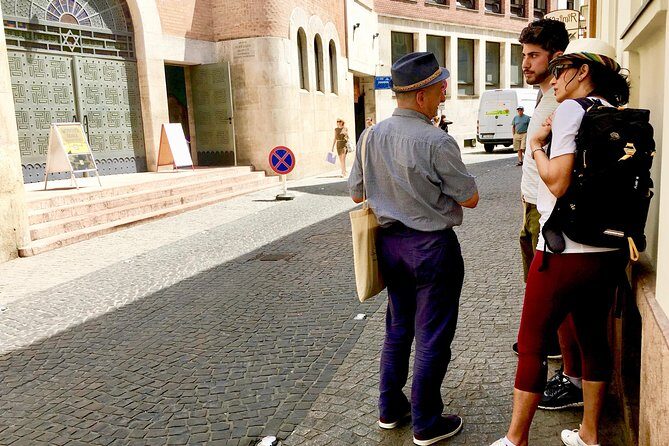
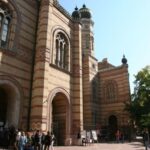
The tour’s anchor is the Dohány Street Synagogue, also called the Great or Central Synagogue (Nagy Zsinagóga). This is the one most visitors recognize fast from photos, but the guide helps you read it beyond the postcard look. It’s the largest synagogue in Europe, with seating for about 3,000 people, and it functioned as a center of Neolog Judaism.
Expect a focused stop (about 20 minutes), with attention to why the building is architecturally distinctive. Then you’ll shift into the WWII story—what happened to Hungarian Jewry—plus the guide’s take on internationally known Hungarian Jews and their ties to Jewish life in the city.
Practical note: the synagogue entrance ticket is not included, so you’ll pay separately here. That’s the main cost surprise on the route.
Rumbach Street Synagogue: Otto Wagner’s Moorish-style surprise
Next comes the Rumbach Street Synagogue (Moorish Rumbach Sebestyén utca Synagogue). It was built in 1872 by Austrian Secessionist architect Otto Wagner, and it served a more moderate Conservative community. This is one reason I like this tour: it doesn’t force every stop into the same “big and famous” category.
The interior is where the story really lands. The decorations are described as shining in old, soft light after a long-overdue facelift. In other words, you’re not just looking at a shell—you’re seeing what restoration has made visible again, and you’re hearing how design choices matched a specific community identity.
This stop is shorter (about 15 minutes), and again, the entrance ticket isn’t included. Budget for it, and you’ll stay happy instead of annoyed.
Carl Lutz Memorial: a Swiss rescuer you’ll actually remember
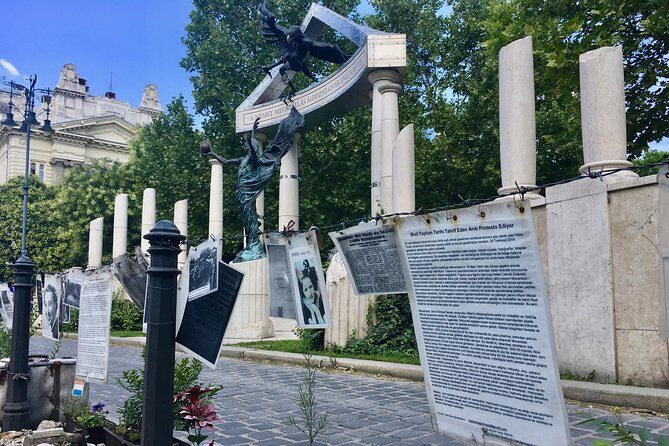
War often gets told through documents and numbers. Carl Lutz cuts through that with a specific human outcome. The tour pauses at the monument to honor Carl Lutz, the Swiss diplomat credited with helping save tens of thousands of Jews in Budapest from persecution and deportation.
This stop is about 10 minutes and it’s free. I like it because it balances the heavier stops without pretending suffering didn’t happen. You get a clear example of action and risk, not just tragedy.
Kazinczy Street Orthodox Synagogue: art nouveau color overhead
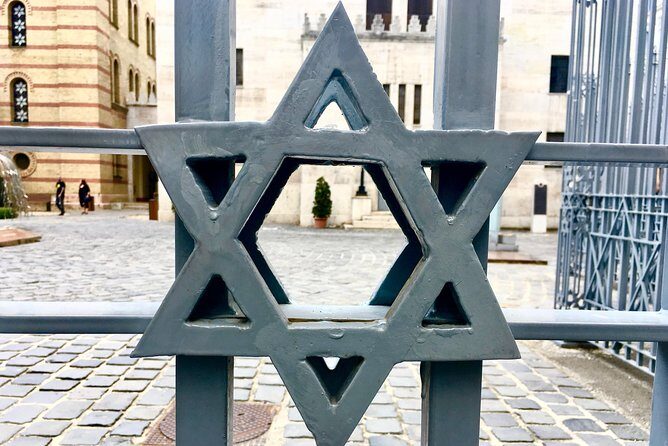
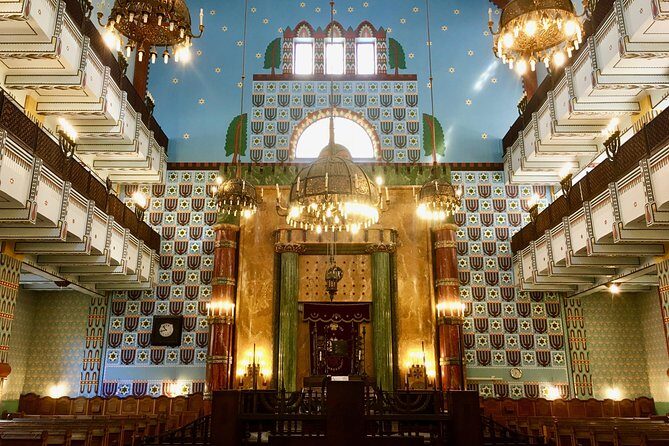
Budapest’s Orthodox community is represented at the Kazinczy Street Synagogue, built in 1913 in what was then a modern design style. Late Art Nouveau touches show up throughout the interior, and the color use is a big clue that this synagogue’s visual language wasn’t meant to be quiet or minimal.
The stained-glass windows in the ceiling are credited to Miksa Róth, so if you like details, look up. This stop is about 10 minutes and the entrance ticket is not included.
Why it matters: different Jewish communities expressed identity through worship spaces. When the guide points that out, the buildings start to feel like documents—each one recording a different choice about style, theology, and belonging.






Shoes on the Danube Bank memorial: go slowly and let it hit
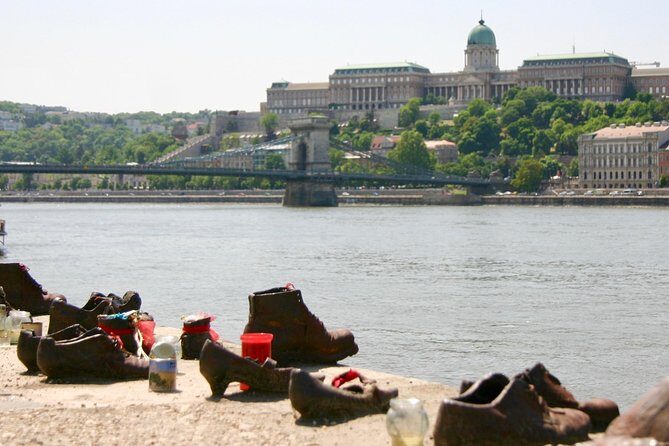
Then you reach the stop that many people find hardest to forget: Shoes on the Danube Bank. The memorial was unveiled on April 16, 2005 to remember Jewish victims murdered at this riverside location during World War II.
The setup matters. The victims were forced to remove their shoes before being shot at the riverbank, and the bodies were carried away by the Danube. The memorial sculpture—depicting shoes left behind—turns that sequence into something you can stand near and confront.
This is about 10 minutes, and the admission for this stop is included. I recommend treating it like a slow, deliberate stop, not a “quick look and move on.” The guide’s framing helps, but your own pace helps more.
Jewish Quarter and the ghetto wall: what’s left and what you can imagine
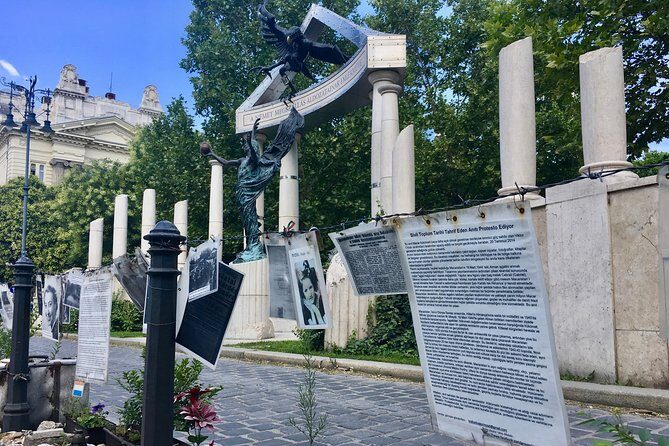
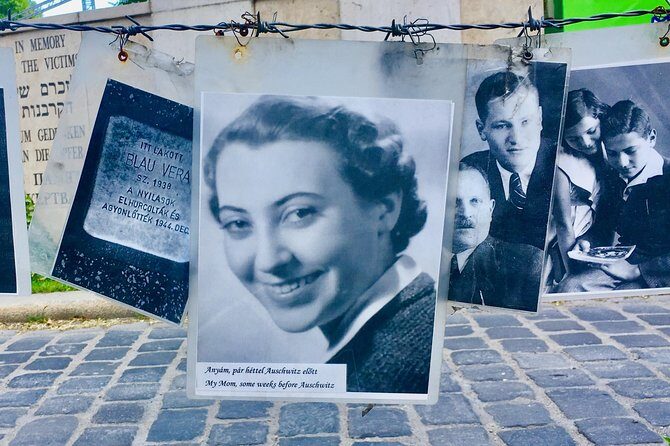
The walk continues into the Jewish Quarter area, where the ghetto story is told with the physical clues that still exist in the city. During the end stages of WWII, Jews in Budapest were herded into a ghetto. A small section of the ghetto’s wall still stands, right in the heart of the city.
This stop is roughly 15 minutes and is free. The value here is learning what daily life was like inside the confined space and how people’s situations changed over time. Even though you can’t reconstruct the entire ghetto from what remains, the guide helps you build that picture with context.
One detail that stuck with me from this style of tour: the area is also tied to famous Hungarian figures connected to the quarter’s later identity and creation, including Tony Curtis and Estée Lauder. That contrast—before, during, and after—helps you see the quarter as more than a site of loss.
Flódni finale on Dohány Street: food as living heritage
The tour ends where it began, with a sweet stop on Dohány Street: flódni. This isn’t pitched as an afterthought. Flódni is presented as a Jewish heritage pastry, and you’ll get the quick cultural meaning behind it while you eat.
It’s about 20 minutes, and the pastry is included. I like finishing this way because you get a small feeling of continuity. After synagogues and memorials, a simple traditional dessert gives your brain a place to land that still fits the theme.
Price and logistics: what $102.95 really buys
At $102.95 per person for about 2 hours 45 minutes, the big value isn’t just the list of stops—it’s the way they’re connected by a historian guide. You’re not paying for a bus ride and a checklist. You’re paying for explanation at each site and the chance to keep the conversation going while you walk.
There’s also hotel pickup included, which matters in Budapest, where getting from one neighborhood to another can eat up time. The tour uses mobile tickets, and it’s in English. It’s private, so your group controls the pace within reason, instead of everyone getting herded together.
The trade-off is admissions. Entrance tickets are not included for the synagogues (Great/Central, Rumbach, and Kazinczy). The good news: the memorial stop at Shoes on the Danube Bank is included, and the ghetto-wall stop is free, plus the flódni at the end is included. So you’re not paying extra everywhere—just at the synagogue entries.
If you’re traveling on a tight schedule (like needing to get back somewhere), plan buffer time for those admissions. Even when the guide schedules the visits well, ticketing can take a few minutes.
Who this tour is best for
This fits well if you want a Jewish heritage overview that’s more than “look at the building.” It’s especially good for people who appreciate explanation of how communities show identity through places of worship and how wartime persecution reshaped everyday life.
It’s also a strong choice if you’re mixed in your group—say, some people know the history and some don’t. A good guide style here is to start with questions, then connect facts to what you’re seeing.
If you dislike emotional memorial stops, you might find Shoes on the Danube Bank tough. The pacing helps, but the content is real.
Should you book this Jewish heritage tour?
I’d book it if you want one walk that links synagogues + WWII remembrance + Jewish food with a historian guide who treats the story seriously. It’s not just sightseeing, and the private format keeps it from feeling like noise.
I’d think twice only if you hate handling extra entrance fees for multiple synagogues. If that’s you, check your budget before you go, because those tickets are the main add-on.
FAQ
How long is the Budapest Jewish Heritage tour?
It runs about 2 hours 45 minutes.
Is hotel pickup included?
Yes, hotel pickup is included.
Are entrance tickets included for all stops?
No. Entrance tickets are not included for the synagogues, while the Shoes on the Danube Bank stop is included and other parts of the route (like the ghetto wall area) are free. Flódni is included.
Is the tour private?
Yes. It’s a private tour/activity, and only your group participates.
What language is the tour offered in?
It’s offered in English.
Can I cancel for a full refund?
You can cancel up to 24 hours in advance for a full refund. Canceling less than 24 hours before the start time won’t be refunded.
If you want, tell me your travel dates and whether you prefer a more synagogue-focused route or a more memorial-focused one, and I’ll help you plan the best timing around ticketed entrances.