REVIEW · BUDAPEST
Budapest: Exoskeleton Robotics Powered City Walk
Book on GetYourGuide →Operated by E-Magine Rides Budapest · Bookable on GetYourGuide
A robot-assisted city walk in Budapest sounds strange. You get Hypershell exoskeleton torque support for Gellért Hill climbs, plus a guide who runs the safety briefing and even takes your photos so you can focus on the viewpoints. One catch: it is not suitable if you’re pregnant, have heart problems, or need a wheelchair.
This is built for people who want an active sightseeing day without turning it into a leg workout. You start at Várkert rkp. 16 at the E-Magine Rides Store area, then head out with a small group of up to 8 for a fitted, guided walk.
You’ll cover the Buda side highlights that most first-timers obsess over: Gellért Hill, Fisherman’s Bastion, Matthias Church, the Chain Bridge area, and the Castle-bazaar zone. Expect a playful, sci-fi vibe where the technology doesn’t replace the city, it just makes the hills feel friendlier.
In This Review
- Key things to know before you go
- Where you start at Várkert rkp. 16 and how the exoskeleton setup works
- Gellért Hill and the Buda climb: what torque-assist feels like on real Budapest
- Fisherman’s Bastion and Matthias Church: quick stops that don’t waste your legs
- Chain Bridge and Castle-bazaar: classic Budapest with a tech twist
- The Hypershell experience: why the boost can feel like a cheat code
- Timing, pace, and group size: why the 2.5 hours feels just right
- Price value: getting gear, guidance, and photos for $48
- Who should book this exoskeleton city walk (and who should skip)
- Should you book the Exoskeleton Robotics Powered City Walk in Budapest?
- FAQ
- How long is the Budapest exoskeleton city walk?
- What is included in the price?
- Where is the meeting point?
- Is the tour guide available in English?
- What should I bring or wear?
- Is travel insurance included?
- Who should not join the tour, and can I cancel?
Key things to know before you go
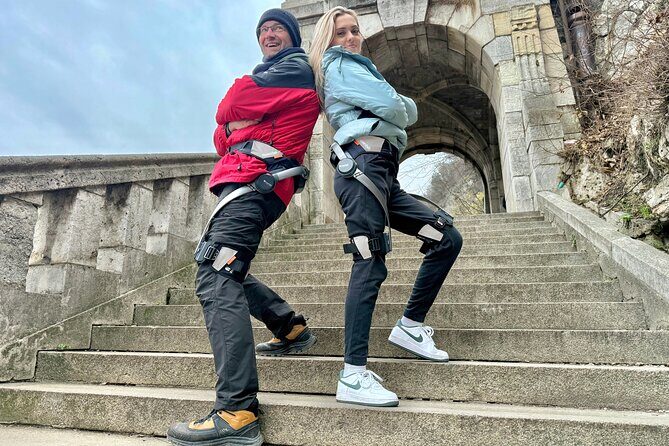
- Hypershell torque-assist helps you keep moving on steep viewpoints without going full burnout mode
- Small-group pacing (max 8 people) keeps the guide close and your experience calmer
- Guided photo stops mean you’re not stuck asking strangers to shoot your best angle
- A real fitting and safety briefing happens before you start walking
- You still do the walking: it’s an assist, not a ride
Where you start at Várkert rkp. 16 and how the exoskeleton setup works
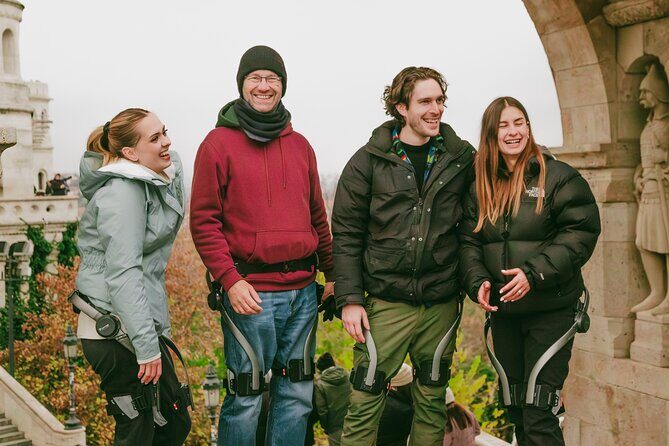
The tour begins at E-Magine Rides Store on Várkert rkp. 16. Before any sightseeing, plan on time for getting suited up: the experience includes fitting, testing, and a safety briefing. That matters because this isn’t about strapping on a costume and guessing your way through a hill.
The setup also keeps the tour smoother for the group. With only up to 8 participants, you’re more likely to get the help you need during the first moments of wearing the electric Hypershell exoskeleton. The guide is also described as local, professional, and certified, and that’s a good sign when the equipment is doing something more than basic “support.”
If you’re a first-timer with wearable robotics, I’d treat the briefing as part of the experience, not a speed bump. You’ll want your comfort checked before you start walking between major viewpoints where you’ll be stopping often for photos and city views.
Practical tip: wear comfortable shoes and comfortable clothes. It sounds basic, but when your lower body is literally part of the system, you want your outfit to cooperate.
You can also read our reviews of more walking tours in Budapest



Gellért Hill and the Buda climb: what torque-assist feels like on real Budapest
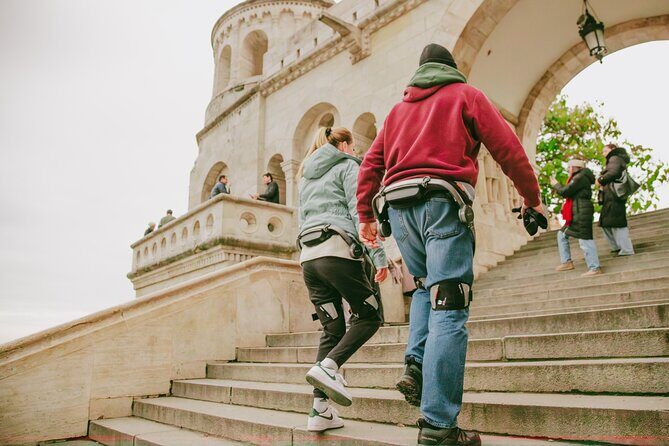
The most obvious reason people book this is the hill factor. Gellért Hill is the early anchor, with about 1 hour dedicated to guided sightseeing and a photo stop. This is where the exoskeleton concept makes sense fast: you’re still walking, but the torque-assist support helps you handle the steeper climbs with less strain.
What I like about how this tour is designed is that the technology doesn’t try to turn Budapest into a theme park. It’s used to get you to the lookout points with your energy intact, so you can actually enjoy the view—rather than just survive the ascent.
You’ll also get a guided tour while you’re up on the hill. That’s important because Gellért Hill isn’t just a pretty climb; it’s a key Budapest panorama spot. With a guide, you’re not only chasing angles for photos, you’re also getting the “what am I looking at” context while you’re there.
From a comfort standpoint, expect your pace to depend on how you feel in the equipment at first. The tour structure (briefing, fitting, and ongoing guidance) is there so you can settle in before you move onward toward the Castle district area.
Fisherman’s Bastion and Matthias Church: quick stops that don’t waste your legs
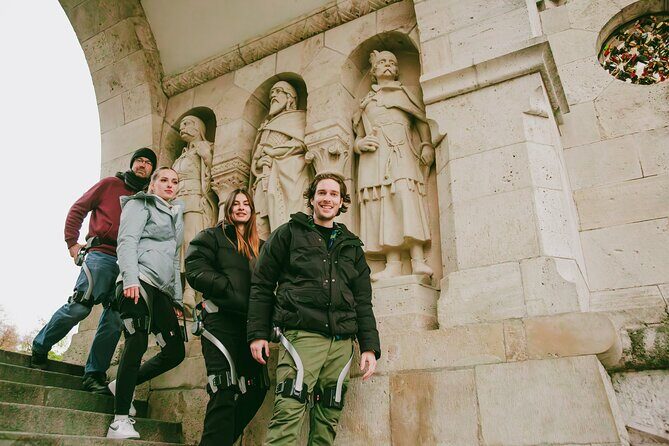
After the hilltop start, the tour shifts into shorter, high-impact sightseeing segments.
Fisherman’s Bastion is next, with about 15 minutes that includes a photo stop, a visit, and guided sightseeing as you walk through the area. This is a good match for the exoskeleton format because the location is built for photography. You’ll likely spend that time lining up shots, taking in the views, and learning what makes the place so iconic.
Then comes Matthias Church, again with around 15 minutes for a photo stop plus visit and guided sightseeing. This is the kind of landmark where people often move too fast because they’re tired. Here, the walking support helps you stay more present while you take in the details and settle into the moment before you’re off again.
A realistic consideration: these are short stops. If you want long, slow time inside or a long linger at every corner, this tour keeps momentum. The tradeoff is that, with assisted walking, you get more major sights packed into a 2.5-hour window—without turning the day into a grinding hike.
Chain Bridge and Castle-bazaar: classic Budapest with a tech twist
Next you move into the flatter-but-still-busy sightseeing flow.
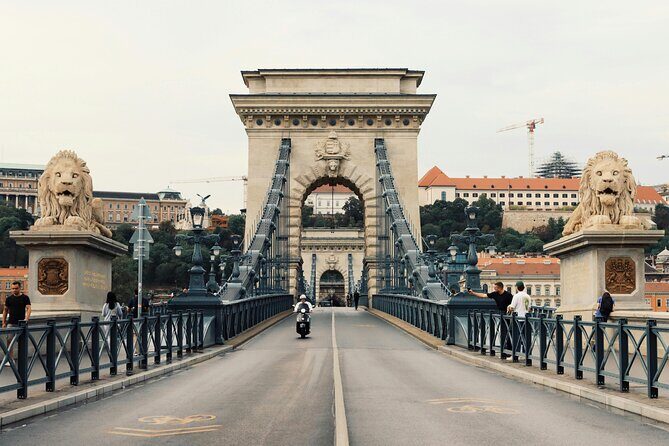
The Chain Bridge segment is about 10 minutes with a photo stop and guided sightseeing. Ten minutes isn’t enough to do a full, wandering photography circuit. But for many people, it’s the practical sweet spot: you get a guided moment at one of Budapest’s signature landmarks, you capture a few photos, then you keep going.
Then you head toward Castle-bazaar with another 10 minutes that includes a visit and guided sightseeing. This part works well after the hill climbs because it gives your legs a break while still keeping the itinerary moving. You’re not just in transit; you’re in a place where you can look around and soak up the Castle district vibe.
One note: since the timing at these spots is tight, you’ll feel the benefit of having your guide manage the flow. It’s less about rushing yourself across crowded points and more about staying on track for the next viewpoint.
The Hypershell experience: why the boost can feel like a cheat code
The Hypershell system is the heart of this tour. You’ll walk in electric powered mode and get that quiet torque-assist support when you need it most—especially on the steeper sections leading to viewpoints.
In plain terms, this is not a lazy ride. You’re still walking. The exoskeleton just helps reduce the effort spike that usually makes hills eat up your day. When the support is doing its job, you end up with that surprising feeling of having more energy than you expected at the end of the walk.
There’s also a mental effect people notice: walking without the device after the tour can feel different. That’s not magic; it’s just your body getting used to the assistance. If you’re expecting a total “off switch,” you might be disappointed. But if you want to explore farther while keeping your legs fresher, the technology is doing exactly what it’s designed for.
Photo advantage is another big practical win. Because the experience is paced around viewpoints and guided photo moments, you’re set up to capture angles that many people only get after they’ve already given up on energy and are stuck resting.
You can also read our reviews of more city tours in Budapest






Timing, pace, and group size: why the 2.5 hours feels just right
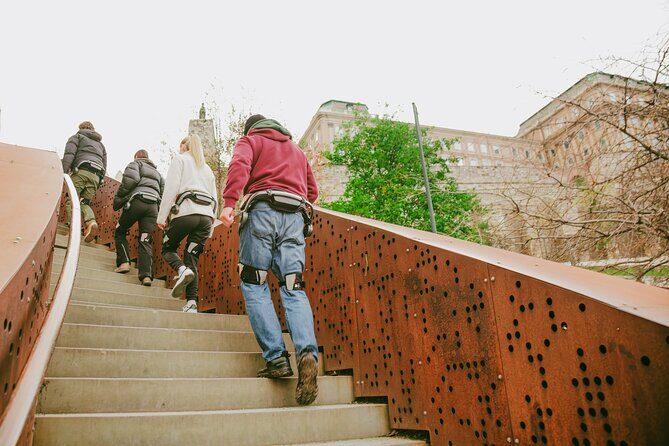
The total duration is 2.5 hours, which is perfect if you want a meaningful sightseeing block without losing half your day. It’s also a smart length for an assisted activity: enough time to enjoy the viewpoints, but not so long that it drags when you’re tired.
Group size is capped at 8 participants, which changes the feel. With a smaller group, the guide can check in more often and adjust the pace so you’re not left behind or waiting endlessly. That matters on a route built around hill viewpoints and short landmark stops.
Expect a steady rhythm: hill climb and sightseeing first, then a sequence of major Castle district and central sights, with photo stops threaded through. If you want structure, this tour provides it. If you want full freedom to roam for hours, you’ll likely prefer a classic walking tour instead.
Price value: getting gear, guidance, and photos for $48
At $48 per person, the value depends on what you’d otherwise spend effort (and time) on. Here, you’re not just paying for a guide. Your price includes the electric Hypershell exoskeleton, the fitting, testing, and safety briefing, the guided small-group city walk, and photos taken by your guide.
That last part is underrated. Budapest’s biggest sights are popular, and it’s not always easy to get good photos without waiting or hunting for the right angle. When your guide handles photo moments, it saves time and reduces frustration.
You’re also paying for the time-and-energy savings. If you normally skip the steep viewpoints because you fear you’ll be too tired, this experience is basically buying you access to those highlights without turning them into a punishment.
Who should book this exoskeleton city walk (and who should skip)
This works especially well for:
- Active people who want the views but don’t want a steep climb to dominate the day
- Tech-curious visitors who like seeing real-world robotics in action
- People who prefer guided photo stops over solo landmark hunting
It is not suitable for:
- Pregnant women
- People with heart problems
- Wheelchair users
If you fall into any of those categories, skip this and look for a different walking tour that fits your mobility and health needs. Also, dress for comfort and weather—this is still a city walk.
Should you book the Exoskeleton Robotics Powered City Walk in Budapest?
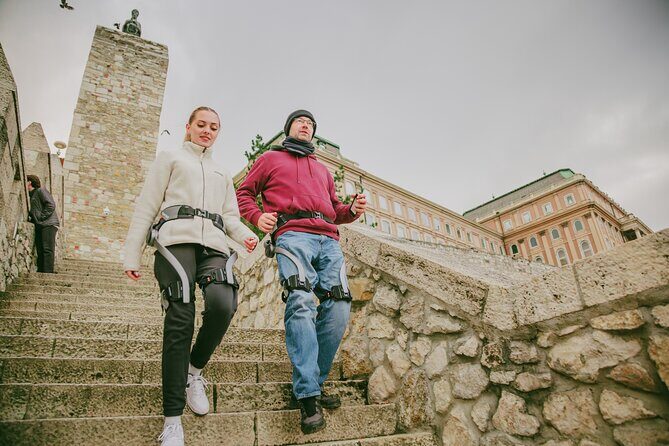
If your wish list includes Gellért Hill and the Castle district viewpoints but you know hills drain you, I think this is a strong “yes.” The assist helps you get through the steep parts with more energy for photos and sightseeing, and the small group size keeps the day from feeling crowded or rushed.
If you’re hoping for a relaxed sightseeing cruise where you barely walk, you might not love it. You’re still walking for the full tour length, just with electric support. Also, make sure you fit the suitability rules.
My call: book it if you want a memorable, future-leaning way to see Budapest’s big hilltop moments, and you’re ready to treat the experience as an active guided walk.
FAQ
How long is the Budapest exoskeleton city walk?
The tour lasts 2.5 hours.
What is included in the price?
The price includes the electric Hypershell exoskeleton, a professional, certified local guide, fitting, testing, and a safety briefing, a guided small-group city adventure, and photos taken by your guide.
Where is the meeting point?
You meet at E-Magine Rides Store, at Várkert rkp. 16.
Is the tour guide available in English?
Yes, the live tour guide offers English.
What should I bring or wear?
Bring comfortable shoes and comfortable clothes, and wear weather-appropriate clothing.
Is travel insurance included?
No. Personal travel insurance is not included.
Who should not join the tour, and can I cancel?
The tour is not suitable for pregnant women, people with heart problems, and wheelchair users. It also offers free cancellation up to 24 hours in advance for a full refund, and you can reserve now and pay later.