REVIEW · BUDAPEST
Pest side stories with a Historian
Book on Viator →Operated by Budapest Explorers · Bookable on Viator
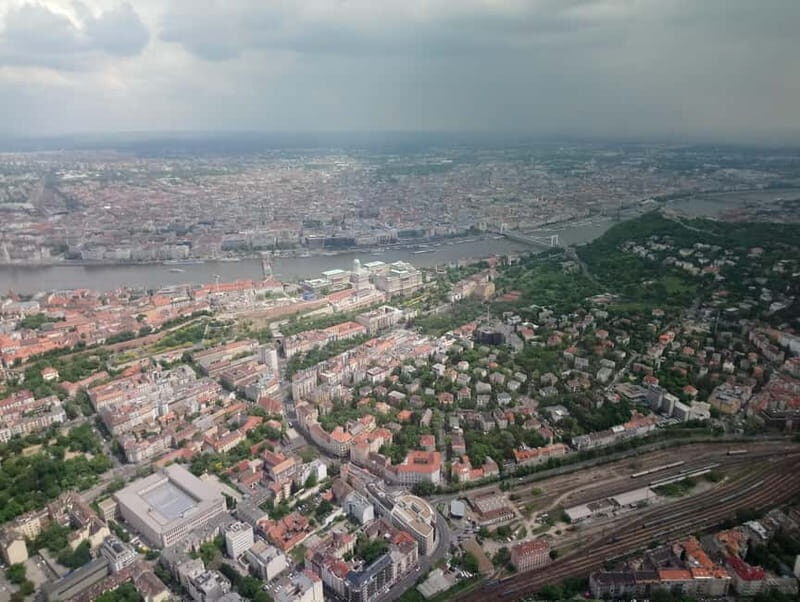
Budapest’s Pest side tells its story on foot. This 3-hour walking tour pairs a historian with real local details, so the big landmarks actually make sense. You’ll cover famous sights like Heroes’ Square and St. Stephen’s Basilica, plus a few spots many people skip.
I like two things a lot here. First, the historian guide keeps the pace easy while connecting buildings and statues to Hungary’s ups and downs. Second, the tour includes practical value: metro tickets and refreshments, and the listed sights have free admission when you’re visiting.
One thing to plan for: there’s a fair amount of walking in about three hours, and it’s outdoors through central Pest. If you’re sensitive to heat or have mobility limits, wear comfortable shoes and consider bringing a little water buffer.
In This Review
- Key highlights you’ll feel right away
- Pest’s landmarks make more sense with a historian in front of you
- Getting started at Kempinski Corvinus and using what’s included
- Stop 1: Elizabeth Square, from market and Stalin Square to a modern hangout
- Stop 2: St. Stephen’s Basilica, Budapest’s largest church (and whether you go in)
- Stop 3: Heroes’ Square, where Hungary’s 1100 years show up in stone
- Stop 4: Vajdahunyad Castle, built in 1896 and designed to look medieval
- Stop 5: Andrássy Avenue, UNESCO since 2002
- Stop 6: Vorosmarty Square, commerce in the heart of historic Pest
- Stop 7: Millennium Underground, Europe’s oldest underground
- How to handle the walking pace (and stay comfortable)
- Value check: is $58.94 a fair deal?
- Guides matter: you might learn best from their style
- Should you book this Pest walking tour?
- FAQ
- FAQ
- How long is the Pest side stories with a Historian tour?
- What time does the tour start?
- What does it cost per person?
- Where do we meet, and where does the tour end?
- Is the tour offered in English?
- What’s the maximum group size?
- Are there admission fees for the stops?
- Do we enter St. Stephen’s Basilica?
- Can I get a full refund if I cancel?
Key highlights you’ll feel right away
- Small group up to 10 people means you can ask questions and actually hear the answers
- Historian-style side stories connect monuments, politics, and everyday life
- Free-entry stops at major landmarks like Heroes’ Square and Vajdahunyad Castle
- Metro tickets plus refreshments reduce what you need to pay for on the day
- A logical Pest route that mixes grand squares with university-town streets and underground history
Pest’s landmarks make more sense with a historian in front of you
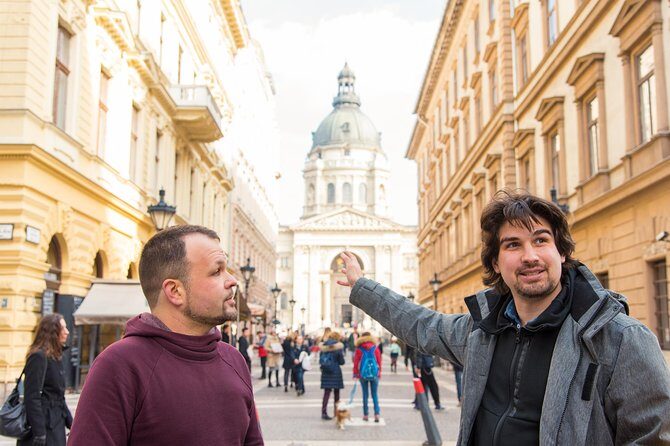
Budapest can feel split in two, with Buda on one side and Pest on the other. This tour focuses on the Pest side, where you get the city’s “big public” energy: major squares, major churches, major avenues, and that famous underground that feels like a time capsule.
The big win is how the guide frames what you’re seeing. You’re not just staring at stone and guessing. A historian guide turns statues and street names into context—why they’re there, what they’re meant to say, and how the meaning changed over time. The pace stays human. Even when the route covers a lot, the walking time is handled in a way that keeps it doable.
One more practical point: this tour is offered in English, and it’s capped at 10 travelers. That cap matters. Smaller groups usually mean the guide can slow down for questions and keep everyone oriented without rushing.
You can also read our reviews of more tours and experiences in Budapest.



Getting started at Kempinski Corvinus and using what’s included
Your day begins at the Kempinski Hotel Corvinus Budapest, at Erzsébet tér 7–8 (meeting point is right at Erzsébet tér area). The start time is 2:00 pm.
Two inclusions help your planning. You get a mobile ticket, so you’re not hunting for paper. You also get metro tickets, which can be handy if you need a quick hop between stops or you want a smoother transition at the end of the tour. On top of that, the tour includes refreshments, which is especially useful on a warm afternoon.
The tour also lists the route as near public transportation, which is good news if you’re arriving from elsewhere in the city. And it’s straightforward in terms of language and participation: it’s designed for most travelers, and service animals are allowed.
Stop 1: Elizabeth Square, from market and Stalin Square to a modern hangout
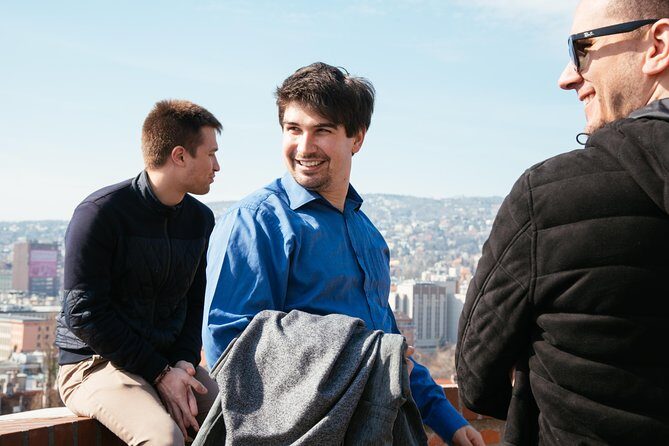
The first stop is Elizabeth Square (Erzsébet tér), a place with layers. It started as a market square, later became known as Stalin Square, and it also functioned as a bus station. Today, it’s a young, party-style area, but the ground beneath you still carries older meanings.
This is a smart first stop because it sets the theme for the whole tour: Budapest doesn’t erase the past—it repurposes it. When you walk around Elizabeth Square, you’ll spend about 20 minutes on orientation. Even if you’re not there for nightlife, it’s worth seeing how political history and daily life can live side-by-side in the same open space.
What to watch for: public statues and the way the square is used now. This stop is also a good “wake up your eyes” moment, before the tour shifts into big-ticket monuments.
A small consideration: because it’s now a hangout area, you may see more movement around you than at quieter squares.
Stop 2: St. Stephen’s Basilica, Budapest’s largest church (and whether you go in)
Next is St. Stephen’s Basilica (Szent István Bazilika). It’s described as the largest church in Budapest, and you’ll spend about 20 minutes here.
Here’s the one choice point: the tour notes that if the group is interested, you enter the basilica. That means you may just get an exterior introduction, or you might go inside depending on how your group feels and what the guide can work out that day.
Either way, you’ll get the basics you need to not treat it like a random photo stop. With a historian guide, the focus is less on generic postcard facts and more on why a building like this matters in Hungary’s public story.
What I think makes this stop worth your time: it anchors the tour in a major religious and civic landmark. After Elizabeth Square’s repurposed identity, the basilica becomes the opposite kind of symbol: something built to last and to project meaning.
Stop 3: Heroes’ Square, where Hungary’s 1100 years show up in stone
Now you hit one of Budapest’s best-known showpieces: Heroes’ Square. This is more than a dramatic plaza. It’s presented as an introduction into more than 1100 years of Hungarian history, and it’s one of the main sites in the city.
You’ll spend about 30 minutes here, and the best part is how the historian approach helps you read it. Statues, symbols, and how everything is laid out start to click once you understand what the square is trying to communicate.
This stop is also a “breathing space” in the middle of the walk. It’s spacious, so even if you’re moving at an easy pace, you won’t feel trapped shoulder-to-shoulder. And because the admission is free for the stop itself, you can focus on learning rather than budgeting.
Potential drawback: if you’re traveling during a busy time, you may share the square with lots of people. That doesn’t spoil it—it just means you’ll want to listen carefully while the guide keeps your group positioned.



Stop 4: Vajdahunyad Castle, built in 1896 and designed to look medieval
From the grandeur of Heroes’ Square, the tour shifts to a site that can feel like a movie set: Vajdahunyad Castle. It’s described as “lesser visited,” which is great if you’re tired of crowds that turn everything into a photo line.
You’ll spend about 30 minutes here. The standout detail is that it was built in 1896, and the tour specifically promises you’ll learn why and how it was constructed to look medieval. That’s the kind of twist I like: it’s not just about the castle shape. It’s about what people wanted to communicate when it appeared.
Why you’ll likely enjoy this stop: it’s a different tempo. Heroes’ Square is monumental and formal; Vajdahunyad Castle feels like a storybook comparison piece. With a historian guide, you get the “why,” so it doesn’t stay a visual only.
Tip for the timing: because this is a walking tour with multiple squares, use the full stop time. Look slowly enough to connect details to what the guide is saying.
Stop 5: Andrássy Avenue, UNESCO since 2002
Then comes Andrássy Avenue, described as the pride of Budapestians and a UNESCO World Heritage site since 2002. You’ll spend about 30 minutes here.
This is one of those stops where you can easily overthink it: you might wonder, is this “just a street”? But with a historian guide, Andrássy Avenue becomes an organized lesson in urban design and cultural identity. The tour treats it like a major part of the city’s written identity—something people in Budapest think about and claim.
What makes it practical on a walking tour: it’s a natural transition between the big open spaces and the more central commercial heart of Pest. You get variety without the route feeling random.
A consideration: it’s a key avenue, so expect some city movement around you.
Stop 6: Vorosmarty Square, commerce in the heart of historic Pest
Next is Vorosmarty Square (Vorosmarty tér). This is the kind of central square where Budapest’s modern life and old-city layout overlap.
You’ll spend about 15 minutes here, and the tour frames it as iconic and focused on commerce—especially high-end products—right in the center of historical Pest.
This stop works best if you like the city as a living place, not just as a museum. You’ll see how public space supports business and daily flow.
Quick caution: fifteen minutes goes fast. If you want time for coffee or browsing, plan to do it right after the tour or near the end, not at this stop.
Stop 7: Millennium Underground, Europe’s oldest underground
Finally, you wrap at Millennium Underground (Millennium Földalatti). The tour notes it as the oldest underground on the European continent.
You’ll spend about 30 minutes, and this is a neat closer because it changes the scale again. You’ve gone from squares and buildings to infrastructure, and the guide’s context helps you see it as part of Budapest’s story of modernization.
An underground history stop is a smart way to end a walking tour. After hours outside, you get a reminder that cities evolve under the surface too—literally.
Why this works as a finale: it gives you something memorable that isn’t just another monument. Even if you don’t go deep into the system details, the “oldest underground” framing gives the stop instant weight.
How to handle the walking pace (and stay comfortable)
This tour is built around walking, and it’s easy to underestimate it when you’re excited by the landmarks. Plan for a solid, steady pace across central Pest. The itinerary also mixes longer stops (Heroes’ Square, Vajdahunyad Castle, Millennium Underground) with shorter ones (Vorosmarty Square), which helps you recover while still keeping momentum.
If the weather is hot, bring water and dress for shade where you can. The stops themselves range from open squares to major buildings and streets, so there’s not always a guaranteed shaded break.
One thing I appreciate about a small-group format: it tends to keep the pace manageable. A guide can slow down when the group needs it, instead of steamrolling ahead for the next photo stop.
Value check: is $58.94 a fair deal?
Price is $58.94 per person for about 3 hours. That price can look high if you compare it to a solo audio app or a self-guided route. But when you break it down, it’s more reasonable.
Here’s what you’re paying for that you might otherwise need to arrange yourself:
- A historian guide leading the walking route and explaining what you’re seeing
- Metro tickets included
- Refreshments included
- Mobile ticket for easy entry
- The sights on the itinerary are listed with free admission (and you won’t be hit with an extra ticket fee at the major stops)
The small-group cap at 10 also pushes the value in your favor. You’re not just buying facts. You’re buying the ability to ask follow-up questions and stay oriented.
One fair way to judge it: if you want a quick, guided way to connect Pest landmarks into a coherent story, this price makes sense. If you only want photos and you don’t care about the context, you’d probably do better with a self-guided walk.
Guides matter: you might learn best from their style
One of the most praised parts of this tour is the guide’s storytelling. Names mentioned include Steven the Tall, Andrew, Greg, and István. That’s a good sign: the guide isn’t just reciting facts. They’re shaping a narrative across the route so each stop feels connected.
Also note the route is designed for historian-style explanations: squares, churches, UNESCO streets, and an underground system all give the guide multiple angles to talk about politics, identity, and everyday life. If you enjoy learning while walking, you’re in the right place.
Should you book this Pest walking tour?
Book it if you want a smart, story-driven way to see Pest’s top landmarks in one afternoon. This works especially well if:
- You like history explanations tied to specific places
- You prefer a small group over large bus-style tours
- You want included basics like metro tickets and refreshments
- You’ll enjoy walking at a steady pace for about three hours
Skip it or adjust expectations if:
- You’re trying to minimize walking time
- You want to control every minute for shopping or lingering at squares (this route moves with a schedule)
If you fit the first group, you’ll likely come away with a much clearer sense of why these places look the way they do—and why they matter.
FAQ
FAQ
How long is the Pest side stories with a Historian tour?
It lasts about 3 hours.
What time does the tour start?
The start time is 2:00 pm.
What does it cost per person?
The price is $58.94 per person.
Where do we meet, and where does the tour end?
You start at Kempinski Hotel Corvinus Budapest, Erzsébet tér 7-8, 1051 Hungary. The tour ends at St. Stephen’s Basilica (Szent István tér 1, 1051 Hungary), though it may end at another central Pest point close to the start.
Is the tour offered in English?
Yes, it’s offered in English.
What’s the maximum group size?
The tour is capped at 10 travelers.
Are there admission fees for the stops?
The listed stops are shown with free admission.
Do we enter St. Stephen’s Basilica?
If the group is interested, the tour notes that you can enter St. Stephen’s Basilica.
Can I get a full refund if I cancel?
Yes. You can cancel up to 24 hours in advance for a full refund.