REVIEW · BUDAPEST
Buda Castle Walking Tour: A Kingdom of Many Nations
Book on Viator →Operated by Insight Cities · Bookable on Viator
Budapest’s Castle Hill feels like a living timeline. This small-group walking tour threads together UNESCO-protected Castle Hill and the sites that shaped Hungary’s power, from royal coronations to Ottoman rule. I like that you’re not stuck in one spot—you’re walking a route that gives you both story and views.
Two things I really like: the maximum six-person group keeps questions moving and the guide’s pace realistic, and the tour links architecture to who controlled Hungary over the centuries. One consideration: it’s focused on the district, not a deep, inside-the-palace experience, and you’ll pay entry fees on your own for Matthias Church and Fisherman’s Bastion.
In This Review
- Key highlights at a glance
- Castle Hill in a Small Group: why 3 hours works here
- Meeting Point and How the Walk Flows from Országház u. 31
- Buda Castle District Streets and the Palace–Church Skyline
- The Royal Palace Story: Béla IV to World War II
- Sándor Palace: the President’s Residence as a Living Contrast
- Matthias Church: coronation site, decorated roof, and the ticket you should plan for
- Fisherman’s Bastion: seven towers, Danube views, and where the photo stops
- Vienna Gate Finish: Roman Aquincum in the line of sight
- Price and Value: what $126.15 covers and what you’ll pay extra for
- Who should book this walking tour (and who might not need it)
- Practical tips before you go: tickets, timing, and comfort
- Should you book this Buda Castle District tour?
- FAQ
- How long is the Buda Castle walking tour?
- What group size should I expect?
- Is the tour offered in English?
- Are tickets included for Matthias Church and Fisherman’s Bastion?
- Where is the meeting point?
- Can I cancel for a full refund?
Key highlights at a glance
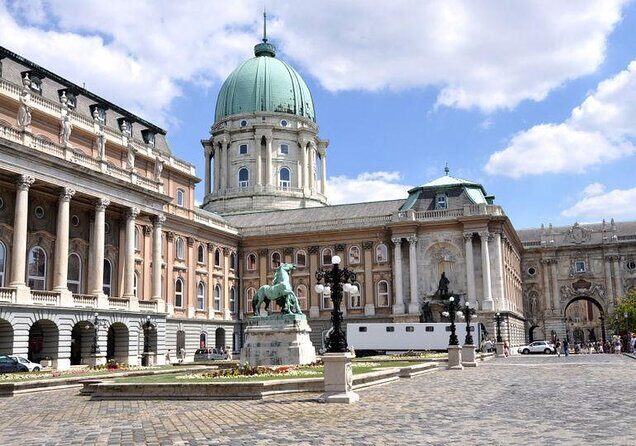
- Castle Hill viewpoint route: palace facades, Matthias Church steeple, and Danube views built into the walk
- Small-group feel: typically up to six per booking, with a maximum of eight travelers
- History that follows the buildings: the palace changes hands and functions across Mongol, Ottoman, and Hapsburg eras
- Matthias Church focus: coronation site with a heavily decorated roof and standout interior (ticket extra)
- Fisherman’s Bastion symbolism: seven towers tied to the Magyar tribes, plus famous panoramic terraces (ticket extra)
- A Roman wink at the end: the Vienna Gate finish points you toward Obuda and Aquincum
Castle Hill in a Small Group: why 3 hours works here
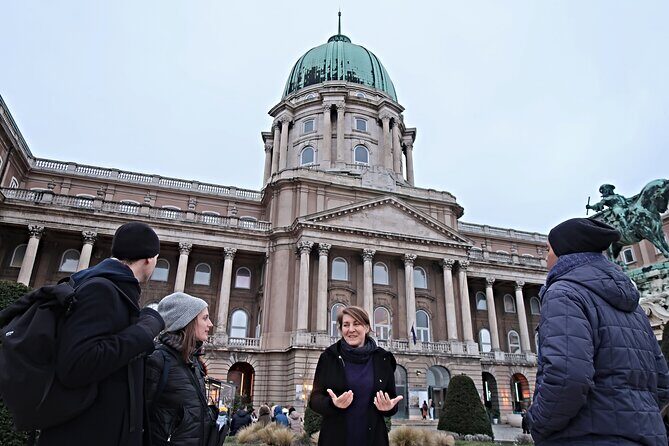
This is a smart-length tour for Castle Hill. Three hours is enough to connect the dots across centuries without turning your legs into museum exhibits. With a group capped at six (and a maximum of eight travelers), you get more back-and-forth than you would on those huge bus-and-blob tours.
I also like how the route mixes “look at it” moments with “now make sense of it” moments. You’ll see the palace massing at one end of the hill, Matthias Church’s recognizable roof in the middle, then finish with a big panoramic payoff.
At $126.15 per person, you’re paying for a guide who can explain what you’re seeing while you walk. You’re not paying for transport or a private chauffeured stroll, so your value depends on how much you want context—and in a place like Castle Hill, context is the whole game.
You can also read our reviews of more walking tours in Budapest



Meeting Point and How the Walk Flows from Országház u. 31
The meeting point is Budapest, Országház u. 31, 1014 Hungary. It’s in a central area near public transportation, which helps if you don’t want to waste time figuring out trams and metro lines before you even start.
Departure timing is also flexible: morning or afternoon depending on the day. That matters because this is a hilltop district, and light can change how the buildings read—especially the colorful Matthias roof and the wide Danube views later.
One practical thing: you get a mobile ticket, so have that ready on your phone. And since there’s no hotel pickup or drop-off, plan to arrive on your own and start walking promptly with the group.
Buda Castle District Streets and the Palace–Church Skyline
The tour starts by focusing your eyes on the layout of Castle Hill. The area is known for narrow, cobbled streets and for facades that look like they belonged to different worlds—baroque meets Gothic, and royal power shows up in stone.
You’ll spend time in the Buda Castle area taking in the big visual anchors: the massive, imposing palace at the southern tip of the hill, and then the bright, colorful Matthias Church roof in the middle. The church’s steeple also becomes a landmark as you move, so the guide can point out what you should notice as you go.
This part is great if you like the “orientation first” approach. Castle Hill can feel huge and confusing if you wander on your own. Even if you’re not a serious architecture nerd, this setup helps you understand why these buildings sit where they do.
The Royal Palace Story: Béla IV to World War II
The tour’s history engine turns on the palace. You start from the palace area, described as the ancient seat of royal power. What you’re really learning here is that this wasn’t one simple palace that stayed frozen in time. It was rebuilt, extended, changed, burned down, and rebuilt again—then it got its current eclectic look after World War II.
The guide also ties major political moments to physical changes. The story begins with King Béla IV, who built a fortress on this spot around 1250 after a devastating invasion by Mongolian forces. Then you shift into the Renaissance period, when King Matthias made this court one of the most famous in Europe toward the end of the 15th century.
After that, the Ottoman period takes over: Turkish pashas ruled for over 150 years. Following them, Hapsburg emperors took their turn. That long sequence is exactly why the tour is titled a kingdom of many nations—the hill shows layers of power rather than one single national style.
A small but meaningful piece: the guide discusses the changing function of the building over time. Even if you don’t care about dates, it helps you read the palace as a political instrument that kept changing owners—and purposes.
Sándor Palace: the President’s Residence as a Living Contrast

Next comes Sándor Palace, the official residence of the President of Hungary and the seat of the Office of the President since 2003. That alone makes it an interesting contrast: you’re standing in a place that looks historical, but it’s tied to modern state leadership.
The palace also has its own origin story. The original palace was commissioned and built in a Neoclassical style in 1806 by Count Vincent Sándor. This stop is short, but it works as a bridge between “royal era” and “today,” reminding you that the Castle Hill zone still matters politically, not just artistically.
You won’t spend ages here, so think of it as a quick viewpoint-and-context moment. It’s especially useful if you want the tour to feel like a timeline instead of a list of monuments.






Matthias Church: coronation site, decorated roof, and the ticket you should plan for
Matthias Church is a highlight for a reason. The tour spotlights its abundantly decorated roof and an interior described as amazing. Architecturally, it’s a Neogothic reconstruction from the end of the 19th century, and the effect is intentionally dramatic—more “performed Gothic fantasy” than plain church.
This is also the coronation site of Hungarian kings. Even if you’re not into ceremonies, coronation history adds weight to your visit. You’re not just looking at a pretty building; you’re seeing the kind of place where rulers were formally legitimized.
One key budgeting note: Matthias Church tickets are not included. You’ll need to pay entrance fees separately if you want to go inside. The tour gives you time for the visit, but you should set aside extra money so you’re not stuck making last-minute decisions.
Based on the general guide quality on this kind of tour, I’d suggest arriving mentally ready to ask questions. Guides in this program are often praised for explaining details and keeping people moving at a pace that feels comfortable in the Castle District.
Fisherman’s Bastion: seven towers, Danube views, and where the photo stops

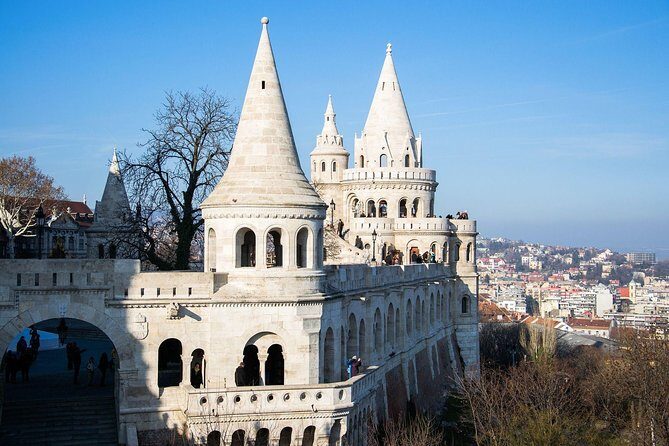
Fisherman’s Bastion is where the tour earns its postcard reputation. It’s designed in neo-Gothic and neo-Romanesque styles and was built between 1895 and 1902. The seven towers are symbolic: they represent the seven Magyar tribes that settled in the Carpathian Basin at the end of the 9th century.
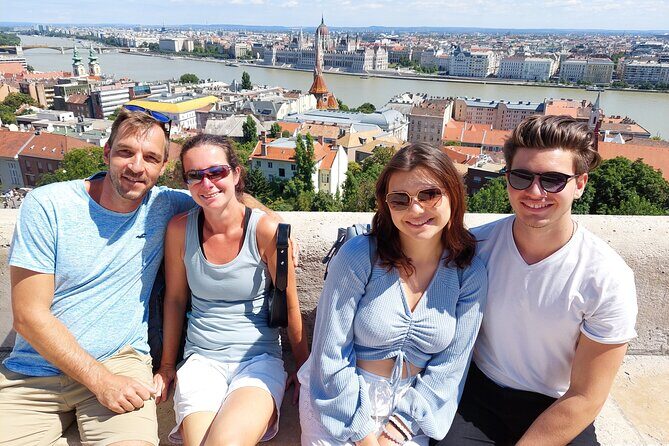
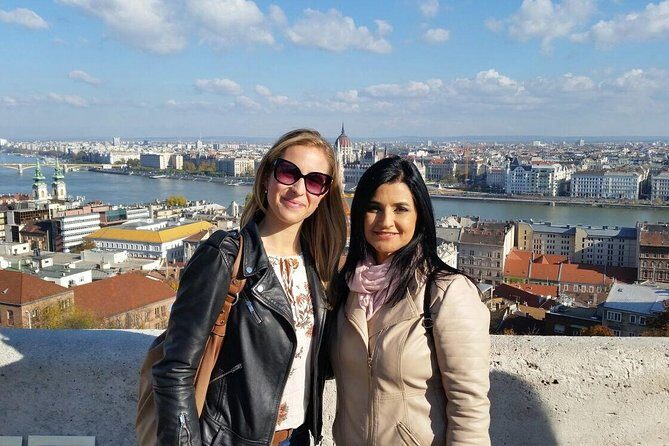
The real payoff is the terrace views. From here, you can look out over the Danube, Margaret Island, Pest, and Gellért Hill. This is one of those spots where your brain shifts from “what am I looking at” to “okay, I get why people come here.”
Again, tickets are not included for Fisherman’s Bastion. Plan for that. If you’re traveling on a tight budget, you might be tempted to skip paid entry—but if views are high on your list, this is one of the most direct ways to get them without struggling alone through Castle Hill.
I also like that the guide makes this stop more than a photo break. The tower symbolism gives you something to hold onto when you’re standing there, not just taking pictures.
Vienna Gate Finish: Roman Aquincum in the line of sight

The walk ends at Vienna Gate. It’s a final viewpoint stop that helps you widen your mental map of Budapest. From here, you can see toward Obuda (Old Buda), where the Romans founded a city called Aquincum.
This is a clever ending because it returns you to the idea of layers. You started with a fortress and a royal palace that changed hands and purposes. Now you’re closing with the Roman foundation beneath it all. The hill isn’t just medieval; it’s part of a much older story.
You’ll only get a short moment at the finish, about 10 minutes, so don’t treat it like a long stop. Use it to refocus: what you’ve learned today should help you notice patterns across the view and across the architecture you passed earlier.
Price and Value: what $126.15 covers and what you’ll pay extra for
At $126.15 per person for an approximately 3-hour guided walk, this is priced like a serious, guided experience rather than a casual stroll. The good news is that what’s included is real value: the guided walk and a professional guide.
What’s not included is also clear. Tickets for Buda Castle, Matthias Church, and Fisherman’s Bastion aren’t included. In practice, some areas of the route are free to view, but you should expect to pay for Matthias Church and Fisherman’s Bastion if you want the full experience.
So the value question becomes: will the guide’s historical connections save you time and confusion? In a district like this, that’s usually yes. Castle Hill can turn into aimless wandering fast, because the buildings are impressive but not automatically legible.
Also, because the group is small, the guide can adjust. In the past, guides such as Peter, Kata, and Veronica have been praised for adapting to what people want and answering questions patiently, including pacing for smaller groups. That kind of flexibility is part of what you’re paying for.
Who should book this walking tour (and who might not need it)
This tour is best for you if you want a guided history of Budapest’s power center. If you like architecture that explains politics, you’ll have a great time. The palace story alone covers Mongol aftermath, Renaissance court culture under Matthias, Ottoman rule for more than a century, and Hapsburg influence afterward. That’s a lot of content for only three hours.
You’ll also like it if you care about views but don’t want to plan them yourself. Fisherman’s Bastion isn’t just a viewpoint stop; it’s tied to the Magyar tribes story, and the route brings you there in a logical sequence.
Who might hesitate: if you’re hoping for a “go inside everything” tour, you may feel underwhelmed. This is about the Castle Hill district and the surrounding sites, not a deep interior tour of the entire castle complex. If you want hands-on museum time, you’ll likely want a separate add-on day.
Practical tips before you go: tickets, timing, and comfort
Here’s what I’d prep so the tour feels smooth.
First, bring budget for entrance fees at your own expense—especially for Matthias Church and Fisherman’s Bastion. The tour is set up to show you the highlights either way, but paid entry gives you the full payoff.
Second, wear shoes that handle cobblestones. Castle Hill’s streets are narrow and cobbled, and you’re walking for about three hours. This is not the time for slippery footwear.
Third, keep your phone ready for the mobile ticket. And arrive a few minutes early at Országház u. 31 so you start on time.
Finally, since departures can be morning or afternoon, check the day you book and think about your energy level. Walking a hill district is easier when you’re not rushed.
Should you book this Buda Castle District tour?
Yes—if you want an efficient, guided way to understand Castle Hill without getting lost or missing the best connections. The combination of UNESCO-protected setting, Matthias Church’s coronation significance, and Fisherman’s Bastion’s Danube views makes the route feel worth the time.
Book it if small-group pacing matters to you. The guide quality is consistently described as attentive and able to adjust—people mention guides like Peter, Judith, Kata, and Marianna being friendly, energetic, and focused on making history make sense.
Skip it or plan differently if you’re mainly after deep interior museum time. This tour’s value is in the walk and the storytelling, not in a full “inside the castle” day.
FAQ
How long is the Buda Castle walking tour?
It’s about 3 hours.
What group size should I expect?
It’s a small-group tour with a maximum of six people per booking, and the activity can have up to eight travelers.
Is the tour offered in English?
Yes, it’s offered in English.
Are tickets included for Matthias Church and Fisherman’s Bastion?
No. Tickets for Buda Castle, Matthias Church, and Fisherman’s Bastion are not included.
Where is the meeting point?
The meeting point is Budapest, Országház u. 31, 1014 Hungary.
Can I cancel for a full refund?
Yes. Free cancellation is available up to 24 hours in advance for a full refund.