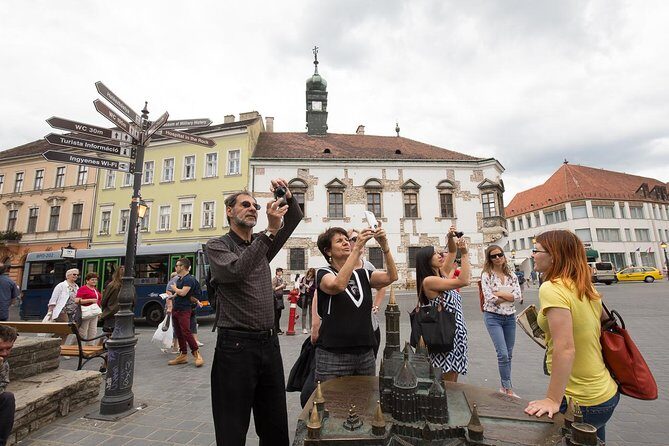
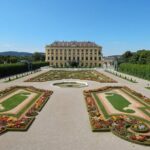
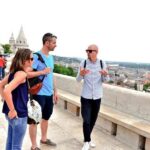
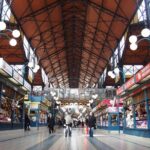
Castle Hill turns Budapest into a storybook, and this walk strings together big panoramas with the small details you’d miss on your own. I love that it mixes major sights like Matthias Church and Fisherman’s Bastion with quick stops that explain what you’re looking at, and I love that the guides add practical local suggestions after the walk (I’ve heard from Sou, Nacho, Ignacio, Sophie, and Bayler). One drawback to plan for: the route is hilly with plenty of steps, so hot sun or heavy rain can slow you down.
In about 2 hours, you’ll cover the Castle District’s highlight loop in English with a max group size of 10, plus a ride on the Buda Hill Funicular. You get a mobile ticket, and the stops are mostly outside, which makes this a good “first day up here” option.
In This Review
- Key highlights worth your time
- Price and logistics: why $3.63 can feel unreal
- Meeting on Szentháromság tér and finishing at Buda Castle
- Matthias Church: the roof, the spires, and what to look for
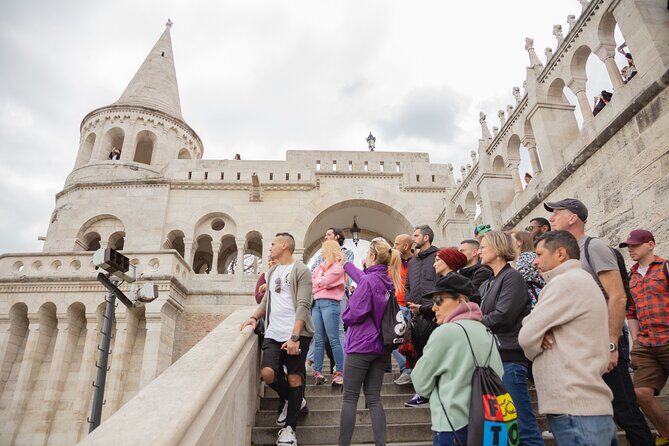
- Fisherman’s Bastion: fairy-tale terraces with real direction
- Holy Trinity Column and Trinity Square: quick stop, strong meaning
- Ruszwurm Confectionery: a cake break that feels historic
- Hadik statue: the bronze horse and the good-luck ritual
- Residential Castle Hill at Arpád Tóth Promenade
- Hospital in the Rock and the Castle Hill labyrinth feel
- Sandor Palace and the Carmelite Monastery: power behind old walls
- Sandor Palace
- Karmelita Kolostor (Carmelite Monastery)
- Buda Hill Funicular: the shortcut with Danube views
- Királyi Lovarda and Matthias Fountain: horse energy and Baroque drama
- Királyi Lovarda (Riding Hall)
- Fountain of King Matthias
- Ending at Buda Castle: choose your next museum wisely
- Who should book this Buda Castle tour
- Should you book this Buda Castle Tour from Luna Walking Tours?
- FAQ
- How long is the Buda Castle tour?
- What language is the tour offered in?
- Is Matthias Church included, and is admission included?
- Are the other stops free to enter?
- What’s the meeting point and where does the tour end?
- Is the tour group small?
- Do I need to print anything?
- Does the tour include Hospital in the Rock?
- Is the tour mostly walking?
- Are service animals allowed?
Key highlights worth your time
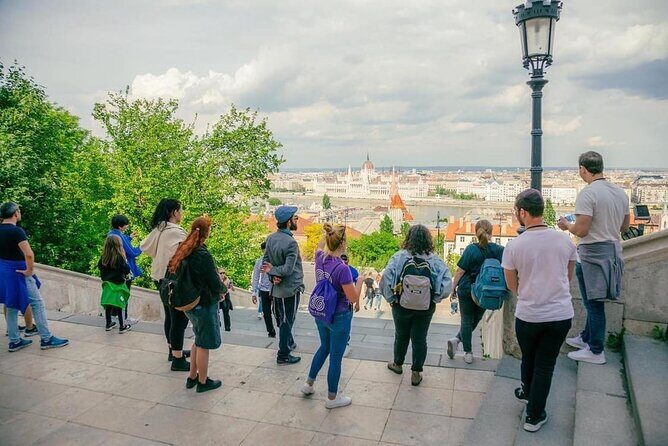
- Matthias Church outside photos with just enough context to make the building feel personal
- Fisherman’s Bastion viewpoints that actually help you understand the Danube skyline
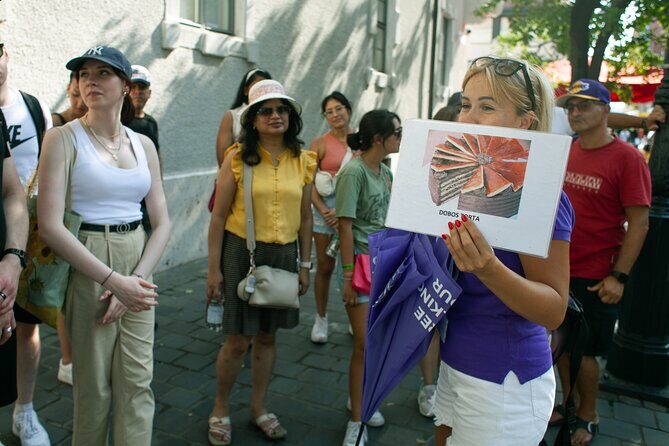
- Ruszwurm Confectionery time to grab classic Hungarian cake like Dobos torta and krémes
- Bronze good-luck touch at the András Hadik statue, plus the story behind it
- Buda Hill Funicular (historic since 1870) as a shortcut with rewarding views
- No-pressure museum approach at Buda Castle: you’ll see the key institutions and then decide what to do next
Price and logistics: why $3.63 can feel unreal
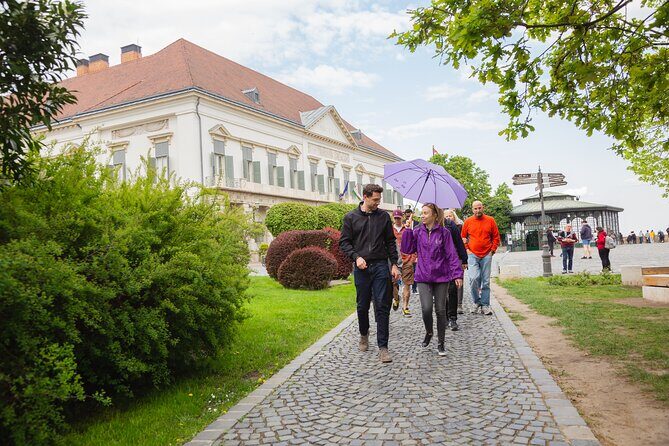
For $3.63 per person, this is priced like a steal, not a premium tour. The big value is that you’re paying for a professional guide and smart routing around Budapest’s Castle District, not for lots of expensive admissions. Most stops are marked as free to enter, and the only clearly stated paid entry is Matthias Church, so you can budget accordingly if you want inside access.
A few practical notes that matter once you’re there:
- The tour runs around 2 hours, so it’s efficient, not slow and stroll-y.
- You’ll be on your feet through a lot of stairs and slopes. If you’re even slightly fit, you’ll enjoy it more.
- Weather changes the experience. In strong heat, it’s harder to keep the pace. In downpours, you still walk—just slower, with more layering needed.
- Tips are not included, so plan for that.
If you like your sightseeing with structure—photo stops, explanations, and then a little freedom—this is a strong match.
You can also read our reviews of more tours and experiences in Budapest.



Meeting on Szentháromság tér and finishing at Buda Castle
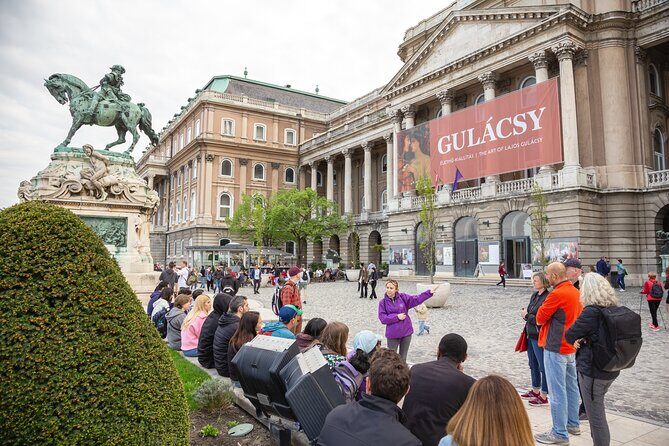
The tour starts at Szentháromság tér, 1014 Hungary and ends around Buda Castle, near Szent György tér, 1014 Hungary (at the entrance of the National Gallery area). That drop-off is handy because it puts you right where you may want to continue: the Royal Palace complex and the museum cluster.
Because the group is capped at 10 people, you’re less likely to feel squeezed. Also, the tour includes mobile tickets, and it’s offered in English, which keeps things straightforward.
Matthias Church: the roof, the spires, and what to look for
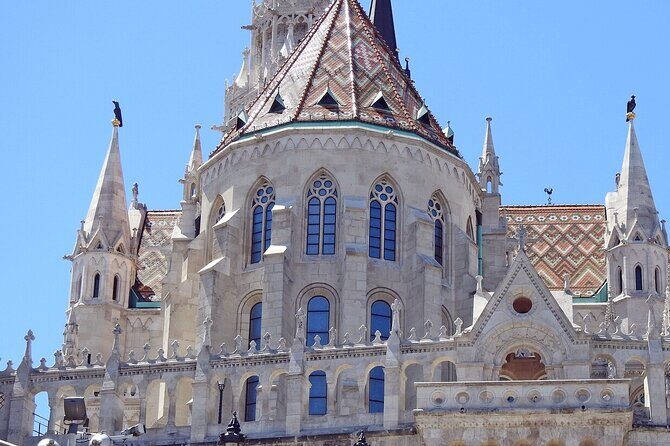
Matthias Church is the kind of building you recognize from photos—then you see it in person and realize why it looks so dramatic. On this tour, you spend about 15 minutes, with the emphasis on seeing it up close and getting photo time outside. Admission is not included, so treat that as a separate choice if you want to go in.
What I’d focus on during your outside stop:
- The famous tiled roof patterns. Up close, they’re way more detailed than the postcard versions.
- The way the spires pull your eyes upward. Your guide’s explanations help you “read” the architecture instead of just admiring it.
- Interior frescoes, even from outside context. When someone points out what’s known for the inside, the church becomes more than a shell.
If you hate museum-style pacing, the outside approach is a plus. If you love interiors, you’ll probably want to return on your own.
Fisherman’s Bastion: fairy-tale terraces with real direction
Fisherman’s Bastion is your payoff stop. You’re there for about 15 minutes, and the best part is how it teaches you what you’re seeing—especially the Danube and the skyline stretch.
A few reasons this stop works:
- It’s designed for views. You naturally find better angles without needing to hunt.
- The neo-Gothic and neo-Romanesque details give you something to look at between photos.
- You get turrets, arches, and walkable paths that feel like a storybook set—yet it’s still part of a real city district.
If you come early, the viewpoints can feel calm. If you come later in the day, expect more people around the best camera angles.
Holy Trinity Column and Trinity Square: quick stop, strong meaning
This is a fast 5-minute stop, and that’s exactly why it’s good. You don’t need a long lecture to get the point: the Holy Trinity Column marks the end of an 18th-century plague, and its carvings and tall design make it stand out in Trinity Square.
Even in a brief visit, I like it because it anchors the Castle District in human events. You’re not just looking at royal power and architecture—you’re seeing how communities commemorated survival.



Ruszwurm Confectionery: a cake break that feels historic
When your feet are tired, Ruszwurm is a smart reset. The tour gives you around 10 minutes here, and Ruszwurm has been delighting people since 1827.
This stop is valuable because it’s not only about food. It’s about taking a local tradition seriously:
- You can try Hungarian classics like Dobos torta and krémes.
- The shop atmosphere is part of the experience, not just the pastry case.
- Your guide can help you pick something that matches your sweetness tolerance and time.
Do keep expectations realistic: this is time to buy and enjoy something, not a full sit-down meal. If you want a longer break, you’ll need to schedule that on your own after the walk.
Hadik statue: the bronze horse and the good-luck ritual
A quick 5 minutes brings you to the statue of András Hadik. It honors a legendary Hungarian soldier and connects to Maria Theresa’s favorite general, with stories tied to his bold victories.
Then comes the quirky part: touching the horse’s shiny bronze is said to bring good luck. It’s a small moment, but it’s also a fun way to make history physical. And since it’s over quickly, it doesn’t derail the pace.
Residential Castle Hill at Arpád Tóth Promenade
Not every Castle District tour spends time in the residential stretch. Here, you get about 10 minutes at Arpád Tóth Promenade (Setany), which helps you understand that this area isn’t only palaces and churches. It’s lived-in.
This part is underrated because it changes your mental picture. Instead of imagining the hill as museum land, you start seeing how people actually move through the district.
Hospital in the Rock and the Castle Hill labyrinth feel
This is where the tour gets interesting in a different way. Your guide tells the story of Hospital in the Rock, but you do not enter it. You’ll pass by, while you learn what the site represents.
Then you’ll hear about a labyrinth area of Buda Castle—more maze-like corridors and confusing angles than a dramatic showpiece. You may not see a single landmark that screams come here, but the effect is the same: you begin to feel how Castle Hill can be disorienting and fascinating at the same time.
I like this segment because it turns the district’s confusing geometry into a feature, not a frustration.
Sandor Palace and the Carmelite Monastery: power behind old walls
You get short, meaningful peeks into two major political landmarks.
Sandor Palace
About 5 minutes at Sandor Palace, the official residence of Hungary’s President. It’s named after its original owner, Count Sándor Móricz, known as the Devil’s Rider for daring equestrian stunts. The stop is brief, but the story gives the building an identity beyond architecture.
Karmelita Kolostor (Carmelite Monastery)
Then about 10 minutes at Karmelita Kolostor. The monastery’s history includes shifts into a theater and concert hall, and today it houses the Hungarian Prime Minister’s Office. That change-over through time is the point: these walls keep getting reused for the roles of the day.
If you like seeing how places evolve, this is a strong pairing.
Buda Hill Funicular: the shortcut with Danube views
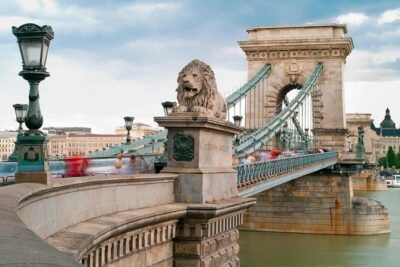
This part can save your legs while improving your photos. The tour includes Buda Hill Funicular for about 10 minutes, connecting the Chain Bridge area to the Castle District. The funicular has been operating since 1870, and the ride offers spectacular views of the Danube and the city.
Why it matters for your experience:
- It breaks up the walking so the tour stays enjoyable.
- You get a moving viewpoint instead of standing and waiting for one perfect angle.
- It’s one of those Budapest details you feel proud you didn’t skip.
Királyi Lovarda and Matthias Fountain: horse energy and Baroque drama
Two quick architectural stops round things out.
Királyi Lovarda (Riding Hall)
A 5-minute look at the Riding Hall in Buda Castle. It was originally a royal equestrian facility, and the restoration keeps the structure crisp enough for a short stop to still feel satisfying.
Fountain of King Matthias
Then 10 minutes at the Matthias Fountain in the heart of Buda Castle. It’s Baroque-style, dedicated to King Matthias Corvinus, with a central sculpture of the king riding a horse. The symbolism is straightforward: power, and the sense of cultural flourishing in the 15th century.
Even if you’re not a sculpture person, this is an easy win because it’s both iconic and readable.
Ending at Buda Castle: choose your next museum wisely
The final Castle District stop is about 15 minutes at Buda Castle, the Royal Palace complex. It houses several museum options, including the Hungarian National Gallery, the Budapest History Museum, and the National Library.
The best way to use this time is to set your next move before you walk away:
- If you want art, the National Gallery is your direction.
- If you want the big-story Budapest narrative, the History Museum helps.
- If you love literature and quieter spaces, the National Library may fit better.
This tour doesn’t try to force you into one museum slot. Instead, it gives you a structured end point where you can decide based on your energy.
Who should book this Buda Castle tour
This experience is ideal if you want:
- A small-group walking tour with an upper-Castle District focus.
- A quick but meaningful introduction to major sights like Matthias Church and Fisherman’s Bastion.
- Practical time planning, including a funicular ride and a pastry stop at Ruszwurm.
- A guide who explains with humor and keeps things engaging, like the styles reported by Sou, Bayler, Nacho, Ignacio, and Sophie.
I’d think twice if you:
- Struggle with steep hills and lots of steps.
- Want a long, slow visit inside Matthias Church or deeper museum time during the same tour.
Should you book this Buda Castle Tour from Luna Walking Tours?
If you’re doing Budapest for the first time or you want one efficient morning/afternoon up on Castle Hill, I’d say yes. For the price, the mix of views, architecture, and practical local stops (including Ruszwurm and funicular time) is hard to beat.
Book it if you like guided context and photo-ready viewpoints without turning the trip into a cram session. Skip it if your top goal is spending long hours inside churches and museums, since key places here are mostly outside or passed by.
If you want Budapest’s Castle District to make sense fast, this is a very smart way to get oriented and start tasting the city.
FAQ
How long is the Buda Castle tour?
It runs for about 2 hours.
What language is the tour offered in?
The tour is offered in English.
Is Matthias Church included, and is admission included?
Matthias Church is part of the tour with time outside for photos, but admission ticket is not included.
Are the other stops free to enter?
Most stops are listed with admission ticket free, including Fisherman’s Bastion and several other Castle District points.
What’s the meeting point and where does the tour end?
You start at Szentháromság tér, 1014 Hungary and end at Buda Castle, near Szent György tér, 1014 Hungary, at the National Gallery entrance.
Is the tour group small?
Yes. The maximum group size is 10 travelers.
Do I need to print anything?
No. You receive a mobile ticket.
Does the tour include Hospital in the Rock?
Your guide tells the story and you pass by, but the tour does not include entering Hospital in the Rock.
Is the tour mostly walking?
Yes. It’s a guided walking route with hills and steps, plus a funicular ride.
Are service animals allowed?
Yes, service animals are allowed.