REVIEW · BUDAPEST
A Journey through Jewish Budapest – Walking Tour
Book on Viator →Operated by Insight Cities · Bookable on Viator
Synagogues in Budapest tell hard truths. This 3-hour Jewish history and heritage walk guides you through the Jewish quarter story, from the old rhythm of the city to the trauma of WWII—without turning it into a lecture. I love how the route ties buildings to real lived life, not just dates on a page.
My first big like: you’re not stuck outside. You spend time at major sites like the Dohány Street Synagogue complex (including the Temple of Heroes, Jewish Museum areas, and Memorial Park) and you also get inside the smaller synagogues when they’re open to the public. My second like: the group stays small—up to eight people—so your historian guide can slow down for your questions.
One possible drawback: the big-name synagogues don’t come with ticket prices included. You’ll want to plan for extra entry costs and be ready for the dress rule at two stops—shoulders and knees covered.
In This Review
- Key things you’ll notice on this tour
- Why this Jewish Budapest walk makes sense in 3 hours
- Where you start at Kamara Café and how the route flows
- Dohány Street Synagogue: Moorish Revival, heroes, and a museum complex
- Kazinczy Street Synagogue, the ghetto wall memorial, and a mikve stop
- Rumbach Street Synagogue and the Status Quo Ante storyline
- Shoes on the Danube Bank: the free ending that hits hardest
- Price and value: what $126.16 includes, and what to budget
- How the guides shape the experience (and why it matters)
- Who should book this Jewish Budapest tour
- Should you book? My take
- FAQ
- How long is the Jewish Budapest walking tour?
- Where does the tour meet and start?
- Is the tour only in the morning?
- Are synagogue and museum tickets included?
- What dress code should I follow?
- Can I cancel for a full refund?
Key things you’ll notice on this tour
- Small group format (max 8 people) keeps the experience personal and question-friendly.
- Historic sites with real meaning, from Moorish Revival splendor to WWII remembrance at the river.
- You’ll learn Jewish community stories across districts, including the VII and VIII areas.
- Interior access when open, which can be the difference between seeing a facade and understanding a place.
- Tickets for synagogues and museum are not included, so budget slightly more than the tour price.
- End at Shoes on the Danube Bank, a free memorial stop built for remembrance.
Why this Jewish Budapest walk makes sense in 3 hours
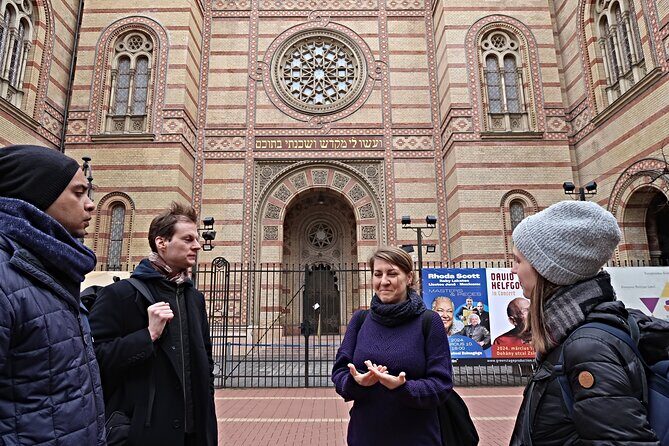
Budapest’s Jewish story can feel huge—centuries of culture, waves of change, and then WWII devastation. This tour’s strength is that it’s built to fit a short visit while still moving in a logical way: synagogue grandeur, neighborhood survival, then a final stop that hits with clarity.
You also get a historian guide, not just someone who can point. That matters because the places themselves are only half the story. The other half is what those communities were doing—how they organized life around faith, learning, and neighborhood institutions.
This is also a practical walking length. Three hours is enough time to feel like you saw something real, but it won’t exhaust you before dinner plans.
You can also read our reviews of more walking tours in Budapest



Where you start at Kamara Café and how the route flows
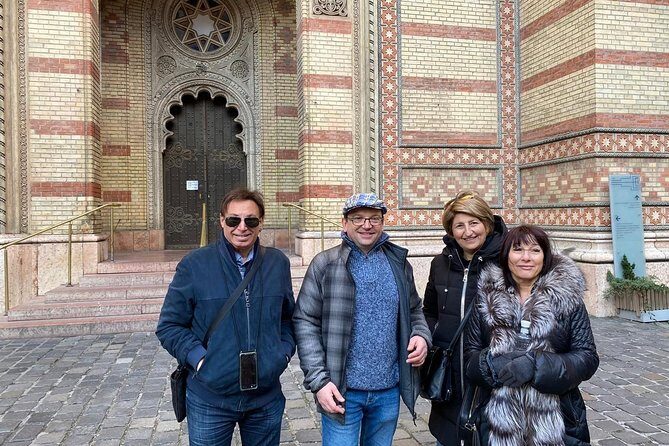
The tour begins at Kamara Café on Dohány Street, right opposite the Great Synagogue. That’s a smart meeting point: you can orient fast, and you’re already in the right neighborhood from the first minute.
The tour offers pickup at that same spot, and you’ll receive your guide’s photo, phone, and bio after booking. You’ll also get a mobile ticket, which is handy in a city where you’ll be bouncing between public transport and walking.
The walking route is designed to connect key parts of the Jewish quarter area. Even if your day includes other sights, this one gives you a tight, coherent “cause and effect” map—from religious spaces to community life to the memorial where people are remembered in the most direct way.
Tip I’d use: wear comfortable shoes. This is a heritage walk, not a sightseeing stroll with constant stops.
Dohány Street Synagogue: Moorish Revival, heroes, and a museum complex
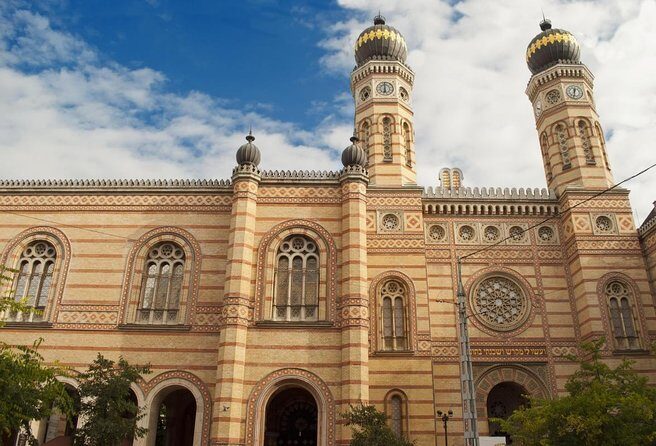
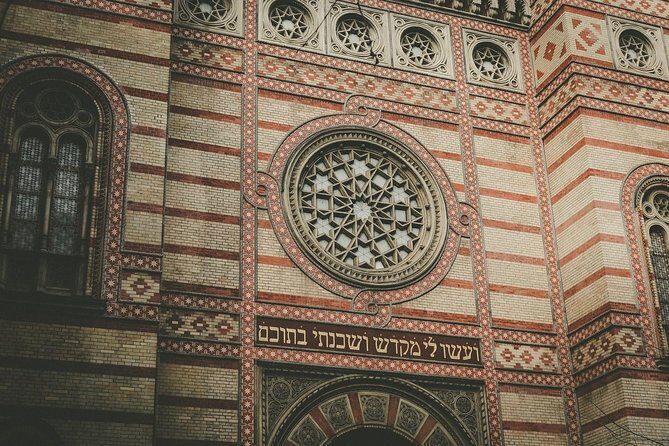
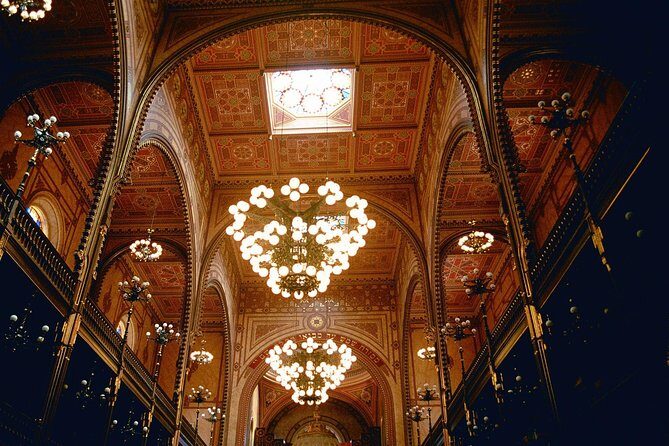
The tour’s first stop is the Great / Central Synagogue (Nagy Zsinagóga) on Dohány Street. Expect the lavish Moorish Revival look right away. This building doesn’t whisper—it announces the presence and ambition of the Jewish community that built and supported it.
You’ll spend about 30 minutes at the complex with help from a Jewish Studies Scholar. That’s a big deal because it sets context before you move into the details. You’ll also visit the Temple of Heroes, the Jewish Museum area, and Memorial Park within the complex.
A practical note: admission tickets for this stop are not included. So factor that in when you plan your schedule and budget. The benefit is that you’re not rushed just to meet a ticket quota—you’re there for meaning, and the time you get is worth making space for.
One extra detail that can make the visit feel more complete: some guides bring attention to elements like the courtyard and the Tree of Life. Even if you only see parts of the complex’s quieter corners, that’s often what turns a big synagogue visit into a personal one.
Kazinczy Street Synagogue, the ghetto wall memorial, and a mikve stop
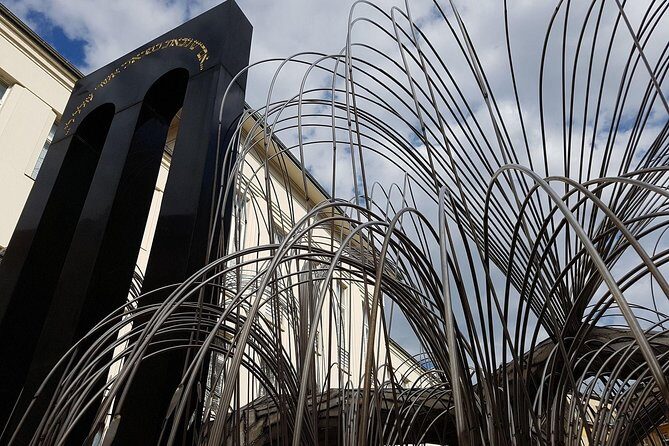
Stop two takes you to the Kazinczy Street Synagogue area for about 35 minutes. This part of the walk is where the story shifts from grand public religious life to the reality of confinement and community endurance.
Before you reach the synagogue, you’ll pass the Ghetto Wall Memorial, erected in 2014. Standing near a marker like that helps you understand why “neighborhood” could suddenly mean enclosure. It puts the WWII story into physical geography, which is the kind of connection that sticks.
You’ll also pass a mikve, a Jewish ritual bath. Even if you don’t go inside, seeing it on the route reinforces that Jewish life wasn’t only about holidays and buildings—it also included everyday practices and community routines.
Then you’ll continue to the Art Nouveau orthodox synagogue on Kazinczy Street. When it’s open to the public, the tour includes visiting the interior. That interior time is valuable because synagogues are designed to be lived in by prayer and community memory, not just photographed.
Dress code matters here. Visitors to the Dohány and Kazinczy synagogues are requested to have shoulders and knees covered. If you forget, you might be stuck outside or find yourself borrowing something on the spot—easy to avoid.
Rumbach Street Synagogue and the Status Quo Ante storyline
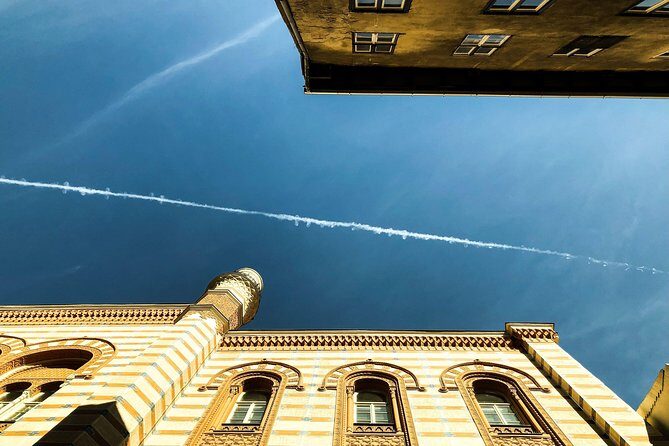
Stop three is the Rumbach Street Synagogue, with about 25 minutes on-site. This is the point where the tour adds nuance: Judaism in Budapest wasn’t one single uniform experience. It included different streams and traditions, and you’ll hear about the history of the Status Quo Ante stream as you observe what’s in front of you.
Like the Kazinczy stop, interior access depends on opening to the public. When it is open, you’ll visit inside, which helps you notice architectural and ritual details that you can’t really “read” from the street.
The practical value here is timing and pacing. After spending more time at the big complexes, this stop gives you a shorter, focused slice. It keeps the walk moving and helps you absorb the story without feeling like you’re stuck at one location for too long.
Also: admission tickets for the Rumbach Street Synagogue are not included. Again, plan a little extra so you’re not surprised by the cost of seeing the inside.






Shoes on the Danube Bank: the free ending that hits hardest
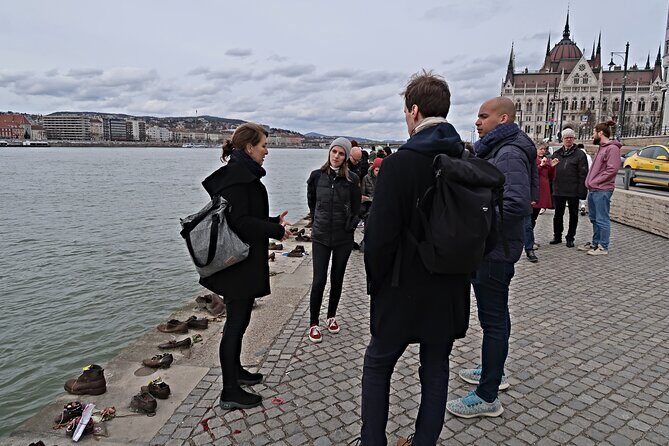
The tour ends with Shoes on the Danube Bank, a memorial erected on April 16, 2005. This one is free, and that matters because it’s accessible even if your synagogue tickets added up.
The memorial commemorates Jews who were massacred here during WWII. The story is stark and specific: people were ordered to take off their shoes and were shot at the edge of the water, so their bodies fell into the river and were carried away. That explanation is part of why the memorial feels so direct—what you see is not abstract.
You’ll spend around 20 minutes paying respects at the riverbank. I like ending here because it turns the earlier sightseeing into remembrance. It also gives you a closing moment where you can actually process what you learned.
If you want to keep your emotions steady, plan a calm way to finish your day. Pick a nearby café afterward, or give yourself a little quiet time rather than packing in another “must-see” right away.
Price and value: what $126.16 includes, and what to budget
The tour price is $126.16 per person for about three hours, and it includes the guided walking portion plus a historian guide. For that length and for that level of context, it’s not just a casual neighborhood walk. You’re paying for structure, interpretation, and access time at multiple sites.
The key value catch: tickets to the Dohány Synagogue, Rumbach Street Synagogue, and Kazinczy Street Synagogue are not included. Depending on what you pay for those entrances, your total day cost will land higher than the tour price alone.
Is it still good value? Yes, if you care about meaning over selfies. The route hits major community landmarks in a condensed timeline, and the small group size helps a lot. If you’re the kind of person who likes reading the “why” behind a building, you’ll feel that value quickly.
If you’re more price-sensitive and only want exterior photos, then you might feel the extra ticket costs. But for most people seeking a Jewish Budapest orientation, the mix of big sites plus smaller neighborhood stories makes the cost feel justified.
How the guides shape the experience (and why it matters)
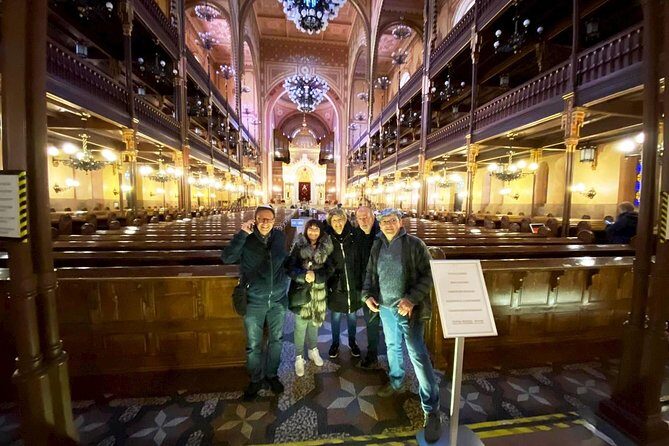
One of the reasons this tour earns a 5-star reputation is the guide quality. I’ve seen names tied to past departures like Orsolya, Agi, Endre, and Veronika.
What stands out is that the guiding doesn’t stick to one angle. Some guides connect the history to daily life in Hungary, and a few even bring food recommendations into the walk. For example, one guide’s suggestion of flodni (a Hungarian cake) came up as a highlight. That’s not required—but it’s a real sign the guide is thinking about your whole Budapest experience, not just the monuments.
If you do this tour, you’ll get the most out of it by asking follow-ups. The tour is short, so smart questions help your guide pick the right depth.
Who should book this Jewish Budapest tour
This works best if you want a clear, guided understanding of Budapest’s Jewish quarter and its key synagogues. It’s also a good pick for first-timers who don’t want to stitch together multiple sites on their own.
It’s ideal if:
- You like guided context at religious and memorial sites
- You want a small-group format instead of a crowd
- You’re visiting the VII and VIII districts and want the story behind the streets
- You’re comfortable following a dress code at two synagogues
If you hate walking, this might not be your cup of tea. It’s not a sprint, but it is a walking tour with multiple stops.
Also, since interior visits depend on public opening hours, you should be flexible. The tour timing helps, but it’s still a real-world schedule.
Should you book? My take
Book it if you want a guided path through Jewish Budapest that connects buildings to lived history, and you’re willing to budget for synagogue tickets. The route ends with Shoes on the Danube Bank, so you leave with both understanding and a proper moment of remembrance.
Skip or reconsider if you’re only after exterior views, or if you’re not comfortable with the shoulder-and-knee dress request at Dohány and Kazinczy. Also, if you’re traveling with very limited time for ticket lines and museum access, you’ll want to plan your day carefully.
FAQ
How long is the Jewish Budapest walking tour?
It lasts about 3 hours.
Where does the tour meet and start?
It starts at Kamara Café, Dohány u. 1b, 1074 Budapest, which is right opposite the Great Synagogue. Pickup is also offered at Kamara Café.
Is the tour only in the morning?
You can choose a morning or afternoon departure. The provided start time is 10:00 am.
Are synagogue and museum tickets included?
No. Tickets for Dohány Synagogue, Kazinczy Street Synagogue, and Rumbach Street Synagogue are not included. The Shoes on the Danube Bank stop is free.
What dress code should I follow?
Visitors to the Dohány and Kazinczy synagogues are requested to have shoulders and knees covered.
Can I cancel for a full refund?
Yes. You can cancel up to 24 hours in advance for a full refund.
If you tell me your travel dates and whether you’re doing morning or afternoon, I can help you plan what to do before and after the walk so the timing feels smooth.