REVIEW · BUDAPEST
Hungarian Langos Making Class: The No. 1 Street Food in Hungary
Book on Viator →Operated by Flavors of Budapest · Bookable on Viator
Langos is messier and better than you expect. In this Budapest kitchen, you make the deep-fried Hungarian flatbread from scratch, then top and taste it warm while you learn why it is a go-to street snack in Hungary. Two kinds of lángos plus a friendly, small-group vibe make this more than just a food stop.
What I really like is how hands-on the class feels. You knead, fry, and assemble, with Marti (and her husband) keeping the energy up and giving attention where you need it. Second, you do not just watch and leave—you sit down afterward to sample what you made, and you get practical info about ingredients and local habits.
One consideration: there is no hotel pick-up. You’ll need to get yourself to the meeting point at Hajós u. 14, 1065, and you’ll return there too, so plan around that.
In This Review
- Key highlights worth showing up for
- Why lángos is the “order it everywhere” food in Hungary
- Price and what you actually get for $83.27
- Where the class starts: Hajós u. 14 and the kitchen setup
- The cooking part: kneading and frying your own lángos
- Classic vs potato lángos: two textures, two reasons to care
- After you fry: tasting together with wine and homemade drinks
- Who this class suits (and who should think twice)
- Should you book this lángos making class?
- FAQ
- How long is the Hungarian lángos making class?
- What does the class cost and what’s included in the price?
- Is the class offered in English?
- How big is the group?
- Where do I meet for the class?
- Is hotel pick-up provided?
- Do I try two types of lángos?
Key highlights worth showing up for
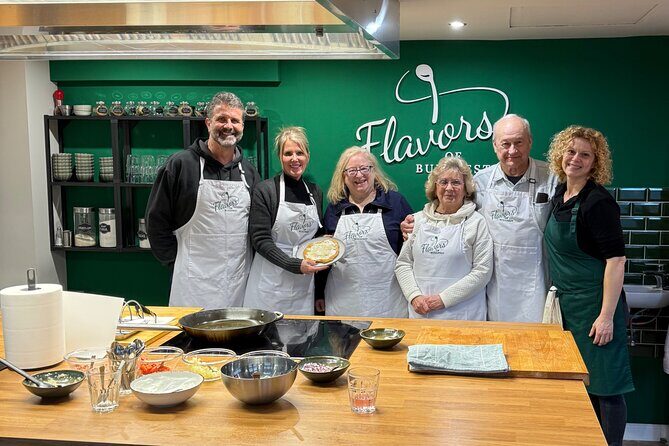
- Two lángos styles you cook yourself: classic and potato, so you taste the difference instead of only reading about it
- Small group, up to 15 people: enough company for fun, not so many you feel lost
- Marti’s teaching style: friendly, inclusive, and focused on technique and timing while you work
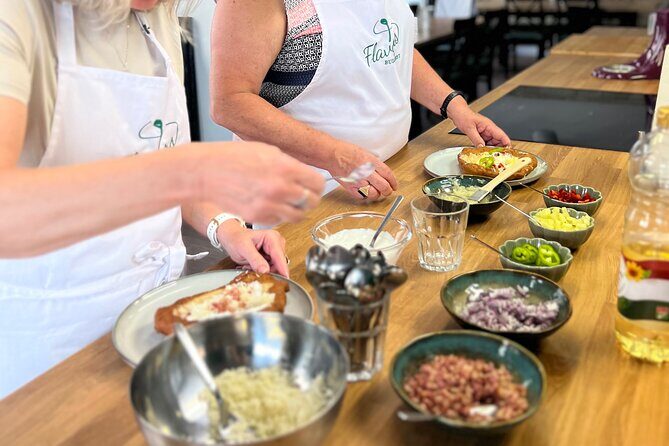
- Toppings that match Hungarian street logic: garlic cream, sour cream, grated cheese, bacon/sausage, red onion, paprika, peppers
- A proper tasting afterward: you gather together to enjoy your results fresh and warm
- Drinks included with your meal: Hungarian wine, homemade soft drinks, and mineral water
Why lángos is the “order it everywhere” food in Hungary
If you want to understand Hungarian street food fast, start with lángos. It’s a deep-fried flatbread designed to be eaten hot, when it is still crisp and steamy in the middle. The magic is not fancy plating. It’s texture, salt, and the way toppings melt right onto warm bread.
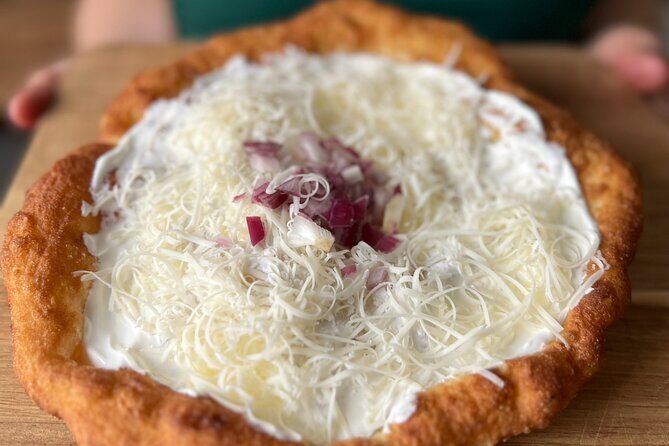
You’ll learn that lángos toppings in Hungary can go a few different directions. The classic build you’ll see often is sour cream and grated cheese. You might also see bacon, sausage, red onion, and peppers. In practice, many people love a simpler option too, like a brush of garlic cream—because the bread itself is the star when it’s fresh.
This class leans into the real reason lángos is so popular. You get a hands-on feel for how the dough behaves before it hits the oil, and you taste the finished product while it still has that just-fried crunch. That matters because lángos is not meant to be a sad cold leftover. It is meant to be eaten immediately.
You can also read our reviews of more food & drink experiences in Budapest


Price and what you actually get for $83.27
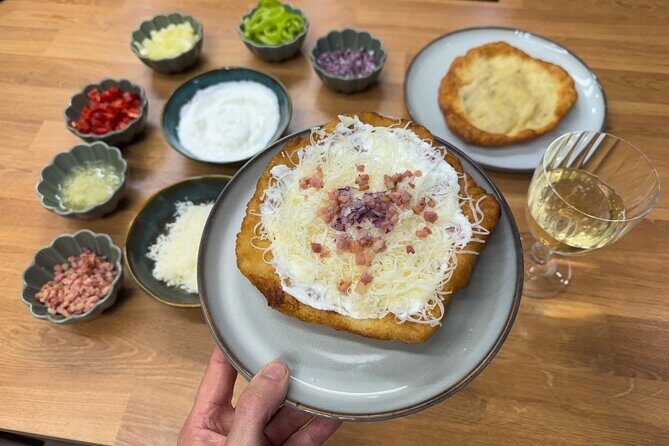
At $83.27 per person for about 2 hours, you should judge this as a meal-plus-cooking lesson, not a quick snack. You’re paying for ingredients, kitchen tools, coaching, and a full tasting experience with drinks.
Here’s how that value shows up for you:
- You make 2 different lángos: classic and potato. That gives you two bites with meaning, not one generic taste.
- Toppings and sauces are included: garlic cream, sour cream, cheese, and several savory options like bacon and sausage, plus onion and peppers.
- Drinks are part of the experience: Hungarian wine, homemade soft drinks, and mineral water (and water is part of the drink setup).
- You get recipes: at least some guests note receiving recipes, which is the easiest way to recreate the experience later.
The only downside on the logistics side is that you have to get yourself to the kitchen. There is no hotel pick-up or drop-off, so budget a little time for transit. Also, since the class runs only when a minimum number of participants is met, you may occasionally need to adjust if dates are changed by demand.
Where the class starts: Hajós u. 14 and the kitchen setup
The meeting point is Budapest, Hajós u. 14, 1065 Hungary, and the experience ends back at the same place. That’s helpful because you do not lose half your day to transfers. You can schedule this before dinner or fit it between sightseeing blocks.
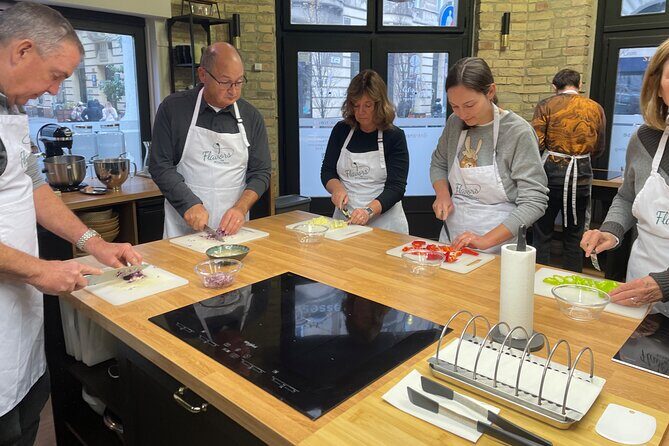
The venue is an open-kitchen style space, close to the area around the opera house. That matters because you can actually watch the process and feel connected to what’s happening instead of disappearing behind a closed door. You’ll also notice the class size stays small (maximum 15), which keeps the experience from turning into a production line.
Since it’s offered in English, you’ll be able to follow what Marti is doing and why she does it. And because service animals are allowed and the location is near public transportation, this is easier to plan than many cooking experiences that hide in hard-to-reach spots.
Practical tip: wear something you’re comfortable getting a little food-life on. Even careful frying has a way of keeping things casual.
The cooking part: kneading and frying your own lángos
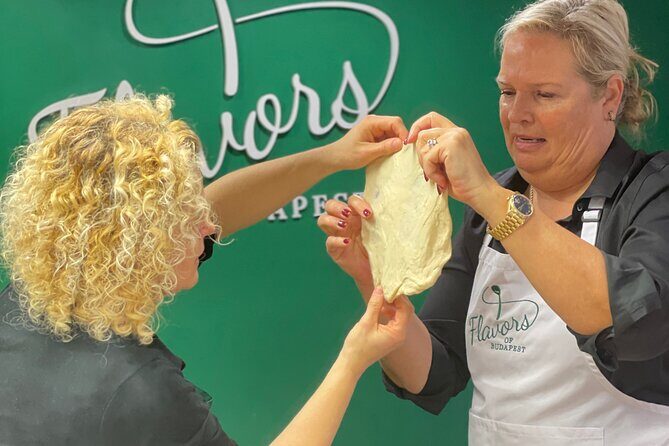
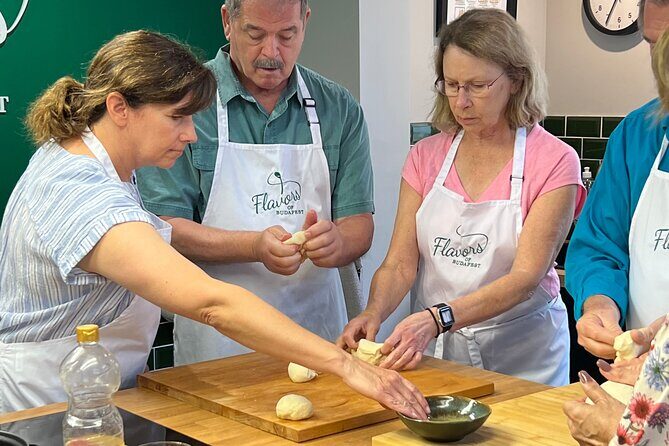
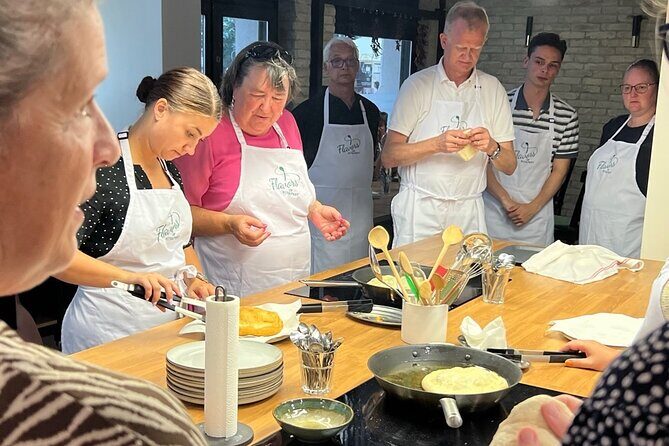
The core of the class is straightforward: you cook together, from start to finish. You’ll work with the dough and then get to fry. That alone is a big deal. Many food lessons teach concepts; this one asks you to do the real steps that create the final texture.
While you cook, Marti and her team guide you through technique—how the dough is handled and how the frying moment needs attention. The goal is a lángos that’s hot and crisp, not greasy or undercooked. Because it’s small-group, you can ask questions and get direct feedback while you’re actively working.
You’ll also get local context as you go. Expect explanations about ingredients and local food customs, not just a list of toppings. That’s what turns the experience into something you can use later when you’re ordering lángos on your own.
And yes, there’s a social side. You’re working near other people in the same process, not competing in a challenge format. The atmosphere is the kind where a newbie can feel confident and a more experienced cook can still pick up a technique tweak.
Classic vs potato lángos: two textures, two reasons to care
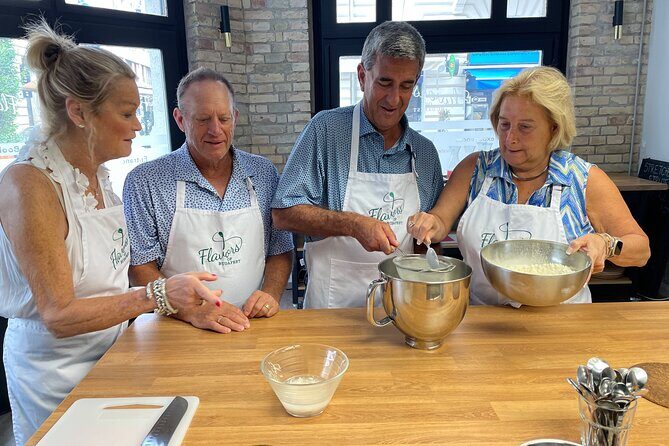
You do not just make one dough and call it a day. The class centers on two varieties:
- Classic lángos
- Potato lángos
That difference is the heart of the tasting. Potato changes the feel of the dough and often the final texture, so you get to notice it instead of guessing. It’s also why the class title makes sense: you’re not sampling a random assortment. You’re comparing two versions of a signature food.
Once each lángos is fried, you top it. The ingredients are included, so you can build the version you like best. Options may include:
- garlic cream
- sour cream
- grated cheese
- bacon
- sausage
- red onion
- peppers
- different paprika styles (where included in the setup)
This is where you’ll understand Hungarian street-food logic: the toppings are designed to melt and cling to warm bread. If you eat it fresh, the mix makes sense. If you wait too long, it stops being what it is supposed to be. The class naturally keeps you eating at the right time, because you fry and then gather to sample.
A few more Budapest tours and experiences worth a look






After you fry: tasting together with wine and homemade drinks
The best part, for me, is that you get to sit down and enjoy what you made—together. After the cooking, you gather and sample your creations. This part turns the lesson into an actual meal, not just a workshop.
Drink-wise, you’re not stuck with water only. The experience includes Hungarian wine, plus homemade soft drinks, and mineral water. There’s also an unlimited water setup (still or sparkling, depending on what the drink station offers). That combination is practical: wine with the savory fried bread, and soft drinks if you want something non-alcoholic.
If you’ve ever tried lángos from a street vendor, you may remember it as a quick bite. Here, you get time. You taste your own version, then you taste someone else’s topping choice. That’s how you learn what you personally prefer: heavy on garlic, extra sour cream, or the more “loaded” versions with bacon, sausage, onion, and peppers.
It’s also the moment when the small-group setup pays off. You’re not far from the action, but you also get a social pause where conversation is natural.
Who this class suits (and who should think twice)
This is a great fit if you:
- love street food and want to learn the technique behind it
- want a small-group activity in Budapest that is social without being awkward
- like hands-on experiences where you leave with a repeatable recipe approach
- want English instruction and a friendly teaching style
It may be less ideal if:
- you hate the idea of fried food in general (this is deep-fried, and that’s non-negotiable)
- you rely on hotel pick-up to reach activities easily
- you are looking for a long cultural walking tour. This is a kitchen-first experience, centered on making and tasting.
Should you book this lángos making class?
Yes, I’d book it if your goal is a warm, authentic Hungarian food experience that you actively create. The best reasons are practical: you cook two kinds of lángos, you get direct help from Marti, and you eat fresh results with included drinks. You’re also in a small group that keeps the experience personal.
My one caution is logistical: be ready to make your own way to Hajós u. 14, 1065. If you’re comfortable handling that, this class is one of the more satisfying ways to spend a couple hours in Budapest without feeling like you paid just to watch.
FAQ
How long is the Hungarian lángos making class?
It runs for about 2 hours.
What does the class cost and what’s included in the price?
The price is $83.27 per person. You get 2 different lángos (classic and potato) with toppings, plus drinks including Hungarian wine, homemade soft drinks, and mineral water.
Is the class offered in English?
Yes. The experience is offered in English.
How big is the group?
The class has a maximum of 15 travelers, and it requires a minimum of 6 participants to run.
Where do I meet for the class?
The meeting point is Budapest, Hajós u. 14, 1065 Hungary. The activity ends back at the same meeting point.
Is hotel pick-up provided?
No. Hotel pick-up and drop-off are not included.
Do I try two types of lángos?
Yes. You make and taste both classic and potato lángos.