REVIEW · BUDAPEST
Budapest: Essentials of Hungarian Wine Tasting Class
Book on GetYourGuide →Operated by Taste Hungary · Bookable on GetYourGuide
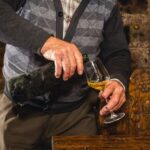
Hungarian wine makes sense in two hours. At Tasting Table Budapest, a sommelier-led format gives you a clear crash course on Hungarian regions through tasting, with 8 wines as the backbone of the lesson.
What I like most is how practical it feels: you taste, then you learn why the wine tastes the way it does—soil, climate, and grape choices all tied together.
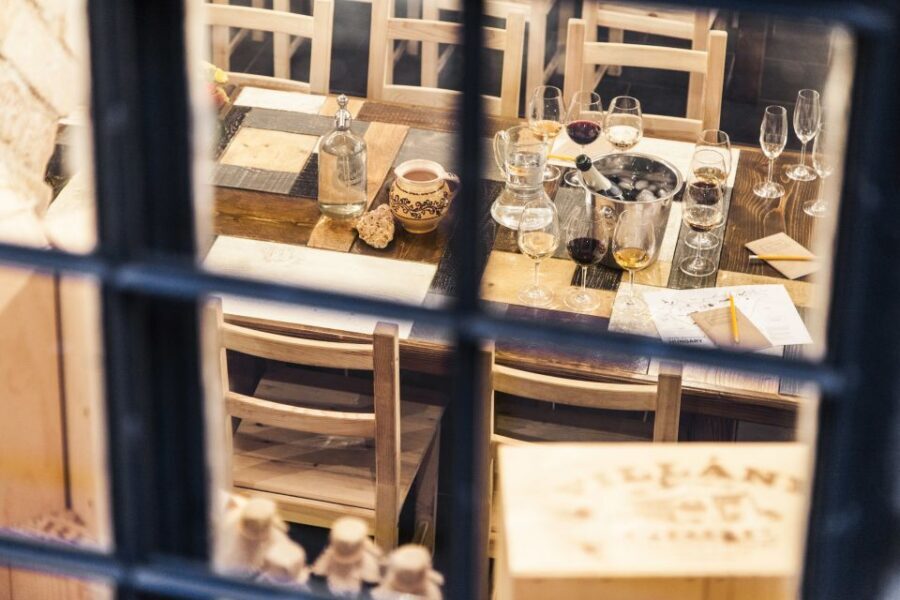
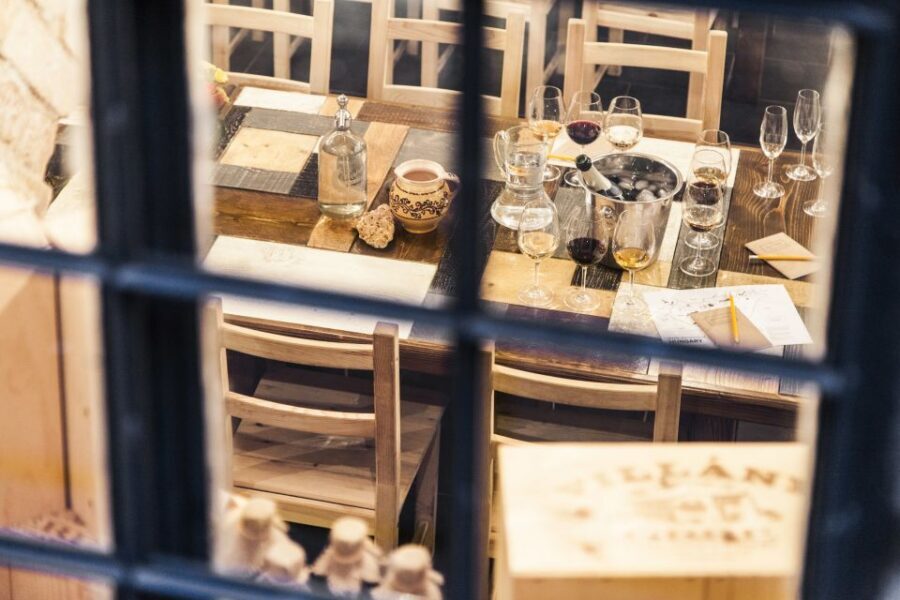
I also love the food pairings. The cheese-and-charcuterie setup (and the old cellar feel with brick arches) turns the tasting into an easy full evening, not just a quick sip-and-go.
One thing to keep in mind: the explanations can be a lot, and the room can get lively, so if you’re the type who wants quiet tasting time, be ready to manage your focus. A small detail I’d flag is that the tasting may not always switch glasses between whites and reds.
In This Review
- Key things that make this class worth your time
- Budapest wine in an old cellar: what to expect in two hours
- Tasting Table Budapest meeting point: easy to reach, built for tasting
- The 8-wine tasting order: aperitif to botrytised Tokaj aszú
- How the sommelier turns Hungarian wine regions into real flavor
- Food pairings that actually help you taste Hungary
- Wine selection and producer focus: why these 8 bottles aren’t random
- Price and value: $65 for 8 wines, plus dinner-style extras
- Who should book this tasting (and who might want a different approach)
- Making the most of your night in Budapest
- Should you book Budapest Essentials of Hungarian Wine Tasting Class?
- FAQ
- How long is the Budapest Hungarian Wine Tasting Class?
- How many wines are included?
- What’s included besides the wines?
- What is the meeting point address?
- What language is the tasting hosted in?
- What time do evening sessions run?
- Is there an age requirement?
- How does cancellation work?
- Does the class provide tasting sheets or materials?
Key things that make this class worth your time
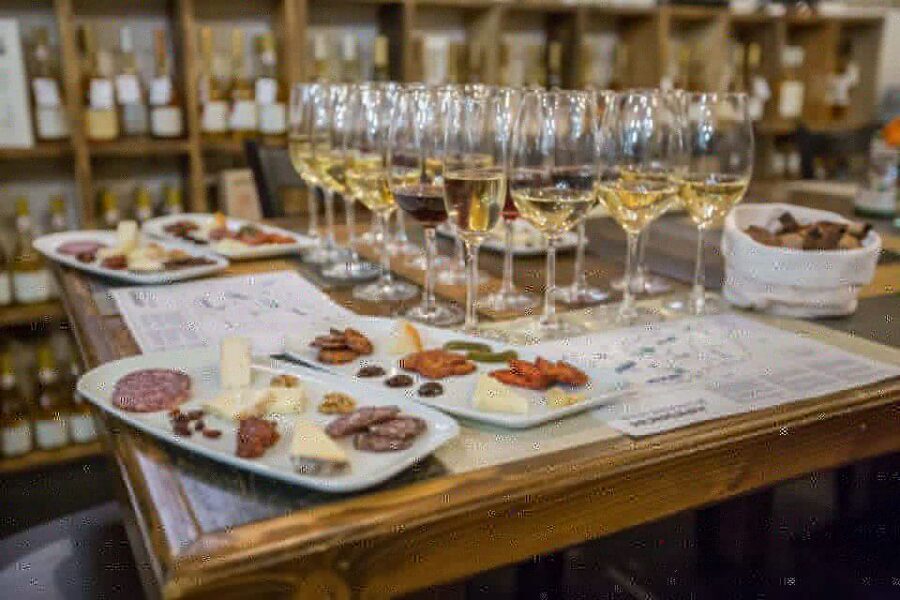
- 8 wines in a guided sequence from aperitif style pours to a sweet Tokaj finish
- Food pairings included, with local cheeses and charcuterie that actually help you taste better
- Tasting sheets + a Hungary wine region map, so the info sticks after the last sip
- Producer-connected selection, so the wines are picked to tell a story, not just fill a flight
- A small-group vibe where it’s easy to chat, ask questions, and compare notes
Budapest wine in an old cellar: what to expect in two hours
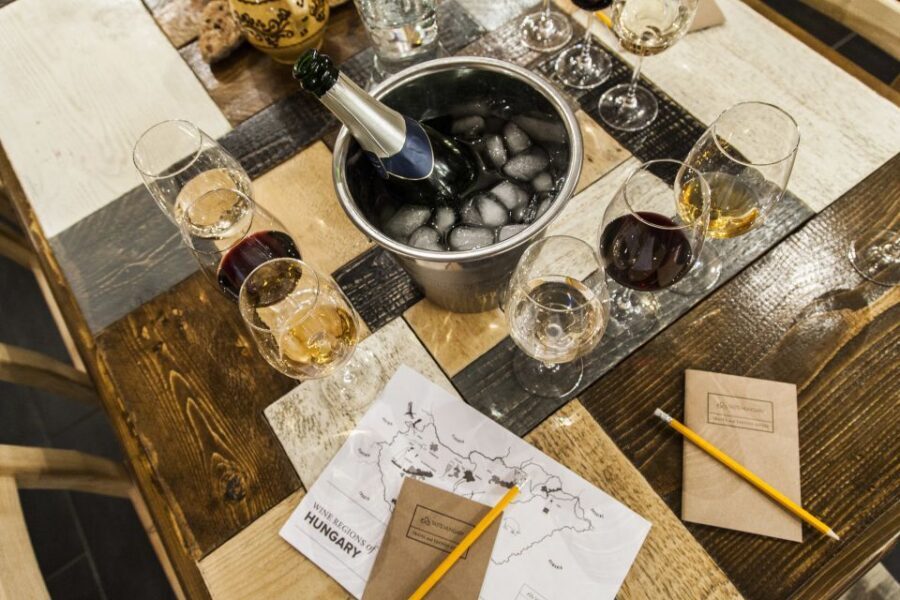
This class is built for people who want a fast, friendly education in Hungarian wine. It runs for 2 hours, and it’s designed as an evening tasting that balances learning with real taste-time. You’re not stuck watching a slideshow; you’re holding a glass while the sommelier explains what you’re experiencing.
The venue is the kind of place that makes the whole thing feel grounded. In past sessions, the space has had that brick-arched cellar feel, and it helps you stay in the mood for wine—slow down, look around, and pay attention to the details the guide points out.
Expect an English host, and expect a lesson that moves. It’s not one long monologue. The pacing matters here: you taste first, then the guide gives context so the flavor makes sense.
You can also read our reviews of more food & drink experiences in Budapest


Tasting Table Budapest meeting point: easy to reach, built for tasting
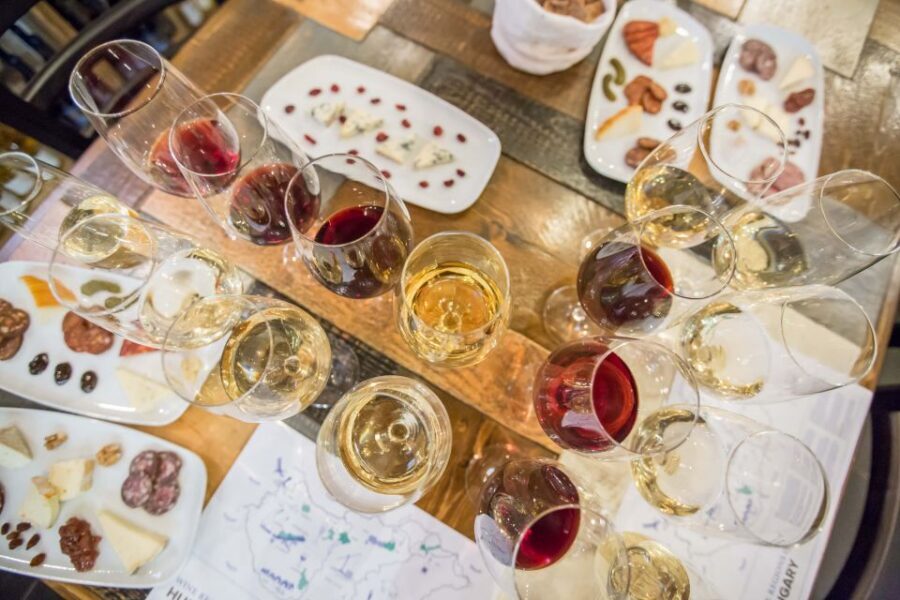
You meet at The Tasting Table Budapest, Bródy Sándor utca 9, District VIII (1088). It’s about a 5-minute walk from both Astoria (M2) and Kálvin tér (M3), and it’s listed as roughly 150 meters from the National Museum—so you can roll in before dinner plans without stressing transport.
This is the kind of location that works well if you’re already sightseeing nearby. You get a straightforward, central meeting point, and you don’t have to plan a long commute out to the countryside for a lesson that’s meant to be a quick evening anchor.
Inside, you’ll find the tasting room/shop setup where the class happens. Several guests have called out the ambiance and the photogenic, cellar-like feel, which matters more than you might think. Wine tastings can feel sterile; here, the setting supports the experience.
The 8-wine tasting order: aperitif to botrytised Tokaj aszú
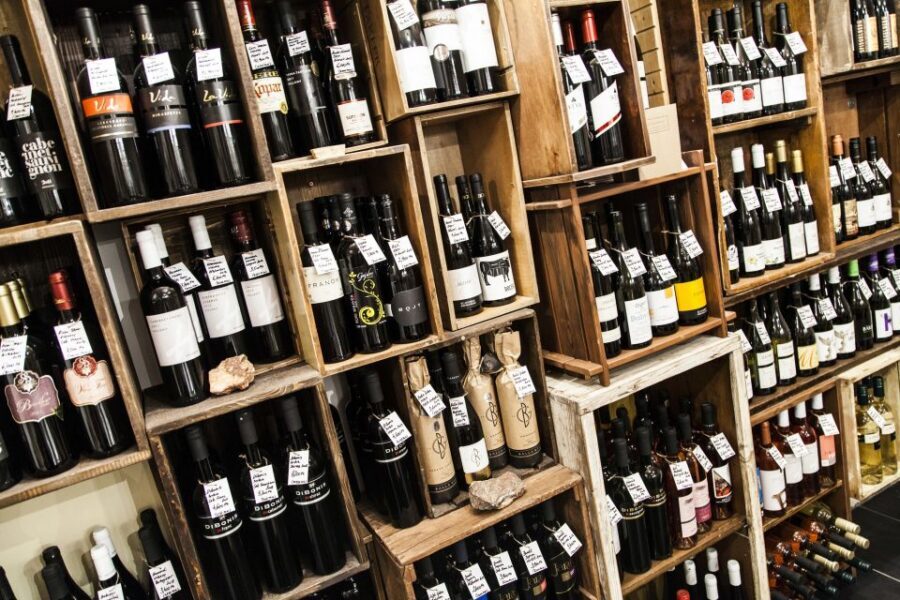
The heart of the experience is eight Hungarian wines, served with guided commentary and paired with food. The lesson is structured so the wines tell a story from start to finish.
Here’s the overall flow:
- It begins with an aperitif-style pour
- Then you move through whites and reds (there may also be a rosé depending on the session)
- It ends with a sweet botrytised Tokaj aszú
A few real-world details help you picture it. Some sessions start with a sparkling-style wine as part of the early aperitif moment, and you’ll likely notice a range of styles as you progress—from fresh and food-friendly to richer, more expressive bottles near the end. The Tokaj aszú finish is the big finale: the sweet, botrytised profile is often what sticks in your mind after the class.
Also note that the lineup isn’t always identical. The experience is described as a selection that’s chosen to represent Hungary’s broader wine picture, and it can vary from one tasting to another. That’s a good thing for repeat visits, but it also means you should treat this as your guided introduction, not a fixed “I must taste exactly X grape.”
How the sommelier turns Hungarian wine regions into real flavor
The guide doesn’t just name-drop. The class is designed to build a mental map of Hungarian wine: where the regions are, how history shaped production, what varietals are important, and what style differences you should notice in the glass.
If you’ve ever stared at a wine list and thought, I have no idea where to start, this is the cure. By the time you reach the later pours, you’re not just tasting; you’re labeling flavors and patterns. Expect talk about:
- Hungarian wine history and winemaking tradition
- Major regions and how they differ
- Varietal choices and how those grapes behave
- Unique characteristics and styles, explained in plain terms
Several guides have led these tastings in English (names you may hear include Somali, Tomas, Carlos, John, Nikki, Christian, Sebastian, Sam, and Christian again across different dates). The common thread is a teaching style that stays friendly and interactive, even when the topic gets specific.
A practical tip: take your notes on the tasting sheets as the guide talks. You’ll get a map of the Hungarian wine regions, which means the information becomes visual, not just verbal. That map is the bridge between what you taste in the room and what you can use later when you shop in Budapest or plan a day trip.
Food pairings that actually help you taste Hungary
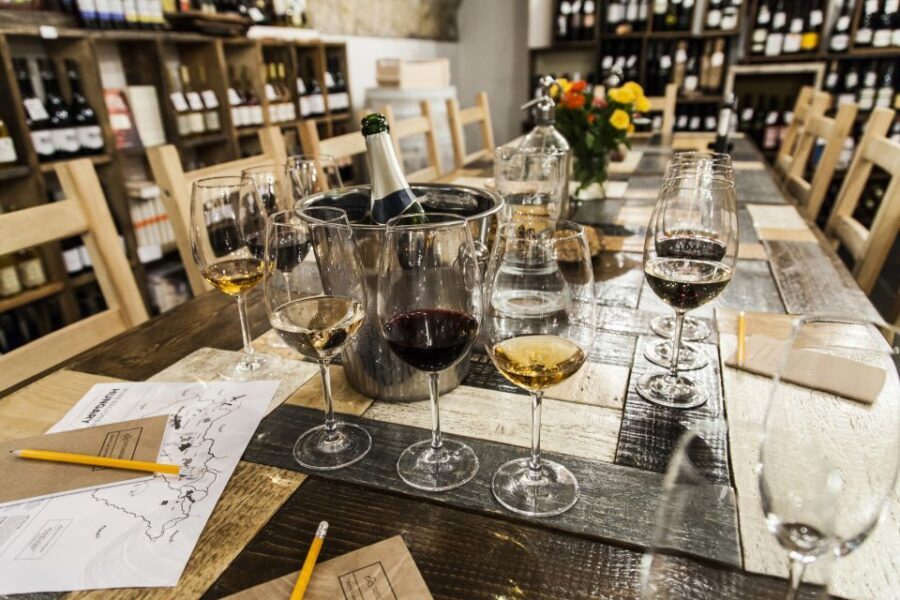
In a lot of tastings, food is an afterthought. Here, it’s part of the tasting logic.
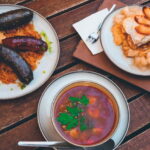
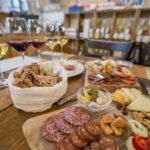
You’ll get food pairings made with local Hungarian flavors, and most setups include a strong cheese-and-charcuterie component. Guests have specifically mentioned cheese and charcuterie boards, plus tasty bread and extras like pumpkin seed oil and house-style spreads/chutney elements. The point is simple: salt, fat, and texture can either sharpen aromas or soften harsh edges.
This is why the class works even if you don’t consider yourself a wine person. You’re not only learning what Hungarian wines taste like—you’re also learning how to read your own reactions. If a white suddenly tastes brighter after a bite of cheese, that’s a lesson you’ll remember.
One other small benefit: food keeps the evening comfortable. Wine tastings can push your palate into fatigue. Eating between pours helps you stay alert enough to enjoy the entire sequence, including the sweet Tokaj aszú finish.
You can also read our reviews of more wine tours in Budapest
Wine selection and producer focus: why these 8 bottles aren’t random
The class uses a set of wines that’s chosen to represent Hungary clearly. The tasting is described as coming from wines bought directly from producers, which matters because it signals a relationship—not just a generic selection pulled together for a flight.
Most of what you taste is from smaller producers, which tends to mean a few things:
- You’re more likely to taste bottles with strong regional identity
- The guide can give more specific context about how the wine is made
- You’re not stuck with only the most obvious, easiest-to-find international-style options
This is also why you’ll often hear guests talk about surprise. Hungarian wine has a reputation for being less known than France, Spain, or Italy, and that’s exactly the point of the class: you get a structured entryway into wines you might not pick on your own.
Price and value: $65 for 8 wines, plus dinner-style extras
$65 per person for a 2-hour guided tasting is not cheap-cheap, but it’s also not “just drink eight tiny samples and go.” The value comes from what you actually receive in the package.
You get:
- A sommelier-led tasting
- 8 wines
- Mineral water
- Food pairings with local flavors
- Tasting sheets and a map of Hungarian wine regions
When you add that up, the class behaves more like a guided wine-and-food lesson than a basic tasting. In practice, many guests describe the pours as generous, and that also changes the feel of the evening: it becomes a real experience, not a budget sampler where you’re constantly waiting for the next token pour.
If your goal is to buy a bottle (or two) after you learn what you like, this format can pay off. You’ll know what styles you enjoyed and what questions to ask at the shop afterward, instead of walking in blind.
Who should book this tasting (and who might want a different approach)
This class is a great fit if you want:
- A Hungarian wine primer that’s structured and easy to follow
- A fun evening activity that still feels educational
- Wine tastings that include real food pairings
- A guide who can explain the “why” behind region and grape choices
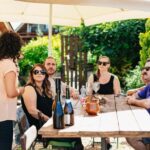
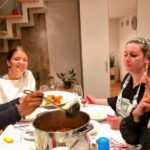
It also works well for mixed groups—couples, solo travelers, and friends—because the format gives you talking points without forcing awkward small talk. Many guests mention a friendly group energy and an easy social vibe around the table.
Here’s who should take the drawback seriously:
- If you’re allergic to explanations and prefer pure silent tasting, you may find the commentary heavy at times
- If you’re sensitive to noise, the lively atmosphere can make some details harder to catch
- If you’re the type who notices glass handling, you might prefer a clearer change between whites and reds (one suggestion was to adjust the glass-switching during the tasting)
Making the most of your night in Budapest
To get your money’s worth, go with a simple plan:
- Arrive a few minutes early so you’re settled before the first pour
- Take notes lightly at first, then more during the middle section when your palate starts to “lock in”
- If you’re overwhelmed by information, focus on one thread: region, grape type, or style. Pick the thread that matches what you want to remember later.
And pace yourself. Eight wines in two hours is fun, but it’s also a lot of alcohol. If you want to shop afterward, slow down during the later pours and lean on the food between wines.
Should you book Budapest Essentials of Hungarian Wine Tasting Class?
Yes—if you want a fast, guided way to understand Hungarian wine without needing a wine degree. The mix of eight pours, food pairings, and tasting sheets with a regional map makes this a strong introduction, especially if you’re planning to explore Budapest beyond the city center and want your next wine stop to make sense.
Skip it only if you strongly prefer quiet, purely self-guided tasting, or if you know you get mentally overloaded by lots of explanations. In that case, you might want a shorter, less talk-heavy option.
If you’re flexible and you like the idea of learning while you drink (the best kind of learning), this class is one of the more practical evenings you can add to a Budapest trip.
FAQ
How long is the Budapest Hungarian Wine Tasting Class?
The class lasts 2 hours.
How many wines are included?
You taste 8 wines during the guided tasting.
What’s included besides the wines?
It includes mineral water and food pairings with local Hungarian flavors, plus tasting sheets.
What is the meeting point address?
The meeting point is The Tasting Table Budapest, Bródy Sándor utca 9, 1088 Budapest (District VIII).
What language is the tasting hosted in?
The host or greeter is English.
What time do evening sessions run?
This tasting is available on most evenings from 6:00 PM to 8:00 PM.
Is there an age requirement?
Yes. The legal drinking age in Hungary is 18, so participants must be 18+.
How does cancellation work?
You can cancel up to 24 hours in advance for a full refund.
Does the class provide tasting sheets or materials?
Yes. You receive tasting sheets, including a map of Hungarian wine regions.