REVIEW · BUDAPEST
Budapest Essential Walk&Food tasting
Book on Viator →Operated by Budapest Tour Guy · Bookable on Viator
Budapest shines when you connect its districts. This private Budapest walk-and-food tasting links classic sights with quick, story-filled stops across town, using real local transport instead of bouncing around by car. In my kind of travel plan, what matters is flow and context, and this one comes with a guide who can handle surprises; one guide named Gábor kept the route moving even in heavy rain, and still made time for the key sights.
Two things I especially like: you get a built-in food moment (strudel and coffee) without turning your day into a food crawl, and you move through Budapest using famous systems like the Millennium underground and Metro 2. The other big plus is that most sights on the route are listed as free admission, which helps the $90.11 price feel more like paying for the brainpower and pacing than for entry fees.
One consideration: the whole plan is weather dependent, and the stops are mostly short (often 15–30 minutes). If you want long, slow time inside every building, you’ll need to add that later on your own.
In This Review
- Key points that make this tour worth your time
- Why this Budapest route works: Deák tér, Castle hill, and Danube views
- Price and value: $90.11, mostly free sights, and paid attention
- Meeting point, timing, and how the day actually feels
- Stop 1: Deák Ferenc Square to Elizabeth Square and the Opera house exteriors
- Stop 2: Heroes’ Square and City Park, plus Vajdahunyad Castle architecture
- Stop 3: Széchenyi Baths area history, then St. Stephen’s Basilica
- Stop 4: The basilica, King Stephen, and Ferenc Puskás
- Stop 5: Szabadság tér, Soviet-era leftovers, and a strudel break
- Stop 6: Kossuth tér, Hungarian Parliament, and the Shoes on the Danube Promenade
- Stop 7: Metro 2 under the Danube to Fisherman’s Bastion viewpoints
- Stop 8: Castle hill descent, funicular, and Széchenyi Chain Bridge lions
- Food and small details: strudel and coffee as the pacing tool
- Who this tour suits best (and who should skip it)
- Should you book it?
- FAQ
- How long is the Budapest Essential Walk&Food tasting?
- What does the tour cost?
- Where does the tour start?
- Where does the tour end?
- Is this tour private?
- Is there a food stop?
- Do you need tickets for the sights?
- How do you get your tickets?
- Are service animals allowed?
- What happens if the weather is poor?
Key points that make this tour worth your time
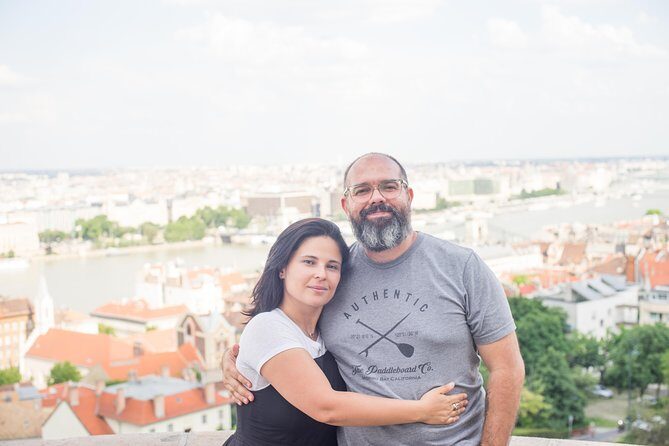
- A private route built for first-time orientation across Deák tér, the City Park area, and the Castle hill
- Historic transit choices like Europe’s first underground and Metro 2 to keep things efficient
- A real snack break with strudel and coffee, so you’re not just walking hungry
- High-impact landmarks with mostly free admissions along the way
- Rain-ready guidance (Gábor-style) that keeps the day on track
- Panoramic payoff at Fisherman’s Bastion before finishing near the Castle District
Why this Budapest route works: Deák tér, Castle hill, and Danube views
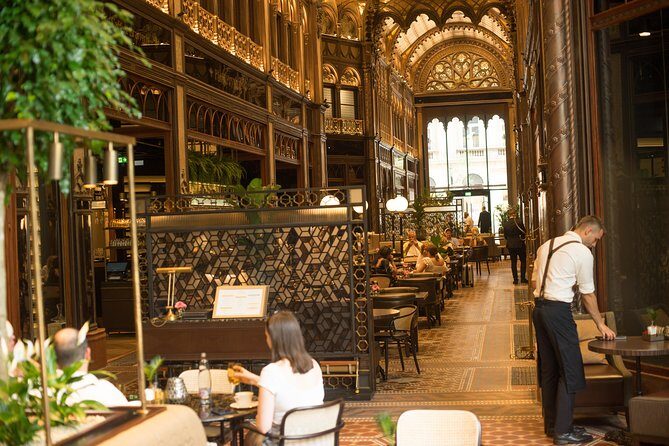
Budapest is big enough to feel overwhelming, especially when you’re trying to hit the biggest postcard spots without spending half your day in transit. This walk-and-food tasting does the smart thing: it connects neighborhoods that naturally belong together on foot, then uses classic underground/metro lines when the geography gets annoying.
The day starts at Deák Ferenc Square, one of the city’s most central junctions, at the stairs of the Lutheran church of Deák tér (Deák Ferenc tér 4, 1052). From there, you’re set up to see how Budapest’s downtown grid lines up with grand buildings like the Opera house and nearby Elizabeth Square. It’s an easy start, not a “run across town immediately” plan.
Then the route gently escalates. You go from the elegant exterior architecture in the center, to City Park and Vajdahunyad Castle, to the thermal-bath area, and then over to the Danube-side memorials and Parliament. After that comes the Castle District climb—Fisherman’s Bastion and panoramic viewpoints—ending in the Castle area near Szentháromság tér, just off Matthias Church. If you like finishing a trip day in the most scenic part of town, this arrangement helps.
You can also read our reviews of more walking tours in Budapest


Price and value: $90.11, mostly free sights, and paid attention
At $90.11 per person, you’re not paying for a stack of museum tickets. Many of the listed stops show admission ticket free, and the itinerary is built around architecture, monuments, and viewpoint moments that don’t require buying a separate entry ticket for each stop.
What you are paying for is the structure and the guide’s interpretation. The tour’s “tasting” component is not presented as an all-day food fest—it’s a planned break for strudel and coffee—so the price feels more like you’re buying time, direction, and context, not just snacks.
A good way to judge value here is to ask yourself what you’ll do if you don’t take a tour. If you walk the same route on your own, you’ll still see these places—but you’ll likely miss the story connections (why certain buildings were built the way they were, what each landmark represents in the bigger city picture, and how the day’s transit choices fit together). That’s where the tour earns its keep.
Meeting point, timing, and how the day actually feels
This is a private tour/activity, meaning only your group participates. That matters, because it usually makes the guide more flexible with pace and weather adjustments. One write-up noted that even with downpour and strong winds, the plan continued and the guide brought the pair back later in the evening.
The stated duration is 3 to 4 hours. In practice, expect “about” rather than “exact.” Another account described the tour running closer to 6 pm. When rain or crowding changes the flow, a knowledgeable guide can compress or stretch timing slightly while keeping the key stops intact.
Operating hours are listed from 3:00 PM to 9:00 PM (with validity running from late 2023 through late 2026). If you’re planning evening light photos, that’s convenient. If you want early-morning quiet, keep in mind the start window is later in the day.
Bring comfortable walking shoes. This plan includes multiple short walks plus rides on underground/metro lines and a funicular downhill toward the end.
Stop 1: Deák Ferenc Square to Elizabeth Square and the Opera house exteriors
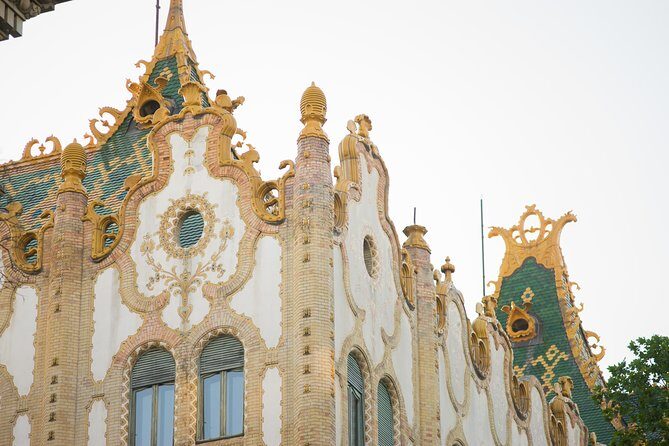
You meet at the Lutheran church steps at Deák Ferenc tér. It’s a practical anchor point—easy to find, close to transport, and central enough that you’re not wasting time “getting oriented.”
From there, you take a short walk toward Elizabeth Square and also the Opera house, focusing on what you can see from the outside. This is a classic strategy that works well on a short tour: you get the “wow factor” of landmark architecture without burning time on interior tickets or long waits.
Why I like this start: it teaches you where Budapest’s downtown energy sits. You’re shown the grid of the city’s core and the grand façade rhythm that repeats across neighborhoods. If you later return to the Opera area, you’ll know exactly what direction you’re walking and why the buildings feel so formal.
Stop 2: Heroes’ Square and City Park, plus Vajdahunyad Castle architecture
Next comes a shift in feel. You travel to Heroes’ Square and City Park, with a key transit moment: the plan includes the Millennium underground, described as Europe’s first underground. Even if you don’t care about transport history, it’s a fast, memorable way to move between sightseeing zones without feeling like you’re just hopping from one bus stop to another.
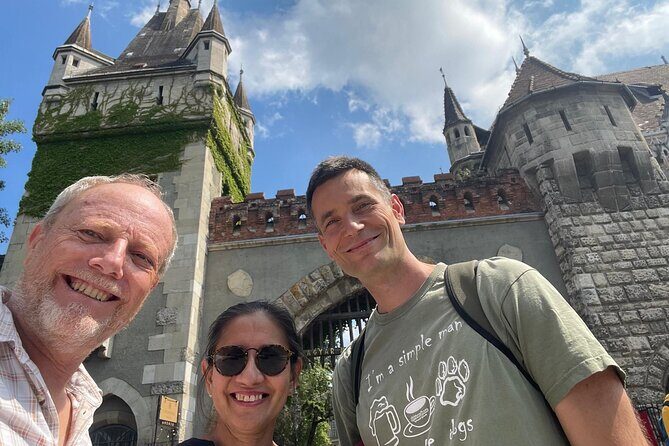
In City Park, you visit Vajdahunyad Castle and learn about its architecture. That’s a strong use of time because the castle area is visually complex and rewarding even when your stop is brief. You get to read the structure and the design choices, rather than just taking photos and moving on.
A small drawback: 30 minutes is not enough for deep museum-style exploration of a complex place. But that’s not what this tour is selling. It’s more like getting the architectural “map in your head” so you can decide later if you want a longer return.
You can also read our reviews of more food & drink experiences in Budapest




Stop 3: Széchenyi Baths area history, then St. Stephen’s Basilica
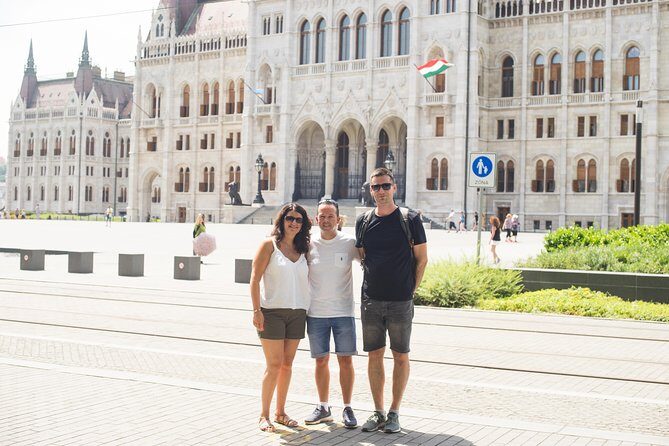
Then you’re introduced to the history of Széchenyi Baths, described as Budapest’s most visited thermal bath. Even if you don’t enter the baths, it’s a useful stop because thermal-bath Budapest is not random—it’s tied to the city’s development and public culture.
The plan says that if possible, you can take a glimpse of the outdoor pools by using a side entrance. That’s smart in a short tour format: it offers a taste of the atmosphere without forcing everyone into the same ticketed scenario.
After that, you take the underground back downtown to St. Stephen’s Basilica (Szent Istvan Bazilika). The focus here is the birth of Catholic Hungary and King Stephen, plus a look at other Hungarian figures like football legend Ferenc Puskás.
This is a stop I’d call “meaningful without being heavy.” You’re not stuck in a lecture; you’re getting story anchors that connect the architecture to people and national identity.
Stop 4: The basilica, King Stephen, and Ferenc Puskás
At St. Stephen’s Basilica, the guide’s job is to translate the site from “big church” to “why it matters.” You hear about King Stephen and the broader birth of Catholic Hungary, along with references to Hungarian history personalities such as Ferenc Puskás.
The practical benefit for you: once you know those names and why they’re brought up, your photos stop being random. You’re more likely to look up at details and notice symbolism instead of just aiming the camera at the tallest thing.
Time is listed around 15 minutes for this stop, so treat it as the “starter course.” You’ll still have plenty of time later in your own schedule to go deeper if you want.
Stop 5: Szabadság tér, Soviet-era leftovers, and a strudel break
Before the Danube-side monuments, there’s a short break at a strudel house with strudel and coffee. This is where the “food” part earns its spot. It also helps reset your energy, since the rest of the route climbs and transitions through some of Budapest’s busiest architectural zones.
Then you walk toward the bank district and arrive at Szabadság tér (Freedom Square). The tour frames it through specific sights: the last remaining Soviet statue, the American embassy, and the memorial of the German occupation.
Even when you don’t fully know the timeline of twentieth-century Central European politics, this kind of stop works. Seeing these landmarks in the same physical neighborhood forces the city’s twentieth-century story into focus. You start connecting buildings to the political shifts that shaped the street level you’re standing on.
Drawback to keep in mind: like many “essential” tours, time here is tight (about 20 minutes). You’ll get the names and the themes, but not long explanations.
Stop 6: Kossuth tér, Hungarian Parliament, and the Shoes on the Danube Promenade
Next you reach Kossuth tér to observe the Hungarian Parliament building. The tour focuses on architecture and both past and recent issues tied to the building and its role.
Right near this area, you visit Shoes on the Danube Promenade. It’s a strong stop for a short tour because it adds an emotional, human scale to what can otherwise be a strict architectural day.
This is also one of those moments where a guide’s framing really matters. You don’t want to just see a memorial; you want to understand why it’s positioned there and what you’re meant to notice when you stand on the riverfront.
Time is about 20 minutes, so plan your photo angles quickly. If you’re picky about shots, do the wide view first (parliament and river line), then return for closer angles if there’s room.
Stop 7: Metro 2 under the Danube to Fisherman’s Bastion viewpoints
After Parliament, the plan uses Metro 2—the red line—under the Danube to get you to the top of Castle hill. That transit choice is practical and also fun: it’s one more way the day feels like Budapest rather than generic sightseeing.
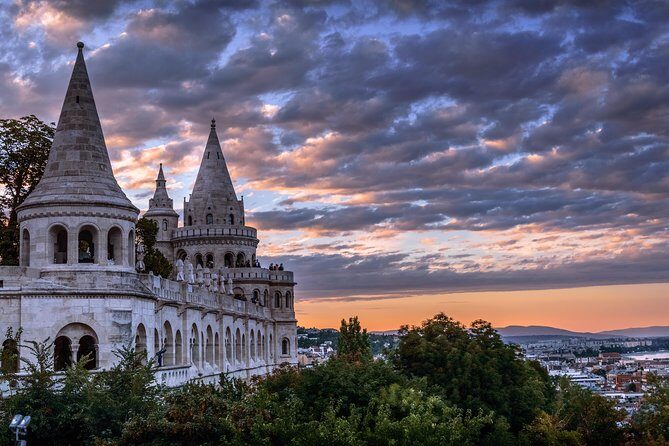
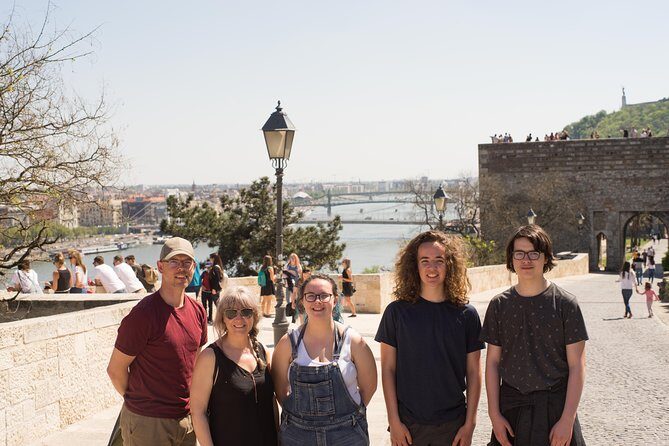
At Castle hill, you start your walk at Fisherman’s Bastion, with a panoramic view from the terrace. From there, the route continues toward the Royal Palace area.
This is the part of the tour that many people remember most. The views give you a mental “final image” of Budapest: the river bends, bridges align, and the city’s layout starts making sense as one system instead of disconnected stops.
Because the time listed for this segment is about 30 minutes, it’s ideal as a viewpoint circuit. If you want longer at the terrace or more time wandering palace streets, you can always extend your evening after the tour ends.
Stop 8: Castle hill descent, funicular, and Széchenyi Chain Bridge lions
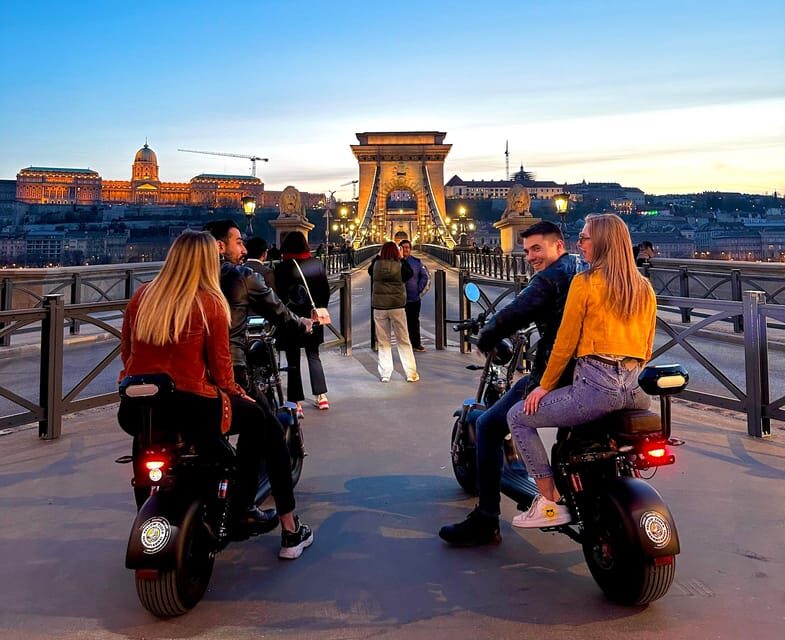
The day closes with a return toward the river via the Funicular along Castle hill. From there, you hear stories about the Széchenyi Chain Bridge, including tales about the lions.
This is a nice way to finish because you’re not just ending with a “last stop.” You’re ending with a sense of movement—from viewpoint heights down toward the iconic bridge profile.
One thing to note based on the route details: the listed end location references Széchenyi Chain Bridge, but the plan also says the walk ends in the Castle district near Szentháromság tér, just off Matthias Church. In plain terms, expect the finish to keep you close to the Castle District, so you can keep exploring on your own afterward.
Food and small details: strudel and coffee as the pacing tool
The strudel-and-coffee break might look small on paper, but it’s a smart design element. In a short walking tour, energy crashes happen. By scheduling a taste stop around the Freedom Square area—when you’ve already covered downtown architecture and before the Parliament riverfront—the day stays comfortable instead of turning into a stressed march.
In one detailed account, the guide Gábor took the pair to a Strudel restaurant where they tried poppy seed strudel, described as superb. That kind of “food choice” matters because you’re not just eating something convenient; you’re eating something you’d actually want to recommend after.
If you have dietary restrictions, the tour data doesn’t spell them out. Your best move is to ask ahead so the strudel break fits your needs.
Who this tour suits best (and who should skip it)
This works well if you:
- want an organized Budapest orientation in a few hours
- like mixing landmark architecture with transit history
- want a private guide and faster pacing without skipping the big names
- prefer mostly free-admission stops on an afternoon/evening schedule
- enjoy viewpoints and memorials without spending all day in lines
You might skip it (or add extra personal time) if you:
- want lengthy time inside major interiors (this route is built for short, high-value stops)
- are very sensitive to walking and weather swings
- expect a long, guided food sampling menu (the plan highlights strudel and coffee, not a multi-stop tasting marathon)
Should you book it?
If you want a smart, story-led way to see Budapest’s core icons—Deák tér, Heroes’ Square, Széchenyi area, St. Stephen’s Basilica, Freedom Square, Parliament and the Danube promenade, then Fisherman’s Bastion and Chain Bridge—this is a strong pick. The private format, the free-admission framing, and the guide’s ability to keep the plan moving (even in rough weather) make it feel like paying for direction, not just sightseeing.
Book it if you’re okay with a tight schedule and you’d rather come away with a clear city picture than spend hours in one place. Pass or plan extra time on your own if you want slow wandering and deep interior time for every stop.
FAQ
How long is the Budapest Essential Walk&Food tasting?
It runs about 3 to 4 hours.
What does the tour cost?
The price is $90.11 per person.
Where does the tour start?
The meeting point is the Lutheran Church of Ferenc Deák Square, Deák Ferenc tér 4, 1052 Hungary.
Where does the tour end?
The route ends near Széchenyi Chain Bridge area, and the plan also states the walk finishes in the Castle District near Szentháromság tér, just off Matthias Church.
Is this tour private?
Yes. It’s a private tour/activity, so only your group participates.
Is there a food stop?
Yes. The itinerary includes a break at a strudel house for strudel and coffee.
Do you need tickets for the sights?
The stops are listed with admission tickets as free, including places like Deák Ferenc Square meeting point walk, Heroes’ Square area, and St. Stephen’s Basilica. The tour also notes a possible side entrance glimpse at Széchenyi Baths pools.
How do you get your tickets?
You receive a mobile ticket.
Are service animals allowed?
Yes, service animals are allowed.
What happens if the weather is poor?
The experience requires good weather. If it’s canceled due to poor weather, you’ll be offered a different date or a full refund.