REVIEW · BUDAPEST
Communism in Hungary with a Historian
Book on Viator →Operated by Budapest Explorers · Bookable on Viator
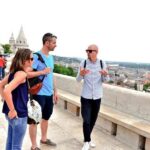
One square at a time, the Cold War shows up. This guided history walk links Stalin-era landmarks to the everyday pressures of life in Hungary, with personal family stories that turn big politics into street-level reality. I like that it keeps the pace human—short stops, clear context, and time to ask questions—while still covering major sites.
Two things I really like: you get an intimate group size (max 10), and you finish at a communist-style café with coffee included, so the history doesn’t feel like it ends when the tour does. A small consideration: you’ll mostly see big places like St. Stephen’s Basilica and Parliament from the outside, with admission not included for those stops.
In This Review
- Key highlights worth your time
- Meeting at Erzsébet tér: how the tour starts and moves
- Elizabeth Square (Stalin Square): monuments with receipts
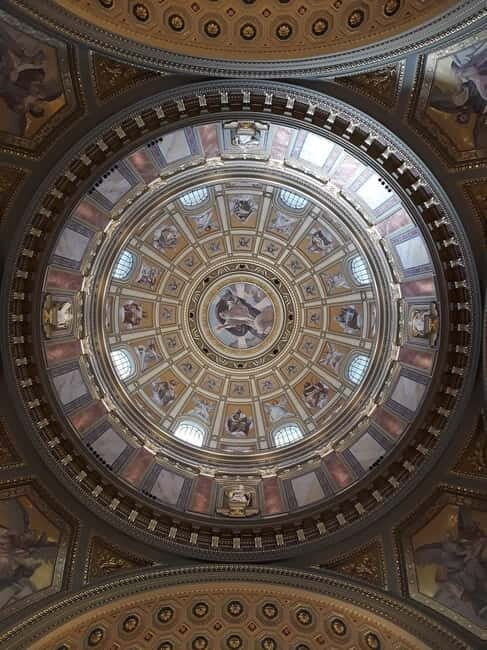
- St. Stephen’s Basilica from the outside: where faith had to negotiate
- Szabadság tér: remnants, statues, embassies, and a bunker glimpse
- Parliament Square and 1956’s Bloody Thursday: politics made concrete
- Bambi Café and coffee: why the ending feels like real Budapest
- What makes the guides different (and why that boosts value)
- Price and timing: is $59.13 worth it?
- Who should book this communist past walking tour
- Should you book it?
- FAQ
- How long is the tour?
- Where does the tour start and end?
- Is transportation included?
- Is coffee included?
- Is the tour in English and what group size is it?
- Can I cancel for a refund?
Key highlights worth your time
- Small-group format (up to 10) keeps the conversation going and questions fast
- Metro ride with tickets included helps you cover ground without fuss
- Elizabeth Square to Szabadság tér traces how the communist era left physical marks
- 1956 context at Kossuth Square in front of Parliament ties monuments to real events
- Family stories make nationalization, repression, and survival feel personal
- Bambi Café finish with coffee included gives you a relaxed historical bookend
Meeting at Erzsébet tér: how the tour starts and moves
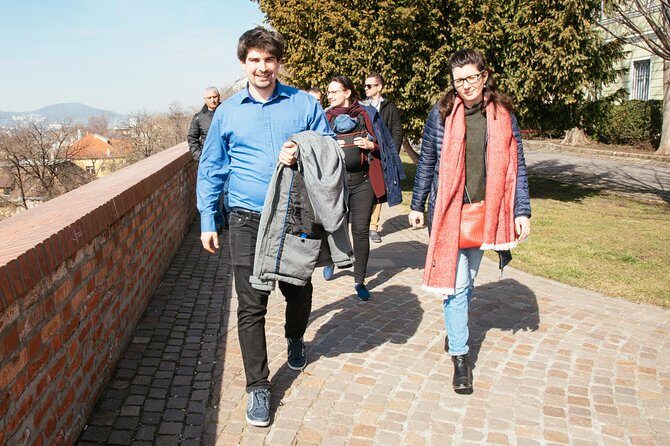
The tour meets near Erzsébet tér, starting at the Kempinski Hotel Corvinus Budapest (Erzsébet tér 7–8). The first stop is in the square area, so you’ll quickly get your bearings before moving along the route. It’s scheduled for 2:00 pm, and it runs about 3 hours in total—long enough to connect ideas, not so long that you feel like you’re speed-walking your way through a textbook.
One practical win: you travel by metro with tickets included. That matters in Budapest, because distances add up fast when you’re also stopping for explanations and photos. The metro also helps the day feel like a real local itinerary rather than a string of “get here, wait, go there” moments.
The tour is offered in English, and you’ll get a mobile ticket. You also have a capped group size—max 10 travelers—which is one of the reasons the storytelling can stay detailed without turning into a lecture.
You can also read our reviews of more tours and experiences in Budapest.


Elizabeth Square (Stalin Square): monuments with receipts
Your first history anchor is Elizabeth Square, which ties directly to the communist era’s monument-making. The tour frames the area as more than a scenic intersection: it’s treated like a message board. You’ll hear stories about what changed, what was celebrated, and how public space was used to shape the public’s sense of power.
What makes this stop work is the way the tour connects metal and stone to human consequences. Instead of only naming years and leaders, it points out how symbols can do political labor—teaching people what to fear, what to admire, and what to ignore. It’s the kind of “look closer” lesson that makes Budapest feel sharper after you leave.
St. Stephen’s Basilica from the outside: where faith had to negotiate
Next comes St. Stephen’s Basilica (Szent István Bazilika). You’ll walk by and see it from the outside, not as a sightseeing checklist stop. The focus is religious life during Communism—how churches and believers survived when the state wanted control.
This is also where the tour’s storytelling style shows up: family anecdotes get folded into the larger historical picture. In one of the most repeated themes from the guides’ personal stories, the church didn’t just wait out pressure—it found ways to work around it, including forms of cooperation framed as survival.
A quick consideration: the stop notes that the admission ticket is not included. Since the tour is built around explanation and exterior views, don’t count on a full inside visit here. If you want to go in, that’s easy to add later on your own time.
Szabadság tér: remnants, statues, embassies, and a bunker glimpse
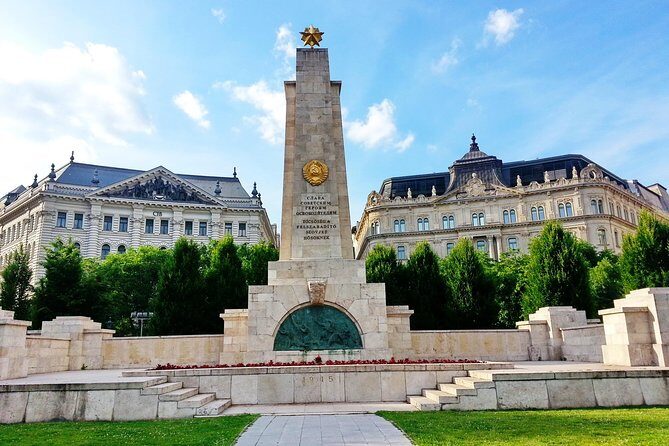
Then you head to Szabadság tér, where the tour leans into “you can still see it” history. This part is about leftovers: memorials, statues, and embassies that carry the mood of the system that shaped them. Even better, you’ll get mention of part of a bunker from the outside, which is the kind of detail that makes the Cold War feel less abstract.
Here’s why this stop is so valuable. When you hear about the communist period only in museums, it can feel like a finished chapter. At Szabadság tér, you’re reading the city’s body language. You start noticing how political eras try to stay permanently visible—through architecture, layout, and what gets preserved.
Also, the pacing gives you a breath. The stop is long enough (about 45 minutes) to take in the sights and listen without feeling rushed.
Parliament Square and 1956’s Bloody Thursday: politics made concrete
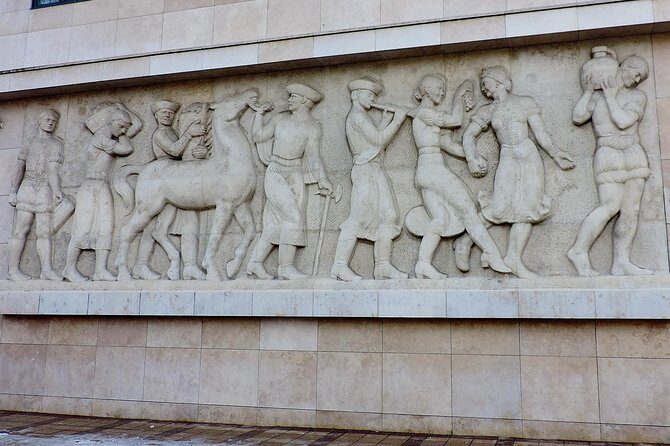
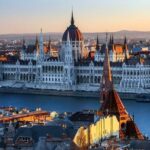
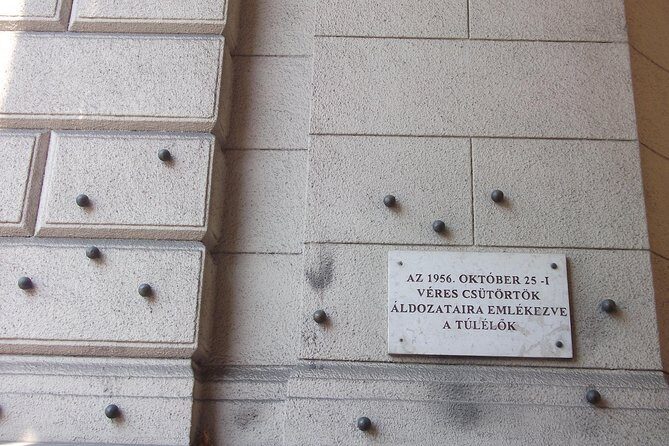
The walk finishes with a big, high-drama set piece: the Hungarian Parliament Building area. The focus is one of the defining moments of the 1956 revolution, specifically the event known as Bloody Thursday, tied to Kossuth Square in front of the Parliament.
This is where the tour helps you connect dots that many first-time visitors miss. The Parliament looks like a grand civic monument, but the tour treats it as part of a living conflict—the kind where streets, crowds, and buildings become part of the same story.
If you’re the type who likes your history with names and cause-and-effect, this portion is built for you. If you’re more into atmosphere, it still works, because the guide’s job is to translate politics into what you’re seeing on the ground.
As with St. Stephen’s Basilica, the stop indicates admission is not included, and the core experience is guided context and exterior viewing.

Bambi Café and coffee: why the ending feels like real Budapest
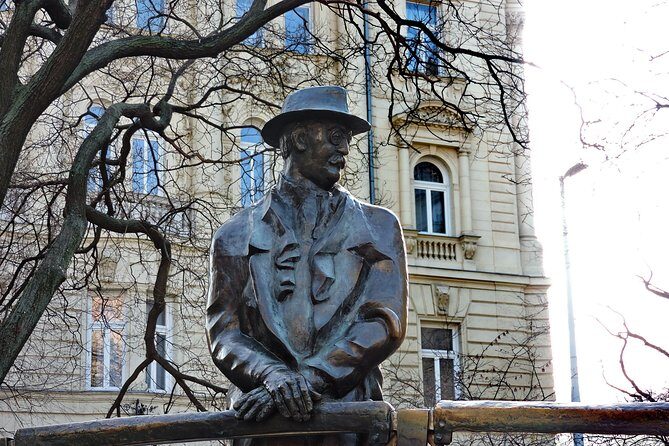
The last move is to Bambi Café (Frankel Leó út 2–4). The tour usually ends on the Buda side near the center and Margaret Bridge. On colder or wet days, it often ends on the Pest side closer to the center near where you began—same spirit, just a smarter weather plan.
This matters because it keeps the “finish” from feeling random. You’re not sprinting across town at the end. You’re settling into a place where you can talk for a minute, process what you just learned, and ask a final question.
The café stop is described as communist-style, and coffee is included. One small detail I appreciate: a guide-led ending like this turns the tour into a full arc. You start with symbols, move through oppression and survival, and then end with a simple human ritual—coffee—where the story can breathe.
There’s also a bit of living history here. The Bambi spot is described as having opened in 1961 and still feeling very similar, which fits the tour’s theme: even after political changes, certain places keep carrying the old mood.
What makes the guides different (and why that boosts value)
The biggest reason this tour lands at 4.9 stars is how the guides tell the story. People highlight the fact that the experience doesn’t feel like a generic script. Guides such as Judit, Raymond, Gabriel (Gábor in Hungarian), András, Virág, Greg, and Daniel (names pulled from different guide experiences) use a mix of researched context and personal family memories.
Those personal stories are what bring the Cold War down to size. You’ll hear about things like nationalization and the way businesses and apartments were taken over or reassigned. You’ll also get accounts of how people coped with fear—particularly the constant sense that someone could report you to the party. And religion comes up again, not as a side topic, but as a survival strategy.
Balanced is another theme. One guide approach emphasizes honesty and even-handedness, so you don’t feel pushed into a single emotional lane. Instead, you’re given the framework to understand how people lived through pressure, then you decide what you think about it.
This balance, plus the small group size, helps if you like to ask questions. The tour format is built for interaction, not just listening.
Price and timing: is $59.13 worth it?
At $59.13 per person for about 3 hours, this tour competes with plenty of “walk-and-point” options. The difference is what you’re actually buying.
You’re getting:
- A capped group (max 10), which improves the quality of the conversation
- Metro transport included, saving both time and extra cost
- Coffee included at the café stop
- A historian-style narrative that focuses on how communist systems affected daily life, not only leaders and dates
If you’ve visited Budapest before and feel like you’ve already taken the postcard photos, this is the kind of tour that adds a new layer. If it’s your first visit and you want something more meaningful than a standard overview, it also works—because the route targets the era’s strongest visual fingerprints.
One timing note: the tour is booked on average about 23 days in advance, so if you travel in busier periods, it’s smart to lock in a slot earlier.
Who should book this communist past walking tour
I’d put this on your list if:
- You like history that’s connected to real places
- You’re curious about WWII and the Cold War era effects in Hungary
- You want stories about everyday life under Communism, not only political slogans
- You prefer a guide who invites questions and keeps the group small
It may feel like a mismatch if you’re specifically searching for synagogue visits, because this tour is focused on the communist/Cold War angle and does not include synagogue stops. Also, if you expect lots of inside visits of major landmarks, the exterior focus at some stops might not match your expectations.
Should you book it?
Yes—if you want Budapest history with consequences. The combination of small-group attention, metro included, and a coffee finish makes it feel complete, not rushed. Most importantly, the guides’ personal storytelling—whether you meet Judit, Raymond, Gábor, András, Virág, Greg, or Daniel—turns the communist era from a set of dates into something you can picture.
If you’re okay with mostly outside viewing and you want context you can carry around the city, book this. It’s one of those tours that makes you look at monuments again, but this time with questions in your head instead of just captions.
FAQ
How long is the tour?
It runs for about 3 hours.
Where does the tour start and end?
It starts at the Kempinski Hotel Corvinus Budapest near Erzsébet tér, and it usually ends at Bambi Café near Margaret Bridge on the Buda side. On colder or wet days, it often ends on the Pest side closer to where you began.
Is transportation included?
Yes. You travel by metro, and metro tickets are included.
Is coffee included?
Yes. The tour includes a communist-style café stop with coffee included.
Is the tour in English and what group size is it?
It’s offered in English and is capped at a maximum of 10 travelers.
Can I cancel for a refund?
You can cancel for a full refund if you cancel at least 24 hours before the experience’s start time.