REVIEW · BUDAPEST
Budapest: Jewish Cuisine and Culture Walk
Book on GetYourGuide →Operated by Taste Hungary · Bookable on GetYourGuide
Food tells history fast. This 4-hour walk through Budapest’s Jewish quarter pairs synagogue sights with Hungarian-Jewish tastings, so you get both stories and something to eat. One thing to keep in mind: you’re walking a lot, and on some days you may end up with fewer tasting stops than the advertised 4–6.
I also like the way the guide ties World War II ghetto history to what you see today—murals, design shops, and cafés in the seventh district. In a small group (max 8), guides such as Endre or Georg can adjust the pace when someone needs it, which makes the whole experience feel less rushed.
In This Review
- Key Reasons This Walk Works
- Why This Jewish Quarter Walk Feels Different When Food Is Included
- Meeting Point at Madách Imre Tér: Start Easy, Then Walk Smart
- From WWII Ghetto Walls to Today’s Seventh District: What You’ll See on the Streets
- Synagogue Stops: Dohány Street and the Four-Site Focus
- The Food Program: Expect Jewish-Hungarian Classics (and Big Lunch Energy)
- Pacing and Group Size: Small, Focused, and Sometimes Adjusted
- Price and Value: Is $155 Worth It for Four Hours?
- Who Should Book This Tour (and Who Should Skip It)
- Should You Book Budapest: Jewish Cuisine and Culture Walk?
- FAQ
- How long is the Budapest Jewish Cuisine and Culture Walk?
- What’s included in the tour?
- How big is the group?
- Will I see synagogues during the tour?
- What kind of food should I expect?
- Is the tour suitable for vegans?
- Is there a cancellation option?
Key Reasons This Walk Works
- Full lunch plus multiple tastings makes it feel like a meal plan, not just sightseeing.
- Dohány Street Synagogue and other Jewish sites give you real context as you walk.
- 7th district history on the street level connects old ghetto boundaries to today’s neighborhood energy.
- Jewish-Hungarian classics change by day, so you get variety across specialties.
- Small-group feel means you get better attention and smoother pacing.
Why This Jewish Quarter Walk Feels Different When Food Is Included
Budapest’s seventh district (the Jewish quarter) is one of those places where the layers show up fast: older religious landmarks, later neighborhood changes, and today’s art and café culture all mixed together on the same streets. This tour is built around that mix, using food as your map.
I like that the experience doesn’t treat cuisine as an afterthought. It’s a theme. You’ll learn about community life and forced ghetto boundaries during the war, and then you’ll eat foods that reflect Jewish-Hungarian tradition and everyday cooking.
The big takeaway: you’ll come away with a stronger sense of how history shapes meals, and how meals carry memory.
You can also read our reviews of more walking tours in Budapest



Meeting Point at Madách Imre Tér: Start Easy, Then Walk Smart
You meet at Madách Imre Tér (1075 Budapest) near the statue of Sisi, with your guide holding a tote bag with the local operator logo. Getting there is usually straightforward because you can connect via Deák Tér (M1/M2/M3) or Astoria (M2), or take tram 47 or 49.
The practical mindset for this tour is simple: wear comfortable shoes and expect walking. It’s not a sit-down, stop-and-go tram crawl. Even though there are plenty of eating breaks, you’ll still cover ground on foot.
If you’re planning this day, I’d pair it with a lighter evening afterward. Your schedule can stay flexible because the tour runs most days (rain or shine), but you do want your legs working.
From WWII Ghetto Walls to Today’s Seventh District: What You’ll See on the Streets
This is a history-and-food walk, focused on the seventh district’s transformation over time. Before World War II, it was home to one of Europe’s largest Jewish communities. Over time, that neighborhood turned into a controlled ghetto, with walls set up and Jews herded into these streets during the war. Many buildings were later demolished, which changed the feel of the area.
Then you look around and see something different: murals, street art, and modern cafés and design shops. The tour doesn’t pretend the past is gone. It helps you read the neighborhood like a timeline.
I find that approach especially useful in Budapest. You can walk past impressive buildings and art without really knowing what changed or why. Here, the guide’s job is to connect the dots—between the forced limits of the ghetto and the later rebuilding and cultural shifts you see today.
Synagogue Stops: Dohány Street and the Four-Site Focus
A major draw is the synagogue time. The tour is designed to include Jewish sites as you walk, with a specific emphasis on the district’s synagogues. You’ll see the famous Dohány Street Synagogue, plus other synagogue locations connected to the area’s Jewish life.
Here’s the important practical note: you won’t be admitted to synagogues on Saturdays. So if your trip includes a Saturday, plan around that reality. Even then, the walk still focuses on the neighborhood’s story and the sites you pass.
Also, the tour mentions skipping the ticket line, which is handy when you’re trying to fit multiple stops into a tight four-hour window. You’ll spend your time where it matters rather than waiting around.
The Food Program: Expect Jewish-Hungarian Classics (and Big Lunch Energy)
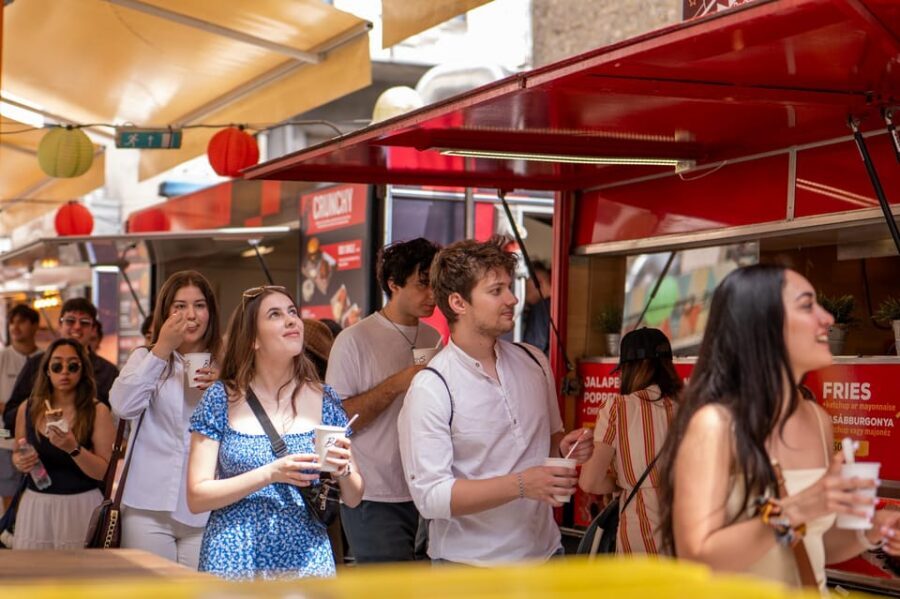
The tour’s promise is straightforward: come hungry. You’ll have food and drink tastings at 4–6 venues, plus a full Jewish lunch. Some of the specialties are listed as possibilities depending on the day, so think of the menu as a set of options rather than a fixed order.
Possible tasting items include classics such as:
- sausages
- matzo ball soup
- gefilte fish
- Jewish eggs
- cholent
- roasted goose
- flódni
If you’re used to Hungarian food but not Jewish-Hungarian versions, this is a smart way to broaden your palate. Hungary has plenty of paprika-forward comfort food, but Jewish cooking often shows different textures and traditions—soups that stick to cold-weather memory, braises built for slow, hearty warmth, and pastries like flódni that you’ll likely remember after the walk.
One practical expectation to set: a small number of people have experienced the tour as having fewer tasting stops than expected. So if you’re the type who likes a strict checklist, keep your mindset flexible. You still end up with a full lunch and multiple tastings, but the exact number of venues can vary.
And if you’re vegan: this tour is not suitable for vegans. That’s worth planning around before you book.






Pacing and Group Size: Small, Focused, and Sometimes Adjusted
With a maximum of 8 participants, this isn’t a crowd-management exercise. It’s meant to be conversational. You’ll have a food-specialized guide who’s well-versed in Jewish history, and that matters because the tastings come with context.
Pacing is usually fast-moving for a walking tour—there are multiple stops and you’ll cover some distance. The upside is that you don’t spend the afternoon in one location. The downside is that you need decent mobility.
There’s also a key note: the tour isn’t wheelchair accessible. If you have mobility concerns, you’ll want to think about stairs, street surfaces, and how long you’ll be standing.
That said, guides have shown flexibility when someone in the group needed a slower pace, which suggests the tour can adjust when needed—just don’t count on a fully sedentary experience.
Price and Value: Is $155 Worth It for Four Hours?
At $155 per person for about 4 hours, you’re paying for three things: guidance, access to important sites, and, most importantly, the food.
A lot of Budapest food tours give you a few bites and call it lunch. This one includes a full Jewish lunch and tastings at multiple venues. If you’re the kind of person who hates guessing menus and wants someone to guide your choices, this pricing starts to look like good value.
You’re also getting the history connection. Knowing why the seventh district developed the way it did—and how the war-era ghetto shaped lives—adds weight to what you eat. The food becomes more than flavor; it becomes a lens.
Where value can feel different is if you wanted a very rigid number of tastings. If you’re hunting exactly 4–6 venues every time and don’t like variability, that’s the main tradeoff. But for most people, the combination of lunch volume, synagogue focus, and curated stops is the deal.
Who Should Book This Tour (and Who Should Skip It)
This is a great fit if you:
- want food tied to Jewish-Hungarian culture, not just generic local eats
- care about seeing Dohány Street Synagogue and learning how this neighborhood evolved
- prefer a small group with a guide who can steer conversation
You might choose differently if you:
- use a wheelchair or need fully accessible routes (this tour isn’t wheelchair accessible)
- follow a vegan diet (it’s not suitable for vegans)
- need a very relaxed, minimal-walking experience
If your goal is to understand Budapest’s Jewish quarter in one afternoon, this tour does that job efficiently.
Should You Book Budapest: Jewish Cuisine and Culture Walk?
I’d book it if you want a four-hour plan that mixes streets, synagogues, and a real meal. The tour is especially strong for people who like history when it’s anchored in daily life—like food you can actually taste.
Before you book, set three expectations:
- Comfortable shoes matter because you’ll walk enough to earn the lunch.
- Saturday synagogue admission isn’t available, so plan around your weekday.
- Menu specifics can vary by day, so be flexible about the exact tasting count and what you get.
If that sounds like your travel style—curious, hungry, and ready to connect the past to what you’re seeing right now—this is a very solid way to spend your time in Budapest’s seventh district.
FAQ
How long is the Budapest Jewish Cuisine and Culture Walk?
It lasts 4 hours.
What’s included in the tour?
You get a food-specialized guide, walking in the seventh district with stops at interesting venues, food and drink tastings at 4–6 venues, and a full Jewish lunch.
How big is the group?
It’s a small group limited to 8 participants (minimum of 2 guests).
Will I see synagogues during the tour?
The tour is designed to include synagogue sites, including the Dohány Street Synagogue, but you will not be admitted to synagogues on Saturdays.
What kind of food should I expect?
You’ll have tastings of Jewish-Hungarian specialties, which can include items such as sausages, matzo ball soup, gefilte fish, Jewish eggs, cholent, roasted goose, and flódni, depending on the day.
Is the tour suitable for vegans?
No. The tour is not suitable for vegans.
Is there a cancellation option?
Yes. You have free cancellation up to 24 hours in advance for a full refund.