REVIEW · BUDAPEST
Memento Park Entrance Ticket
Book on Viator →Operated by Memento Park · Bookable on Viator
Soviet statues in the open air? It’s real, and it’s worth it. I like that this visit gives you 42 Communist-era sculptures in one place, so you can connect the dots fast. I also love the exact details, like the 6-meter Liberation Army Soldier with a hammer-and-sickle flag and a gun-shaped prop hanging from his neck. One thing to consider: if you want a polished, light-and-funny stop, this is heavier, history-forward viewing.
You’ll be walking around outdoors for anywhere from 45 minutes to 2.5 hours, depending on how closely you read the forms and symbolism. The ticket is straightforward—admission is included, and it’s delivered as a mobile ticket. The main drawback is timing: the park closes at 4:00 PM, so you’ll want to plan your day so you’re not rushing at the end.
If you’re the type who stops to study propaganda style, political theater, and how power tried to look permanent, you’ll likely enjoy it. If you’re short on time, don’t underestimate the reading/looking time—this place is meant to be stared at.
In This Review
- Key highlights worth clocking before you go
- Why this ticket feels like a smart add-on from Budapest
- Stop 1: Memento Park (the whole show, in one outdoor loop)
- What to expect while you walk
- A practical note: wear walking-friendly shoes
- The Communist-era figures: names you’ll actually recognize
- Hungarians, the Soviets, and the allegory theme: Friendship and Liberation
- The Liberation Army Soldier: the statue people keep returning to
- Timing your visit: how long to plan and when to arrive
- Price and value: why $11.41 can be a bargain (if it matches your interests)
- Who should book this ticket?
- Should you book? My honest take
- FAQ
- How much does the Memento Park entrance ticket cost?
- How long should I plan for Memento Park?
- What are the opening hours?
- Is the ticket mobile?
- What ticket includes admission?
- Where is the meeting point?
- What is the cancellation policy?
Key highlights worth clocking before you go
- 42 Communist-era pieces (1945–1989) grouped in a single outdoor visit
- Memento Park’s “Hungarian-Soviet Friendship” and “Liberation” themes on display through large monuments
- Lenin, Marx, Engels, Béla Kun, and more among the major figures
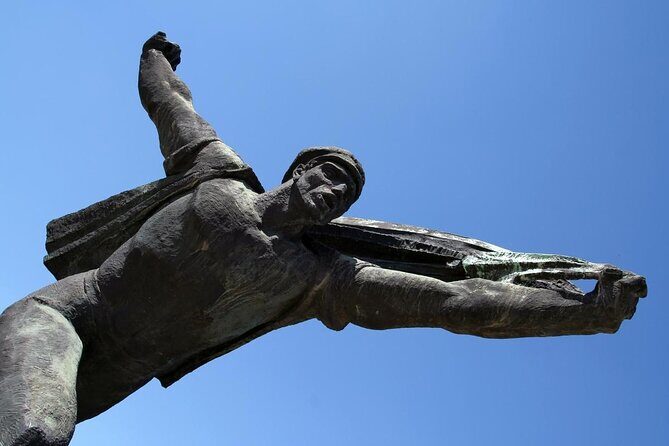
- The Liberation Army Soldier statue people come back to, with its distinct weapon-like prop and flag
- A Gellért Hill connection: this Soviet soldier statue once stood on top of Gellért Hill
- Mobile ticket entry plus straightforward self-guided pacing
Why this ticket feels like a smart add-on from Budapest
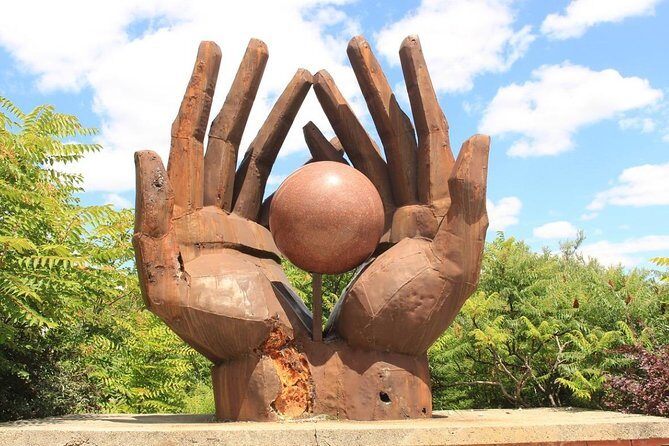
Memento Park sits about a 20-minute drive outside Budapest, which matters more than you’d think. You get a real contrast from the city’s classic sights: fewer postcards, more questions. For the price—$11.41 per person—you’re not buying a theme-park experience. You’re buying time with large-scale political sculpture you can study up close.
The value is in scale and focus. A typical city stop might scatter you across multiple streets and small artifacts. Here, you’re walking through a concentration of Communist-era messaging: allegory, hero figures, and militarized symbolism. If you’re curious about how regimes used art to tell a story, this one ticket covers a lot of ground.
The other reason I like this experience: it’s flexible. Your visit can be 45 minutes if you’re moving quickly, or closer to 2–2.5 hours if you like to look slowly. That’s rare. Many attractions pull you into a rigid schedule. This one lets you set the pace.
A few more Budapest tours and experiences worth a look



Stop 1: Memento Park (the whole show, in one outdoor loop)
This visit is centered on one main stop: Memento Park. Plan on walking through an outdoor display space where the sculptures are arranged as a kind of visual timeline and political gallery. There isn’t a second “must-see” location to chase. The park is the point.
What you’ll see is pretty specific. The park displays 42 pieces from the Communist era between 1945 and 1989, including allegorical monuments such as Hungarian-Soviet Friendship and Liberation. So you’re not only looking at individual famous names—you’re also looking at the bigger message those names were meant to support.
As you move around, you’ll notice the style of propaganda art: giant bodies, strong facial expressions, and objects meant to feel permanent. Some of the statues are “heroic” in a way that’s hard to ignore. Others are more symbolic, designed like pieces of political theater. Even if you don’t read every reference, you’ll feel the intention.
What to expect while you walk
- You’ll spend most of your time looking at large figures and monuments placed throughout the park.
- You’ll likely pause often, because these sculptures come with recognizable faces and strong symbolism.
- If you enjoy photography, this is a great place to take your time—many statues are tall and meant to be seen from different angles.
A practical note: wear walking-friendly shoes
You’re in a park setting, so expect outdoor walking and uneven viewing distances. Comfortable shoes help. Also, I’d plan to stay near the closing time unless you’re confident you can do the full circuit quickly.
The Communist-era figures: names you’ll actually recognize
One reason people remember Memento Park is the list of major personalities you can spot right away. You’re looking at statues of famous figures tied to Communist ideology and the labor movement, along with soldiers and other symbolic “heroes.”
Among the names displayed are Lenin, Marx, Engels, Dimitrov, Captain Ostapenko, and Béla Kun. Seeing them all in one place changes how you read each figure. Instead of one statue isolated in a city setting, you get a clustered “system”—a cast of characters used to build authority.
Even if you only know these names in passing, they’re still useful here because the park’s scale forces you to pay attention. The size and placement make it hard to treat them like normal monuments. They feel like they were designed to dominate a person’s attention, not quietly blend in.
If you like history that’s more than dates and wars, this is the kind of experience where political ideas become visible shapes. You’ll also get a sense of how different roles—ideologue, leader, soldier, worker-symbol—were combined into one narrative.





Hungarians, the Soviets, and the allegory theme: Friendship and Liberation
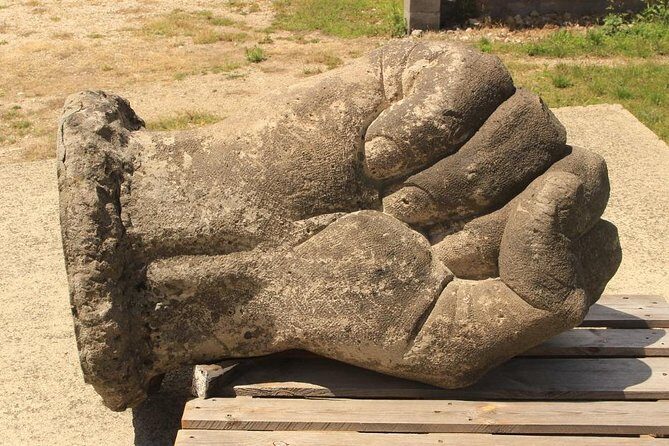
The park doesn’t just show individuals. It also leans into the big allegorical monuments. Two recurring themes are Hungarian-Soviet Friendship and Liberation.
That matters because it shows you the “packaging” of ideology. In other words, it’s not only about who was in power. It’s about how power tried to justify itself visually—through relationships, promises, and symbolism.
When you’re looking at big allegory, you’re usually seeing simplified stories: the friendly alliance, the moral justification of domination, and the idea that one group “liberated” another. Even if you disagree with the politics behind it, it’s useful to recognize how these themes were built to feel emotionally correct.
This is one of the best parts of the visit if you like decoding art. The sculptures push propaganda logic into physical form: large scale, strong iconography, and a cast of recognizable figures that reinforce one storyline.
The Liberation Army Soldier: the statue people keep returning to
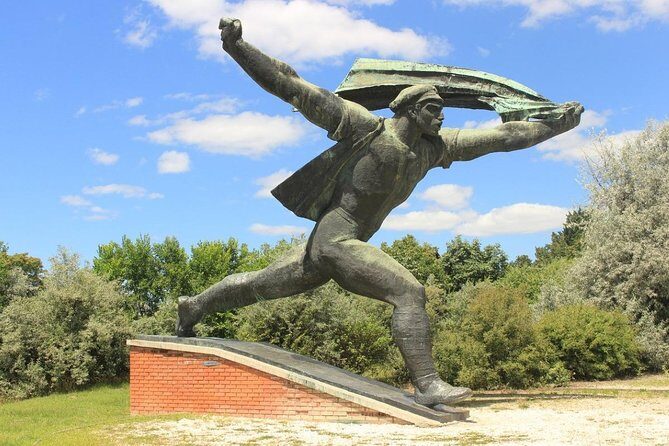
If you want one moment that anchors the entire park, focus on the Liberation Army Soldier. It’s a favorite because it’s so specific and so theatrical. The statue holds a hammer-and-sickle flag in one hand, and a cartridge-disc machine pistol hangs from his neck.
That mix of objects tells you something important about the intent of the sculpture. It’s not only a soldier figure. It’s a symbol of Communist power plus an insistence on strength. The “enemy” or threat is implied through the weapon-like shape, while the flag signals ideology as the controlling force.
Even better: this 6-meter tall statue once stood on top of Gellért Hill in central Budapest. Knowing that changes how you view it. In the city, it would have been a constant presence—visible from multiple directions. In the park, you get a quieter kind of confrontation. Instead of looming over street life, it sits as a preserved artifact of how dominance tried to broadcast itself.
If you’re short on time, make this your priority. You can still enjoy the rest, but if your energy runs out, you’ll at least leave with the most iconic image the park offers.
Timing your visit: how long to plan and when to arrive
The park’s opening hours are listed as 10:00 AM to 4:00 PM, Monday through Sunday. The visit length you’ll see people choose ranges from 45 minutes up to about 2 hours 30 minutes, which is a wide swing.
Here’s how I’d plan it:
- If you’re the fast-look type (and just want the biggest names): aim for 45–75 minutes.
- If you like reading symbolism, comparing figures, and taking photos: aim for 1.5 to 2 hours.
- If you want to linger on allegory and study the big soldier statue from multiple angles: plan 2 to 2.5 hours.
Don’t start too close to closing. Once the light shifts, tall statues can turn into long shadows, and you may feel rushed trying to finish. Starting earlier gives you the best chance to enjoy the experience at your own speed.
One more practical detail: your ticket is a mobile ticket, so you can keep it simple on your phone and focus on the park once you arrive.
Price and value: why $11.41 can be a bargain (if it matches your interests)
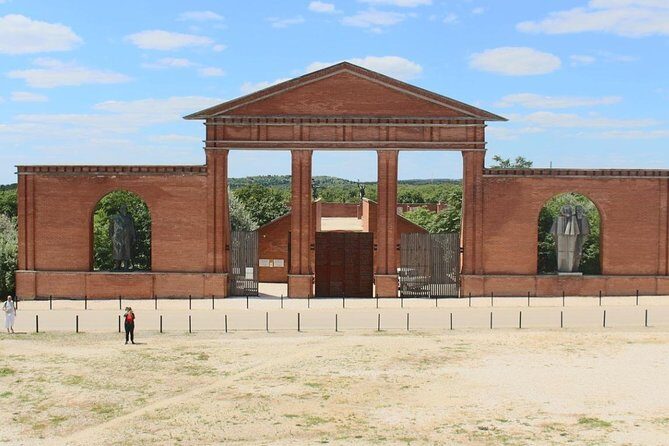
$11.41 per person isn’t just cheap—it’s cheap for what you get. You’re paying for admission to a concentrated display of monumental sculptures: 42 pieces covering 1945–1989. That’s a lot of material for the cost.
The key is match. This is a good deal if:
- You’re interested in history that shows up as art and architecture
- You want context for Communist-era symbolism in Hungary
- You like experiences where the content is visual, not just informational
It’s not as good if you came for something light, kid-friendly in a playful sense, or a quick “walk by and forget” stop. The park is built around heavy political imagery. You’ll feel that.
Booking demand also hints at value: it’s often booked about 24 days in advance on average. That suggests people plan it as a real outing, not a last-minute afterthought.
Who should book this ticket?
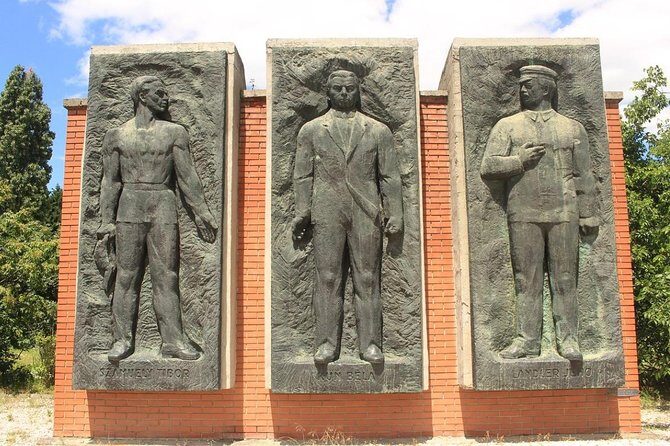
Book it if you want a history-related experience that’s visual and hands-on—where you can stand in front of the symbols instead of just reading about them. I’d especially recommend it if you enjoy:
- Studying how propaganda uses scale and recognizable faces
- Comparing allegory (like friendship and liberation themes) with specific named figures
- Looking for “the story behind the statue” through symbols and placement
It also works well as a half-day add-on from Budapest since the park is about 20 minutes drive outside. If you like museums, but you prefer something you can pace yourself through, this fits.
And if you’re curious but not sure, it helps that the experience is described as something most people can participate in. In practice, it’s an accessible concept: you show up, you walk the park, you look.
Should you book? My honest take
Yes, I’d book it if you’re even mildly interested in Communist-era symbolism and how it was presented in monumental form. The combination of 42 sculptures, the Liberation Army Soldier details, and the Gellért Hill connection gives the visit a clear centerpiece and real context.
If you’re trying to decide between “another indoor museum hour” and “a focused outdoor art-history stop,” this ticket leans toward the second option. It’s not meant to be entertaining fluff. It’s meant to make you look.
If you’re unsure what kind of traveler you are, use this simple test: if you stop to examine political posters or monument symbols in other cities, you’ll probably enjoy Memento Park. If not, you might find it harder to get value from the time.
FAQ
How much does the Memento Park entrance ticket cost?
The ticket price is listed as $11.41 per person.
How long should I plan for Memento Park?
The experience duration is listed as about 45 minutes to 2 hours 30 minutes.
What are the opening hours?
The park is listed as open 10:00 AM to 4:00 PM, Monday through Sunday.
Is the ticket mobile?
Yes. The ticket is provided as a mobile ticket.
What ticket includes admission?
Admission is included with the entrance ticket.
Where is the meeting point?
A specific meeting point isn’t listed, but the park is noted as being near public transportation.
What is the cancellation policy?
You can cancel for a full refund if you cancel up to 24 hours in advance of the experience start time. If you cancel within 24 hours, the amount paid isn’t refunded.