REVIEW · LAKE BALATON
Discover Keszthely: Charming Private Walking Tour
Book on Viator →Operated by Opatrip.com US LLC – Local Tours in Hungary · Bookable on Viator
Four stops, lots of local stories. This private walking tour in Keszthely pairs Lake Balaton scenery with real buildings that explain why the town grew the way it did. I like how it feels more like a guided stroll through everyday places than a rushed checklist, especially around the harbor area.
Two things I really love: first, the stop at Festetics Palace, where Baroque architecture sets the tone for everything else you’ll see. Second, the way your local guide ties details back to Keszthely’s old world—noble families, regional trade, and the pull of the lake—so the town’s character makes sense instead of staying confusing.
One possible drawback: the big “entry ticket” moments are not included (Festetics Palace and Balaton Museum). If you want to go inside both, you’ll need to budget extra on top of the $329.01 per person.
In This Review
- Key highlights
- Keszthely in 2 hours: a smart, walkable overview
- Festetics Palace: Baroque size, long timelines, and what to look for
- Our Lady of Hungary Church (Gothic Church): the oldest structure and why its layout matters
- Balaton Museum: the lake’s story told through people and science
- Municipal Beach and the harbor side: local life, swimming season, and a time machine
- Price and value: what $329.01 covers, and what costs extra
- Who this tour suits best (and how to tailor it)
- Should you book this Discover Keszthely walking tour?
- FAQ
- How long is the Discover Keszthely private walking tour?
- Is this tour private or shared with other groups?
- What language is the tour offered in?
- What stops are included in the tour?
- Are entrance tickets included for Festetics Palace and Balaton Museum?
- Is the Our Lady of Hungary Church admission free?
- Where does the tour start and end?
- Is a mobile ticket provided?
- Is free cancellation available?
- Is the tour suitable for most travelers?
Key highlights
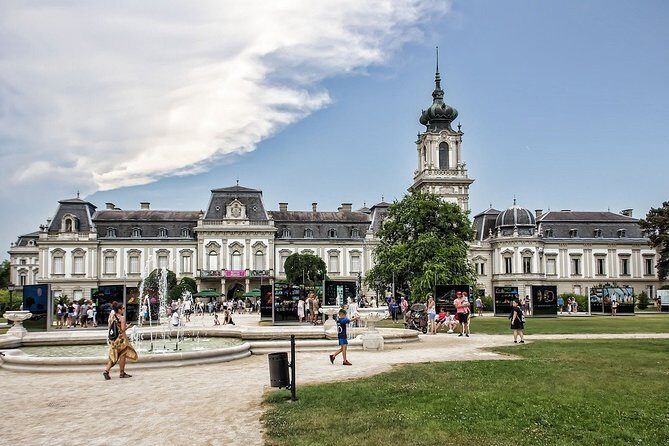
- Festetics Palace origins in 1745, expanded over the next century, with later work linked to architect Viktor Rumpelmayer
- Our Lady of Hungary (Gothic Church) built in 1390, and Keszthely’s oldest surviving structure
- Balaton Museum focused on the lake’s natural and cultural story, with sections tied to specific founders and collections
- Municipal Beach by the harbor, plus a look at the island bath that’s said to be the last one left on Lake Balaton
- Private group format, so you get more back-and-forth time with your guide
Keszthely in 2 hours: a smart, walkable overview

This is an approx. 2-hour experience, built around four well-chosen stops. Each one gets enough time to notice details, then connect those details to the bigger picture of Keszthely. The pacing matters here: you’re not racing across town just to say you were there.
The private setup is also a big value point. When it’s only your group, you can ask follow-ups without feeling like you’re competing with a line. I also like that the tour is offered in English and uses a mobile ticket, which keeps the pre-tour hassle low.
One practical thing to know: the tour is near public transportation, so it’s easier to stitch into a bigger Balaton plan. And since the route ends back near where you started, you’re not stuck with an awkward “now what?” moment after the walk.
You can also read our reviews of more tours and experiences in Lake Balaton.

Festetics Palace: Baroque size, long timelines, and what to look for
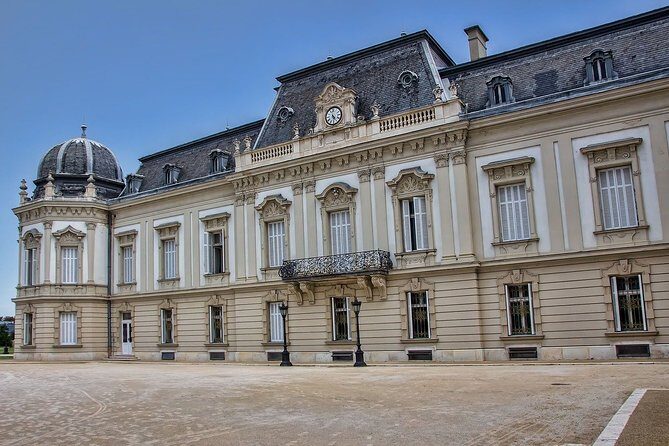
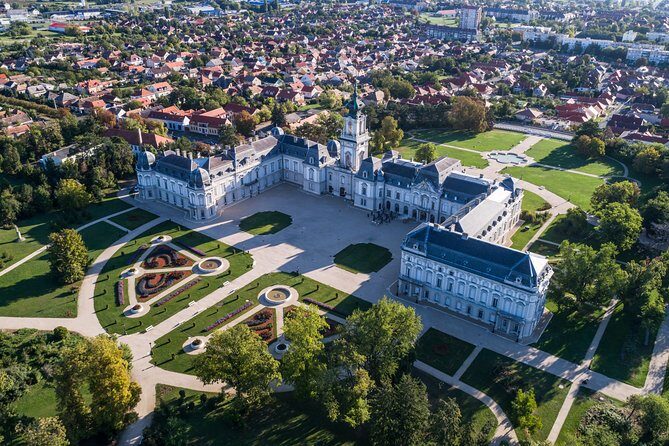
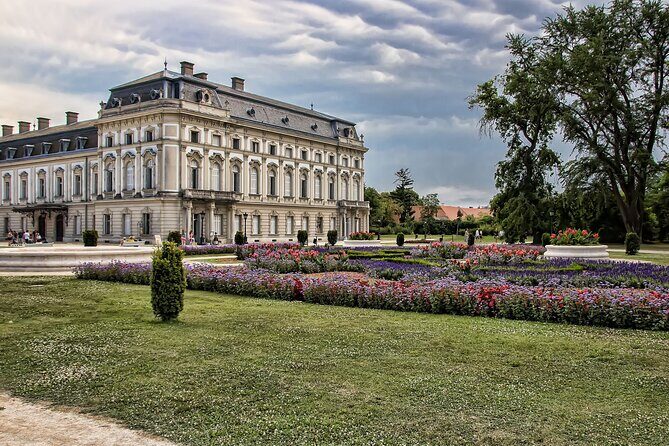
Festetics Palace is the kind of place that instantly changes the mood of a town. Construction began in 1745, and the work stretched for more than a century. That long timeline matters, because it explains why the palace feels like one big story made of many chapters rather than one single design decision.
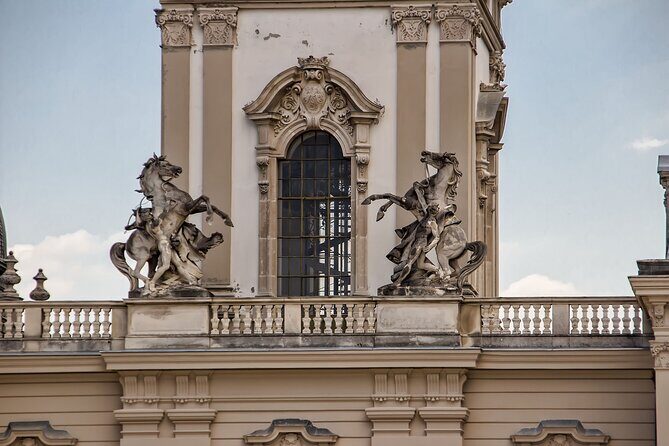
The property started on the foundations of a destroyed castle, then grew in two consecutive building projects that tripled its size. Later, the most recent major expansion came in the 1880s, connected to Vienna-based architect Viktor Rumpelmayer. After Rumpelmayer died in 1885, the palace was completed by architects Gusztáv Haas and Miksa Paschkisch. If your guide points out these transitions, you’ll see the architecture as a timeline of influence—not just a pretty façade.
Today, the palace houses the Helikon Palace Museum. Since Festetics Palace admission fees are not included, you’ll want to decide in advance what you care about most: a quick orientation outside versus paying to spend time inside. I’d think about it like this: if you like museums, plan to budget for entry. If you’re more interested in “why the building looks like this,” you can still get plenty from the guided walk and exterior details.
How to make this stop pay off: ask your guide what changed over time—1750s expectations versus late 1800s tastes, plus the role of Austrian influence suggested by the names and planning. That’s the difference between seeing a palace and understanding it.
Our Lady of Hungary Church (Gothic Church): the oldest structure and why its layout matters
After the palace scale, the Gothic Church feels like a different kind of proof: the town’s older bones. This church—also known as Our Lady of Hungary Church—was built in 1390 and is Keszthely’s oldest structure.
What I find especially useful here is the way the church is divided into three sections toward the equinoctial east. You’ll be looking at a mix of time periods: there’s a neo-gothic 19th-century tower and porch, while the nave and sanctuary follow older medieval patterns. The sanctuary is enclosed by three sides of an octagon, which is a detail you won’t notice on your own unless someone points it out.
There are also functional connections on the north side—monastery, cloisters, and sacristy—plus St. Anne Chapel to the south. That layout is a clue to how the site worked as a complex, not just a single church room. If your guide explains how the monastery spaces connect, you’ll “see” the building more clearly instead of treating it as isolated architecture.
A nice part for planning: admission is free here, so you don’t have ticket-cost friction mid-tour. Also, this stop tends to balance the day. After a major palace, and before you move into museum territory, the church is a calmer moment to slow down and really read shapes, angles, and placement.
Balaton Museum: the lake’s story told through people and science

Balaton Museum is the earliest—and currently only—official museum of Lake Balaton. That alone makes it worth understanding, because it frames what the museum thinks matters most about the region.
The focus isn’t just pretty scenery. The museum highlights the most important natural and cultural qualities of the “Hungarian Sea.” In other words: you’ll get an explanation for how people and place have shaped each other around the lake.
Inside, the structure of the museum story is tied to specific contributions. The archaeological collection associated with Rpád Csák was shown at the old Economy Learning Center building. The natural science department was established, the library expanded, and János Sági built the groundwork for the ethnography department. If your guide mentions names like that, it signals something important: this museum isn’t just one generic exhibit space—it reflects how the field developed locally.
You’ll also see an ongoing push for museum-pedagogical programs and adult-focused renewals, plus temporary exhibitions and cultural specialties. That means it’s not only a static “look and leave” place. Even with limited time, you can still leave with a clearer sense of why the lake became such a cultural anchor.
Drawback to keep in mind: Balaton Museum admission fees are not included. So you’ll want to decide whether to pay for entry during the tour or treat it as a guided orientation stop. If you’re the type who enjoys understanding origins—how collecting, researching, and exhibiting developed—you’ll probably feel the extra value.
A smart way to plan for this stop: ask your guide what theme is easiest to grasp in the limited time you have. That question helps you focus on the parts that match your interests, whether that’s natural science or human traditions.
Municipal Beach and the harbor side: local life, swimming season, and a time machine

The final stop is Keszthely’s Municipal Beach, also known as Szigetfürd és Városi Strand. It’s located right next to the harbor and is the town’s main beach. Practically, this is a great finish because you can immediately feel the lake in a way you can’t get from buildings alone.
The tour also uses this spot to show how Keszthely “lives.” There’s a cluster of souvenir pavilions leading up to the beach, and this area becomes the epicenter where people pause for refreshments. If you’re trying to understand a destination beyond monuments, this is where you get the human rhythm.
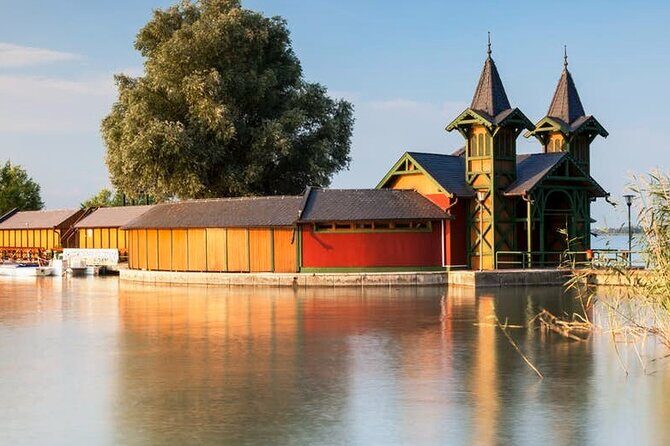
One detail I like because it’s specific: the island bath has been freshly rebuilt, and it’s described as the only one left on Lake Balaton. The idea is that it can transport you to the turn-of-the-century. Whether you treat that as pure nostalgia or a real historical style, it gives you something concrete to look at besides water.
Also, if you’re visiting in summer, swimming is an easy add-on—some of the appeal is simply that you can go from walk to lake time quickly.
No ticket is mentioned for this stop, and that matters for logistics. You can end the tour with flexibility: snack, hang by the harbor, or do a quick dip if the weather and conditions work for you.
Price and value: what $329.01 covers, and what costs extra
The tour price is $329.01 per person, which is on the higher side for a walking experience. But it’s not just “someone walking with you.” You’re paying for a local professional guide, a private group format, and a route that hits multiple major anchors in a tight timeframe.
Here’s the value math you’ll want to do:
- What’s included: local professional guide
- What isn’t included: Festetics Palace admission and Balaton Museum admission
So if you plan to enter both museums during your stops, the all-in cost will be meaningfully higher. If you only enter one, your total spend stays closer to what you expect. Either way, you’re buying guidance and time efficiency.
I think the best way to judge value is to ask yourself what you want from the day. If you want a deeper explanation—architecture timelines, the town’s trade and noble influence, why the museum exists and how it shaped local identity—this private setup makes more sense than doing it on your own. If you’re mainly after photos and a quick waterfront walk, you might find it harder to justify the price unless you also plan to pay for those key entrances.
One more value angle: the listing notes group discounts. If you’re traveling with friends or family, you might get a better per-person deal than if you’re solo. Private tours can become much more attractive once you split the cost across a small group.
Who this tour suits best (and how to tailor it)
This is a great fit if you like interpretation, not just sightseeing. The strongest praise points connect to the guide’s friendliness and the way the explanations reach back into earlier centuries. When a guide can connect the town’s noble families and regional trade to what you see on the street, your stops start clicking into place.
You’ll also enjoy this tour if you want a balanced day: palace scale, medieval church structure, museum-based lake context, and then a relaxing harbor finish. The sequence works because each stop prepares you for the next one.
Consider a tweak if:
- You already know the palace inside and out and mainly need outdoor time (you may want to focus on the church and the beach, and only enter what you truly care about).
- You’re not planning to pay for museum entries. In that case, make sure you still expect to get enough value from guided explanations and exterior details, since two stops carry extra admission costs.
This tour also reads well for couples and small friend groups who want a calmer pace than larger group bus tours. The private format helps you control the flow.
Should you book this Discover Keszthely walking tour?
I’d book it if you want a guided Keszthely that explains the town’s character, not just its landmarks. The palace architecture and the Gothic church’s layout are strong anchors, and the museum stop gives you a practical way to understand Lake Balaton as more than scenery. Add the harbor beach finish, and you get a day that ends where locals actually hang out.
I’d pause before booking if you’re trying to keep costs tight and you don’t plan to enter Festetics Palace or Balaton Museum. In that case, the “private guide + limited included content” math may feel less satisfying.
FAQ
How long is the Discover Keszthely private walking tour?
It’s listed at about 2 hours.
Is this tour private or shared with other groups?
It’s private. Only your group participates.
What language is the tour offered in?
The tour is offered in English.
What stops are included in the tour?
You’ll visit Festetics Palace, Our Lady of Hungary Church, Balaton Museum, and the Municipal Beach.
Are entrance tickets included for Festetics Palace and Balaton Museum?
No. Festetics Palace admission fees and Balaton Museum admission fees are not included.
Is the Our Lady of Hungary Church admission free?
Yes. The church has free admission listed.
Where does the tour start and end?
It starts at Festetics Palace, Kastély u. 1, 8360 Hungary, and ends back at the meeting point.
Is a mobile ticket provided?
Yes. A mobile ticket is included.
Is free cancellation available?
Yes. You can cancel for a full refund up to 24 hours before the experience starts.
Is the tour suitable for most travelers?
It says most travelers can participate.